

Sengan-en Garden
📍 Address: 9700-1 Yoshino-cho, Kagoshima, Kagoshima 892-0871, Japan
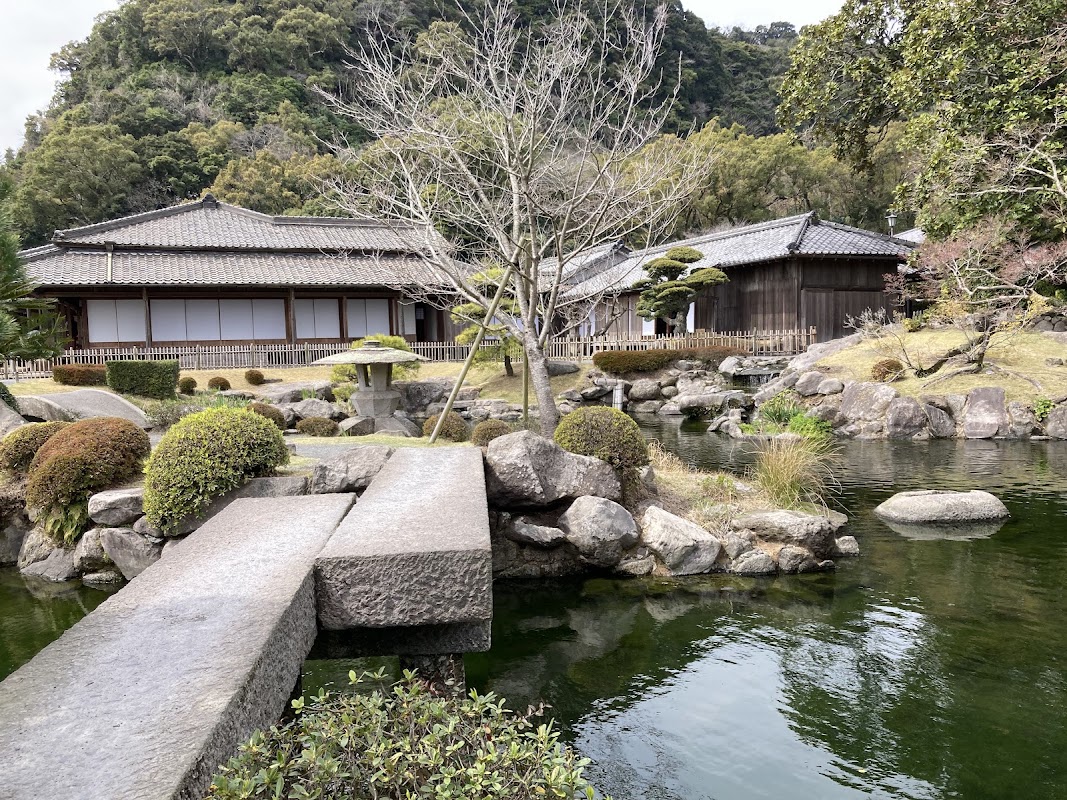
This is the former villa of the Shimazu family, boasting an expansive borrowed-scenery garden spanning approximately 15,000 tsubo (about 49,500 square meters), with Sakurajima serving as a miniature mountain and Kinko Bay as a pond. Built in 1658 by Shimazu Mitsuhisa, the 19th lord, this daimyo garden continues to captivate many travelers as a representative tourist attraction of Kagoshima. It’s also registered as a World Cultural Heritage site as a component of ‘Sites of Japan’s Meiji Industrial Revolution,’ underscoring its significant historical value.
In March 2025, the new ‘Sengan-en Station’ opened on the JR Nippo Main Line, the first new station in 15 years, making it accessible in just two stops from Kagoshima-Chuo Station. The magnificent view of Sakurajima from the new station platform itself has become a new social media hotspot, allowing visitors to fully immerse themselves in the atmosphere of Kagoshima right upon arrival.
For a deeper enjoyment of the garden, we recommend searching for ‘Kugikakushi’ (ornamental nail covers) hidden within the mansion. There are 11 types of these traditional Japanese architectural decorations, and it’s a fun challenge to try and find them all while appreciating the building’s intricate designs. Also, many areas have limited shade, so bringing a parasol or hat is a must from early spring to summer. The garden also features stylish cafes and facilities where you can enjoy local gourmet food, making a leisurely half-day stroll the best way to experience it.
Statue of Saigo Takamori
📍 Address: 4-4 1, Shiroyama-cho, Kagoshima, Kagoshima 892-0853, Japan and others
Standing majestically in the heart of Kagoshima city is the bronze statue of Saigo Takamori, a hero of the Meiji Restoration. It was created in 1937 (Showa 12) by Teru Ando, a sculptor from Kagoshima City who also crafted Shibuya’s ‘Hachiko statue.’ Unlike the Saigo statue in Ueno Park, which depicts him in traditional Japanese attire, this one shows him in the uniform of an army general. Standing about 8 meters tall (main body approx. 5.76 meters) against the backdrop of Shiroyama, its presence up close exudes overwhelming dignity and power.
The ‘Saigo Takamori Statue Photo Plaza,’ located across the road, is the best photo spot. A statue of Saigo’s beloved dog is also placed here, and a little-known fact is that it’s modeled after a dog named ‘Kaya,’ not the famous ‘Tsun’ (the actual ‘Tsun’ statue is at Fujikawa Tenjin in Satsumasendai City).
Local volunteer tourist guides are often stationed at the plaza, and if you hand them your camera, they’ll take a perfect commemorative photo, capturing both the statue and the dog’s statue. It’s a heartwarming space where you can experience the warm hospitality of Kagoshima’s people and feel how deeply Saigo-don is still loved by the locals.
Shiroyama Park Observatory
📍 Address: 22-13 Shiroyama-cho, Kagoshima, Kagoshima 892-0853, Japan
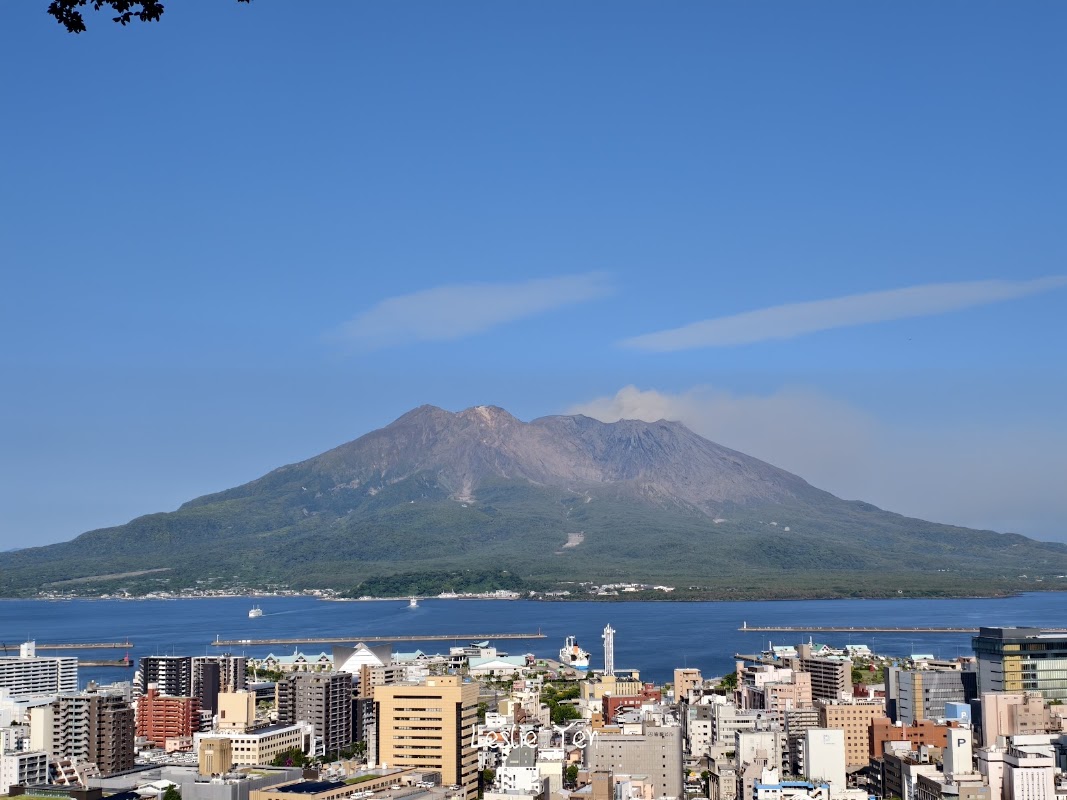
Situated on a small hill 107 meters above sea level, this is one of the city’s premier scenic spots, offering panoramic views of the magnificent Sakurajima floating in Kinko Bay and the Kagoshima cityscape. It’s also a historic site, being the final battlefield of the Satsuma Rebellion, with historical relics such as the cave where Saigo Takamori spent his last moments scattered nearby. Open 24 hours for free, visitors can enjoy not only the grand daytime scenery but also romantic night views, certified as a ‘Japan Night View Heritage.’
Accessing the observatory is convenient by car or the ‘City View Bus’ sightseeing bus, but walking up while enjoying nature is also recommended. There are several walking routes; the one starting next to Terukuni Shrine is the shortest but involves steep stairs. In contrast, the promenade from the ‘Kagoshima Museum of Modern Literature and Fairy Tale Museum’ side is gentle and wide, allowing for a comfortable hike through a broadleaf evergreen forest with over 600 species of plants, enjoying negative ions.
For travelers primarily visiting for photography, it’s best to visit in the afternoon or later, when the sun is lower, to avoid backlighting and capture a clear view of Sakurajima. Souvenir shops and free parking are available near the observatory, adding to its convenience as a stop during your sightseeing.
Arimura Lava Observatory
📍 Address: 952 Arimura-cho, Kagoshima, Kagoshima 891-1545, Japan
Located on the south coast of Sakurajima along National Route 224, the ‘Arimura Lava Observatory’ was built on a vast lava field formed by the historic major eruption of 1914 (Taisho 3). The inorganic landscape, with accumulated volcanic ash and rugged black lava stretching endlessly, offers an otherworldly experience, as if you’ve stumbled onto a sci-fi movie set. It’s an excellent location with views extending as far as Mt. Kaimondake in the distance.
The walking path is well-paved, which is a welcome feature, allowing visitors to walk comfortably even in light footwear like sandals. If you’re lucky, you might witness plumes of smoke rising directly from Sakurajima’s crater, letting you feel the scale of a ‘living volcano’ and the breath of the earth firsthand. Evacuation shelters are also installed along the way, offering a glimpse into the real daily life of locals coexisting with the volcano.
However, a point for travelers to note is that there is very little shade due to the lava field. Especially on sunny days from May to October, the glare from the ground is intense, so bringing a parasol or hat and plenty of water is strongly recommended. With free parking, clean restrooms, and a rest house, it’s also an excellent resting spot for drives to the Osumi Peninsula or sightseeing routes utilizing the Sakurajima Ferry.
Mount Kaimondake
📍 Address: Kaijucho, Ibusuki, Kagoshima 891-0603, Japan
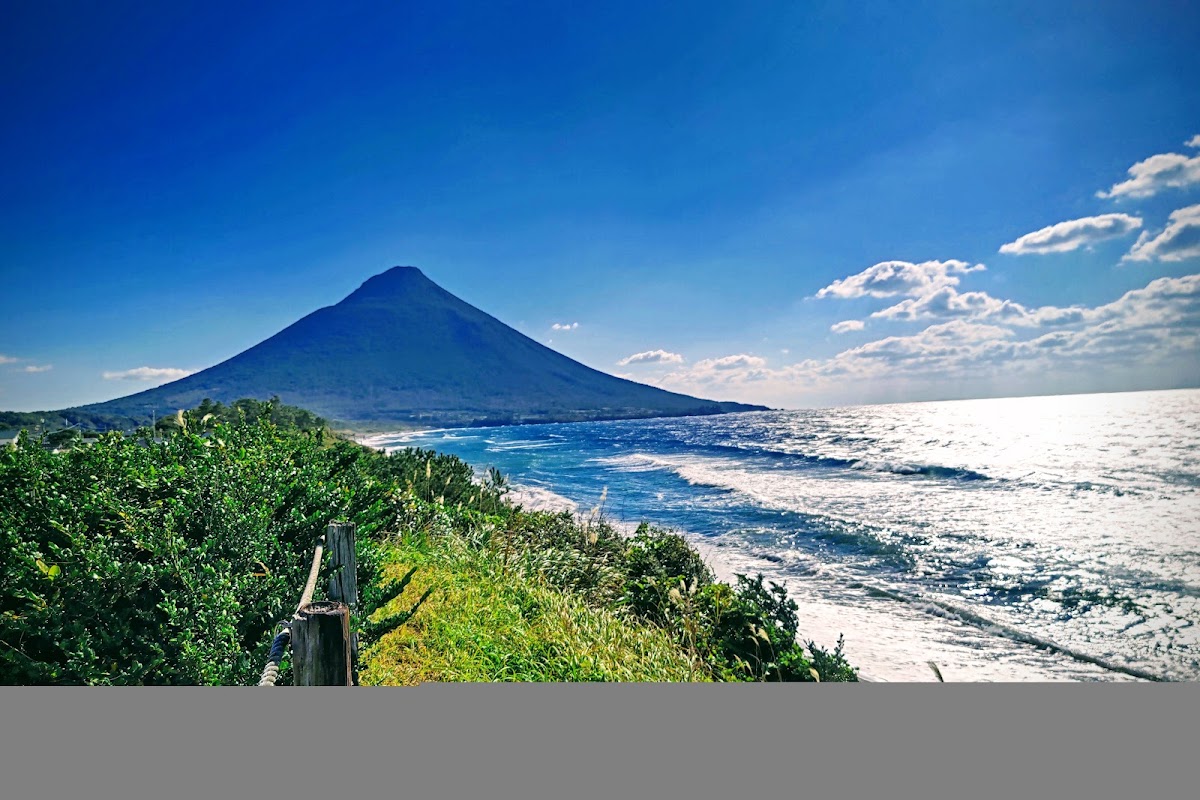
Rising 924 meters at the southernmost tip of the Satsuma Peninsula, ‘Mount Kaimondake’ is a renowned peak, praised as ‘Satsuma Fuji’ for its stunning conical beauty and selected as one of Japan’s 100 Famous Mountains. Its unique topography as an independent peak directly facing the sea offers an unobstructed 360-degree panoramic view from the summit. Looking north, you’ll see Kinko Bay and Sakurajima; to the south, distant Yakushima and Tanegashima. This superb scenery is the ultimate reward only for those who reach the top.
The hiking trail is a single winding path up the mountain, taking about 3 hours to ascend and 2.5 hours to descend. Although its elevation is under 1,000 meters, from the 5th station upwards, there are continuous rocky sections and slippery spots, so sturdy trekking shoes and proper preparation is essential. Furthermore, space near the summit is limited, so a spirit of mutual consideration is vital on busy weekends with many hikers.
For travelers using trains, here’s a valuable tip: a luggage storage service. At the ‘Ibusuki City Hall Kaimon Branch’ located on the way from the nearest JR Kaimon Station to the trailhead, free coin lockers are available for hikers during weekday office hours (it’s best to confirm availability by phone in advance). This is truly a ‘godsend’ service, allowing you to tackle the hike unburdened by heavy suitcases or unnecessary belongings.
Tips to Enjoy Kagoshima Sightseeing 120%
Kagoshima Prefecture’s greatest charm is how different areas reveal completely different faces. If you’re mainly exploring Kagoshima City, utilizing public transportation, such as the Sengan-en Station opened in 2025, allows you to smoothly enjoy both history and nature. On the other hand, if you venture to Mount Kaimondake in the Ibusuki area or the Arimura Lava Observatory on Sakurajima, which leads to the Osumi Peninsula, renting a car and enjoying a coastal drive is highly recommended.
Furthermore, volcanic ash is a part of daily life for Kagoshima residents. Depending on the weather and wind direction, a light dusting of ash might fall, so it’s reassuring to carry a jacket made of easily brushable material and wet wipes in your bag when traveling. Immerse yourself in the warm hospitality of the locals and enjoy an unforgettable journey in Kagoshima, where magnificent nature and profound history intertwine.


'%3E%3Cpath%20stroke='%23000'%20stroke-width='4'%20d='m-35-37-13%2020m5%203%2013-20m5%203-13%2020m63%2042%206-9m1-2%206-9m5%203-6%209m-1%202-6%209m5%203%206-9m1-2%206-9m-96%200%2013%2020m5-3-6-9m-1-2-6-9m5-3%2013%2020m63-42-6-9m-1-2-6-9m5-3%2013%2020m5-3-6-9m-1-2-6-9'/%3E%3Ccircle%20r='24'%20fill='%23cd2e3a'/%3E%3Cpath%20fill='%230047a0'%20d='M0%200a12%2012%200%201%201%2020%2013%2024%2024%200%201%201-40-26A12%2012%200%201%200%200%200'/%3E%3C/g%3E%3C/svg%3E)
'/%3E%3Cpath%20fill='%23b2b2b2'%20d='M241%20382q0%2016%2017%2026%2017%2011%2042%2011t42-11q16-11%2017-26V269H241'/%3E%3Cpath%20fill='%239f7e00'%20d='M241%20379q0%2014%208%2023%209%209%2021%209%2014%200%2021-9%209-9%209-23V269h-59'/%3E%3Cpath%20d='M241%20339v-70h59v110q0%2014-9%2023l-6%205v-68h-15v72q-8%200-14-4v-68zm59%2040c0%2022%2015%2032%2029%2032%2021%200%2030-18%2030-32v-40h-59'/%3E%3Cpath%20fill='%239f7e00'%20d='M266%20277v5h2v12h-3v-5h2v-5h-9v5h2v5h-4v9h3v18h-5v10h34v-10h-5v-18h3v-9h-4v-5h2v-5h-9v5h2v5h-3v-12h2v-5zm42%20101q0%2010%206%2017%206%206%2015%207%2010-1%2016-7%206-7%206-17v-29h-43'/%3E%3Ccircle%20fill='%230044ad'%20cx='329.5'%20cy='372'%20r='6'/%3E%3Cellipse%20fill='%230044ad'%20cx='300'%20cy='340'%20rx='16'%20ry='21'/%3E%3C/svg%3E)


