

Saga Prefecture’s Tourist Attractions Offer an Extraordinary Scale of ‘Nature and History’!
When it comes to Kyushu travel, Fukuoka’s gourmet food, Nagasaki’s exotic atmosphere, and Oita’s hot springs are classic choices. However, for travelers who truly want to experience ‘overwhelming natural beauty’ and ‘deep history,’ Saga Prefecture is highly recommended.
From sea caves that evoke the Earth’s breath from approximately 3 million years ago, to vast pine forests built by Edo period feudal lords, a trending private forest created by an individual over 40 years, and even a serious mountain scattered with giant rock formations revered as sacred objects by shrines – Saga’s tourist spots are simply on a different scale. This time, for both short-term visitors and those who want to deeply savor the local experience, we’ll passionately explain not just a catalog of spots, but ‘the real reasons to go there’ and ‘optimal ways to explore locally.’
Nanatsugama
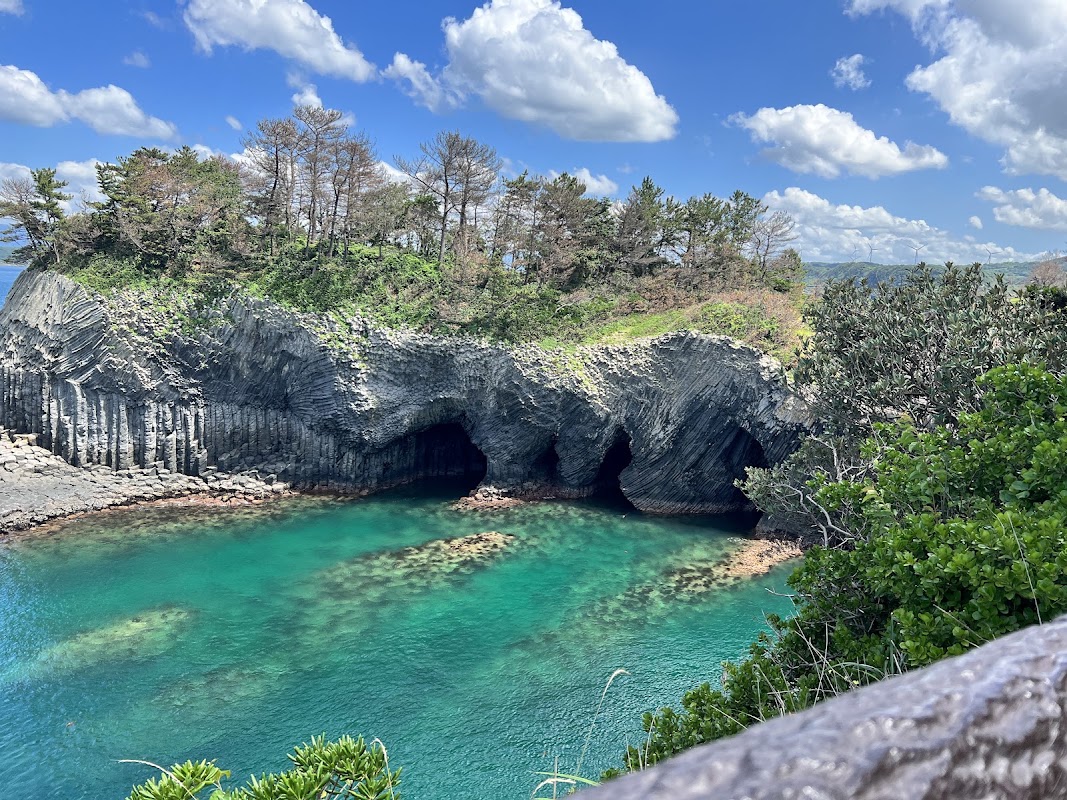
📍 Address: Yagataishi, Karatsu, Saga 847-0135, Japan
Nanatsugama, a national natural monument, features seven sea caves carved out by the rough waves of the Genkai Sea. These geometrically arranged rock walls are called ‘columnar joints,’ formed approximately 3 million years ago when contracting magma cooled and solidified. The sculptural beauty created by nature over countless years has an impact rarely seen elsewhere.
There’s a well-maintained free parking lot (approx. 50 spaces) and a promenade on the cliff, and just looking down at the columnar joints from the observation deck is well worth the visit. However, to truly enjoy Nanatsugama, ‘access from the sea’ is highly recommended. If you take the ‘Ika Maru’ pleasure boat (adults 2,000 yen) departing near the Yobuko morning market, you can get very close to the largest cave (approx. 110m deep), and the power of the columnar joints viewed from below is on a completely different level than from land. However, high waves can cause cancellations during winter, so remember to check operations in advance.
【A common pitfall for travelers】
When traveling by rental car, there have been reports of Google Maps navigation sometimes guiding drivers down extremely narrow roads on the fishing port side (which may be closed or have dangerous ditches). When setting your navigation, please be sure to choose the wider road leading to ‘Nanatsugama Observation Deck’ or ‘Nanatsugama Parking Lot.’
Niji-no-Matsubara
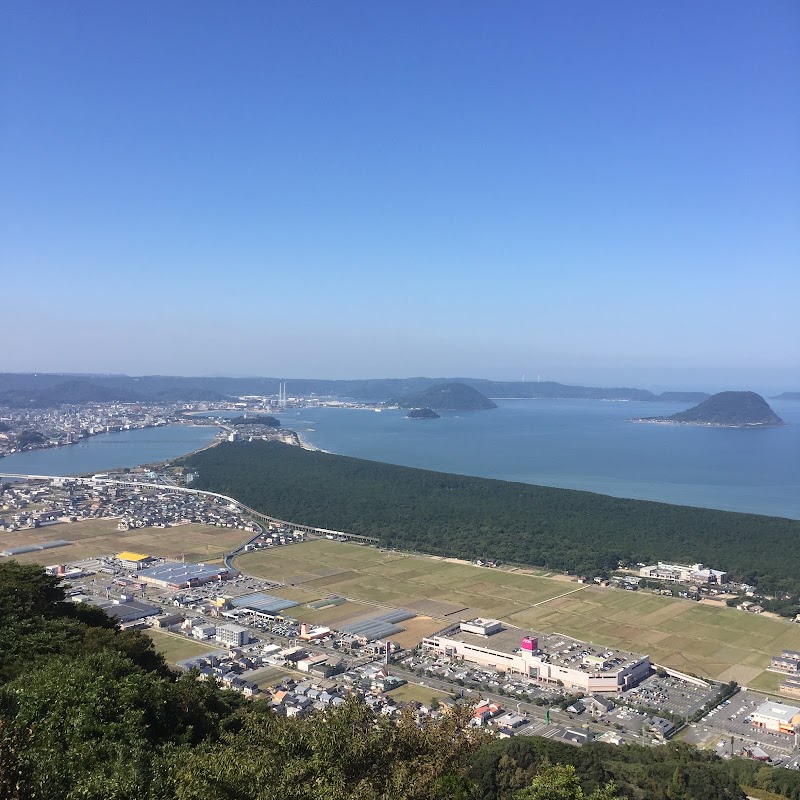
📍 Address: Kagami, Karatsu, Saga 847-0022, Japan
Niji-no-Matsubara, which forms a beautiful arc along the coast of Karatsu Bay, is one of Japan’s three great pine groves, alongside Miho-no-Matsubara and Kehi-no-Matsubara, and is designated as a Special Place of Scenic Beauty. The sight of approximately 1 million Japanese black pines thriving over a length of about 4.5km and a width of about 500m is simply breathtaking.
The origin of this pine grove dates back to the early 17th century (around Keicho 13, 1608). It began when Terazawa Shimamori Hirotaka, the first feudal lord of the Karatsu Domain, planted the trees as a windbreak and tide-protection forest to protect coastal farmland from sea breezes. This spot allows you to feel the weight of history, having been protected and nurtured by local people for hundreds of years.
Even just driving through the pine grove, the sunlight filtering through the trees is pleasant, but parking your car in the free lot and running or walking through the pine forest or along the coast is also a great way to refresh. And if you truly want to experience the scale of these 1 million trees, climbing to the observation deck of ‘Mt. Kagami,’ which rises behind it, is best. The panoramic view of the pine grove and Karatsu Bay from the summit is truly stunning.
Environmental Art Forest
📍 Address: Hirano 667, Ogi-machi, Karatsu, Saga 849-3115, Japan
The Environmental Art Forest, where travelers from all over Japan come for its ‘reflection scenery’ trending on social media, is not a national or prefectural facility. It’s a private forest created by a couple over approximately 40 years with the concept of ‘eliminating artificial elements to the absolute limit.’
The main highlight is the view of the outdoor scenery reflected like a mirror on a ‘lacquered table’ placed in a Japanese-style room within the facility. Thoughtful considerations like stands for fixing smartphones for photography and staff hospitality in showing the best angles are welcome points for travelers. While the autumn foliage season is famous, the ‘fresh green season’ from mid-April to late June is gaining quiet popularity among locals who know the area.
During the fresh green season, it’s less crowded than autumn, allowing you to leisurely stroll through the grounds at your own pace. Furthermore, ‘Nomura maples,’ which have red leaves even in spring and early summer, are planted here, creating a fantastical world unique to this period with the vibrant green of new foliage contrasting with red. After your stroll, we recommend taking a break with a refreshing ‘cold brew coffee made with underground water’ (400 yen including tax), which has a clear, chilled taste.
Kyoseki Park

📍 Address: Umeno 329-5, Yamato-cho, Saga, Saga 840-0203, Japan
Don’t be fooled by the playful name ‘Park’; if you visit Kyoseki Park in your date attire or sandals, you’re guaranteed to have a hard time. Its true nature is a ‘serious light hike’ that takes about 1 to 2.5 hours round trip. Due to steep inclines and ups and downs, wearing trousers and sneakers, and bringing drinks, are essential.
Why are such giant stones scattered in this mountain? Its history runs deep, with descriptions remaining in the ‘Hizen-no-Kuni Fudoki’ from over 1200 years ago, making it a sacred place that has garnered faith as the deity of the Hizen-no-Kuni Ichinomiya ‘Yodohime Shrine’ at its base.
After paying the admission fee at the park entrance and receiving explanations about the hiking courses, you’ll step into a space where giant strange rocks, exceeding 10 meters in size, such as ‘Ama-no-Iwado’ (Heaven’s Rock Gate) and ‘Kaeru-ishi’ (Frog Stone), are majestically enshrined. While there are no artificial attractions, the space woven by the overwhelming mass of giant rock formations and the filtered sunlight is a spot that strongly resonates with those seeking a spiritual presence and the energy of nature.
Shimizu Falls
📍 Address: Matsuo, Ogi-machi, Ogi, Saga 845-0004, Japan
Shimizu Falls, located upstream of the Shimizu River, selected as one of Japan’s 100 Famous Waters, boasts a powerful cascade of water flowing over a width of 13 meters from a 75-meter high cliff. Also known as ‘Tamasudare Falls,’ it’s a healing spot where you can get close and immerse yourself in negative ions.
If you visit this waterfall, there’s a deep history you absolutely must know. At Shimizu Kannon, adjacent to the falls, ‘takigyo’ (waterfall ascetic practices) by ascetic monks and believers were once popular. In the Meiji era, ‘carp cuisine,’ now a specialty of Ogi City, began as a meal served to practitioners visiting the area as lodging. Carp exposed to the cold, clear famous water lose all the peculiar smell of river fish, transforming into exquisite ‘koi no arai’ (carp sashimi) and ‘koi koku’ (carp miso soup). After experiencing nature’s energy at the falls, savoring carp at the surrounding restaurants is the perfect local route.
【Insider tip for access】
If you follow navigation or signboards from the parking lot, you’ll end up on a tough, uphill and downhill staircase route via the shrine. If you prioritize ease of walking, look for the signboard just beyond the shrine entrance and choose the ‘route along the river.’ This is a flat promenade, allowing you to access the base of the waterfall while conserving energy.
Summary: Enjoy Saga’s Tourist Spots Even More with the Right ‘Equipment and Knowledge’
Saga Prefecture’s tourist attractions are not merely Instagrammable spots; their greatest feature is the strong imprint of global crustal movements and historical backgrounds dating back to the Edo period. That’s why understanding their origins – ‘why these landforms came to be’ and ‘who protected them and how’ – dramatically enhances your travel experience.
Also, since many spots like Kyoseki Park’s hiking trails and Nanatsugama’s pleasure boat involve engaging with nature, wearing comfortable shoes, checking the weather in advance, and securing the correct access routes are crucial. On your next trip, be sure to use the insider tips and precautions in this article to deeply savor the profound charm of Saga.


'%3E%3Cpath%20stroke='%23000'%20stroke-width='4'%20d='m-35-37-13%2020m5%203%2013-20m5%203-13%2020m63%2042%206-9m1-2%206-9m5%203-6%209m-1%202-6%209m5%203%206-9m1-2%206-9m-96%200%2013%2020m5-3-6-9m-1-2-6-9m5-3%2013%2020m63-42-6-9m-1-2-6-9m5-3%2013%2020m5-3-6-9m-1-2-6-9'/%3E%3Ccircle%20r='24'%20fill='%23cd2e3a'/%3E%3Cpath%20fill='%230047a0'%20d='M0%200a12%2012%200%201%201%2020%2013%2024%2024%200%201%201-40-26A12%2012%200%201%200%200%200'/%3E%3C/g%3E%3C/svg%3E)
'/%3E%3Cpath%20fill='%23b2b2b2'%20d='M241%20382q0%2016%2017%2026%2017%2011%2042%2011t42-11q16-11%2017-26V269H241'/%3E%3Cpath%20fill='%239f7e00'%20d='M241%20379q0%2014%208%2023%209%209%2021%209%2014%200%2021-9%209-9%209-23V269h-59'/%3E%3Cpath%20d='M241%20339v-70h59v110q0%2014-9%2023l-6%205v-68h-15v72q-8%200-14-4v-68zm59%2040c0%2022%2015%2032%2029%2032%2021%200%2030-18%2030-32v-40h-59'/%3E%3Cpath%20fill='%239f7e00'%20d='M266%20277v5h2v12h-3v-5h2v-5h-9v5h2v5h-4v9h3v18h-5v10h34v-10h-5v-18h3v-9h-4v-5h2v-5h-9v5h2v5h-3v-12h2v-5zm42%20101q0%2010%206%2017%206%206%2015%207%2010-1%2016-7%206-7%206-17v-29h-43'/%3E%3Ccircle%20fill='%230044ad'%20cx='329.5'%20cy='372'%20r='6'/%3E%3Cellipse%20fill='%230044ad'%20cx='300'%20cy='340'%20rx='16'%20ry='21'/%3E%3C/svg%3E)


