

The Essence of Oita Tourism: The Contrast of ‘Onsen × Grand Nature’
Oita Prefecture is nationally renowned as ‘Onsen Prefecture,’ but its charm extends far beyond hot springs. Drive from the coast to the mountains, and a variety of leisure experiences await: dynamic volcanic terrains that make you feel the Earth’s breath, vast panoramic views, and the vivid ecology of animals thriving there.
This time, we introduce four carefully selected spots, from classic must-visit sightseeing locations to scenic wonders boasting overwhelming scale, so that even short-term travelers can experience 120% of Oita’s charm. We’ll go beyond simply visiting, providing deep insights into highlights for a more profound enjoyment, along with tips on how to navigate to avoid crowds.
Umi Jigoku (Sea Hell)
📍 Address: 559-1 Kannawa, Beppu, Oita 874-0045, Japan
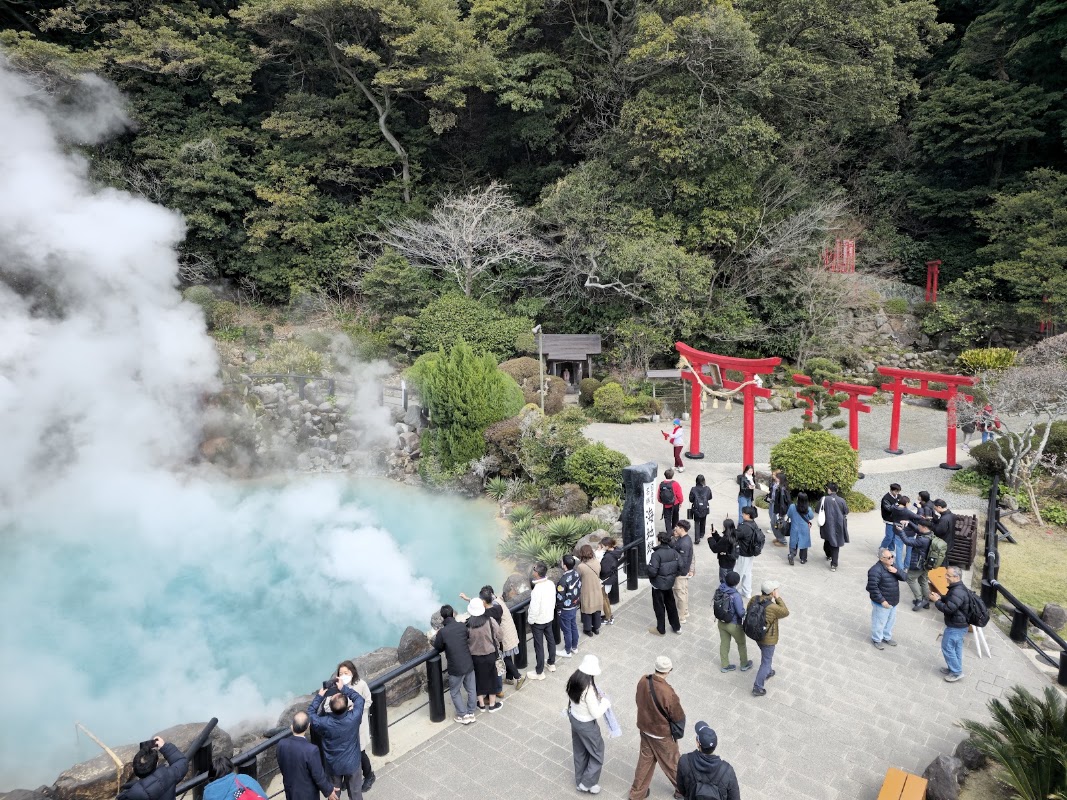
Beppu’s signature ‘Jigoku Meguri’ (Hell Tour). Among them, ‘Umi Jigoku’ stands out for its grand scale and overwhelming beauty, captivating tourists. Born approximately 1200 years ago from the eruption of Mt. Tsurumi, this hell is also designated as a National Place of Scenic Beauty.
The biggest highlight, without a doubt, is its vivid cobalt blue water surface. This beautiful color is due to the high concentration of ‘iron sulfate’ dissolved in the hot spring water. However, contrary to its cool appearance, the spring temperature reaches approximately 98 degrees Celsius, and the swirling white steam and sulfurous scent powerfully remind you that ‘this is indeed hell.’
Another must-see is Umi Jigoku’s specialty, ‘Gokuraku Manju’ (Paradise Buns). These bite-sized steamed buns, cooked using the high-temperature volcanic steam, are irresistibly hot and fluffy. After enjoying the blue hell visually, tasting paradise is the classic Beppu style. The garden also condenses many attractions, including a free footbath (towel recommended), a pond with tropical water lilies cultivated using geothermal heat, and the ‘Hakuryu Inari Okami’ shrine with its striking vermilion torii gates.
To fully enjoy the Hell Tour, it’s recommended to start early in the morning when parking lots are relatively empty. The contrast between the light shining on the blue pond in the clear air and the vigorously rising steam is a truly unique and spectacular view found only in Beppu.
Takasakiyama Natural Zoological Garden
📍 Address: 3098-1 Kanzaki, Oita, Oita 870-0802, Japan
Takasakiyama, located on the border between Oita City and Beppu City. This is not just a ‘zoo,’ but a very rare spot in Japan where you can closely observe the real society of semi-wild Japanese macaques without cages. Currently, two large groups, Group B and Group C, appear alternately at the ‘Monkey Feeding Area’ within the Manjuji Betsuin temple grounds.
The charm of this place lies in the exquisite distance: they aren’t overly afraid of humans, nor do they approach excessively. You’ll be soothed by the peaceful sight of baby monkeys innocently running around and parent monkeys leisurely grooming each other. However, during the ‘feeding times’ held several times a day, the situation completely changes. A fierce and stark struggle for food unfolds, vividly showcasing the hierarchical society of the monkey groups. This contrast is incredibly fascinating.
Furthermore, an indispensable part of enjoying Takasakiyama is the famous guided tours by the staff. They humorously explain the monkeys’ dramas of love, hate, and power struggles, much like a daytime TV drama, detailing things like ‘What is that monkey’s current rank and personality?’ or ‘The drama of past alpha males (now called alpha males and alpha females).’ Recently, it created a buzz when a female monkey (Yakei) became the first ever to reach the top of the group.
You can walk up from the foot of the mountain to the monkey feeding area, but using the charmingly designed monorail, ‘Sarukko Rail,’ provides peace of mind even for those with concerns about their legs or back. Experience the wild energy firsthand, not through cages.
Kokonoe ‘Yume’ Grand Suspension Bridge
📍 Address: 1208 Tano, Kokonoe, Kusu District, Oita 879-4911, Japan
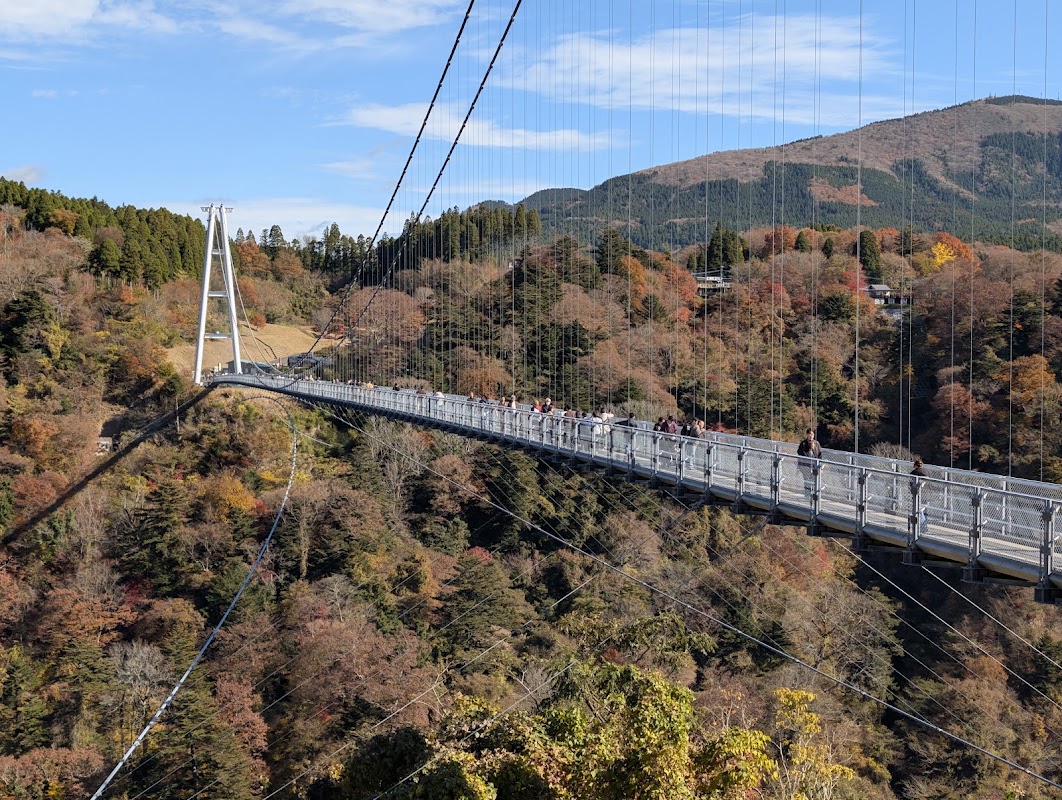
If you want to experience the panorama of grand nature with your whole body, the ‘Kokonoe ‘Yume’ Grand Suspension Bridge’ (Kokonoe Yume Otsurihashi) in Kokonoe Town is an absolute must-visit. Boasting an elevation of 777m, a length of 390m, and a height of 173m from the water surface, it is a mega-structure that proudly stands as Japan’s tallest suspension bridge exclusively for pedestrians.
Standing on the bridge, you’ll see the primeval forest of Narukogawa Valley, the headwaters of the Chikugo River, spreading beneath your feet, and you can gaze down at ‘Shindo Falls (O-daki and Me-daki),’ selected as one of Japan’s Top 100 Waterfalls. Further in the distance, the majestic ‘Kuju Mountain Range’ soars, and the overwhelming 360-degree panoramic view truly deserves to be called a ‘sky promenade’ for its scale.
This suspension bridge is built very sturdily, and you’ll hardly feel any sway, but the central part features a thrilling design where the ground beneath your feet is a grating (mesh), giving you a clear view of the valley far below. It might be a bit of a challenge for those with acrophobia, but the refreshing breeze that sweeps through is exceptional.
As a point of caution, because it’s an elevated location with nothing to block it, it tends to be windy, and it gets colder than you might expect in autumn and winter. Be sure to take thorough cold weather precautions. The bridge is particularly beautiful during the fresh green season and autumn foliage season, and the view from the observation deck on the other side of the bridge is also a must-see. It’s a superb viewpoint where you can enjoy the beauty of Oita’s mountains and valleys from a bird’s-eye perspective.
Harajiri Falls
📍 Address: 410 Harajiri, Ogata-machi, Bungoono, Oita 879-6631, Japan
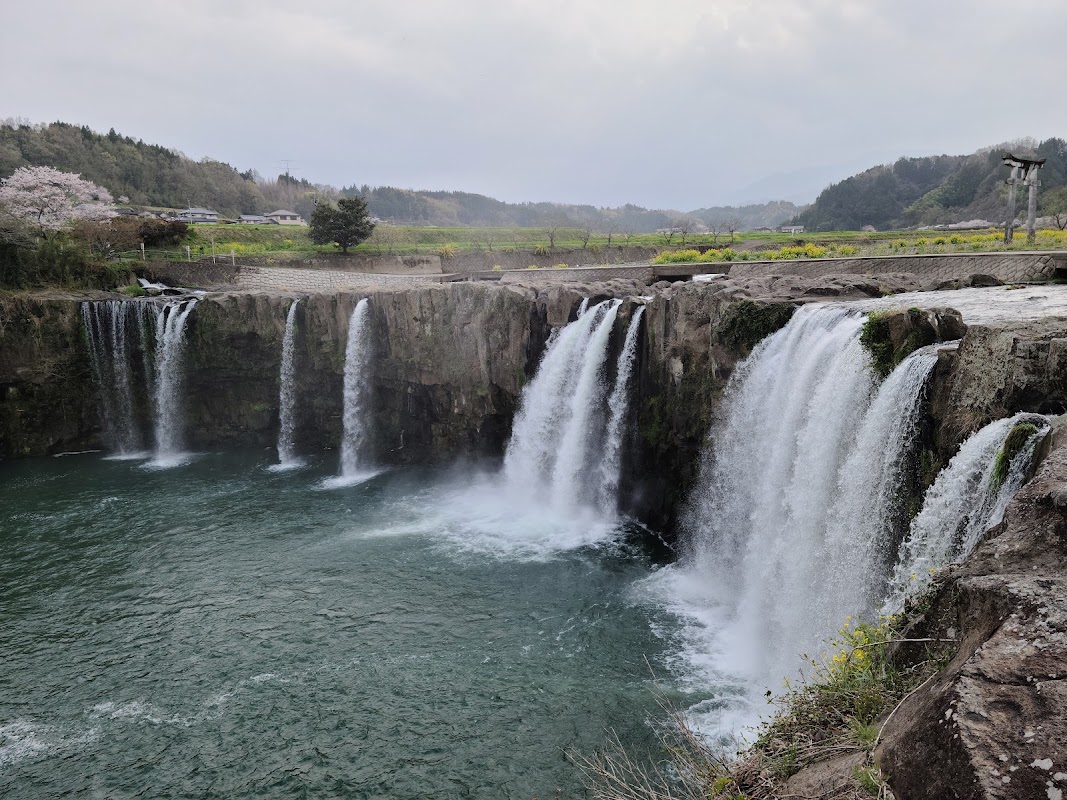
Harajiri Falls, located in Bungoono City, Oita Prefecture, boasts a width of approximately 120m and a drop of about 20m, earning it the nickname ‘Niagara of the Orient’ and making it one of Oita’s most renowned waterfalls. Pyroclastic flows from a massive eruption of Mount Aso approximately 90,000 years ago cooled and solidified, creating this dynamic landscape.
While typical waterfalls often evoke an image of appearing after a long walk through deep mountains, Harajiri Falls’ most striking feature is its sudden appearance in the middle of a tranquil rural landscape. Just park your car at the adjacent ‘Michi-no-Eki Harajiri Falls’ (Roadside Station Harajiri Falls) and walk a few minutes, and you’ll be overwhelmed by the grand waterfall that fills your vision.
The magnificence of this waterfall lies in the fact that ‘you can enjoy it from every angle.’ You can descend close to the basin to feel the spray, walk along the promenade maintained on top of the falls to peer over the edge, or capture the entire panorama from the ‘Takimi Bridge’ (Waterfall Viewing Bridge) downstream. You can photograph its diverse expressions while circling the waterfall.
If you want to enjoy the best views all to yourself, a visit early in the morning when the air is clear is ideal. The morning sun, streaming from the mountain edge, illuminates the waterfall’s spray, creating a sparkling scene of breathtaking photogenic beauty. It’s also a highly popular stop for touring and driving, a place where you can experience the powerful strength of Oita’s nature.
Local Travel Tips to Enjoy Oita Tourism 120%
Oita’s tourist spots are broadly divided into the coastal ‘Beppu-Oita Area’ and the mountainous ‘Kokonoe-Bungoono Area.’ Since each area is about 1-2 hours apart by car, the key to a successful trip is to plan your travel schedule with ample time.
If you’re using a rental car, mountainous areas (like the Yamanami Highway) offer excellent driving courses, but in winter, there’s a risk of snow and ice, so preparations like studless tires are necessary. Also, around Kannawa Onsen’s Hell Tour, roads can be narrow and intricate, and steam can whiten visibility in some places, so drive with extreme caution.
Oita’s charm lies in the fact that it shows completely different faces depending on the season you visit. In spring, Beppu’s collaboration of cherry blossoms and steam is beautiful; in summer, cool off at Harajiri Falls; in autumn, enjoy the fiery autumn leaves at the Kokonoe ‘Yume’ Grand Suspension Bridge; and in winter, warm your chilled body in exquisite hot springs. Embark on a journey to Oita Prefecture, where you’ll find new discoveries every time you visit, and immerse yourself fully using all your senses.


'%3E%3Cpath%20stroke='%23000'%20stroke-width='4'%20d='m-35-37-13%2020m5%203%2013-20m5%203-13%2020m63%2042%206-9m1-2%206-9m5%203-6%209m-1%202-6%209m5%203%206-9m1-2%206-9m-96%200%2013%2020m5-3-6-9m-1-2-6-9m5-3%2013%2020m63-42-6-9m-1-2-6-9m5-3%2013%2020m5-3-6-9m-1-2-6-9'/%3E%3Ccircle%20r='24'%20fill='%23cd2e3a'/%3E%3Cpath%20fill='%230047a0'%20d='M0%200a12%2012%200%201%201%2020%2013%2024%2024%200%201%201-40-26A12%2012%200%201%200%200%200'/%3E%3C/g%3E%3C/svg%3E)
'/%3E%3Cpath%20fill='%23b2b2b2'%20d='M241%20382q0%2016%2017%2026%2017%2011%2042%2011t42-11q16-11%2017-26V269H241'/%3E%3Cpath%20fill='%239f7e00'%20d='M241%20379q0%2014%208%2023%209%209%2021%209%2014%200%2021-9%209-9%209-23V269h-59'/%3E%3Cpath%20d='M241%20339v-70h59v110q0%2014-9%2023l-6%205v-68h-15v72q-8%200-14-4v-68zm59%2040c0%2022%2015%2032%2029%2032%2021%200%2030-18%2030-32v-40h-59'/%3E%3Cpath%20fill='%239f7e00'%20d='M266%20277v5h2v12h-3v-5h2v-5h-9v5h2v5h-4v9h3v18h-5v10h34v-10h-5v-18h3v-9h-4v-5h2v-5h-9v5h2v5h-3v-12h2v-5zm42%20101q0%2010%206%2017%206%206%2015%207%2010-1%2016-7%206-7%206-17v-29h-43'/%3E%3Ccircle%20fill='%230044ad'%20cx='329.5'%20cy='372'%20r='6'/%3E%3Cellipse%20fill='%230044ad'%20cx='300'%20cy='340'%20rx='16'%20ry='21'/%3E%3C/svg%3E)


