

Hakone is one of Japan’s leading tourist destinations, easily accessible from the city center, blessed with beautiful nature throughout the four seasons, and abundant hot springs. For travelers, it’s a profound area with new discoveries every time you visit.
This article carefully selects 5 key spots, ranging from classic attractions you absolutely can’t miss in Hakone to day-trip hot springs that rejuvenate your mind and body. We’ll provide a thorough explanation, including deep knowledge about the history and origins of each facility, practical tips for avoiding crowds, and advice for enjoying the magnificent scenery.
Lake Ashi
📍 Address: Moto-Hakone, Hakone, Ashigarashimo District, Kanagawa 250-0522, Japan
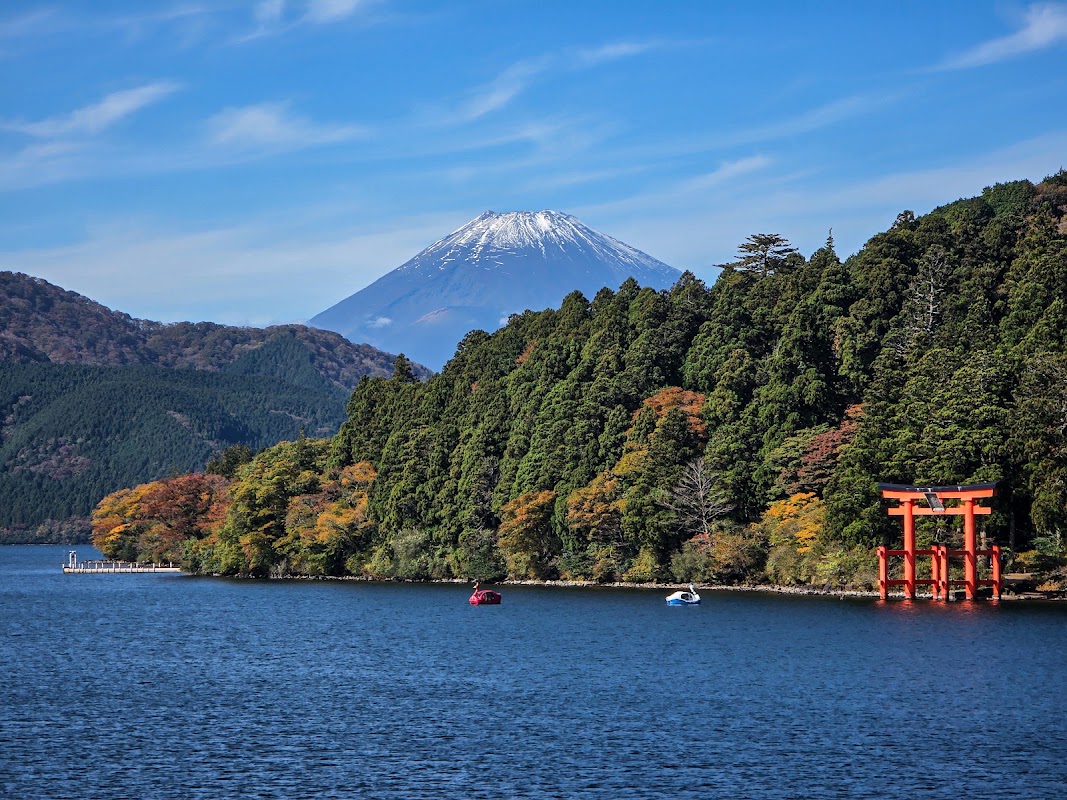
Lake Ashi, a majestic scenic spot symbolizing Hakone, is a caldera lake formed approximately 3,000 years ago by a phreatic eruption and landslide of Mt. Hakone. On a clear day, you can enjoy a picturesque view of the snow-capped Mt. Fuji and Hakone Shrine’s ‘Peace Gate’ (torii) standing by the lakeside.
A must-do when visiting Lake Ashi is a cruise on the famous ‘Hakone Pirate Ship’. Step out onto the deck of this lavish, pirate-themed vessel to feel the 360-degree panorama and the refreshing breeze sweeping across the lake. The ship’s interior is spacious and comfortable, and choosing a special cabin allows for an even more relaxed and luxurious experience.
The lakeside is dotted with stylish cafes, souvenir shops, and historic checkpoint ruins, offering a refreshing experience even with a leisurely stroll. The lake’s appearance changes significantly with the seasons and time of day, making it a cornerstone of Hakone tourism, always offering new impressions regardless of when you visit.
Hakone Shrine
📍 Address: 80-1 Moto-Hakone, Hakone, Ashigarashimo District, Kanagawa 250-0522, Japan
Standing on the shores of Lake Ashi, Hakone Shrine is a venerable ancient shrine believed to have been founded in 757 (Tenpyo Hoji 1) by Priest Mangan, who received an oracle from Hakone Okami. It flourished as the ‘Grand Guardian of Kanto,’ deeply revered by famous samurai commanders such as Minamoto no Yoritomo and Tokugawa Ieyasu, who prayed for victory in battle.
Stepping into the shrine grounds, you’ll find the atmosphere transformed, surrounded by colossal cedar trees centuries old. Ascending the 90 stone steps amidst the cool, clear, sacred air reveals the solemn, vermilion-lacquered main shrine. Nearby, there is also the ‘Kuzuryu Shrine Shingu,’ said to bring good fortune in relationships and wish fulfillment, where visitors can purify their mind and body with the ‘Ryujinsui’ (Dragon God Water) at the purification fountain.
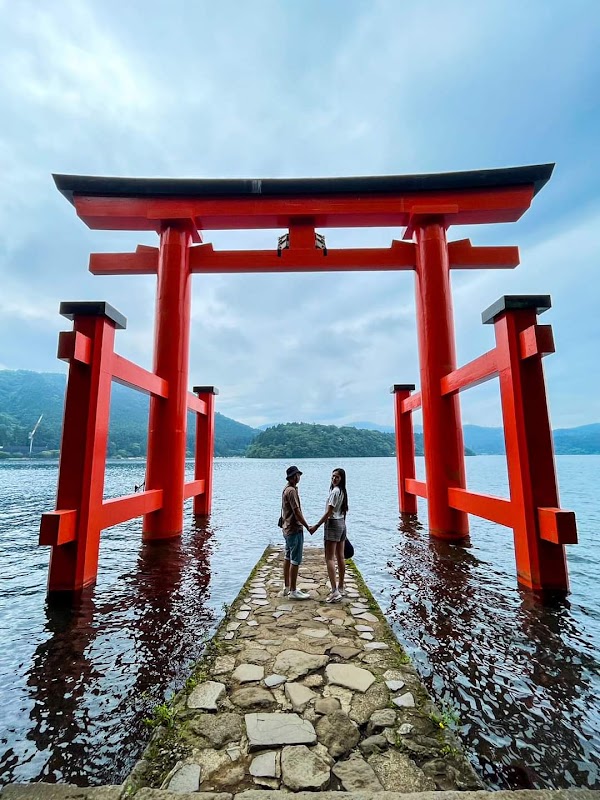
The greatest highlight is the ‘Peace Gate’ (Heiwadorii) standing in the lake. The collaboration of the vermilion torii reflecting on the water and the grand nature is breathtakingly beautiful. However, due to its popularity, a long queue often forms for front-on photos, sometimes exceeding a three-hour wait on weekends. Travelers wishing to capture beautiful pictures should aim to visit early in the morning when there are fewer people.
Owakudani Information Center
📍 Address: 1251 Sengokuhara, Hakone, Ashigarashimo District, Kanagawa 250-0631, Japan
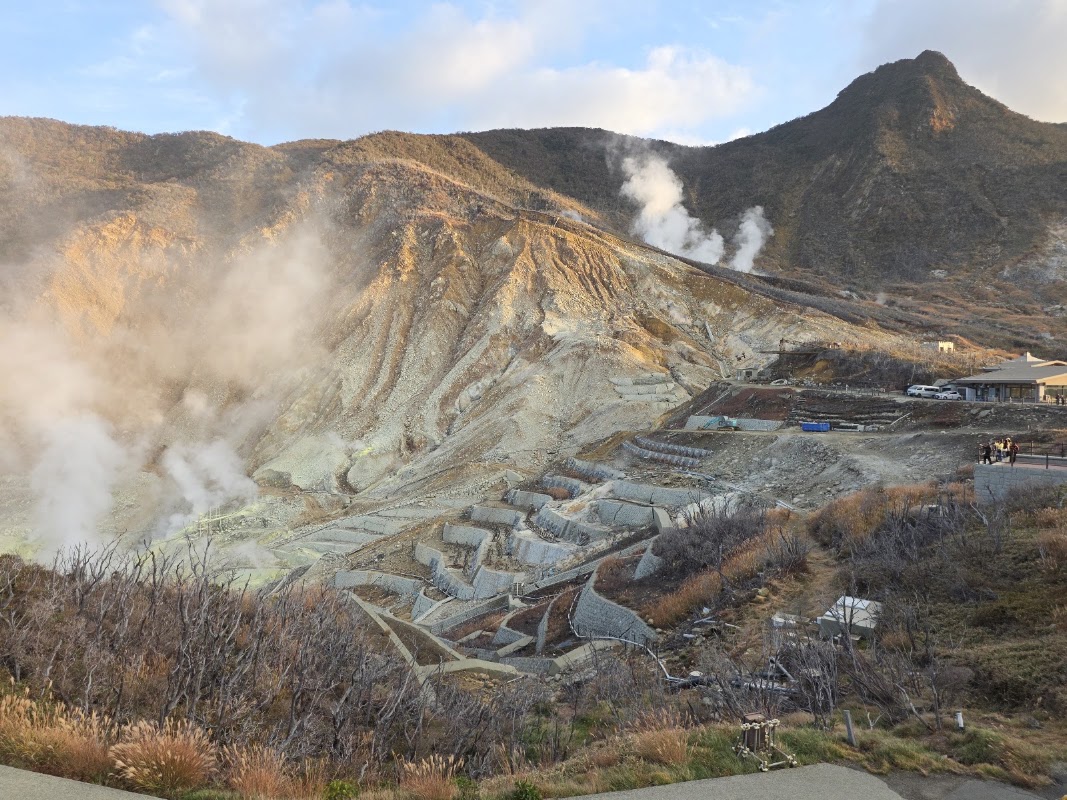
Owakudani allows you to feel the very breath of the Hakone volcano. This desolate area, formed by volcanic activity approximately 3,000 years ago, was feared and known as ‘Dai-Jigoku’ (Great Hell) until the Edo period. However, it holds a profound history, having been renamed ‘Owakudani’ in 1873 during Emperor Meiji’s visit.
Around the Information Center, you’ll be overwhelmed by the billowing white smoke rising from the reddish-brown mountain slopes and the intense sulfur smell. If you visit Owakudani, you absolutely must try the famous ‘Kuro-tamago’ (black eggs), created using a chemical reaction between geothermal heat and volcanic gases. It’s considered a lucky charm, said to extend one’s life by seven years per egg, and savoring them hot on the spot is the ultimate luxury.
As a point of caution, roads and parking lots leading to Owakudani often experience severe congestion during tourist seasons like weekends and holidays, with delays of over an hour to travel just 1km being common. If you wish to make efficient use of your time, it’s highly recommended to access Owakudani via the ‘Hakone Ropeway’ from Sounzan Station or Togendai Station, enjoying an aerial stroll along the way.
The Hakone Open-Air Museum
📍 Address: 1121 Ninotaira, Hakone, Ashigarashimo District, Kanagawa 250-0493, Japan
Opened in 1969, The Hakone Open-Air Museum is Japan’s first outdoor museum. Within its vast grounds of approximately 70,000 square meters, utilizing Hakone’s rich natural environment, about 120 masterpieces of modern and contemporary sculpture by artists such as Rodin and Henry Moore are permanently exhibited.
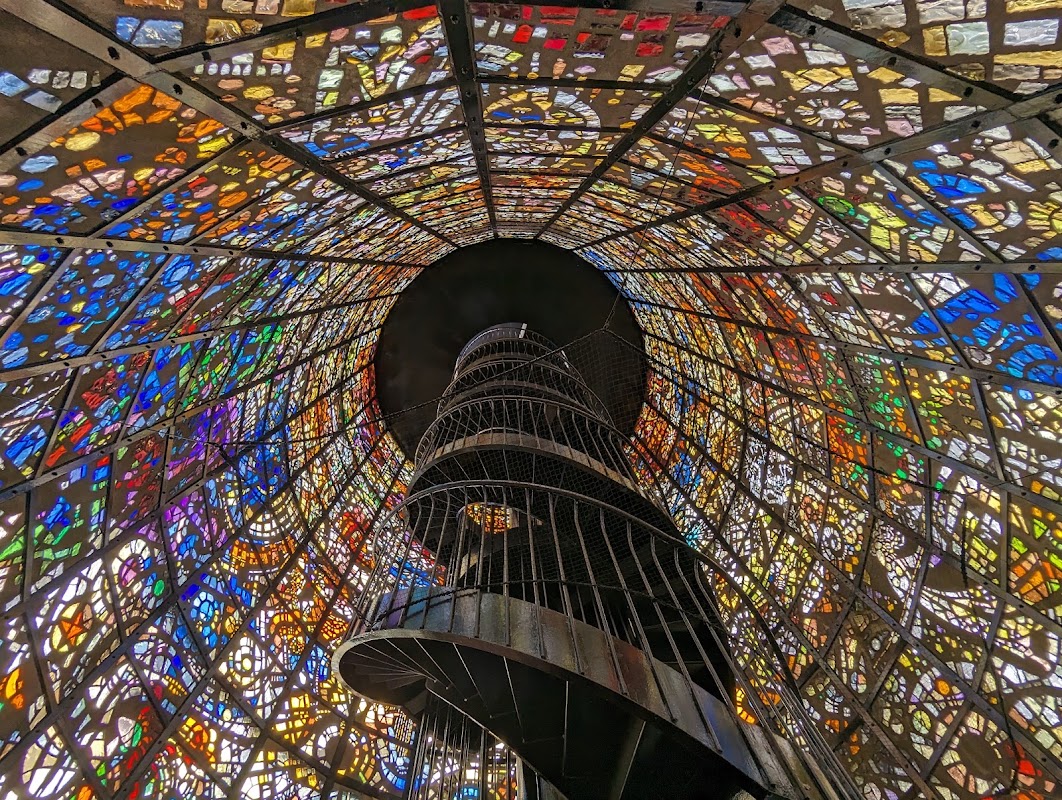
The greatest charm of this museum is the ability to intuitively enjoy art with all five senses, even without specialized knowledge. Visitors can interact with artworks while walking across spacious lawns, and there are many interactive art pieces that children can enter and play in, making it very popular with families. Also, the ‘Symphonic Sculpture’ towering at the back of the facility is a must-see. The interior of the tower is entirely covered in stained glass, and when sunlight shines through, the spiral staircase sparkles with breathtaking beauty, making it a popular photo spot on social media.
As the exhibition is primarily outdoors, it is essential to wear clothes that can be easily adjusted for temperature changes according to the season, and comfortable shoes such as sneakers. While sunny days are wonderful, on rainy or foggy days, the sculptures become moist, creating a mystical atmosphere in conjunction with the Hakone mountain scenery. Purchasing tickets online in advance is recommended for smooth entry.
Hakone Yuryo
📍 Address: 4 Tōnosawa, Hakone, Ashigarashimo District, Kanagawa 250-0315, Japan
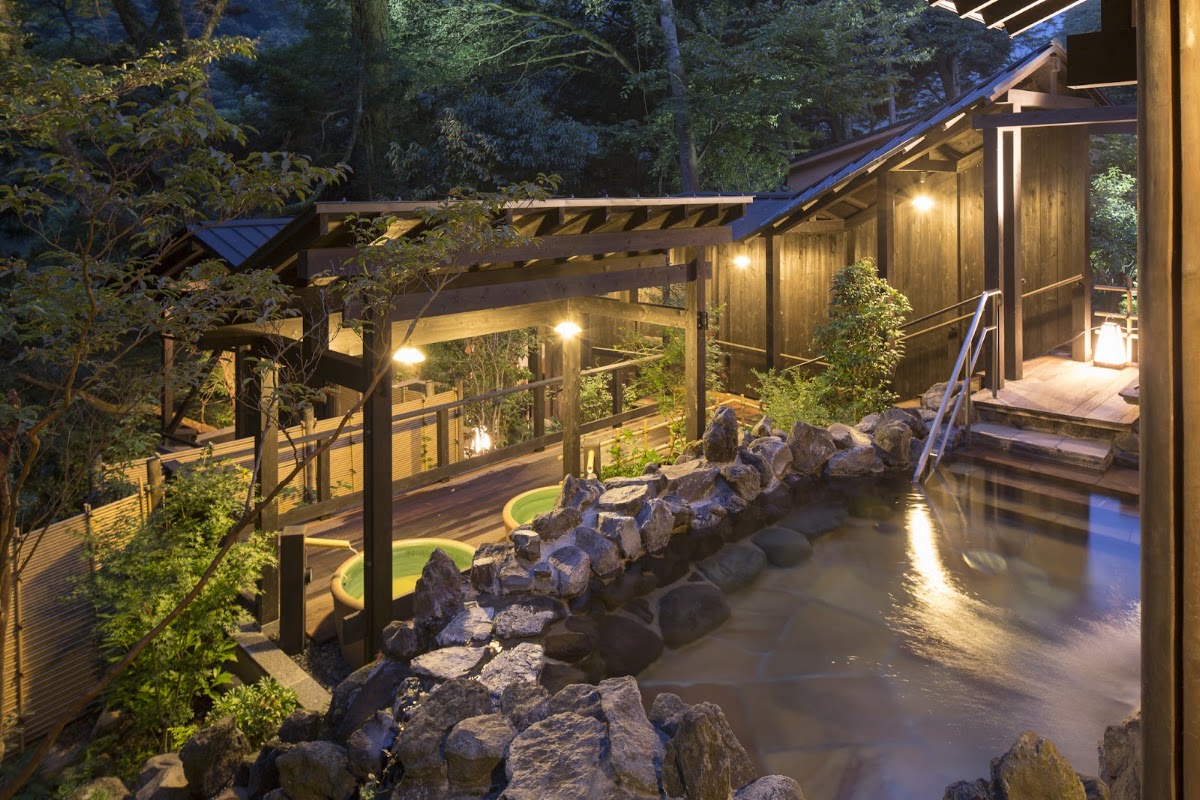
To conclude your Hakone sightseeing, we recommend Hakone Yuryo, a day-trip hot spring facility located in the Tōnosawa area. Operated by Odakyu Resorts, it opened in 2013 with the concept of a ‘Satoyama Onsen in a traditional Japanese house style.’ Its high accessibility, with a free shuttle bus running daily from Hakone-Yumoto Station, reaching the facility in about 3 minutes, is also a welcome convenience for travelers.
Inside, a traditional Japanese atmosphere reminiscent of olden times spreads throughout. The public baths are fully equipped with open-air baths overlooking lush nature, Shigaraki-ware baths, saunas, and cold baths. Furthermore, it boasts 19 private open-air baths, one of the largest numbers in the Tokyo metropolitan area, making it ideal for couples and families who wish to enjoy the hot springs freely in a private setting.
Additionally, at ‘Irori Saryo Hachiri’, the on-site restaurant, you can savor authentic irori (hearth) charcoal-grilled courses, robatayaki (fireside cooking), and rustic yet delicious satoyama dishes like curry soba. Visiting on weekdays from morning to early afternoon helps avoid crowds, and spending a relaxing time in the休息處 (relaxation area) after your bath is a moment of pure bliss.
Tips and Tricks to Enjoy Hakone 120%
Hakone is an area with numerous attractions, but it harbors pitfalls such as the unique topographical undulations and ‘traffic congestion’ due to its popularity as a tourist destination. To make the most of your limited travel time, smart planning of transportation is essential.
Especially on weekends and public holidays, the main roads around Hakone-Yumoto and leading to Owakudani become severely congested. Therefore, it is strongly recommended to use the ‘Hakone Free Pass’ instead of a private car, allowing smooth transfers between the Hakone Tozan Train, cable car, ropeway, and pirate ship. This pass is often more economical than purchasing individual tickets for each mode of transport, and most importantly, it allows you to tour famous spots according to your plan without worrying about traffic jams.
Furthermore, for popular scenic spots mentioned in this article, such as Hakone Shrine’s ‘Peace Gate’ and Owakudani, visiting early in the morning is the best option to avoid crowds. As inbound tour groups and buses begin to arrive towards midday, designing your itinerary to visit popular scenic spots first thing in the morning and then spend the afternoon relaxing at museums or hot springs will allow you to fully experience Hakone’s profound charm stress-free.


'%3E%3Cpath%20stroke='%23000'%20stroke-width='4'%20d='m-35-37-13%2020m5%203%2013-20m5%203-13%2020m63%2042%206-9m1-2%206-9m5%203-6%209m-1%202-6%209m5%203%206-9m1-2%206-9m-96%200%2013%2020m5-3-6-9m-1-2-6-9m5-3%2013%2020m63-42-6-9m-1-2-6-9m5-3%2013%2020m5-3-6-9m-1-2-6-9'/%3E%3Ccircle%20r='24'%20fill='%23cd2e3a'/%3E%3Cpath%20fill='%230047a0'%20d='M0%200a12%2012%200%201%201%2020%2013%2024%2024%200%201%201-40-26A12%2012%200%201%200%200%200'/%3E%3C/g%3E%3C/svg%3E)
'/%3E%3Cpath%20fill='%23b2b2b2'%20d='M241%20382q0%2016%2017%2026%2017%2011%2042%2011t42-11q16-11%2017-26V269H241'/%3E%3Cpath%20fill='%239f7e00'%20d='M241%20379q0%2014%208%2023%209%209%2021%209%2014%200%2021-9%209-9%209-23V269h-59'/%3E%3Cpath%20d='M241%20339v-70h59v110q0%2014-9%2023l-6%205v-68h-15v72q-8%200-14-4v-68zm59%2040c0%2022%2015%2032%2029%2032%2021%200%2030-18%2030-32v-40h-59'/%3E%3Cpath%20fill='%239f7e00'%20d='M266%20277v5h2v12h-3v-5h2v-5h-9v5h2v5h-4v9h3v18h-5v10h34v-10h-5v-18h3v-9h-4v-5h2v-5h-9v5h2v5h-3v-12h2v-5zm42%20101q0%2010%206%2017%206%206%2015%207%2010-1%2016-7%206-7%206-17v-29h-43'/%3E%3Ccircle%20fill='%230044ad'%20cx='329.5'%20cy='372'%20r='6'/%3E%3Cellipse%20fill='%230044ad'%20cx='300'%20cy='340'%20rx='16'%20ry='21'/%3E%3C/svg%3E)


