

Kiyomizu-dera
📍 Address: 1-294 Kiyomizu, Higashiyama Ward, Kyoto, 605-0862 Japan
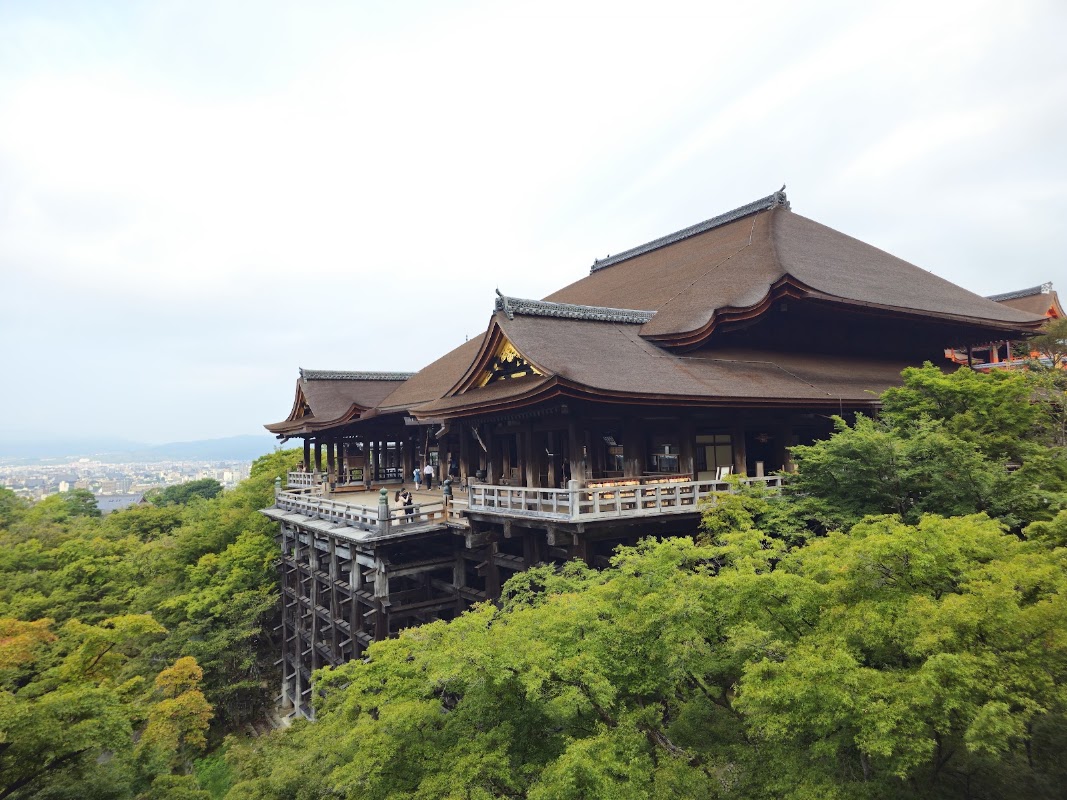
Kiyomizu-dera, one of Kyoto’s leading tourist attractions, is renowned for the idiom ‘to jump off the stage of Kiyomizu’ (meaning to take a leap of faith). It is said to have been founded in 778 (Hoki 9) by the monk Enchin after receiving a divine oracle in a dream, boasting over 1200 years of history as a World Cultural Heritage site. In December 2020, the main hall’s roof re-thatching and stage floorboard replacement were completed, making its solemn beauty shine even brighter.
This classic spot is bustling daily with students on school trips and international tourists, but the greatest secret to deeply enjoying it lies in the ‘visiting time’. Kiyomizu-dera opens as early as 6 AM, and the best time is between 6 AM and 7 AM, when there are only a sparse number of Western individual travelers. The experience of having the magnificent view from the National Treasure Main Hall and Kiyomizu-no-Butai (Kiyomizu Stage) almost to yourself, enveloped in the crisp early morning air with birdsong as background music, is truly exceptional.
Furthermore, the admission fee is an affordable 500 yen for adults (cash only). The temple grounds largely follow a one-way route, so be sure to take your time exploring sights like Otowa Waterfall (where you choose one of three streams to pray for blessings) without going against the flow. After your visit, the classic route involves enjoying souvenir shopping and trying matcha sweets along ‘Sannenzaka’ (Sanneizaka Slope), the stone-paved path leading from Kiyomizu-dera.
Kinkaku-ji
📍 Address: 1 Kinkakuji-cho, Kita Ward, Kyoto, 603-8361 Japan
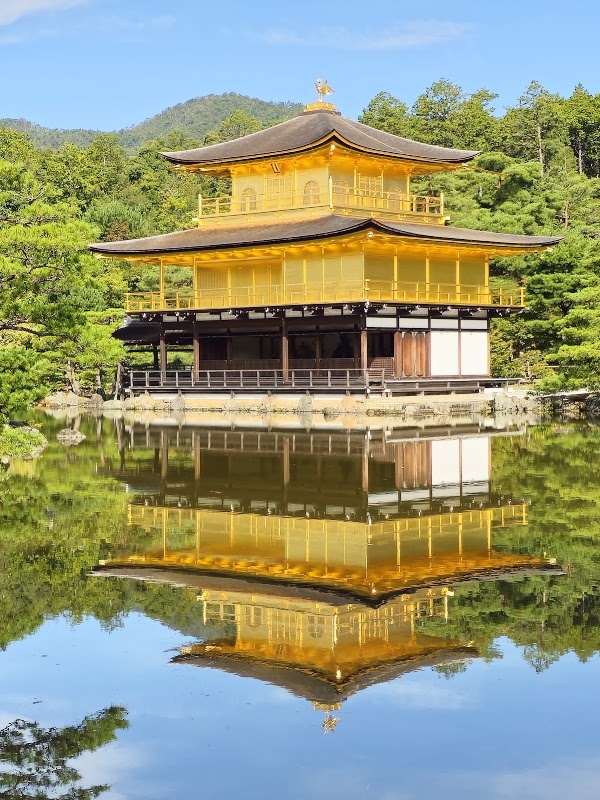
Kinkaku-ji, symbolizing the brilliant ‘Kitayama Culture’, is formally known as ‘Rokuon-ji’. Its origins trace back to 1397 when Ashikaga Yoshimitsu, the 3rd shogun of the Muromachi Shogunate, acquired the Sai’onji family’s villa and built the Hokuzan-dono, embodying the Pure Land. The Shariden (Golden Pavilion), radiating an overwhelming presence, showcases a marvelous harmony of three distinct architectural styles: Shinden-zukuri on the first story, Buke-zukuri on the second, and Zen Buddhist temple style on the third, earning it high acclaim worldwide.
The greatest highlight is Kyoko-chi Pond (Mirror Pond), which stretches out in front of the Golden Pavilion. The ‘Inverted Kinkaku’ – the golden Shariden vividly reflected in this pond dotted with islands of various sizes – is breathtakingly beautiful. It changes its appearance with the seasons and weather; the contrast with the water surface on a clear day is magnificent, as is its magical sight in winter when covered in snow.
The admission fee for adults is 500 yen, and you receive an amulet upon entry, which is a nice touch. The temple grounds feature well-maintained pathways, allowing you to view the Golden Pavilion from various angles across the pond, making you want to stop and admire it repeatedly. Photography spots tend to get crowded during the day, so visiting right after opening at 9 AM or in the late afternoon when the setting sun makes the gold shine brighter is highly recommended.
Ginkaku-ji
📍 Address: 2 Ginkakuji-cho, Sakyo Ward, Kyoto, 606-8402 Japan
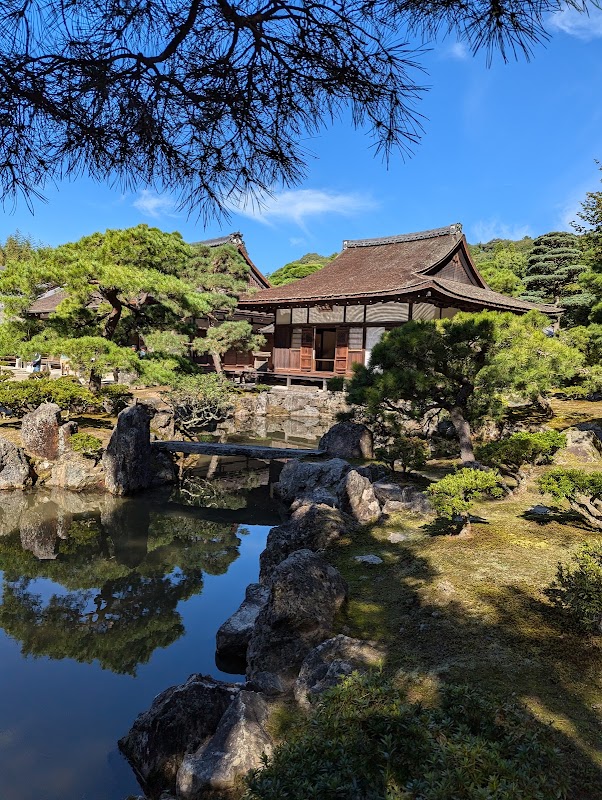
In contrast to the dazzling ‘gold’, Ginkaku-ji (formally Jisho-ji) perfected the quiet aesthetic of ‘wabi-sabi’. In 1482, Ashikaga Yoshimasa, the 8th shogun of the Muromachi Shogunate, built it as his retirement villa, modeled after his grandfather’s Kinkaku-ji. Ginkaku-ji was the birthplace of ‘Higashiyama Culture’, conveying the simple yet elegant beauty of traditional Japan to the present day.
It’s often asked, ‘Why isn’t it covered in silver?’ In fact, it’s known that the building’s interior and exterior were originally coated in ‘black lacquer’. A sample recreating the original black lacquer is exhibited on the premises, and one can’t help but feel the profound history in the muted luster of the black lacquer. Lacking lavish decoration, the refreshing beauty of the wooden architecture and nature merging into one is deeply moving.
Not to be missed is the exquisite garden beauty created by ‘Ginsadan’ (Sea of Silver Sand), which uses white sand to express ripple patterns, and the tall, conical mound of sand known as ‘Kogetsudai’ (Moon-Viewing Platform). The panoramic view of Ginkaku and Kyoto city from the elevated walking path is also superb. Compared to Kinkaku-ji, there are fewer tourists, making it a spot for adults to leisurely immerse themselves in its unique world at their own pace. It’s also the starting point of the Philosopher’s Path, making it ideal for a scenic stroll.
Arashiyama
📍 Address: Genrokuzan-cho, Arashiyama, Ukyo Ward, Kyoto, 616-0007 Japan
Located on the west side of Kyoto, Arashiyama is a scenic area cherished by emperors and nobles as a villa retreat since the Heian period. The view of the elegant Togetsukyo Bridge, Arashiyama’s symbol, spanning the Katsura River, with the surrounding mountains dyed in red and yellow as borrowed scenery, has captivated people’s hearts throughout the ages.
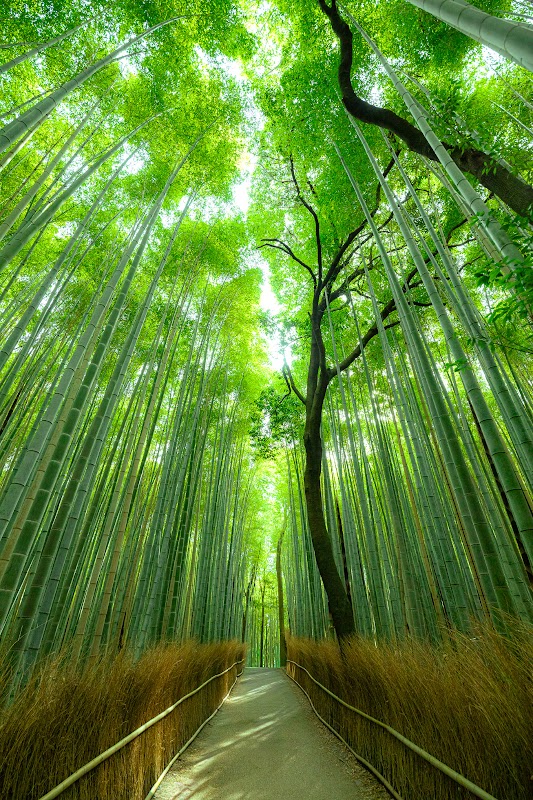
A highlight of Arashiyama sightseeing is the ‘Bamboo Grove Path’, which stretches from Nonomiya Shrine through Tenryu-ji Temple’s North Gate. This area was once covered by an extensive bamboo forest and even appears in ‘The Tale of Genji’, making it historically rich. As sunlight filters through the tall bamboo towering on both sides, stepping onto the path offers an ethereal experience where the air suddenly becomes cool.
The area boasts endless sights, including the Sogenchi Garden of Tenryu-ji Temple (a World Heritage site) and numerous shops where you can enjoy delicious dango (skewered dumplings) and other snacks. While it’s an area where the grandeur of nature and depth of history are perfectly fused, it’s also a popular tourist destination, constantly bustling with many people. For those who wish to walk quietly through the bamboo grove, visiting in the early morning is essential, or for a more experienced way to enjoy it, try visiting in winter with boots to admire the snowscape.
Nanzen-ji
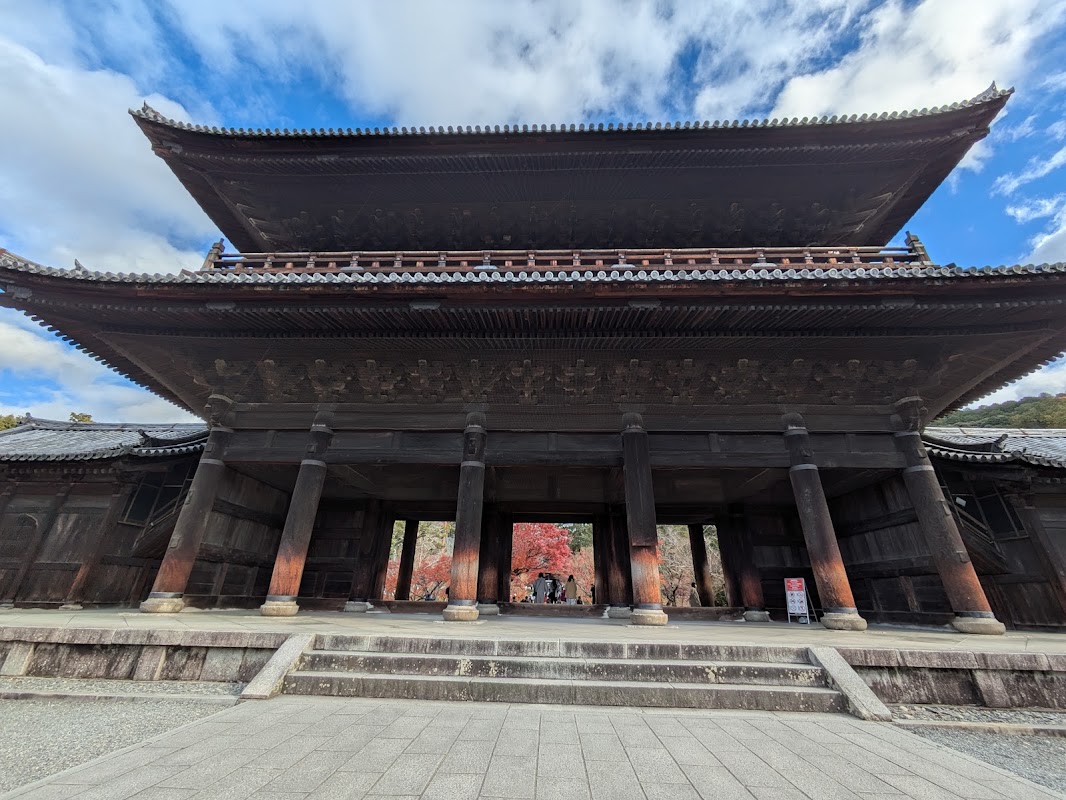
📍 Address: 86 Nanzenji Fukuchi-cho, Sakyo Ward, Kyoto, 606-8435 Japan
Located in the Higashiyama area, Nanzen-ji is Japan’s first Imperial Zen Temple, founded in 1291 when Emperor Kameyama converted his detached palace into a Zen temple. It boasts the highest rank in Zen Buddhism. Visitors are captivated by its overwhelming scale of wooden architecture, including the enormous ‘Sanmon Gate’, famous as the stage where Ishikawa Goemon dramatically declared, ‘What a magnificent view! What a magnificent view!’, and the National Treasure ‘Hojo’ (Abbot’s Quarters).
The most unique and profound highlight of this temple is the ‘Suirokaku’ (Aqueduct), which quietly stands in the back of the temple grounds. This brick-built arched aqueduct bridge was constructed in 1888 (Meiji 21) under the design of Sakuro Tanabe to transport water from Lake Biwa to Kyoto city. Western-style architecture, reminiscent of ancient Roman aqueducts, suddenly appears within the Japanese space of a Zen temple, harmonizing mysteriously with the surrounding nature.
The autumn foliage season is particularly special. The scene of blazing red and yellow maple leaves against the nostalgic red bricks offers a three-dimensional feel and an exotic atmosphere that cannot be fully conveyed through a screen. As it’s slightly removed from the city center, it’s a spot for adults to enjoy a stroll in a relatively calm atmosphere, where the weight of history and modern heritage intersect.
Local Tips for Smart Kyoto Sightseeing
To comfortably explore the historic ancient capital, advance preparation and knowing how to navigate are crucial. Especially in recent years, with a rapid increase in domestic and international travelers, how you avoid crowds directly impacts your satisfaction.
Firstly, regarding scheduling, visiting popular spots (such as Kiyomizu-dera and the Bamboo Grove Path) in the ‘early morning’ is a golden rule. Simply starting your day between 6 AM and 8 AM, before most tourists begin to move, will make photography smoother and allow you to fully appreciate Kyoto’s inherent ‘beauty of tranquility’. Conversely, aiming for evening illuminations and special night viewings is also highly recommended.
For transportation, relying solely on city buses risks encountering traffic jams and overcrowded vehicles. Utilizing a ‘Subway and Bus One-Day Pass’, which combines the Kyoto City Subway and buses, and planning your route to cover long distances by subway and then approaching the nearest station by bus or on foot, can significantly reduce time loss (information and tickets are available at Kyoto Station Tourist Information Center ‘Kyo Navi’).
Finally, attire and footwear. Kyoto has a unique basin climate, with muggy and humid summers, and bitterly cold winters known as ‘sokobie’ (chilling from the bottom). Besides clothing that allows for easy temperature adjustment according to the season, remember that temple grounds often have many gravel paths, stone pavements, and slopes (like Sannenzaka), so absolutely choose comfortable walking shoes like sneakers.


'%3E%3Cpath%20stroke='%23000'%20stroke-width='4'%20d='m-35-37-13%2020m5%203%2013-20m5%203-13%2020m63%2042%206-9m1-2%206-9m5%203-6%209m-1%202-6%209m5%203%206-9m1-2%206-9m-96%200%2013%2020m5-3-6-9m-1-2-6-9m5-3%2013%2020m63-42-6-9m-1-2-6-9m5-3%2013%2020m5-3-6-9m-1-2-6-9'/%3E%3Ccircle%20r='24'%20fill='%23cd2e3a'/%3E%3Cpath%20fill='%230047a0'%20d='M0%200a12%2012%200%201%201%2020%2013%2024%2024%200%201%201-40-26A12%2012%200%201%200%200%200'/%3E%3C/g%3E%3C/svg%3E)
'/%3E%3Cpath%20fill='%23b2b2b2'%20d='M241%20382q0%2016%2017%2026%2017%2011%2042%2011t42-11q16-11%2017-26V269H241'/%3E%3Cpath%20fill='%239f7e00'%20d='M241%20379q0%2014%208%2023%209%209%2021%209%2014%200%2021-9%209-9%209-23V269h-59'/%3E%3Cpath%20d='M241%20339v-70h59v110q0%2014-9%2023l-6%205v-68h-15v72q-8%200-14-4v-68zm59%2040c0%2022%2015%2032%2029%2032%2021%200%2030-18%2030-32v-40h-59'/%3E%3Cpath%20fill='%239f7e00'%20d='M266%20277v5h2v12h-3v-5h2v-5h-9v5h2v5h-4v9h3v18h-5v10h34v-10h-5v-18h3v-9h-4v-5h2v-5h-9v5h2v5h-3v-12h2v-5zm42%20101q0%2010%206%2017%206%206%2015%207%2010-1%2016-7%206-7%206-17v-29h-43'/%3E%3Ccircle%20fill='%230044ad'%20cx='329.5'%20cy='372'%20r='6'/%3E%3Cellipse%20fill='%230044ad'%20cx='300'%20cy='340'%20rx='16'%20ry='21'/%3E%3C/svg%3E)


