

Mezquita-Cathedral
📍 Address: C. Cardenal Herrero, º 1, Centro, 14003 Córdoba, Spain
The Mezquita-Cathedral is the highlight of Cordoba tourism, a unique architectural marvel worldwide where Islamic and Christian cultures beautifully merge. Its fascinating history began in the 8th century as a mosque during the Umayyad Caliphate and was later converted into a cathedral during the time of the Catholic monarchs. Stepping inside, you’re enveloped in a wondrous sensation, as if lost in another world, as you encounter the ‘Forest of Columns’—a vast expanse of arched pillars adorned with beautiful red brick and limestone stripes.
Travelers should note that opening hours vary by day and that it can get very crowded depending on the time. On holidays, it often opens at 8:30 AM, and visiting right after opening, amidst the calm, is highly recommended. Within an hour, it becomes heavily congested with tour groups, so make sure to arrive early. Additionally, the bell tower (former minaret), viewed from the orange tree-filled courtyard, is an excellent photo spot, but tickets to climb the tower are limited and require advance booking. It’s often fully booked on the day, and even a slight delay in your entry time can result in refusal, making early reservations and strict time management essential.
Roman Bridge of Cordoba
📍 Address: Av. del Alcázar, s/n, Sur, 14009 Córdoba, Spain
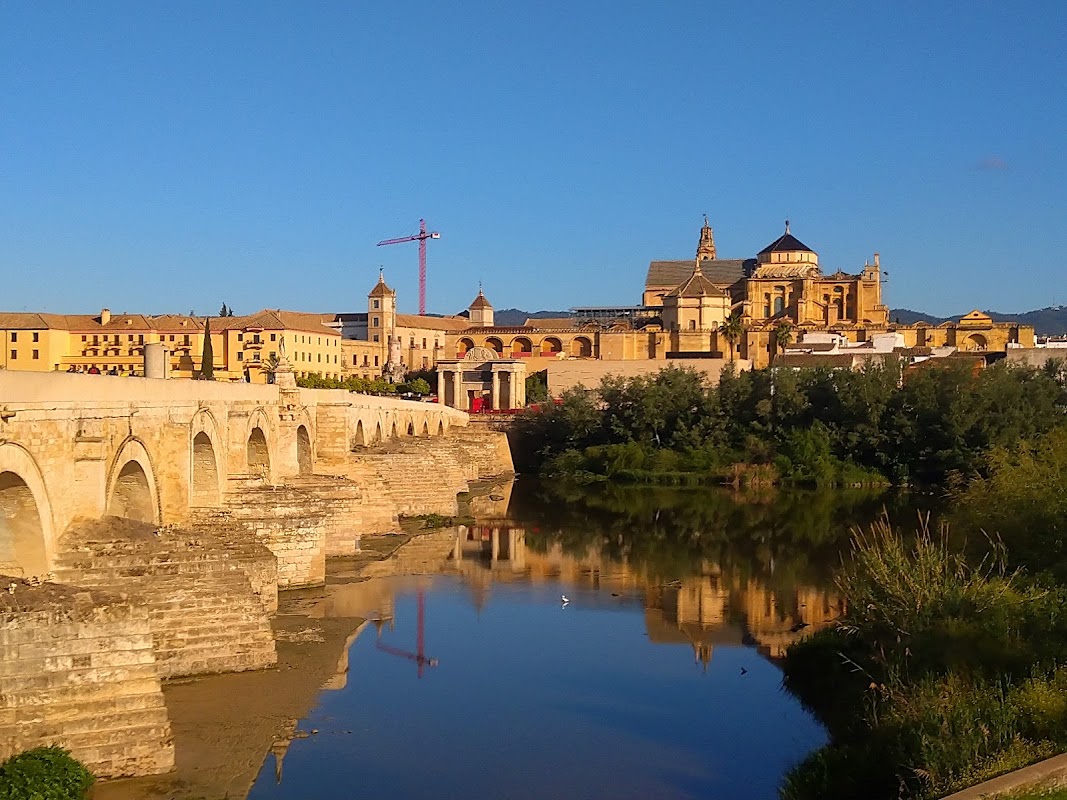
Spanning over 200 meters across the Guadalquivir River, from the Puerta del Puente in the old town to the Calahorra Tower on the opposite bank, stands the historic ‘Roman Bridge’. As its name suggests, its foundations were laid in the Roman era before the Common Era, and after numerous renovations, it has taken on its current sturdy appearance. At the center of the bridge is a statue of ‘Saint Raphael’, revered as Cordoba’s guardian angel, illuminated by candles offered by locals.
While the majestic view of crossing the bridge with the Mezquita behind you during the day is splendid, a visit at night is highly recommended for travelers. The enchanting sight of the beautifully lit Roman Bridge and Mezquita emerging from the darkness is a privilege only those staying overnight in Cordoba can truly savor. However, this bridge, a popular spot for tourists, is also a target for pickpockets. Even souvenir shop staff repeatedly warn visitors, so always hold your bag containing your wallet and smartphone in front of your body, and take thorough precautions against theft, even when admiring the scenery.
Calahorra Tower
📍 Address: Puente Romano, s/n, Sur, 14009 Córdoba, Spain
Standing guard at the far end of the Roman Bridge is the ‘Calahorra Tower’, which served as a fortress during the Islamic era. It now houses the ‘Live Museum of Al-Andalus’, a historical museum where you can delve deep into the lifestyle of Cordoba when Islamic, Christian, and Jewish cultures coexisted and arts and sciences flourished. Admission is 4.5 euros, and it’s highly recommended to take your time exploring with the comprehensive audio guide.
The biggest highlight of this tower is the panoramic view from its rooftop. From here, you can take in a postcard-perfect scene: the Roman Bridge spreading out below, the Mezquita majestically presiding beyond it, and the old town of Cordoba. However, Cordoba in summer experiences very high temperatures, and there is little shade inside the tower or on the rooftop, so be prepared to get sweaty. Be sure to bring a hat and drinking water to enjoy the spectacular view while taking precautions against heatstroke.
Medina Azahara (Madinat al-Zahra)
📍 Address: Ctra. Palma del Río, km 5, 5, 14005 Córdoba, Spain
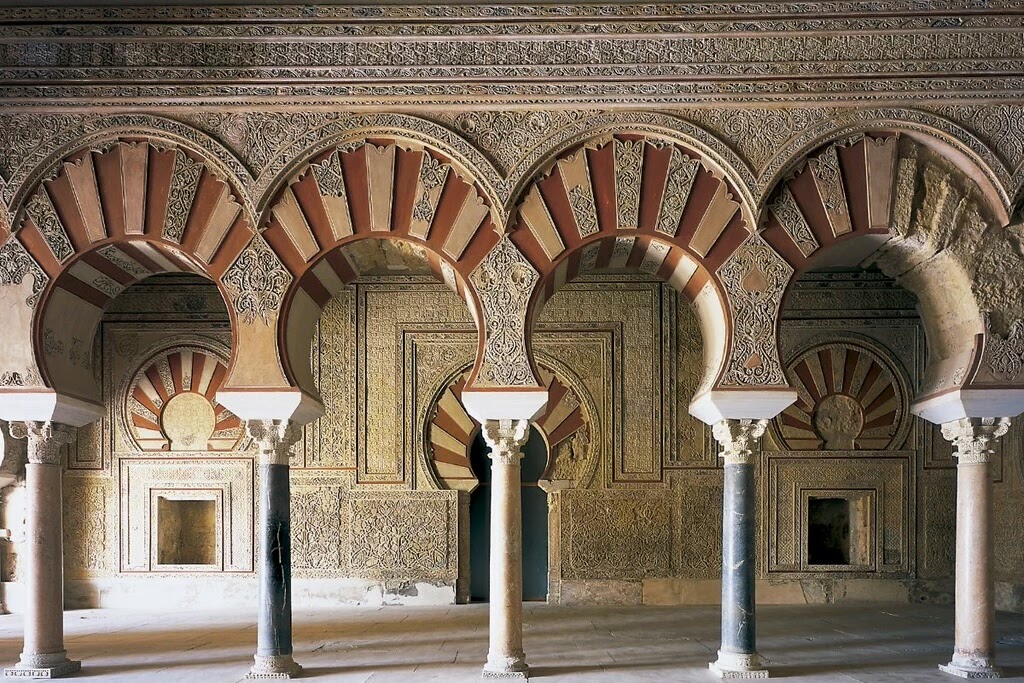
Approximately 7km west of central Cordoba, the ‘Medina Azahara (Madinat al-Zahra)’ was newly inscribed as a World Heritage site in 2018. It is the ruins of a vast palace city built in the mid-10th century by Abd al-Rahman III of the Umayyad Caliphate, conveying the splendor of Islamic civilization in Andalusia. Although located on the outskirts, it’s easy to enjoy a half-day trip by utilizing direct buses from the city or guided tours.
The starting point for your visit is a modern museum at the foot of the site. After purchasing tickets there, you take a dedicated shuttle bus down to the ruins area, a unique system. The extensive ruins, without prior knowledge, might just look like piles of stones, so it’s best to use virtual guides or join a tour departing from the city to imagine the palace’s glorious appearance in its prime. You’ll be walking a long way on unpaved paths, so be sure to wear comfortable walking shoes. The classic route is to depart in the cooler morning hours and take 2-3 hours for a leisurely stroll.
Tips for Making the Most of Your Cordoba Visit (120% Enjoyment)
Cordoba’s main attractions—the Mezquita, Roman Bridge, and Calahorra Tower—are concentrated within the compact old town area, making them easily explorable on foot. While many travelers visit as a day trip, Cordoba’s true charm emerges after sunset. Due to the intense daytime sun, it’s advisable to complete excursions to out-of-town sites like Medina Azahara in the morning. In the hot afternoon, locals often take a break at a bar, savoring the famous ‘oxtail stew (Rabo de Toro)’.
As dusk settles, the old town’s narrow streets become enveloped in a romantic atmosphere, and the illumination around the Roman Bridge is breathtakingly beautiful. We highly recommend spending at least one night in Cordoba to fully experience both the vibrant historical exploration by day and the tranquil, magical strolls by night.


'%3E%3Cpath%20stroke='%23000'%20stroke-width='4'%20d='m-35-37-13%2020m5%203%2013-20m5%203-13%2020m63%2042%206-9m1-2%206-9m5%203-6%209m-1%202-6%209m5%203%206-9m1-2%206-9m-96%200%2013%2020m5-3-6-9m-1-2-6-9m5-3%2013%2020m63-42-6-9m-1-2-6-9m5-3%2013%2020m5-3-6-9m-1-2-6-9'/%3E%3Ccircle%20r='24'%20fill='%23cd2e3a'/%3E%3Cpath%20fill='%230047a0'%20d='M0%200a12%2012%200%201%201%2020%2013%2024%2024%200%201%201-40-26A12%2012%200%201%200%200%200'/%3E%3C/g%3E%3C/svg%3E)
'/%3E%3Cpath%20fill='%23b2b2b2'%20d='M241%20382q0%2016%2017%2026%2017%2011%2042%2011t42-11q16-11%2017-26V269H241'/%3E%3Cpath%20fill='%239f7e00'%20d='M241%20379q0%2014%208%2023%209%209%2021%209%2014%200%2021-9%209-9%209-23V269h-59'/%3E%3Cpath%20d='M241%20339v-70h59v110q0%2014-9%2023l-6%205v-68h-15v72q-8%200-14-4v-68zm59%2040c0%2022%2015%2032%2029%2032%2021%200%2030-18%2030-32v-40h-59'/%3E%3Cpath%20fill='%239f7e00'%20d='M266%20277v5h2v12h-3v-5h2v-5h-9v5h2v5h-4v9h3v18h-5v10h34v-10h-5v-18h3v-9h-4v-5h2v-5h-9v5h2v5h-3v-12h2v-5zm42%20101q0%2010%206%2017%206%206%2015%207%2010-1%2016-7%206-7%206-17v-29h-43'/%3E%3Ccircle%20fill='%230044ad'%20cx='329.5'%20cy='372'%20r='6'/%3E%3Cellipse%20fill='%230044ad'%20cx='300'%20cy='340'%20rx='16'%20ry='21'/%3E%3C/svg%3E)


