

Beyond the Beach Resorts: Discovering the ‘Real Goa’
When you think of Goa in southwestern India, beautiful beaches, vibrant nightlife, and hippie culture might come to mind. However, Goa’s true charm extends far beyond that. As you venture inland, a ‘deeper Goa’ emerges, revealing its unique history as a former Portuguese territory where East and West cultures merged, and the overwhelming natural beauty crafted by the Western Ghats.
This time, we focus on the ‘local passion’ and ‘practical tips’ that aren’t typically found in ordinary guidebooks. We introduce 5 carefully selected attractions in Goa that every traveler should definitely visit.
Aguada Fort
📍 Address: Fort Aguada Rd, Aguada Fort Area, Candolim, Goa 403515, India
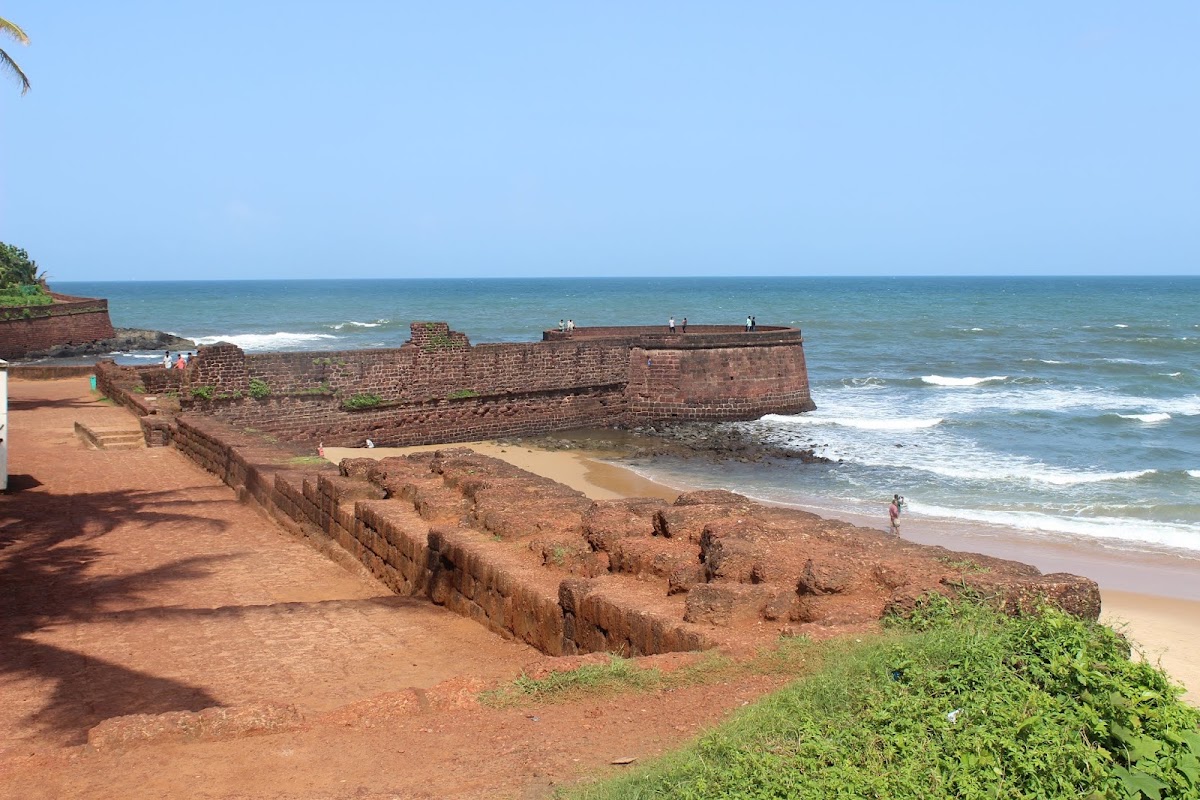
Perched on a peninsula overlooking the Arabian Sea, Aguada Fort is a magnificent fortress built by the Portuguese in 1612. It was constructed to defend against maritime attacks from the Dutch and the Maratha Empire, and also served as a freshwater supply point. Within its grounds stands Asia’s oldest four-story lighthouse, built in 1864, captivating not only history enthusiasts but also many travelers.
The greatest charm of this place lies in the powerful waves crashing against the rocky shores and the breathtaking panoramic views of the horizon. The beauty at sunset is especially exceptional; the reddish-brown laterite ramparts, bathed in the evening sun, are a must-see. We recommend arriving before dusk when the daytime heat subsides, and leisurely waiting for the sunset while enjoying the sea breeze.
The entrance fee for foreigners is 300 rupees (Indian nationals are free or charged differently), and there’s an additional parking fee (approx. 20 rupees) if you visit by car or motorbike. Although it’s situated on a slightly less accessible hill, the dynamic landscape created by the fort walls and the sea makes it well worth the journey.
Dudhsagar Falls
📍 Address: Sonawli, Goa 403410, India
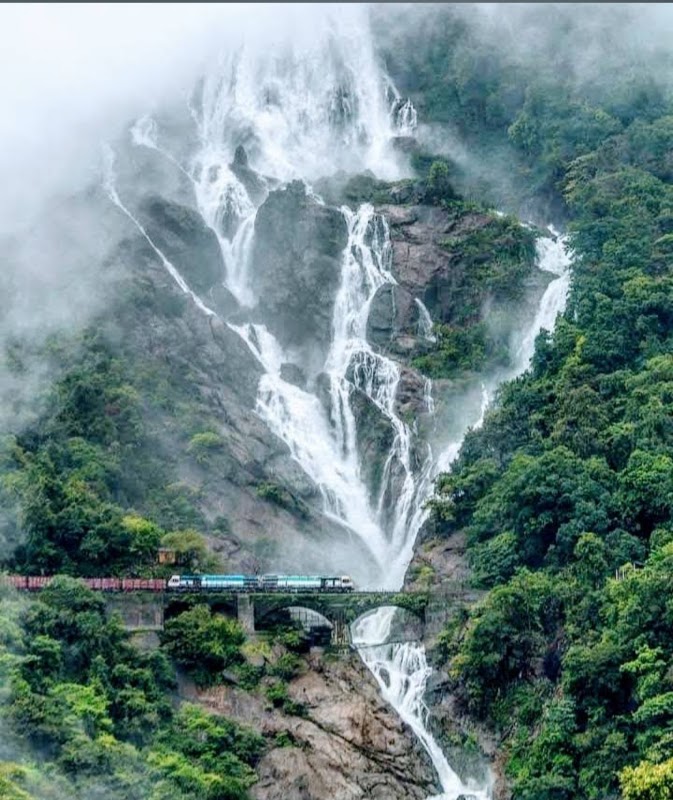
Dudhsagar Falls, meaning ‘Sea of Milk,’ is located within Bhagwan Mahaveer Sanctuary and Mollem National Park, on the border of Goa and Karnataka. The sight of water cascading down over 300m in four tiers is truly a force of nature. Known as a filming location for the blockbuster Bollywood movie ‘Chennai Express,’ the scene of a train passing over a bridge mid-waterfall has become an aspiration for travelers worldwide.
Accessing this place is truly an ‘expedition.’ You’ll need to transfer to a jeep safari from near Kulem station, the closest point, and traverse bumpy, unpaved jungle roads for about 45 minutes. The jeep fee is approximately 600 rupees per person, plus a forest entry fee of about 259 rupees. After disembarking from the safari, you’ll trek over rocky terrain for about 15 minutes to reach the base of the falls.
A crucial real-world tip for visiting is to ‘go as early in the morning as possible.’ This is because jeep waiting times can become long due to entry restrictions during the day. Furthermore, while the usual free time given by drivers at the falls is 90 minutes (±10 minutes), there’s a trick to extend your time: negotiate directly with the driver on-site (by adding a tip of around 300-500 rupees) if you want to admire the magnificent view for longer or capture the exact moment a train passes.
Se Cathedral
📍 Address: Old Goa, Goa 403402, India
Nestled in Old Goa, the former center of Goa, Se Cathedral is Asia’s largest Catholic church. It was completed in 1640, taking approximately 80 years, to commemorate the day in 1510 when the Portuguese army seized Goa from the Muslims (the Feast Day of St. Catherine of Alexandria). Its exterior, a fusion of Portuguese Gothic and Manueline styles, and its vast 250-foot nave, evoke breathtaking solemnity the moment you step inside. The tower houses the ‘Golden Bell,’ Goa’s largest and one of the world’s most beautiful-sounding bells.
A crucial piece of in-depth information for travelers is its connection to St. Francis Xavier, who introduced Christianity to Japan. Normally, Xavier’s relics are enshrined in the adjacent Basilica of Bom Jesus. However, once every ten years, during a special 40-day exposition, the relics are moved to Se Cathedral for a grand mass and veneration. The most recent exposition was from 2024-2025, with the next one scheduled for ‘December 2034.’ During this period, pilgrims flock from around the world, leading to long queues for veneration, making it essential to visit during the early morning mass (around 07:30).
Access from Vasco da Gama Airport is about 50 minutes by pre-paid taxi (around 1000-1100 rupees). A word of caution: it’s difficult to hail a taxi from Old Goa back to Panaji city or the various beaches. For peace of mind, arrange for your inbound driver to wait, or ask a local guide or facility staff to arrange a pick-up.
Arvalem Caves
📍 Address: H23F+267, Ladreshwar Colony, Harvalem, Goa 403505, India
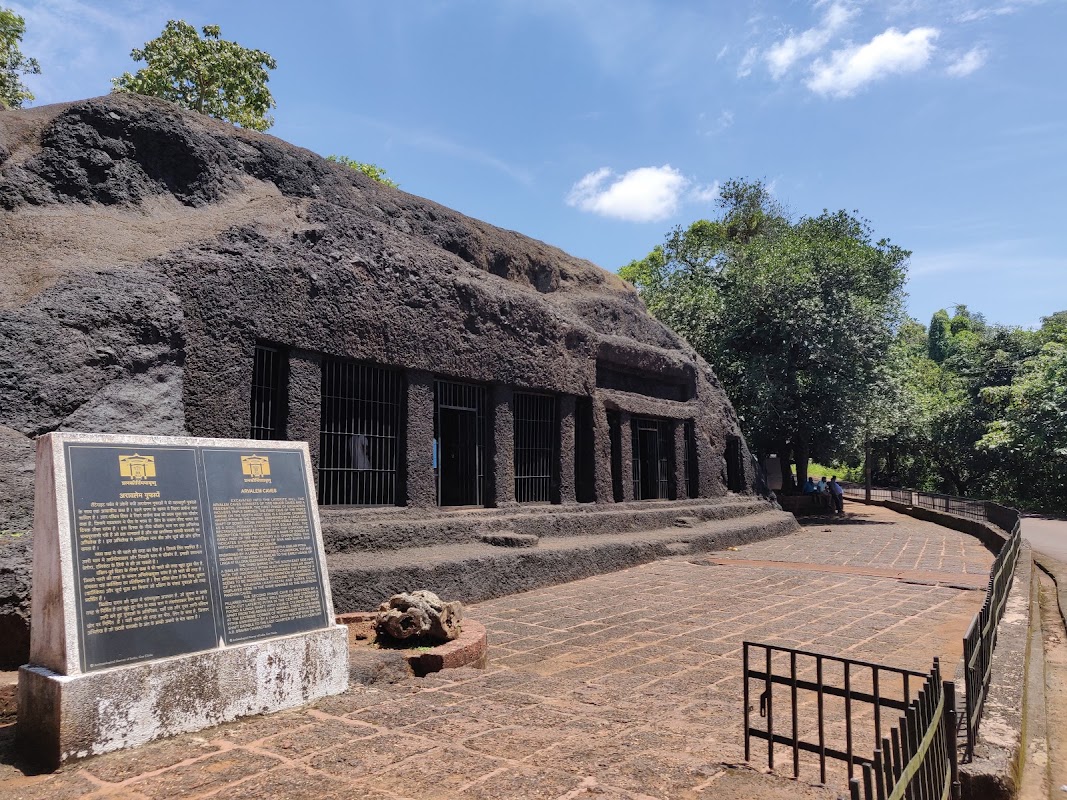
Hidden along a quiet village road in the inland region of North Goa, the Arvalem Caves are ancient rock-cut temples carved out of hard laterite hills around the 6th century. Locally known as the ‘Pandava Caves,’ legend has it that the five Pandava brothers from the Hindu epic ‘Mahabharata’ stayed here as a hideout during their exile.
The interior is divided into five sections, with three shrines housing Shiva lingams in an early style, similar to those found in the Ellora Caves, and inscribed with ancient scripts. There is also a theory that it was used as a training ground for Buddhist monks. The simple, minimalist space, devoid of flashy decorations, paradoxically evokes a deep sense of historical mystery.
Admission is free. Due to the nature of the temple, you’ll walk barefoot inside, so if you’re concerned about your soles, it’s a good idea to bring wet wipes. A picturesque waterfall and lake are also just a few meters walk from the caves, where you can also see the remnants of an old, formerly operational hydroelectric power station. This deep-dive spot, where history and nature merge, is perfect for a 1 to 1.5-hour tour from North Goa’s beach areas by rental bike or bicycle.
Corjuem Fort
📍 Address: Off, Road, Corjuem, Aldona, Goa 403508, India
Finally, we introduce Corjuem Fort, highly recommended for history buffs and those who love ruins and exploration in Goa. Located on Corjuem Island, a river island in the Aldona region, it’s a rare inland fort in Goa, designed for defending the Mapusa River rather than the coastline. Rebuilt by the Portuguese in 1705, it once also served as a military school.
This fort was long left abandoned and closed as a ruin. However, a major conservation and restoration project by the Archaeological Survey of India (ASI) has been underway in recent years. With meticulous attention to detail, including sourcing laterite stones of the same specifications as the original from neighboring states, restoration has progressed, and partial access was finally reopened in early 2025. Video recording is prohibited during restoration, but photography is permitted. At the entrance gate, guards require visitors to fill in their identification (e.g., passport), and closing time is strictly 5 PM, so please be mindful of your visiting hours.
As it hasn’t been heavily developed for tourism, there are no shops or similar amenities. However, standing atop the ramparts with cannon embrasures at the four corners, you can overlook the babbling river, lush green paddy fields, and local villages. It offers an ineffable sense of nostalgia where remnants of the colonial era intersect with the tranquil daily life of Goa.
[Summary] Tips and Strategies for Enjoying Your Goa Trip to the Fullest
Goa is vast, and the ideal base for your stay varies depending on your purpose: North Goa’s lively beach areas, the historical district of Old Goa, and the natural areas of South Goa and the interior.
A key point to note is ‘transportation.’ Common ride-hailing apps like Uber or Ola are unavailable (or extremely difficult to use) in Goa. Therefore, the basic strategy is to download the government-approved taxi app ‘GoaMiles’ in advance or arrange for a rental motorbike (from around 300 rupees per day) at your accommodation. However, for destinations like Dudhsagar Falls in mountainous areas, the journey can be arduous, so it’s more reliable to use a dedicated tour or a chartered car.
The time of day you visit is also important. For forts (like Aguada Fort), sunset is best to avoid the strong sun, while religious sites like cathedrals reveal their most beautiful expressions during the serene early morning hours when mass is held. A trip to Goa would be a waste if it only revolved around the sea. Please use this article as a guide and embark on a local exploration to experience Goa’s profound history and magnificent nature.


'%3E%3Cpath%20stroke='%23000'%20stroke-width='4'%20d='m-35-37-13%2020m5%203%2013-20m5%203-13%2020m63%2042%206-9m1-2%206-9m5%203-6%209m-1%202-6%209m5%203%206-9m1-2%206-9m-96%200%2013%2020m5-3-6-9m-1-2-6-9m5-3%2013%2020m63-42-6-9m-1-2-6-9m5-3%2013%2020m5-3-6-9m-1-2-6-9'/%3E%3Ccircle%20r='24'%20fill='%23cd2e3a'/%3E%3Cpath%20fill='%230047a0'%20d='M0%200a12%2012%200%201%201%2020%2013%2024%2024%200%201%201-40-26A12%2012%200%201%200%200%200'/%3E%3C/g%3E%3C/svg%3E)
'/%3E%3Cpath%20fill='%23b2b2b2'%20d='M241%20382q0%2016%2017%2026%2017%2011%2042%2011t42-11q16-11%2017-26V269H241'/%3E%3Cpath%20fill='%239f7e00'%20d='M241%20379q0%2014%208%2023%209%209%2021%209%2014%200%2021-9%209-9%209-23V269h-59'/%3E%3Cpath%20d='M241%20339v-70h59v110q0%2014-9%2023l-6%205v-68h-15v72q-8%200-14-4v-68zm59%2040c0%2022%2015%2032%2029%2032%2021%200%2030-18%2030-32v-40h-59'/%3E%3Cpath%20fill='%239f7e00'%20d='M266%20277v5h2v12h-3v-5h2v-5h-9v5h2v5h-4v9h3v18h-5v10h34v-10h-5v-18h3v-9h-4v-5h2v-5h-9v5h2v5h-3v-12h2v-5zm42%20101q0%2010%206%2017%206%206%2015%207%2010-1%2016-7%206-7%206-17v-29h-43'/%3E%3Ccircle%20fill='%230044ad'%20cx='329.5'%20cy='372'%20r='6'/%3E%3Cellipse%20fill='%230044ad'%20cx='300'%20cy='340'%20rx='16'%20ry='21'/%3E%3C/svg%3E)


