

Kek Lok Si Temple
📍 Address: Kek Lok Si Temple, 86s, Jln Balik Pulau, 11500 Ayer Itam, Pulau Pinang, Malaysia
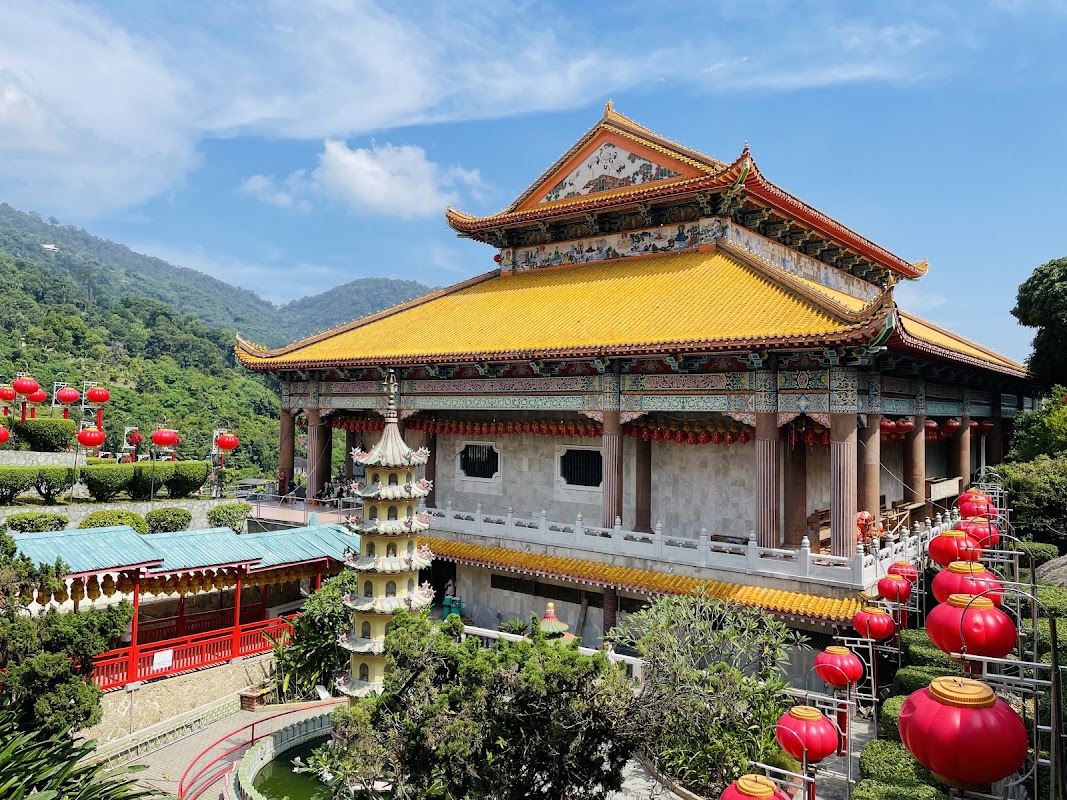
Perched on a hill in Ayer Itam, a suburb about a 30-minute drive from George Town, the central city of Penang Island, Kek Lok Si Temple (also known as the ‘Monastery of Supreme Bliss’) stands as Malaysia’s largest Buddhist temple and one of the most prominent in Southeast Asia. It was founded in the 1890s by the Venerable Beow Lean, a Chinese immigrant monk, who recognized this sea-facing hill as an auspicious ‘crane spreading its wings’ according to Feng Shui principles. Today, it has become a major pilgrimage site attracting countless devotees not only from Malaysia but also from neighboring countries.
Within its vast grounds, an absolute must-see is the approximately 30-meter-high ‘Seven-Tiered Pagoda’ (Pagoda of Ten Thousand Buddhas) soaring from the middle section of the temple. The most distinguishing feature of this pagoda is the beautiful fusion of three different architectural cultures: the lower tier is Chinese, the middle tier is Thai, and the glittering golden upper tier is Burmese (Myanmar) in style. Inside the pagoda, 10,000 Buddha statues are enshrined, and from the top, visitors can enjoy breathtaking panoramic views of Penang Island’s beautiful sea and cityscape. While it might be a bit thrilling for those with a fear of heights, the stunning vista is well worth the climb.
At the temple’s summit, an awe-inspiring presence is the 30.2-meter-tall bronze statue of Kuan Yin (Goddess of Mercy), nestled beneath a gigantic octagonal pavilion. Surrounded by countless smaller Buddha statues, the Goddess of Mercy watches over Penang Island with a serene expression, enveloped in incense smoke and an atmosphere of prayer. Furthermore, the ‘Liberation Pond’ (Turtle Pond) in the lower area is another intriguing highlight. Serving as a liberation pond based on Buddhist teachings, it houses an astonishing number of turtles, which symbolize longevity and good fortune in Chinese culture, delighting the eyes of visitors.
The sprawling grounds, with significant elevation changes, offer a sense of scale akin to exploring a theme park or a small town. From its vibrantly colored prayer halls to intricately detailed reliefs, Kek Lok Si Temple is a concentrated essence of Southeast Asian energy and spiritual culture, making it one of Penang Island’s premier power spots.
Smart Tips for Exploring Kek Lok Si Temple
Kek Lok Si Temple is built along a hillside, requiring considerable stamina to walk from the base to the Goddess of Mercy statue at the summit. In tropical Penang’s scorching heat, heatstroke prevention is essential. This is where the temple’s ‘inclined lift’ (funicular/cable car) comes in handy. For a small fee (around 6 MYR for a round trip), you can quickly travel from the base area to the main prayer hall midway up, and then to the summit where the Goddess of Mercy statue stands. Travelers who want to make the most of their time should purchase an all-area pass and smartly conserve energy while exploring – it’s a local golden rule.
Regarding access, you can take a public bus from George Town city center, which takes about 40-50 minutes, but there’s still a considerable walk from the bus stop to the temple entrance. For groups or those with concerns about physical stamina, using a ride-hailing app like ‘Grab’ is highly recommended. Grab can drop you directly at Kek Lok Si Temple’s entrance, allowing for a comfortable and smooth start to your sightseeing.
Moreover, about a 15-minute walk from Kek Lok Si Temple is the cable car station for ‘Penang Hill’, another scenic spot offering panoramic views of Penang Island. Combining a visit to Kek Lok Si in the relatively cooler morning hours with an onward trip to Penang Hill makes for a highly efficient half-day sightseeing itinerary.
If you can adjust your travel dates, the best time to visit is during the ‘Chinese New Year’ season, typically from late January to February each year. During this period, the entire temple complex is illuminated at night with tens of thousands of LED lights and traditional vibrant lanterns, transforming its solemn daytime appearance into an overwhelmingly beautiful, almost fantastical wonderland.


'%3E%3Cpath%20stroke='%23000'%20stroke-width='4'%20d='m-35-37-13%2020m5%203%2013-20m5%203-13%2020m63%2042%206-9m1-2%206-9m5%203-6%209m-1%202-6%209m5%203%206-9m1-2%206-9m-96%200%2013%2020m5-3-6-9m-1-2-6-9m5-3%2013%2020m63-42-6-9m-1-2-6-9m5-3%2013%2020m5-3-6-9m-1-2-6-9'/%3E%3Ccircle%20r='24'%20fill='%23cd2e3a'/%3E%3Cpath%20fill='%230047a0'%20d='M0%200a12%2012%200%201%201%2020%2013%2024%2024%200%201%201-40-26A12%2012%200%201%200%200%200'/%3E%3C/g%3E%3C/svg%3E)
'/%3E%3Cpath%20fill='%23b2b2b2'%20d='M241%20382q0%2016%2017%2026%2017%2011%2042%2011t42-11q16-11%2017-26V269H241'/%3E%3Cpath%20fill='%239f7e00'%20d='M241%20379q0%2014%208%2023%209%209%2021%209%2014%200%2021-9%209-9%209-23V269h-59'/%3E%3Cpath%20d='M241%20339v-70h59v110q0%2014-9%2023l-6%205v-68h-15v72q-8%200-14-4v-68zm59%2040c0%2022%2015%2032%2029%2032%2021%200%2030-18%2030-32v-40h-59'/%3E%3Cpath%20fill='%239f7e00'%20d='M266%20277v5h2v12h-3v-5h2v-5h-9v5h2v5h-4v9h3v18h-5v10h34v-10h-5v-18h3v-9h-4v-5h2v-5h-9v5h2v5h-3v-12h2v-5zm42%20101q0%2010%206%2017%206%206%2015%207%2010-1%2016-7%206-7%206-17v-29h-43'/%3E%3Ccircle%20fill='%230044ad'%20cx='329.5'%20cy='372'%20r='6'/%3E%3Cellipse%20fill='%230044ad'%20cx='300'%20cy='340'%20rx='16'%20ry='21'/%3E%3C/svg%3E)


