

Miyazaki Prefecture: Where Mythology Meets Stunning Scenery! A Deep Dive into Classic Tourist Routes
Miyazaki Prefecture is known for its warm climate, lush tropical landscapes, and as a stage for Japanese mythology. For travelers, its greatest appeal lies in the opportunity to feel the energy of its magnificent nature while touching upon the mysteries of history.
This article carefully selects 5 must-visit tourist spots in Miyazaki Prefecture. Beyond just introducing the locations, we’ll provide in-depth information, including the secrets of bizarre rock formations created millions of years ago, the moving history of Moai statues connecting Easter Island and Miyazaki, and even practical tips like the best way to get around and how to avoid crowds at each site.
Amanoyasugawara Cave
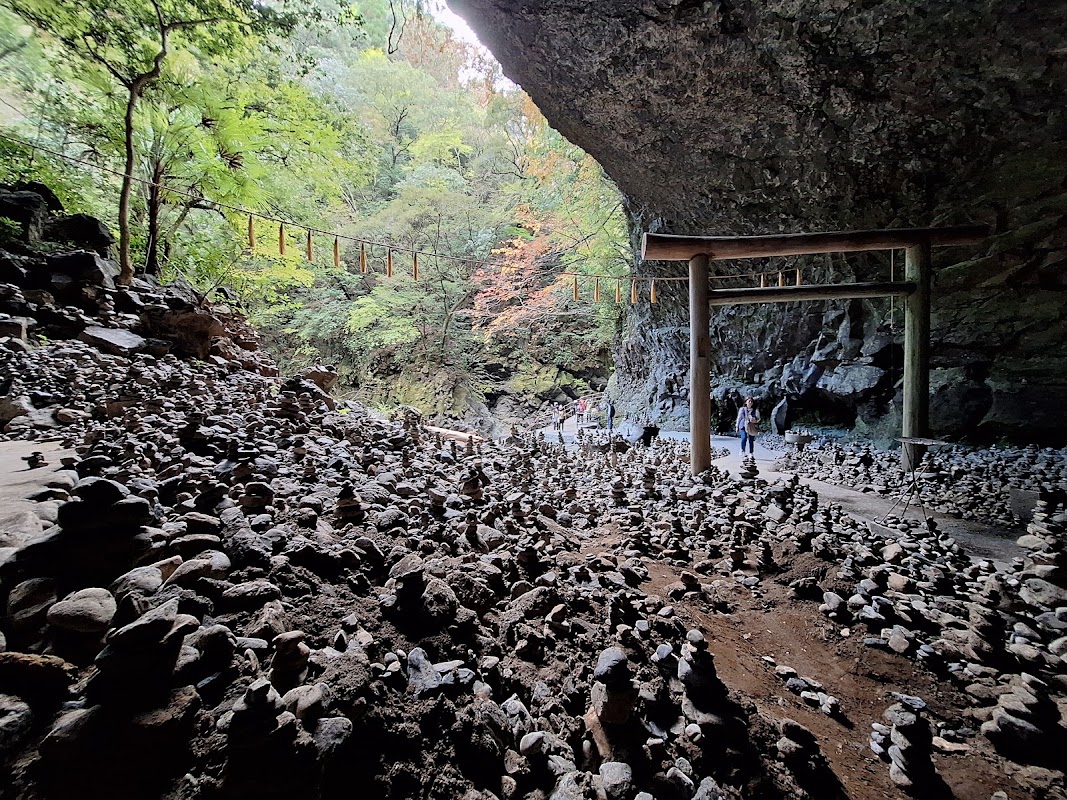
📍 Address: Iwato, Takachiho, Nishiusuki District, Miyazaki 882-1621, Japan
This large cave is said to be where eight million gods gathered for a divine council (Kami-gakari) to discuss how to coax Amaterasu Omikami (the Sun Goddess) out after she had hidden herself in Amano-Iwato, plunging the world into darkness. Also known as ‘Gyoboga-iwaya’, this cave, approximately 40m wide and 30m deep, is filled with countless stacks of stones left by visitors as prayers, emanating an overwhelming sacredness that can be felt the moment you step inside.
Access is easiest by using the free parking lot at Amanoiwato Shrine West Main Shrine (Nishi-hongu). While there are both East (Higashi-hongu) and West (Nishi-hongu) main shrines, you’ll reach the cave in about 10-15 minutes by walking along the Iwato River path from the West Main Shrine. The area around ‘Taiko Bridge’ over the Toroku River along the way is also a powerful spiritual spot known to a select few. A stroll while being soothed by the sound of the river and negative ions is perfect for cleansing mind and body.
A note for visitors: although the path is paved, it has inclines and some muddy sections, so comfortable walking shoes like sneakers are essential. Also, it can be slippery after rain, and access may be restricted during heavy rain or flooding, so please pay close attention to the weather. Aim for the early morning hours when there are fewer tourists to experience the divine tranquility even more deeply.
Nichinan Coast (Devil’s Washboard)
📍 Address: Aoshima, Miyazaki 889-2301, Miyazaki, Japan
Along the Nichinan Coast, stretching south from Aoshima in Miyazaki City, lies a mysterious series of corrugated rock formations resembling a giant washboard. Designated as a National Natural Monument, ‘Aoshima’s Raised Sea Beds and Eroded Formations,’ these unique rocks were formed approximately 7 million years ago (Neogene Period) from layers of sandstone and mudstone created underwater, which later uplifted and were eroded by waves over vast periods. The softer mudstone was scoured away, leaving the harder sandstone as raised ridges, creating this geometrically stunning landscape.
While beautiful from a distance, it’s highly recommended to descend to the rocky surface itself. You’ll be overwhelmed by the immense energy and scale of nature. The classic routes include descending 260 steps to the coast from the ‘Roadside Station Phoenix’ (mentioned later) or observing them while crossing the bridge to Aoshima Shrine.
The biggest tip for enjoying this scenery to the fullest is to ‘aim for low tide’. At high tide, most of the rocks are hidden beneath the sea, but visiting during low tide reveals the vast striped patterns of the rocks stretching far offshore, significantly enhancing photo opportunities. Be sure to check the Japan Meteorological Agency’s tide tables in advance when planning your trip.
Horikiri Pass
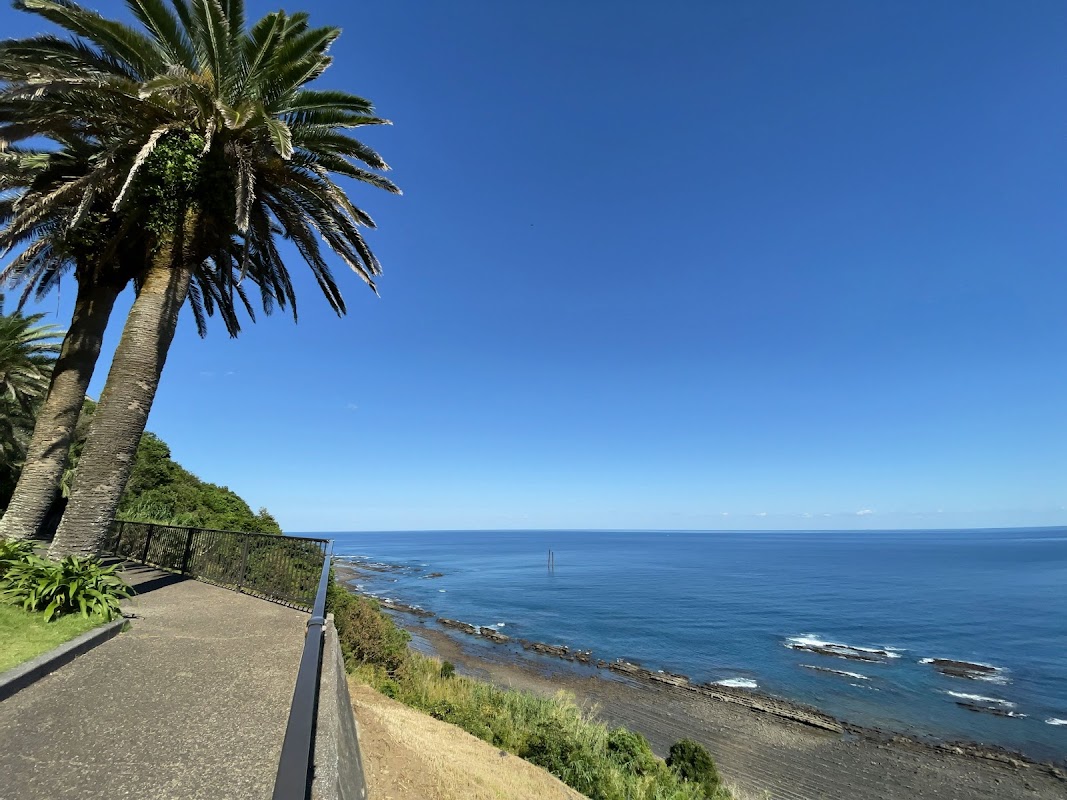
📍 Address: 984 Uchiumi, Miyazaki 889-2164, Miyazaki, Japan
Horikiri Pass is truly a highlight of a Nichinan Coast drive. As you drive along the old road (Prefectural Road 377), the view suddenly opens up to the ‘Devil’s Washboard’ stretching below and the endless horizon of the Pacific Ocean. The phoenix palm trees planted along the roadside amplify the tropical resort atmosphere to its peak.
While there are no large souvenir shops at the pass itself, a free parking lot and benches are available, allowing you to park your car or motorbike and enjoy the spectacular view while feeling the sea breeze. The blue of the ocean on a clear day is highly praised by travelers as a ‘view that makes you forget you’re in Japan’.
After enjoying the scenery here, a classic next stop is the ‘Roadside Station Phoenix’ just to the south. Taking out the famous ‘Miyazaki Mango Soft Serve Ice Cream’ or ‘Hyuganatsu Citrus Soft Serve Ice Cream’ and savoring them while gazing at the magnificent view of Hyuganada Sea from the observation deck will surely become an unforgettable memory of your Miyazaki trip.
Sun Messe Nichinan
📍 Address: 2650 Miyaura, Nichinan 887-0101, Miyazaki, Japan
Seven giant Moai statues stand majestically on a small hill along the Nichinan Coast. Many might wonder, ‘Why are there Moai in Miyazaki?’ The inspiring history behind this is that after Moai statues on Easter Island were toppled by tribal conflicts and the Great Chilean Earthquake, a Japanese crane manufacturer (Tadano) and a restoration team dedicated many years to their repair. As a token of gratitude for their service and friendship, the Easter Island Elder Council granted the world’s sole official permission for a complete replica in Japan.
The seven ‘Ahu Akivi’ Moai statues lined up in the park are each associated with different fortunes, such as career, health, love, and money, and visitors can touch them directly to make a wish. The park is also a treasure trove of SNS-worthy photo spots, including swings where you can take photos with the Moai in the background, and ‘Voyants’, seven colorful human-shaped objects meaning ‘observers’ in French.
Admission is 1,000 yen. The vast grounds offer great views but require a considerable amount of walking. For those who want to make the most of their time or have concerns about physical exertion, renting a paid round car (golf cart) is recommended to explore the park while enjoying the sea breeze.
Udo Shrine
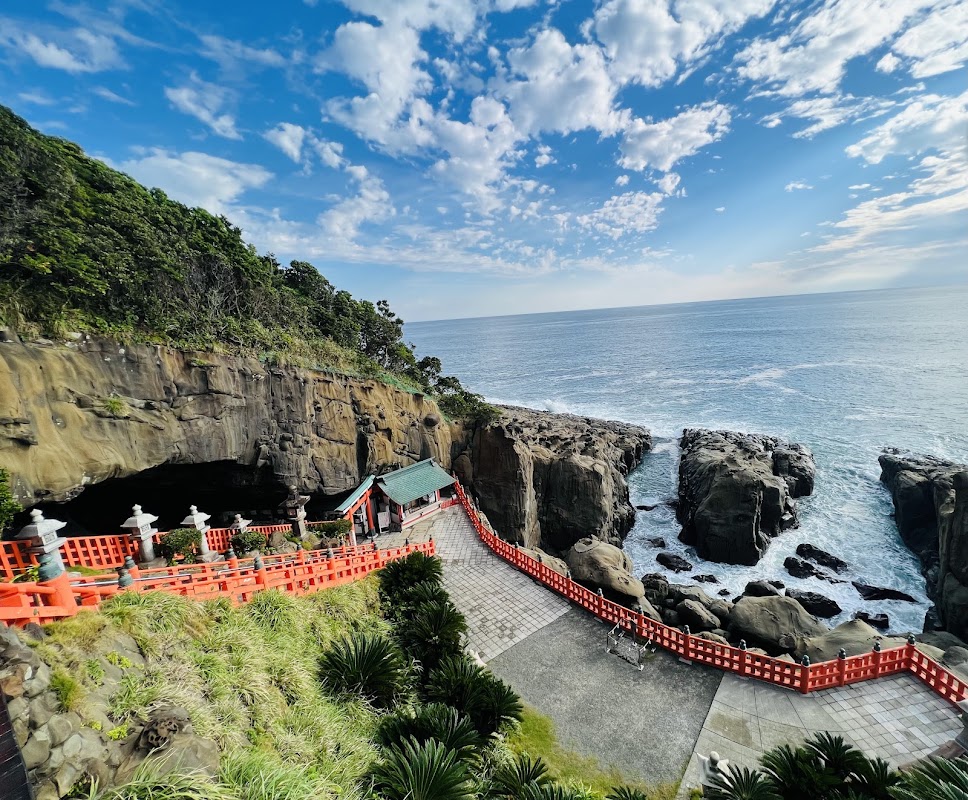
📍 Address: 3232 Miyaura, Nichinan 887-0101, Miyazaki, Japan
Boasting a unique location with its vermilion-lacquered main hall enshrined within a wave-washed cave on a sheer cliff overlooking the Hyuganada Sea, Udo Shrine is one of Kyushu’s premier power spots. The main deity enshrined is Hikonagisatake Ugayafukiaezu-no-Mikoto, the father of Emperor Jimmu. According to mythology, this is where Toyotama-hime built a birthing hut and gave birth, and the ‘Ochichi-iwa’ (Breast Rock), where the princess pressed her breasts against the rock before returning to the palace of the Sea God for her child, remains behind the main hall.
The ‘Ochichi-ame’ (Breast Milk Candy), made from the ‘Ochichi-mizu’ (Breast Milk Water) dripping from this rock, has long been a focal point of faith for safe childbirth, child-rearing, and promoting breast milk production, making it a very popular souvenir. Many visitors also try the famous ‘Undama-nage’ (Lucky Ball Throw). Men throw unglazed clay balls with their left hand and women with their right, aiming for a hollow on the back of the ‘Kameishi’ (Turtle Rock) below the cliff in front of the main hall. It is said that if your ball lands in the hollow, your wish will come true.
A note for visitors: from the parking lot, it’s about a 10-15 minute walk one-way along a path with ups and downs, including stairs and slopes along the coast, so please wear comfortable walking shoes. Also, if accessing by public transport (bus), some routes have only a few services per day, so it is crucial for travelers to check the return bus schedule before visiting the shrine.
Tips for Enjoying Your Miyazaki Trip to the Fullest
The spots introduced in this article are broadly divided into the Takachiho area (northern part of the prefecture) and the Nichinan Coast area (southern part of the prefecture). Traveling between these two areas takes nearly 3 hours one-way by car or highway bus, making it very tight to visit all of them in a single day. When planning your trip, it’s best to create a relaxed schedule by dedicating separate days to each area, for example, ‘Day 1: Immerse yourself in the mythical world of Takachiho’ and ‘Day 2: Enjoy a scenic drive along the Nichinan Coast’.
Also, while Miyazaki’s climate is warm, areas like Amanoyasugawara Cave in the valleys and caves can often be cool even in summer. Conversely, coastal spots like Sun Messe Nichinan and Udo Shrine have little shade, so sun protection is essential. Prepare seasonal layers for temperature regulation and, universally, ‘comfortable sneakers’ for all spots, to fully enjoy Miyazaki’s nature and myths.


'%3E%3Cpath%20stroke='%23000'%20stroke-width='4'%20d='m-35-37-13%2020m5%203%2013-20m5%203-13%2020m63%2042%206-9m1-2%206-9m5%203-6%209m-1%202-6%209m5%203%206-9m1-2%206-9m-96%200%2013%2020m5-3-6-9m-1-2-6-9m5-3%2013%2020m63-42-6-9m-1-2-6-9m5-3%2013%2020m5-3-6-9m-1-2-6-9'/%3E%3Ccircle%20r='24'%20fill='%23cd2e3a'/%3E%3Cpath%20fill='%230047a0'%20d='M0%200a12%2012%200%201%201%2020%2013%2024%2024%200%201%201-40-26A12%2012%200%201%200%200%200'/%3E%3C/g%3E%3C/svg%3E)
'/%3E%3Cpath%20fill='%23b2b2b2'%20d='M241%20382q0%2016%2017%2026%2017%2011%2042%2011t42-11q16-11%2017-26V269H241'/%3E%3Cpath%20fill='%239f7e00'%20d='M241%20379q0%2014%208%2023%209%209%2021%209%2014%200%2021-9%209-9%209-23V269h-59'/%3E%3Cpath%20d='M241%20339v-70h59v110q0%2014-9%2023l-6%205v-68h-15v72q-8%200-14-4v-68zm59%2040c0%2022%2015%2032%2029%2032%2021%200%2030-18%2030-32v-40h-59'/%3E%3Cpath%20fill='%239f7e00'%20d='M266%20277v5h2v12h-3v-5h2v-5h-9v5h2v5h-4v9h3v18h-5v10h34v-10h-5v-18h3v-9h-4v-5h2v-5h-9v5h2v5h-3v-12h2v-5zm42%20101q0%2010%206%2017%206%206%2015%207%2010-1%2016-7%206-7%206-17v-29h-43'/%3E%3Ccircle%20fill='%230044ad'%20cx='329.5'%20cy='372'%20r='6'/%3E%3Cellipse%20fill='%230044ad'%20cx='300'%20cy='340'%20rx='16'%20ry='21'/%3E%3C/svg%3E)


