

Osaka Prefecture boasts countless charming tourist attractions that draw visitors from both Japan and abroad. However, simply visiting the famous spots won’t allow you to fully experience the true passion and depth that Osaka holds.
In this article, we’ll delve deep into everything from unmissable classic landmarks to deep-dive ‘B-kyu’ (offbeat) spots known only to locals, introducing them with their historical backgrounds and practical tips for navigating them. Enjoy a deeper dive into Osaka’s charm, beyond the superficial information found in typical guidebooks.
Dotonbori
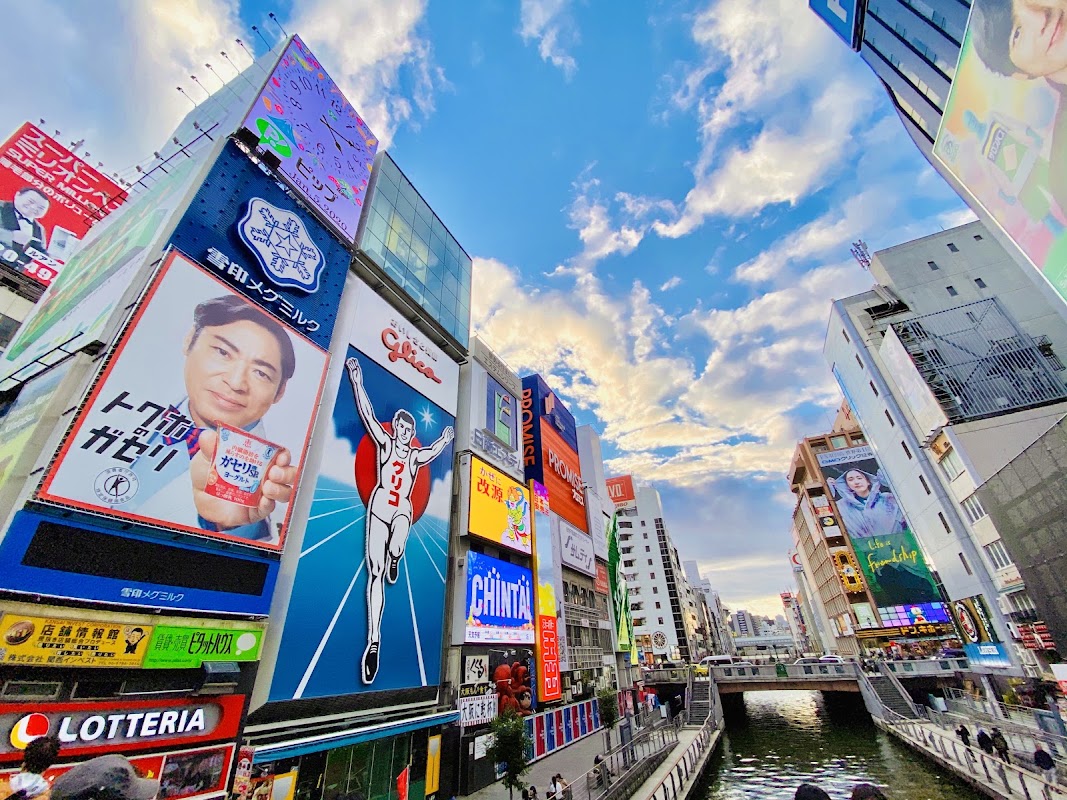
📍 Address: 1-9 Dotonbori, Chuo Ward, Osaka, 542-0071, Japan
Dotonbori is a globally renowned tourist destination that symbolizes Osaka’s ‘kuidaore’ (eat ’til you drop) culture. Originating from a canal excavated by Yasui Doton with his private funds during the Edo period, this area was once a cultural hub lined with theaters. Today, giant three-dimensional signs and neon lights densely pack the streets, creating an overwhelming immersive experience that makes the entire district feel like a theme park. It’s so visually stimulating that you’ll find yourself looking around from top right to top left, and the flamboyant cityscape created by the shops in unison will undoubtedly lift your spirits just by walking through it.
The best time to visit Dotonbori is during the magic hour from dusk into night. The breathtakingly fantastical sight of the river surface reflecting the streetlights of Namba at night, along with the neon lights including the Glico sign, allows you to truly feel the energy of a ‘city that never sleeps.’ The Tombori River Walk is a promenade developed along both banks of the river, and taking the approximately 20-minute ‘Tombori River Cruise’ to see the city’s hustle and bustle from the water is highly recommended. However, on weekends and public holidays during the daytime, it can get so crowded that ‘it’s hard to even walk,’ so if you prefer a calmer stroll, aim for early morning, or embrace the crowds as part of the entertainment and enjoy the vibrant night energy.
When it comes to gourmet food, ‘konamon’ (flour-based dishes) are an absolute must-try. The real thrill of Dotonbori is eating your way through it – lining up for piping hot takoyaki at places like ‘Takoya Dotonbori Kukuru’ or ‘Honke Ohtako,’ or savoring classic okonomiyaki at ‘Yaksoba Baby.’ Even as times change, Osaka’s soul of ‘grilling flour and eating it with dashi’ is continuously passed down, making it a culinary pilgrimage site to visit with an empty stomach.
Osaka Castle
📍 Address: 1-1 Osakajo, Chuo Ward, Osaka, 540-0002, Japan
Osaka Castle, a symbol of Osaka. While it’s strongly associated with Toyotomi Hideyoshi, the magnificent stone walls and deep moats we see today were actually constructed as part of ‘Tenka Bushin’ (nationwide building projects) ordered by the Tokugawa Shogunate to the Western daimyo after the Summer Siege of Osaka. Many tourists tend to head straight for the main keep, but the true deep highlight of Osaka Castle lies in ‘the stone walls themselves,’ which represent the pinnacle of civil engineering and architectural technology of that era.
One thing you absolutely must stop and see is the ‘Takoishi’ (Octopus Stone), the largest megalith within the castle grounds, located in the Masugata (square enclosure) of Sakuramon Gate, the main entrance to the Honmaru. Its surface area is approximately 36 tatami mats, and its estimated weight is an astonishing 108 tons. This granite stone, transported by ship from the distant Seto Inland Sea under the charge of Ikeda Tadao, Lord of the Bizen-Okayama domain, gets its name from the octopus-like pattern on its lower left. You’ll be overwhelmed by the historical romance of how each giant stone was transported and stacked. Furthermore, the contrast between the stone walls and turrets reflected in the moats offers a beauty that looks like a painting from any angle.
The current main keep, a reconstructed structure, is both a historical building and a well-equipped museum inside. With elevators and ramps, ascending the castle is very smooth. It’s well worth spending time exploring the exhibits, which include folding screens and swords from the Sengoku period to the early Edo period, and video presentations on the rise and fall of the Toyotomi clan. Ticket booths can often be crowded, so purchasing tickets online in advance ensures smoother entry.
Osaka Castle Park
📍 Address: Osakajo, Chuo Ward, Osaka, 540-0002, Japan
Osaka Castle Park, spreading out around Osaka Castle, is an oasis abundant with greenery, seemingly impossibly located in the heart of a metropolis. This park, which changes its appearance with each season, is deeply cherished not only by tourists but also by locals as a place for running and picnics. It’s recommended not just to walk through it as an approach to the main keep, but to leisurely spend time enjoying the park itself as a destination.
Especially during the spring cherry blossom season, it’s simply breathtaking. Numerous cherry trees bloom profusely around the Nishinomaru Garden and along the moats, creating a uniquely Osakan scene where stone walls, cherry blossoms, and distant modern buildings intertwine. During full bloom, many food stalls and kitchen cars set up shop, allowing visitors to enjoy hanami (cherry blossom viewing) with a festive atmosphere. Since the grounds are extremely vast, you can find relatively quiet spots by walking a bit to avoid the crowded areas. When strolling, it’s strongly recommended to wear comfortable walking shoes.
In recent years, convenience has greatly improved, with BBQ areas being set up and the ability to enjoy cafe time at ‘MIRAIZA Osaka-jo,’ a commercial facility renovated from a historical building. However, after dusk, some areas may have restricted access due to wedding photography or events, so it’s best to follow staff guidance and enjoy the scenery while observing good manners.
Umeda Sky Building
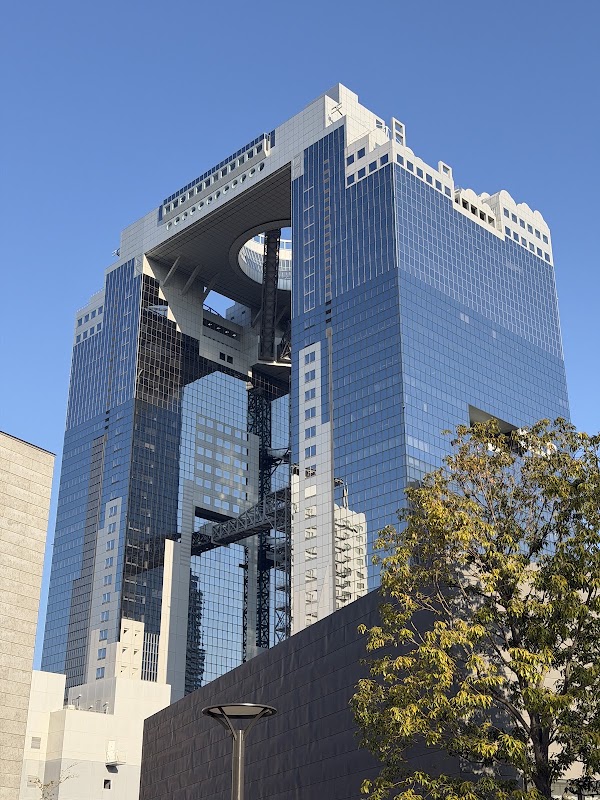
📍 Address: 1-1-88 Oyodonaka, Kita Ward, Osaka, 531-6023, Japan
Soaring in Shin-Umeda City, northwest of Osaka Station, the Umeda Sky Building is the world’s first ‘connected super high-rise building,’ completed in 1993. Designed under architect Hiroshi Hara’s concept of an ‘aerial city,’ it was selected as one of the ‘World’s Top 20 Buildings’ by British media. Looking up from below, you’ll be captivated by its futuristic design, where the ‘Kuchu Teien Observatory’ (Floating Garden Observatory) on the rooftop connects two towers like a disc.
The greatest appeal of this facility is the ‘orchestration of the experience’ from the ground floor to the observatory. The glass-enclosed elevators heading to the upper floors and the see-through escalators diagonally crossing between the towers give you an exhilarating feeling, as if you’ve wandered into the world of a sci-fi movie. The rooftop corridor, 173m above ground, is an open-air space with no obstructing glass, allowing you to feel the wind directly while enjoying a 360-degree panoramic view of Osaka city. The best time to visit is during the magic hour from dusk until the city lights up at night. The gradient of the sky turning pink and the city’s neon lights gradually illuminating is truly a magnificent sight. Since it can be windy on the rooftop, it’s recommended to bring something to wear, regardless of the season.
Furthermore, at the base of the building, an unmissable area themed ‘coexistence with nature’ spreads out. To the south is ‘Naka-Shizen no Mori’ (Forest of Urban Nature) with a large waterfall and streams, and to the north is ‘Hananoya – Shin-Satoyama’ (Flower Field – New Satoyama) created by Sekisui House, where you can experience Japan’s original landscapes and rich ecosystems even within the urban concrete jungle. In winter, an authentic German-style Christmas market is held in the 1F plaza, drawing large crowds enjoying the illuminations with mulled wine and pretzels.
Kosaka Castle
📍 Address: 1-12-29 Shimosaka, Higashiosaka, Osaka, 577-0803, Japan
An ultimate deep spot that you’ll never find in guidebooks, embodying Osaka’s intense ‘DIY spirit’ and humor, is ‘Kosakajo’ (Kosaka Castle) in Higashiosaka City. This castle, which suddenly appears in a residential area after passing through a shopping street from Kawachi-Kosaka Station on the Kintetsu Nara Line, was not built by a daimyo. Astonishingly, it’s a ‘self-built castle’ erected on the rooftop by Kenichi Isono, the owner of ‘Isono Barbershop’ on the first floor, who taught himself and used scrap materials and 100-yen shop items.
His passion, which led him to continuously expand it over approximately 40 years, eventually completing a five-story main keep, is truly extraordinary. The total construction cost is said to have been a mere 50,000 yen, but the punchline, full of Osaka’s characteristic humor, is that much of it was spent on a ‘100,000 yen gold leaf bowl’ displayed inside the castle. In the past, it featured a grand hall of a thousand tatami mats with trompe l’oeil paintings, and a ‘golden tea room’ made of 300 pieces of gold origami, and it was a legendary tourist spot where you could get a tour if you hit it off with the owner.
However, in 2018, the castle was struck by the devastating Typhoon Jebi (Typhoon No. 21) which directly hit the Kinki region, blowing away most of its symbolic main keep – a true tragedy. Afterward, it was splendidly (perhaps?) revived as a ‘mural of Kosakajo’ on the wall of a nearby building, thanks to a TV program’s project. While only the ‘incomplete castle grounds’ without a main keep and the remains of the barbershop now stand, its unique history and the lovable character of its owner are still told, making it a rare spot worth seeing to feel Osaka’s ‘humanity and humor.’
Conclusion: How to Enjoy Osaka Sightseeing 120%
Osaka’s tourist attractions are characterized by a wide range, from places with overwhelming historical scale to extraordinary deep spots born from individual passion. To maximize satisfaction within a limited travel itinerary, it’s crucial to cleverly allocate your time based on ‘what you primarily want to enjoy.’
For Dotonbori and Umeda Sky Building, visits from dusk onwards, when the neon lights and night views shine most beautifully, are overwhelmingly recommended, though crowds will also peak then. On the other hand, for vast outdoor facilities like Osaka Castle and Osaka Castle Park, a stroll in the morning when it’s relatively cool and less crowded is a good tip to avoid fatigue. Also, for Osaka sightseeing, which often involves long distances, be sure to choose comfortable walking shoes like sneakers.
Filling your stomach with classic takoyaki and okonomiyaki, touching the massive stone walls of Tenka Bushin, and finally contemplating the DIY spirit of Osaka people at the whimsical Kosakajo in Higashiosaka. If you explore the city from such diverse perspectives, your trip to Osaka will undoubtedly become even deeper and more unforgettable.


'%3E%3Cpath%20stroke='%23000'%20stroke-width='4'%20d='m-35-37-13%2020m5%203%2013-20m5%203-13%2020m63%2042%206-9m1-2%206-9m5%203-6%209m-1%202-6%209m5%203%206-9m1-2%206-9m-96%200%2013%2020m5-3-6-9m-1-2-6-9m5-3%2013%2020m63-42-6-9m-1-2-6-9m5-3%2013%2020m5-3-6-9m-1-2-6-9'/%3E%3Ccircle%20r='24'%20fill='%23cd2e3a'/%3E%3Cpath%20fill='%230047a0'%20d='M0%200a12%2012%200%201%201%2020%2013%2024%2024%200%201%201-40-26A12%2012%200%201%200%200%200'/%3E%3C/g%3E%3C/svg%3E)
'/%3E%3Cpath%20fill='%23b2b2b2'%20d='M241%20382q0%2016%2017%2026%2017%2011%2042%2011t42-11q16-11%2017-26V269H241'/%3E%3Cpath%20fill='%239f7e00'%20d='M241%20379q0%2014%208%2023%209%209%2021%209%2014%200%2021-9%209-9%209-23V269h-59'/%3E%3Cpath%20d='M241%20339v-70h59v110q0%2014-9%2023l-6%205v-68h-15v72q-8%200-14-4v-68zm59%2040c0%2022%2015%2032%2029%2032%2021%200%2030-18%2030-32v-40h-59'/%3E%3Cpath%20fill='%239f7e00'%20d='M266%20277v5h2v12h-3v-5h2v-5h-9v5h2v5h-4v9h3v18h-5v10h34v-10h-5v-18h3v-9h-4v-5h2v-5h-9v5h2v5h-3v-12h2v-5zm42%20101q0%2010%206%2017%206%206%2015%207%2010-1%2016-7%206-7%206-17v-29h-43'/%3E%3Ccircle%20fill='%230044ad'%20cx='329.5'%20cy='372'%20r='6'/%3E%3Cellipse%20fill='%230044ad'%20cx='300'%20cy='340'%20rx='16'%20ry='21'/%3E%3C/svg%3E)


