

Introduction
Miyagi Prefecture is a captivating area with many facets, from historical sites associated with Lord Date Masamune to the beautiful seas of ‘Matsushima’, one of Japan’s Three Great Views, and the rugged wilderness of the Zao Mountain Range.
This time, we introduce ‘5 carefully selected tourist spots’ where both short-term visitors and long-term residents can deeply experience Miyagi’s authentic charm. We’ll share information that conveys the local atmosphere, including historical backgrounds hidden behind classic scenic spots, delicious local gourmet food, and even deep, little-known insider stories.
Okama Crater Lake
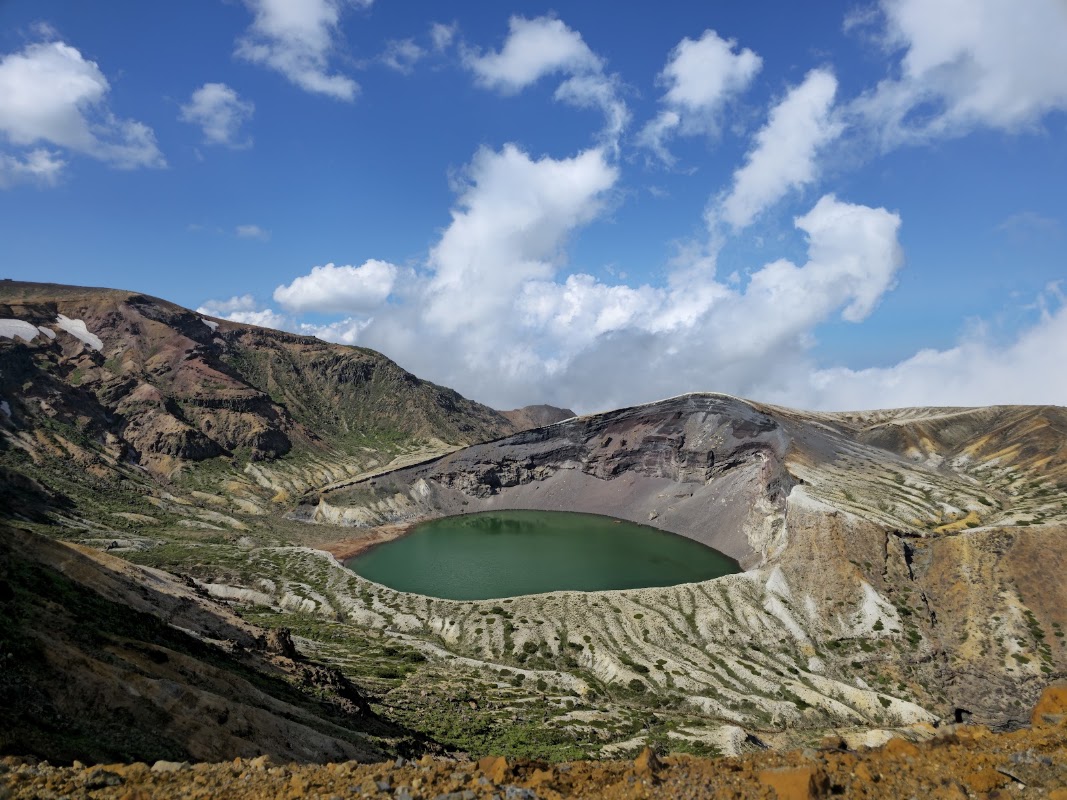
📍 Address: National Forest Land within Kurashidake National Land, Togatta Onsen, Zao Town, Katta District, Miyagi Prefecture, 989-0998, Japan
Located near the summit of the Zao Mountain Range, on the border of Miyagi and Yamagata Prefectures, ‘Okama’ is a crater lake formed approximately 800 years ago by the activity of the Zao volcano. Its surface changes color from emerald green to cobalt blue depending on the sunlight and viewing angle, earning it the nickname ‘Goshikinuma’ (Five-Color Pond).
Due to its high altitude, it’s cool and comfortable even in summer, a stark contrast to the lowlands. However, be aware that mountain weather is highly unpredictable. Even if it’s sunny at the base, the temperature drops as you ascend by car (said to decrease by about 1 degree Celsius for every 10m increase in altitude), and you might encounter fog or blizzards near the summit. Especially around Golden Week in May, you can experience an extraordinary drive through ‘snow walls’ that can reach the height of a two-story building, but proper cold weather gear and knowing when to give up in bad weather are crucial.
In fact, during the Edo period, Okama was considered a sacred site, the ‘boundary between heaven and earth,’ and a destination for ‘Oyama-mairi’ (mountain pilgrimages) where many people visited. If you witness its emerald green splendor on a clear day, you’ll surely feel the reverence that people once held. The rest house also offers a wide range of original goods. Note that the rest house toilets are unavailable before opening hours, so it’s a traveler’s rule of thumb to use the parking lot facilities further down.
Homei Forty-Eight Falls
📍 Address: Sakunami Bomeki, Aoba Ward, Sendai, Miyagi Prefecture, 989-3434, Japan
‘Homei Forty-Eight Falls’ is located along National Route 48 (Sakunami Kaido) heading towards Yamagata from central Sendai. Situated upstream of the Hirose River, it’s a lesser-known but magnificent waterfall where various large and small cascades flow down in a staircase-like formation.
The beautiful name ‘Homei’ (Phoenix’s Cry) originates from the clear sound of the falling water, said to resemble the cry of the legendary bird, the ‘Phoenix.’ The contrast with Mount Kamakura soaring behind is also superb. In spring, the powerful volume of meltwater and dazzling fresh greenery, and in autumn, the vibrant autumn leaves color the falls, creating a landscape akin to a masterpiece painting.
While it’s a ‘hidden gem’ with less media exposure as a tourist spot, its appeal lies in its easy access along the national highway. Besides a large paved parking lot, there’s also a small unpaved parking lot directly in front of the falls, allowing access to the scenic viewpoint with almost no walking during less crowded weekday hours. Nearby, popular spots and gourmet delights such as Nikka Whisky Miyagikyo Distillery, Sakunami Onsen, and Jogi Nyorai’s deep-fried tofu are concentrated, making it an ideal stop on a drive. However, caution is advised for bear sightings during autumn mornings and evenings.
Aoba Castle Honmaru Hall (Miyagi Gokoku Shrine Assembly Hall)
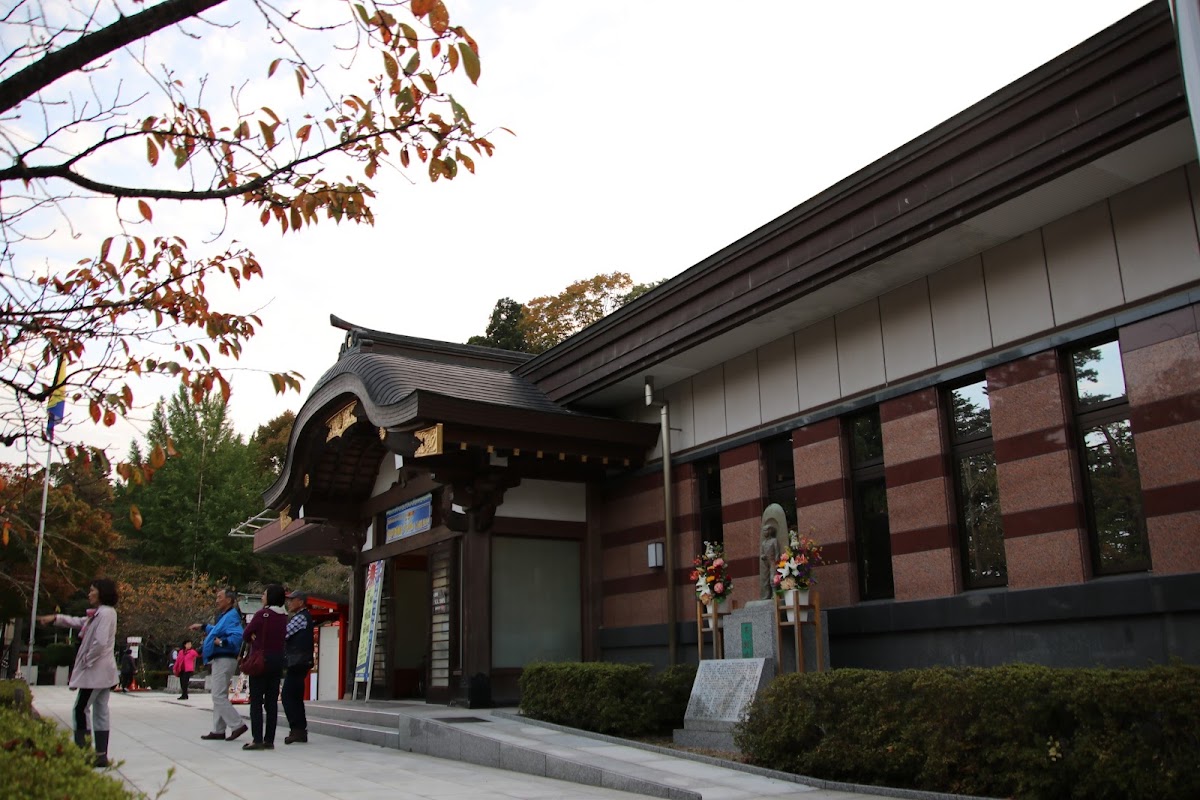
📍 Address: 1 Kawauchi, Aoba Ward, Sendai, Miyagi Prefecture, 980-0862, Japan
‘Aoba Castle Honmaru Hall’ is located on the former site of the main keep of Sendai Castle (Aoba Castle), built by Lord Date Masamune. Although the castle’s structures were lost to fire, a equestrian statue of Lord Date Masamune stands majestically, overlooking the city of Sendai and the Pacific Ocean, making it a highlight of Sendai tourism.
For history buffs, the ‘Sendai Castle VR Go’ experience is an absolute must-do. Peering into the dedicated viewer, you can relive the opulent Momoyama-style architecture, such as the grand main hall and the Tsume-mon gate, from 400 years ago in a 360-degree stereoscopic image, allowing you to experience the sights Lord Masamune once saw. Also, within the same grounds is the ‘Miyagi Gokoku Shrine’, founded in the Meiji era, known as a power spot for improving luck in competitions.
No visit is complete without enjoying the local gourmet scene. The hall and its surroundings gather Sendai’s specialties; besides gyutan (beef tongue), the authentic ‘Zunda sweets’ are a must-try. You can enjoy street food like vividly green zunda an (sweet edamame paste) dango (a remnant of when Kasho Sanzen, famous for ‘Hagi no Tsuki’, used to have a shop here), which seeps into your hungry body, and the popular ‘Suzume Manju’. The souvenir shop also boasts one of the best selections in the city, making it a smart move to do your bulk souvenir shopping here.
Fukuura Island
📍 Address: 39-1 Matsushima Senzui, Matsushima Town, Miyagi District, Miyagi Prefecture, 981-0213, Japan
‘Fukuura Island’, floating in Matsushima, one of Japan’s Three Great Views, is a lush small island developed as a natural park. It is accessed from the mainland via the 252-meter long vermilion ‘Fukuura Bridge’ (Toll: 200 yen for adults; it is free at night, but daylight hours are recommended due to poor visibility in the dark).
This Fukuura Bridge is also known as the ‘Encounter Bridge’ and is famous as a power spot that brings wonderful connections. The experience of walking over the sea and feeling the sea breeze reveals the charm of ‘experiencing Matsushima’ in a way different from merely seeing it in photos.
The island has well-maintained walking paths that can be completed in about an hour, making it a natural treasure trove with approximately 250 species of plants and trees. While there are some gentle ups and downs, the observation deck at the island’s tip offers panoramic views of the beautiful islands floating in Matsushima Bay, such as ‘Kuno Island’ and ‘Yake Island’. Also, the Bentendo temple on the island is popular for its famous ‘Daruma Omikuji’ (Daruma fortune slips). There’s a unique custom where, if you draw a bad fortune, you can leave the Daruma doll itself on the lattice window of the Bentendo. Although some views are obscured by growing trees, a quiet island stroll, isolated from daily life, is a supreme refreshment.
Niojima Island
📍 Address: Urato Katsurajima Ayame, Shiogama, Miyagi Prefecture, 985-0192, Japan
The quintessential Matsushima experience is an island cruise. Among the islands, the most impactful is the strangely shaped rock formation ‘Niojima Island’, situated off the coast of Matsushima Bay. It’s too far from the regular ferry routes to the Urato Islands, so to see it up close without binoculars, you must take a sightseeing boat (such as the Niohmaru Course, approximately 50 minutes).
Mudstone has been eroded by waves, forming a humorous yet powerful shape, as if a Kongo Rikishi (Nio, a guardian deity) statue is seated, clutching a cigar. However, what’s surprising here is the bold announcement made over the boat’s loudspeaker: ‘The constricted part of the neck has been reinforced with concrete to prevent the head from falling off.’
Some might feel a moment of disappointment, thinking, ‘Isn’t it a natural rock formation?’ However, it’s said that thanks to this concrete reinforcement, it was able to withstand the massive tsunami of the Great East Japan Earthquake. It is, in a sense, a very deep tourist resource, where the natural beauty of geological formations merges with human efforts (physical) to preserve it for future generations. When taking the cruise, secure a seat on the front right side to truly witness its real appearance, including the traces of its restoration.
Tips for Enhancing Your Miyagi Travel Experience!
Miyagi’s tourist attractions vary greatly in atmosphere by area. In mountainous regions like Zao and Sakunami, changes in weather and seasonal gear (cold weather clothing and comfortable shoes) significantly impact your comfort. In contrast, coastal areas such as Sendai city and Matsushima require careful planning for your eating-and-walking pace and securing efficient transportation.
Especially in the Matsushima area, for activities like cruise tours and Fukuura Island visits, it’s reassuring to bring an extra layer of clothing regardless of the season due to strong sea breezes. Additionally, while popular local gourmet restaurants tend to be crowded, you can skillfully use takeout options (such as Zunda dango) available at tourist facilities to enjoy authentic flavors without waiting in long lines. Allow ample time in your schedule and enjoy a fulfilling trip to Miyagi, recalling the ‘deep history and behind-the-scenes stories’ of each spot.


'%3E%3Cpath%20stroke='%23000'%20stroke-width='4'%20d='m-35-37-13%2020m5%203%2013-20m5%203-13%2020m63%2042%206-9m1-2%206-9m5%203-6%209m-1%202-6%209m5%203%206-9m1-2%206-9m-96%200%2013%2020m5-3-6-9m-1-2-6-9m5-3%2013%2020m63-42-6-9m-1-2-6-9m5-3%2013%2020m5-3-6-9m-1-2-6-9'/%3E%3Ccircle%20r='24'%20fill='%23cd2e3a'/%3E%3Cpath%20fill='%230047a0'%20d='M0%200a12%2012%200%201%201%2020%2013%2024%2024%200%201%201-40-26A12%2012%200%201%200%200%200'/%3E%3C/g%3E%3C/svg%3E)
'/%3E%3Cpath%20fill='%23b2b2b2'%20d='M241%20382q0%2016%2017%2026%2017%2011%2042%2011t42-11q16-11%2017-26V269H241'/%3E%3Cpath%20fill='%239f7e00'%20d='M241%20379q0%2014%208%2023%209%209%2021%209%2014%200%2021-9%209-9%209-23V269h-59'/%3E%3Cpath%20d='M241%20339v-70h59v110q0%2014-9%2023l-6%205v-68h-15v72q-8%200-14-4v-68zm59%2040c0%2022%2015%2032%2029%2032%2021%200%2030-18%2030-32v-40h-59'/%3E%3Cpath%20fill='%239f7e00'%20d='M266%20277v5h2v12h-3v-5h2v-5h-9v5h2v5h-4v9h3v18h-5v10h34v-10h-5v-18h3v-9h-4v-5h2v-5h-9v5h2v5h-3v-12h2v-5zm42%20101q0%2010%206%2017%206%206%2015%207%2010-1%2016-7%206-7%206-17v-29h-43'/%3E%3Ccircle%20fill='%230044ad'%20cx='329.5'%20cy='372'%20r='6'/%3E%3Cellipse%20fill='%230044ad'%20cx='300'%20cy='340'%20rx='16'%20ry='21'/%3E%3C/svg%3E)


