

Rome, the ‘Eternal City,’ vividly conveys the glory of the ancient Roman Empire. This entire city is like a colossal museum, where every step you take brings you into contact with a drama spanning over 2,000 years.
This time, we’ve carefully selected must-visit spots from Rome’s classic attractions that allow you to truly appreciate their ‘depth.’ Beyond textbook historical explanations, we’ll delve into the latest ticketing information for 2026 and the profound atmosphere you can only experience locally, all from a professional travel writer’s perspective.
Colosseum
📍 Address: P.za del Colosseo, 1, 00184 Roma RM, Italy
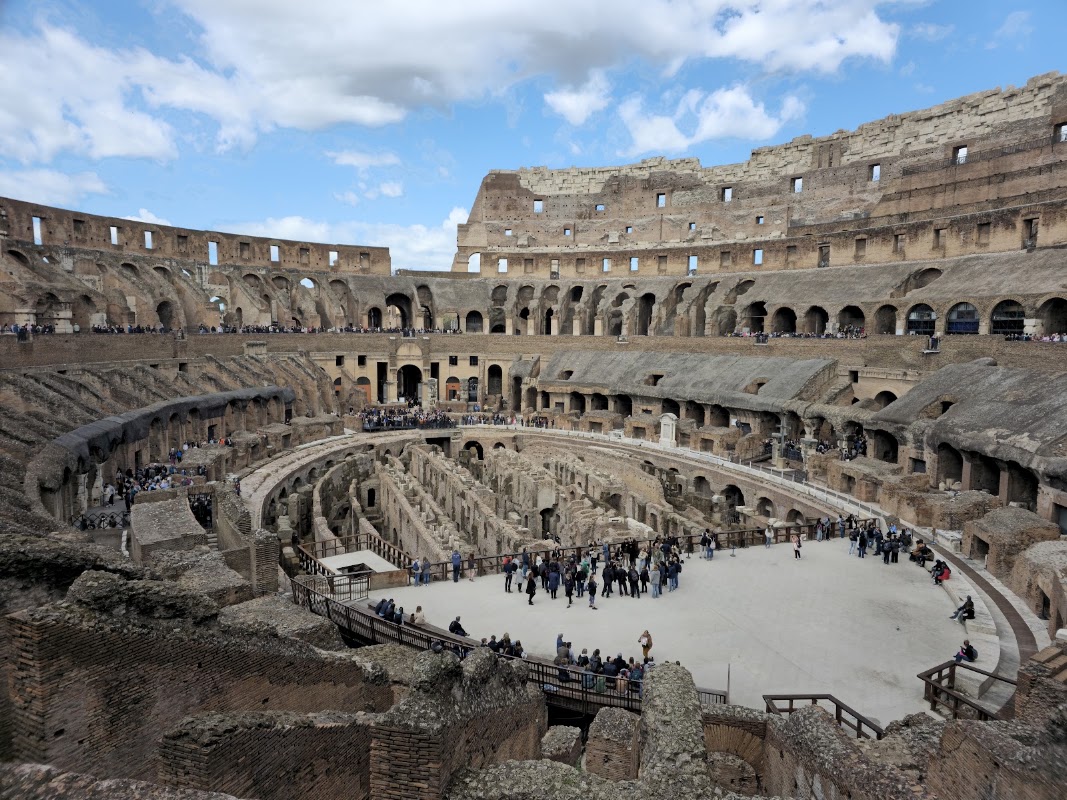
The Colosseum is an overwhelming amphitheater symbolizing Rome, completed in 80 AD. It was ancient Rome’s largest entertainment venue, thrilling up to 50,000 spectators.
A major highlight is the ‘Arena,’ where gladiators and wild beasts once fought to the death. The word ‘arena’ itself actually originates from the Latin word ‘harena,’ meaning ‘sand.’ In those days, a large quantity of sand was spread over wooden floors, on which bloody battles were waged daily.
For an even deeper experience, the ‘Underground Area,’ accessible only with special tickets, is a must-see. The labyrinthine underground passages housed gladiators’ changing rooms and animal cages, and even featured human-powered ‘lifting devices’ (elevators). You’ll be astonished by the fact that stage effects akin to modern-day live performances already existed in Rome 2,000 years ago.
⚠️ Travel Advice: Tickets on the official website are so popular they sell out immediately upon release. If you wish to enter the underground or arena floor, planning at least a month in advance and making reservations is essential. Attempting to visit without a reservation is ill-advised.
Roman Forum
📍 Address: Rome, 00186, Italy
The Roman Forum, sprawling right next to the Colosseum, is not just a beautiful ruin. It was literally the heart of political, religious, and commercial life during the era when ‘all roads led to Rome.’
Surprisingly, this area was merely a swamp until around the 7th century BC. The construction of the ‘Cloaca Maxima,’ an advanced ancient Roman drainage system, marked the beginning of its journey as the center of a world empire. Within its vast grounds, you can still see the remnants of the Temple of Caesar, where Julius Caesar’s body was cremated, and the ruins of the Senate House—stages where history was made.
As you walk among the crumbling stone walls, imagine the fervor of citizens clad in white togas and the clamor of triumphant generals’ parades. This immersive, time-traveling sensation, where the air of 2,000 years ago touches your skin, is a supreme luxury only experienced here.
⚠️ Travel Advice: It’s far more expansive than you might imagine and offers little shade. For summer visits, a hat, sunglasses, and plenty of water are essential. Also, using digital tools like Google Lens to scan reliefs and ruins as you walk will reveal their historical context on the spot, doubling your appreciation! This is a classic route covered by a joint ticket with the Colosseum.
Trevi Fountain
📍 Address: Piazza di Trevi, 00187 Roma RM, Italy
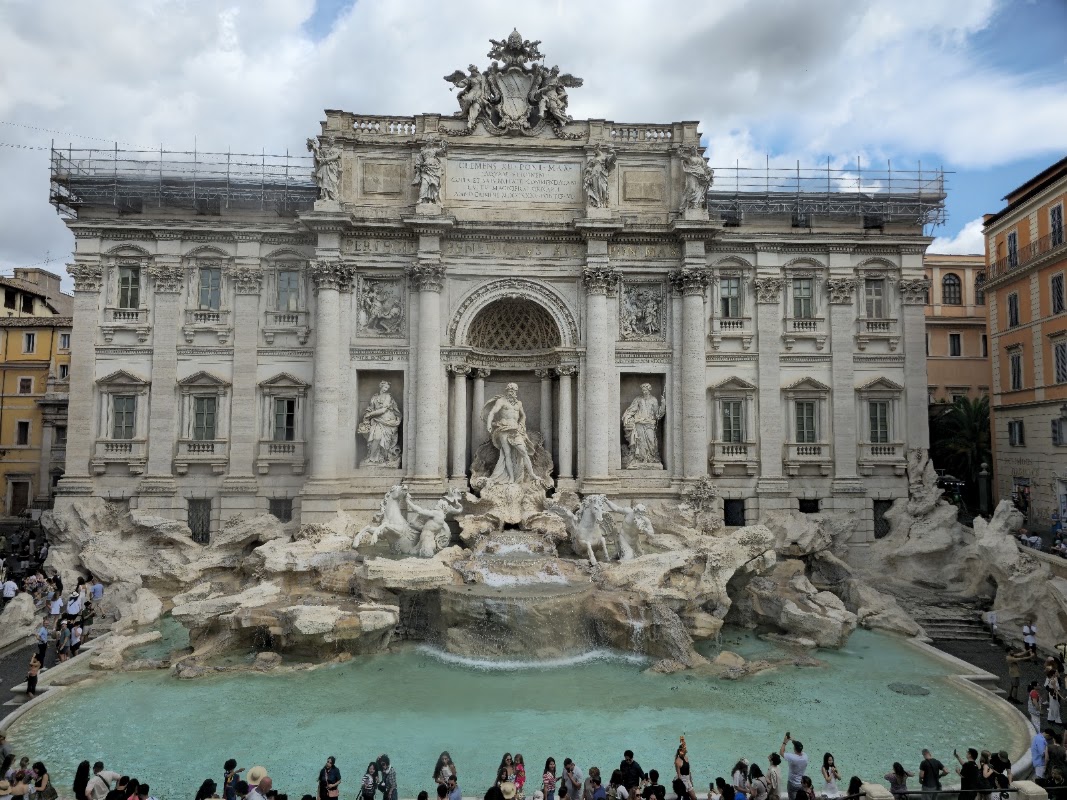
Among Rome’s many fountains, the Trevi Fountain captivates travelers with its overwhelming beauty and vibrant energy. More than just a beautiful fountain, it holds deep history as the terminus of the ancient ‘Aqua Virgo’ aqueduct, built by Agrippa in 19 BC.
Its current form was completed in the 18th century, designed by Nicola Salvi. The Baroque sculpture, perfectly integrated with the Palazzo Poli behind it, resembles a colossal theater. The dynamic, muscular beauty of the sea god Neptune (Poseidon) enthroned in the center, flanked by goddesses representing ‘Abundance’ and ‘Health,’ is a must-see.
The famous tradition of tossing coins over your shoulder (one coin for a return to Rome, two for finding love…) remains, but as of February 2026, entry to the fountain area has become ticketed at €2 per person. The good news is that this new ticketing system has helped manage crowds, making it significantly easier to capture beautiful photos than before. The vibrant, light-up spectacle at night, like a sleepless castle, is also exceptional! Do enjoy, but be mindful of pickpockets.
Pantheon
📍 Address: Piazza della Rotonda, 00186 Roma RM, Italy
Praised by Michelangelo as an ‘angel’s design,’ the Pantheon stands as the world’s best-preserved ancient Roman building. Originally constructed in 27 BC and rebuilt by Emperor Hadrian around 125 AD, it retains its original form to this day, housing the tombs of master artist Raphael and Italy’s first king, Vittorio Emanuele II.
Its greatest highlight is the gigantic dome (cupola) overhead and the ‘oculus’ (eye) – a perfectly circular 9-meter diameter opening – at its center. This sole light source for the temple has no glass, allowing rainwater to pour in relentlessly on rainy days. However, meticulously calculated, inconspicuous drainage channels are laid beneath the marble floor, showcasing astonishing 2,000-year-old water management technology to the modern world. The mystical sight of sunlight illuminating the interior truly evokes a connection with the gods.
⚠️ Travel Advice: An admission fee (€5) is now in effect. Purchasing tickets on-site can lead to long queues, so booking a time-slot ticket online in advance is the smart way to visit.
Capuchin Crypt (Santa Maria della Concezione dei Cappuccini Church)
📍 Address: 00187, Via Vittorio Veneto, 27, 00187 Roma RM, Italy
Just a short distance from the bustling Spanish Steps and Trevi Fountain, on Via Vittorio Veneto, lies a unique space in Rome that offers a profound reflection on ‘life and death.’ This is the Capuchin Crypt, commonly known as the ‘Bone Church,’ featuring the underground ossuary of Capuchin friars.
Stepping underground, you’ll find the skeletons of approximately 4,000 friars meticulously arranged as decorations on the walls and ceilings. The arches and chandeliers made of bones are far from grotesque; instead, they represent the ultimate beauty of the philosophical concept of ‘Memento Mori’ (Remember Death). The Latin message, ‘Tonight, my body returns to dust, but tomorrow your body will return to dust in the same way’ (Thou art dust, and unto dust shalt thou return), resonates with quiet awe.
⚠️ Travel Advice: Photography is strictly prohibited inside. Put away your phone camera, listen to the English audio guide, and spend a quiet moment in the Eternal City reflecting on the ‘fragility and preciousness of life.’
Practical Tips for 120% Enjoyment of Rome Sightseeing
Rome boasts an immense scale, often referred to as ‘the entire city being a World Heritage Site.’ To explore efficiently and fully enjoy your visit, keep the following points in mind:
1. Advance Booking is an Absolute Rule
World travelers flock to popular sites like the Colosseum and Pantheon. Waiting for hours in line for same-day tickets is a waste of precious time. Securing your tickets online at least a month before your trip is ‘the golden rule for Rome sightseeing.’
2. Don’t Underestimate ‘Cobblestones’ and ‘Sunshine’
Most streets in Rome are historically uneven cobblestone paths. Comfortable, well-cushioned sneakers are a far better choice than fashionable shoes. Additionally, the summer sun can be fiercely reflective, making sunglasses and frequent hydration your lifelines.
3. Use Digital Tools to Understand the ‘Meaning’
The pillars and reliefs of ancient ruins transform from ‘just stones’ into ‘dramatic stages’ when you know their backstory. Utilize tools like Google Lens’s translation feature to enhance your understanding of ancient Rome before embarking on your city stroll!
![[2026 Update] Must-Visit Kaohsiung! 5 Top Attractions & Essential Local Eats](https://images.unsplash.com/photo-1677607220167-1abe92f648b0?crop=entropy&cs=tinysrgb&fit=max&fm=jpg&ixid=M3w5MDExNDh8MHwxfHNlYXJjaHw0fHxLYW9oc2l1bmclMjBUYWl3YW4lMjBsYW5kc2NhcGV8ZW58MHwwfHx8MTc3NzAxMDQ3Nnww&ixlib=rb-4.1.0&q=80&w=1080 "[2026 Update] Must-Visit Kaohsiung! 5 Top Attractions & Essential Local Eats")


'%3E%3Cpath%20stroke='%23000'%20stroke-width='4'%20d='m-35-37-13%2020m5%203%2013-20m5%203-13%2020m63%2042%206-9m1-2%206-9m5%203-6%209m-1%202-6%209m5%203%206-9m1-2%206-9m-96%200%2013%2020m5-3-6-9m-1-2-6-9m5-3%2013%2020m63-42-6-9m-1-2-6-9m5-3%2013%2020m5-3-6-9m-1-2-6-9'/%3E%3Ccircle%20r='24'%20fill='%23cd2e3a'/%3E%3Cpath%20fill='%230047a0'%20d='M0%200a12%2012%200%201%201%2020%2013%2024%2024%200%201%201-40-26A12%2012%200%201%200%200%200'/%3E%3C/g%3E%3C/svg%3E)
'/%3E%3Cpath%20fill='%23b2b2b2'%20d='M241%20382q0%2016%2017%2026%2017%2011%2042%2011t42-11q16-11%2017-26V269H241'/%3E%3Cpath%20fill='%239f7e00'%20d='M241%20379q0%2014%208%2023%209%209%2021%209%2014%200%2021-9%209-9%209-23V269h-59'/%3E%3Cpath%20d='M241%20339v-70h59v110q0%2014-9%2023l-6%205v-68h-15v72q-8%200-14-4v-68zm59%2040c0%2022%2015%2032%2029%2032%2021%200%2030-18%2030-32v-40h-59'/%3E%3Cpath%20fill='%239f7e00'%20d='M266%20277v5h2v12h-3v-5h2v-5h-9v5h2v5h-4v9h3v18h-5v10h34v-10h-5v-18h3v-9h-4v-5h2v-5h-9v5h2v5h-3v-12h2v-5zm42%20101q0%2010%206%2017%206%206%2015%207%2010-1%2016-7%206-7%206-17v-29h-43'/%3E%3Ccircle%20fill='%230044ad'%20cx='329.5'%20cy='372'%20r='6'/%3E%3Cellipse%20fill='%230044ad'%20cx='300'%20cy='340'%20rx='16'%20ry='21'/%3E%3C/svg%3E)


