

Known nationwide for its charming townscape and ‘onsen-meguri’ (hot spring hopping), ‘Kurokawa Onsen,’ located in Minamioguni Town, Aso District, Kumamoto Prefecture, is actually surrounded by untouched nature, sacred spots, and numerous deep, little-known tourist attractions.
This article carefully selects and introduces everything from classic to slightly more niche hidden gems for travelers who want to experience the authentic local atmosphere, whether they are on a short trip or planning a long stay in a hot spring town. We will also thoroughly explain the best visiting hours and deep insights and precautions that only locals know.
Suzume Jigoku
📍 Address: Manganji Oyakurinchi, Minamioguni-machi, Aso-gun, Kumamoto 869-2403, Japan
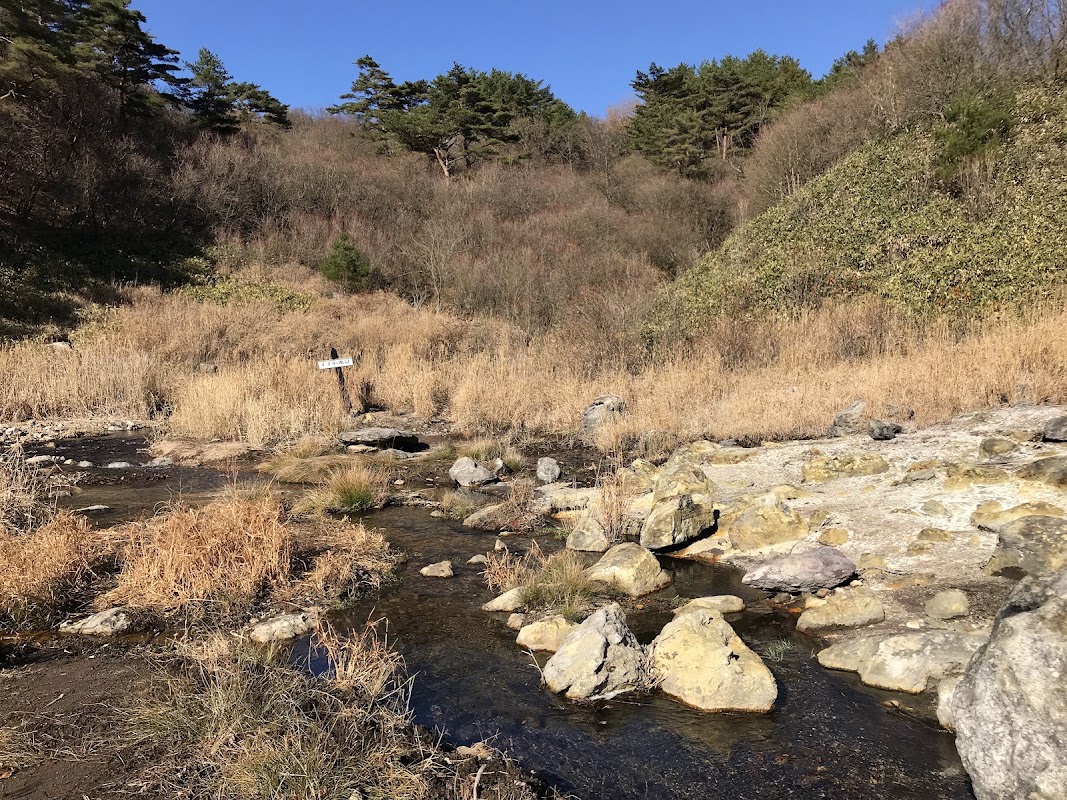
Located in a corner of ‘Seiryu-no-Mori’ (Forest of Clear Streams), accessible by car from the center of Kurokawa Onsen, ‘Suzume Jigoku’ (Sparrow Hell) allows you to feel the desolate breath of nature. The terrifying name is said to originate from the fact that small animals like sparrows (suzume) sometimes perish due to the sulfuric acid gas (volcanic gas) erupting from the area.
The strong smell of sulfur hits your nose the moment you step out of the parking lot, and as you proceed further along the walking trail, you can observe gas bubbling up from a cold spring. Some say there used to be more smoke, but even today, it is a profound spot where you can experience the earth’s activity up close. On the other hand, this cold spring is also reputed to be effective for skin diseases, and this dichotomy adds to its mysterious charm.
As a practical note for visiting, while the area largely retains its natural state, some parts of the walking trails have not been fully restored after past disasters and are a bit rough. Additionally, public restrooms in the vicinity may be unusable or not well-maintained, so it is highly recommended to use the restrooms in Kurokawa Onsen town or facilities along the way before heading there. It’s best to quickly appreciate the wonders of nature without lingering too long.
Meotodaki Falls
📍 Address: Manganji, Minamioguni-machi, Aso-gun, Kumamoto 869-2402, Japan
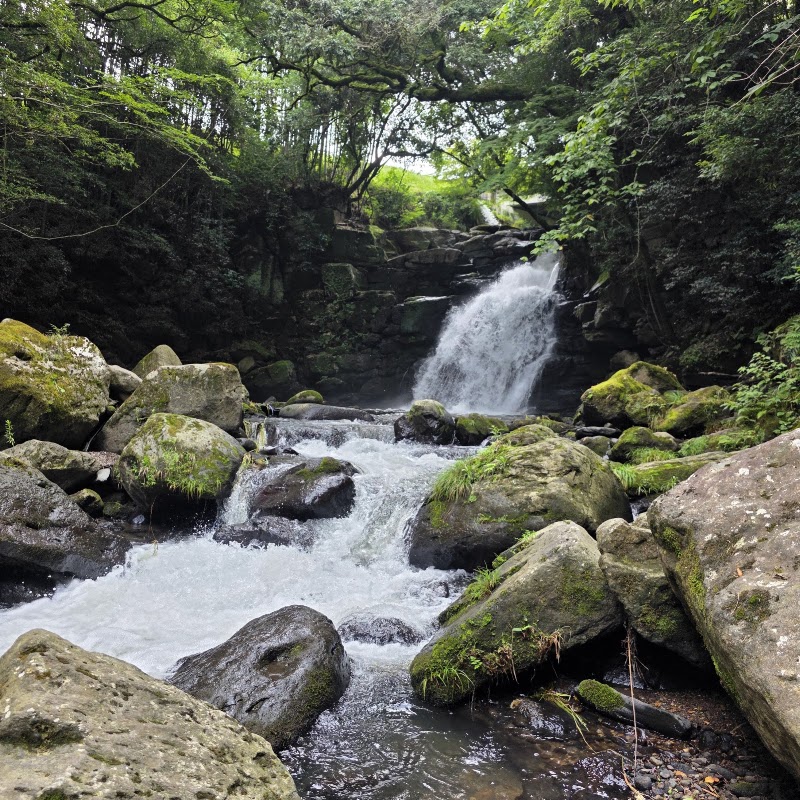
‘Meotodaki Falls’ (Husband and Wife Falls), recognizable by a sudden sign while driving on National Route 442, boasts one of the most mystical landscapes around Kurokawa Onsen. Here, you can witness a nationally rare sight where two waterfalls from different rivers—the 15-meter ‘Otokodaki’ (Male Falls) from the Tanohara River and the 12-meter ‘Onnadaki’ (Female Falls) from the Oda River—merge into a single basin.
Because the two streams unite into one, it is known as the ‘Encounter Falls’ or ‘Matchmaking Falls.’ At the souvenir shop at the entrance to the falls, heart-shaped ’ema’ (votive tablets) are sold for writing wishes. The numerous ’ema’ tied densely around the stairs of the walking path attest to the high popularity of this spot.
It’s about a 5-minute walk from the parking lot to the waterfall basin, but you will need to ascend and descend steep steel stairs, so wear comfortable shoes. The best time to visit is, without a doubt, ‘early morning.’ The morning sun shines from the direction of Otokodaki, creating beautiful light rays amidst the spray, an overwhelmingly majestic presence as if you’ve wandered into the world of ‘Princess Mononoke.’ It’s a breathtaking view well worth the physical effort.
Kurokawa Onsen Anayu Oosugi
📍 Address: Manganji, Minamioguni-machi, Aso-gun, Kumamoto 869-2402, Japan
‘Anayu Oosugi’ (Great Cedar of Anayu Hot Spring) once stood right next to the communal bath ‘Anayu’ along the Tanohara River flowing through the center of Kurokawa Onsen. This magnificent great cedar, said to be 700 years old, used to tower over Anayu, cherished as a historic landmark symbolizing the hot spring town.
Unfortunately, due to damage from past natural disasters and the risk of collapse from heavy branches, it was felled, and the giant tree itself no longer exists. However, its former site has now been developed into the ‘Anayu Oosugi Plaza,’ reborn as a new relaxing spot in the hot spring town.
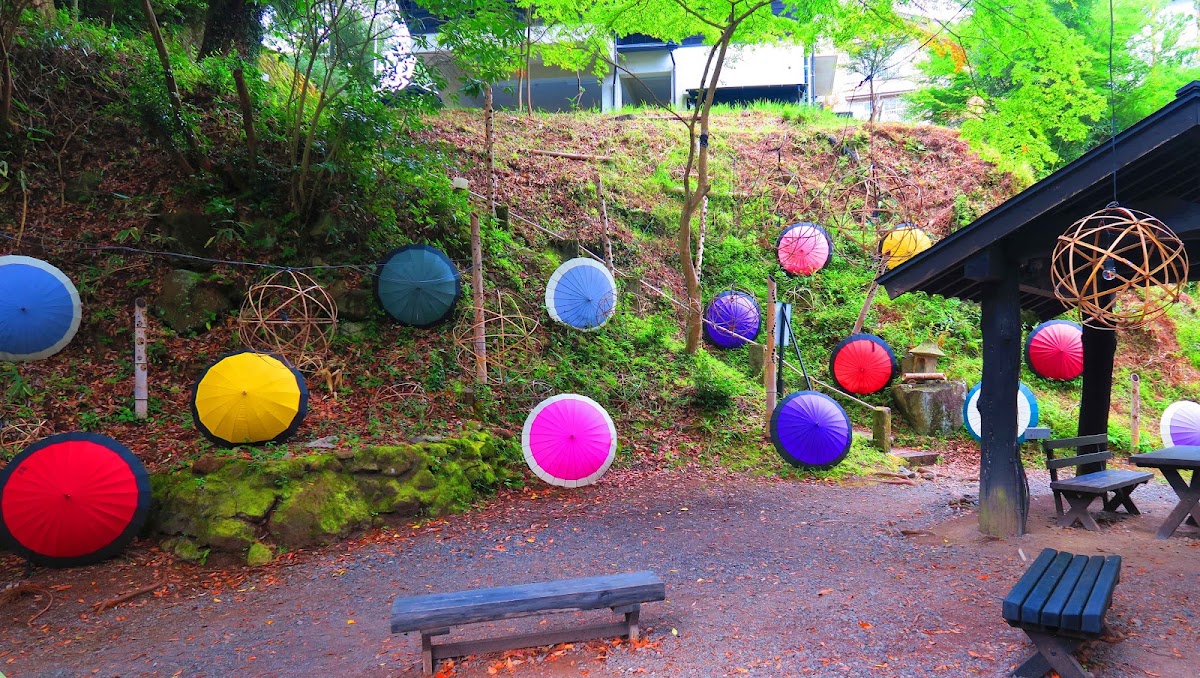
Especially during the ‘Yusuzumi’ (cooling down after a bath) season in summer, this plaza is adorned with colorful Japanese umbrellas for ‘Kasa Akari’ (umbrella lights) and special ‘wind chime arches’ crafted from local Oguni cedar. At night, it’s beautifully lit up, becoming a perfect photo spot where the sound of the river and the refreshing wind chimes resonate. Even though the great cedar is gone, fireflies still flutter here and there, quietly preserving the ambiance of the hot spring town.
Oda Onsen
📍 Address: Manganji, Minamioguni-machi, Aso-gun, Kumamoto 869-2402, Japan
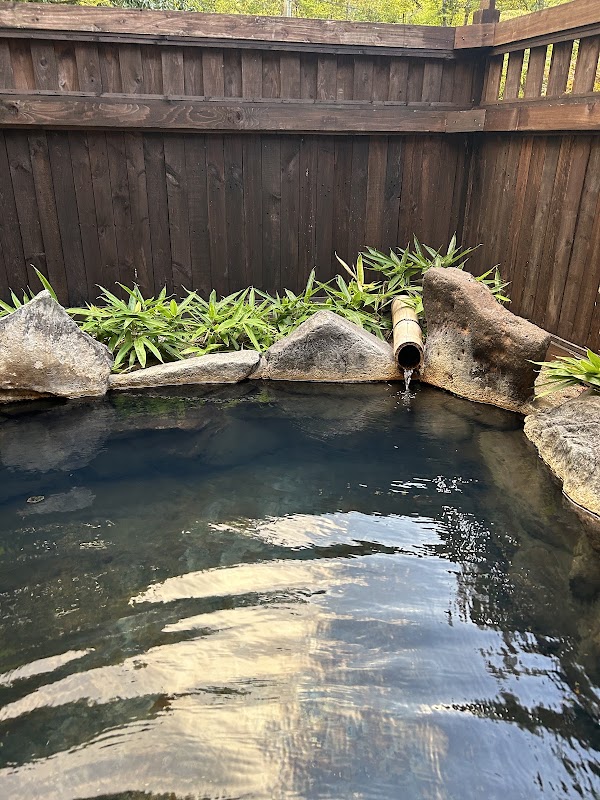
Just a 5-minute drive or 20-minute walk from Kurokawa Onsen, quietly nestled deep within a tranquil rural landscape, is ‘Oda Onsen.’ Opened in the 1970s, it’s a relatively new hot spring area, but precisely because of this, it hasn’t been overly commercialized, attracting adults as a high-quality, little-known retreat.
In stark contrast to the lively hot spring hopping streets of Kurokawa Onsen, Oda Onsen is ‘tranquility’ itself. High-quality ryokans with all rooms detached or featuring private open-air baths are scattered throughout, making it highly recommended for travelers who wish to genuinely unwind away from the hustle and bustle. The spring water is said to contain many skin-beautifying ingredients, leaving the skin feeling moist after bathing.
When strolling around, only the sound of the river and birdsong echo, and you can savor the serene ‘satoyama’ (rural landscape) while soaking in the free footbaths found here and there. For those who want to enjoy sightseeing in Kurokawa Onsen but prefer a quieter, more peaceful place for accommodation and stay, this truly offers an ideal choice.
Okunoin
📍 Address: Manganji, Minamioguni-machi, Aso-gun, Kumamoto 869-2402, Japan
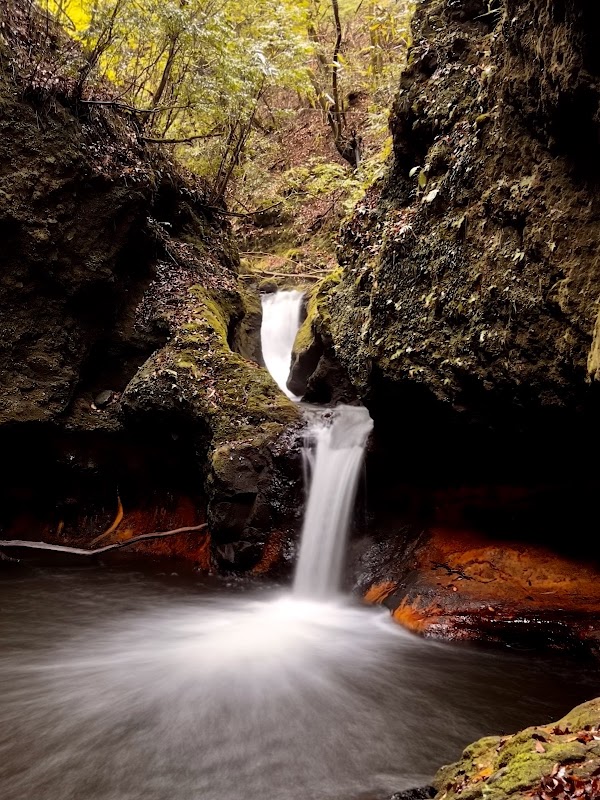
‘Okunoin’ (Inner Sanctuary), situated deep in a valley a little away from the hustle and bustle of Kurokawa Onsen town, is more than just a tourist spot—it’s a ‘serious sacred ground’ deeply revered by locals. It enshrines Fudo Myoo (Acala, the Immovable Wisdom King), who protects the water sources and hot springs of Kurokawa Onsen, and you will undoubtedly feel a distinct change in the air’s temperature and quality the moment you step in.
As you proceed along the narrow approach from the entrance, numerous Buddhist statues and cliffside carvings line the moss-covered rock face, and at the innermost part, a Fudo Myoo statue and a small waterfall appear. Facing the solemn gaze of Fudo Myoo in the dimly lit valley is an experience that is quite literally spine-chilling in its solemnity.
The most crucial points when visiting this place are ‘clothing and time of day.’ The approach is very narrow, with crumbling sections, rocky areas with poor footing, and stairs, so absolutely avoid light attire like sandals and wear sneakers. Furthermore, it is very dangerous to visit after dusk due to the dimness. It is strongly recommended to visit during bright morning or daytime, and preferably not alone.
Tips for Efficient Sightseeing Around Kurokawa Onsen
The tourist spots in Kurokawa Onsen and its surroundings (Minamioguni Town area) are scattered amidst nature, making transportation and route selection crucial. Rental cars or private cars are generally recommended for getting around. Especially for natural spots like ‘Suzume Jigoku’ and ‘Meotodaki Falls,’ public transport access is difficult, so having a car allows you to experience their charm to the fullest.
Also, since there are many natural spots, securing restrooms is a vital concern. Public restrooms in mountain parking lots may not be well-equipped, so always make sure to use the restrooms at the Kurokawa Onsen town tourist information center, convenience stores, or roadside stations along the way as a precautionary measure.
Regarding clothing, ‘yukata’ and ‘geta’ (traditional Japanese attire) are fine for enjoying the hot spring town’s baths, but if you plan to descend the stairs at ‘Okunoin’ or ‘Meotodaki Falls,’ be sure to have comfortable sneakers in your car. Prioritize safety and enjoy the profound nature that Kumamoto and Aso boast.


'%3E%3Cpath%20stroke='%23000'%20stroke-width='4'%20d='m-35-37-13%2020m5%203%2013-20m5%203-13%2020m63%2042%206-9m1-2%206-9m5%203-6%209m-1%202-6%209m5%203%206-9m1-2%206-9m-96%200%2013%2020m5-3-6-9m-1-2-6-9m5-3%2013%2020m63-42-6-9m-1-2-6-9m5-3%2013%2020m5-3-6-9m-1-2-6-9'/%3E%3Ccircle%20r='24'%20fill='%23cd2e3a'/%3E%3Cpath%20fill='%230047a0'%20d='M0%200a12%2012%200%201%201%2020%2013%2024%2024%200%201%201-40-26A12%2012%200%201%200%200%200'/%3E%3C/g%3E%3C/svg%3E)
'/%3E%3Cpath%20fill='%23b2b2b2'%20d='M241%20382q0%2016%2017%2026%2017%2011%2042%2011t42-11q16-11%2017-26V269H241'/%3E%3Cpath%20fill='%239f7e00'%20d='M241%20379q0%2014%208%2023%209%209%2021%209%2014%200%2021-9%209-9%209-23V269h-59'/%3E%3Cpath%20d='M241%20339v-70h59v110q0%2014-9%2023l-6%205v-68h-15v72q-8%200-14-4v-68zm59%2040c0%2022%2015%2032%2029%2032%2021%200%2030-18%2030-32v-40h-59'/%3E%3Cpath%20fill='%239f7e00'%20d='M266%20277v5h2v12h-3v-5h2v-5h-9v5h2v5h-4v9h3v18h-5v10h34v-10h-5v-18h3v-9h-4v-5h2v-5h-9v5h2v5h-3v-12h2v-5zm42%20101q0%2010%206%2017%206%206%2015%207%2010-1%2016-7%206-7%206-17v-29h-43'/%3E%3Ccircle%20fill='%230044ad'%20cx='329.5'%20cy='372'%20r='6'/%3E%3Cellipse%20fill='%230044ad'%20cx='300'%20cy='340'%20rx='16'%20ry='21'/%3E%3C/svg%3E)


