

Matsushima, Miyagi Prefecture, is renowned as one of Japan’s Three Great Scenic Views. The panoramic vista of Matsushima Bay, dotted with over 260 large and small islands, has captivated countless people, including the famous haiku poet Matsuo Basho, since ancient times.
However, enjoying Matsushima isn’t just about ‘gazing at the scenery.’ It’s filled with authentic experiences only accessible by visiting in person: the solemn atmosphere of historic temples, thrilling ‘sukashibashi’ (see-through bridges), and hidden scenic spots known only to locals.
This time, we’ll introduce carefully selected ‘must-visit tourist attractions’ that will truly satisfy all travelers, from first-time visitors to repeaters. We’ll go beyond textbook explanations to provide practical information, including in-depth highlights and the best times to visit.
Fukuurajima Island
📍 Address: 39-1 Sensui, Matsushima, Matsushima-machi, Miyagi-gun, Miyagi 981-0213, Japan
Fukuurajima Island, floating to the east of Matsushima Kaigan, is a lush natural spot designated entirely as a Prefectural Natural Park. It’s connected to the mainland by the vibrant vermilion ‘Fukuura Bridge,’ which is 252m long, and can be accessed on foot after paying an admission fee. This bridge also has the romantic nickname ‘Encounter Bridge’ (Deai-bashi), making it a popular power spot believed to bring good fortune in relationships when crossed.
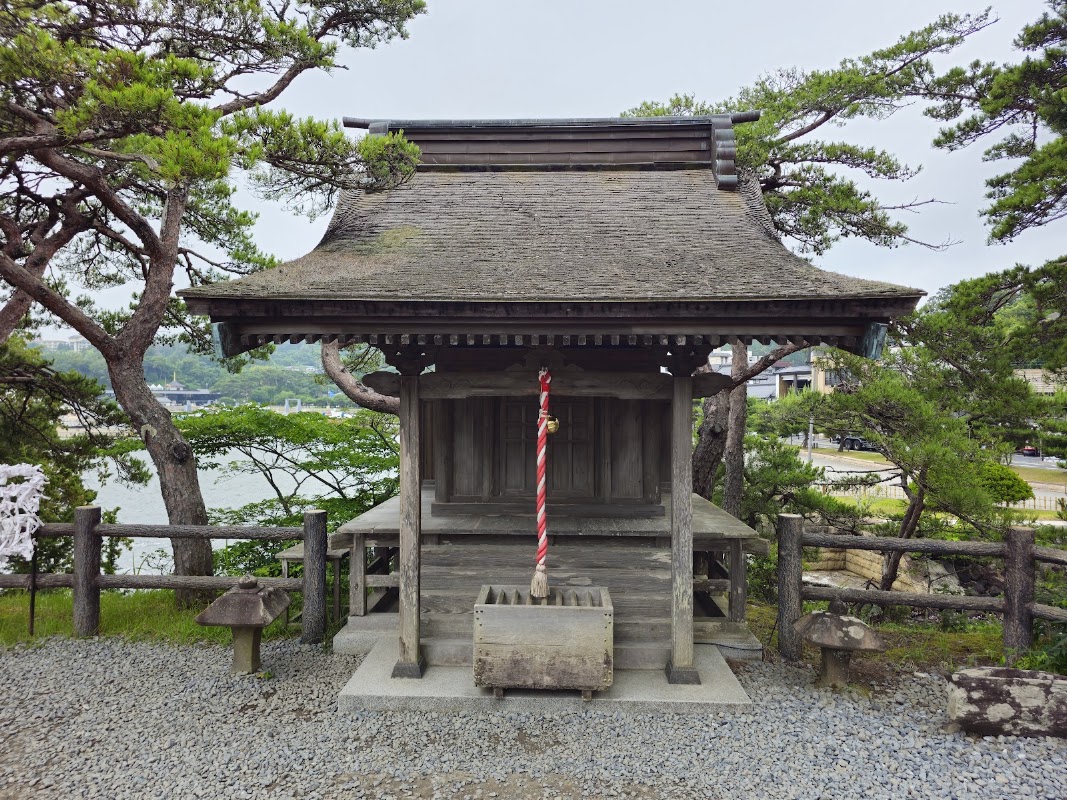
The island has well-maintained walking paths that can be completed in about an hour, allowing you to feel the pleasant sea breeze unique to Matsushima on its slightly undulating terrain. The highlight is the ‘Miharashidai’ (Observation Deck) at the island’s tip. From here, you can get a close-up panoramic view of the beautiful islands floating in Matsushima Bay, such as ‘Kunoshima’ (shaped like a dragon), ‘Yakishima,’ and ‘Hikiodoshima,’ making it the island’s premier viewpoint that captivates many visitors.
Furthermore, at Bentendo Temple along the path, you can enjoy a unique custom called ‘Daruma Omikuji.’ If you draw a ‘kyou’ (bad luck) fortune, you leave the Daruma doll itself in the temple’s lattice window. The sight of Daruma dolls densely lining the lattices is a rare spectacle. You can enjoy seasonal flowers, and the autumn foliage season offers a spectacular view. It’s an island where nature and history harmonize, revealing new scenery with every step you take.
Zuiganji Temple Godaido Hall
📍 Address: 111 Machiuchi, Matsushima, Matsushima-machi, Miyagi-gun, Miyagi 981-0213, Japan
Godaido Hall, familiar from brochures as a symbol of Matsushima, is a historic structure built on a small island just off the coast. Its origins trace back to the Bishamondo Hall built by Sakanoue no Tamuramaro in 807. The current building, reconstructed by Date Masamune in 1604, is the oldest existing Momoyama-style architecture in the Tohoku region (Nationally Designated Important Cultural Property). Admission is free, making it an excellent starting point for Matsushima sightseeing.
The small bridge leading to Godaido is a ‘sukashibashi’ (see-through bridge), where you can see the sea surface through the gaps in the floorboards. This carries a cautionary meaning: ‘brace your mind and body before entering the sacred realm,’ offering a slightly thrilling experience with every step. The sight of waves below through the gaps and the scent of the sea breeze create a mystical sensation, as if transitioning from the mundane world to a special spiritual space.
Though the hall itself is small, its aged wooden surface, bleached white over centuries, conveys over 400 years of history. Elaborate carvings of the twelve Chinese zodiac animals are placed on all four sides (kaerumata) of the building according to their respective directions, and a popular way to enjoy it is to walk around, searching for your own zodiac sign. During the day, it gets crowded with many tourists, so if you wish to quietly photograph the collaboration of Matsushima Bay and Godaido, visiting before around 10:00 AM is highly recommended.
Tomiyama (Mt. Tomi)
📍 Address: Miura, Tezaru, Matsushima-machi, Miyagi-gun, Miyagi 981-0211, Japan
Tomiyama (Mt. Tomi) is one of the four renowned viewpoints of Matsushima Bay, known as ‘Matsushima Shidaikan’ (Four Great Views of Matsushima), and is praised as the ‘Reikan’ (Beautiful View). From its summit, approximately 116m above sea level, a grand panorama of Matsushima Bay unfolds directly below. This historic scenic spot was even visited by Emperor Meiji and Emperor Taisho. Being slightly removed from the bustling coastal area, it’s an ‘insider’s hidden gem’ where you can enjoy the magnificent scenery in quiet solitude, away from the crowds.
Near the summit are ‘Tomiyama Kannon-do,’ one of the three Oshu Kannon temples, and ‘Daigyoji Temple,’ a Rinzai sect temple. Daigyoji Temple’s garden can be entered for a 100-yen admission fee, where a meticulously maintained dry landscape garden beautifully harmonizes with the majestic views of Matsushima Bay. The temple grounds are so immaculately clean that not a single piece of litter can be found, allowing for a serene and soul-cleansing experience. Visiting at dusk will treat you to a dramatic sunset over Matsushima Bay, dyed in golden hues.
However, access requires some preparation. If going by car, you’ll need to drive up a narrow, unpaved mountain road where passing is difficult, or park at the base and climb 300 steep stone steps for about 15 minutes. For those less confident in driving, hiking up from the bottom is a safer bet. But the panoramic view that awaits you after overcoming these challenges promises a breathtaking and unforgettable experience.
Saigyo Modoshi no Matsu Park
📍 Address: 2 Inuta, Matsushima, Matsushima-machi, Miyagi-gun, Miyagi 981-0213, Japan
Saigyo Modoshi no Matsu Park is an exceptionally open viewpoint situated on a hill overlooking Matsushima Bay. Its name originates from an anecdote where the Heian-era poet-monk Saigyo visited Matsushima but abandoned his journey after losing a Zen debate with a child, making it a place to touch upon history and literary romance, not just scenery. It’s famous as a cherry blossom spot with over 260 trees blooming in spring, but it also enjoys overwhelming popularity as a panoramic viewpoint offering views of Matsushima’s islands at any time of the year.
The greatest charm of this park lies in its excellent accessibility to a stunning view. From the parking lot at the very back of the park, it’s just about 50 meters, a short uphill walk, to reach the ‘Byakue Kannon Observation Deck.’ From there, a miniature garden-like panorama unfolds below, encompassing Matsushima Bay, scattered green islets, and even the vermilion ‘Fukuura Bridge’ mentioned earlier. Since it doesn’t require a long walk, families with small children or those with mobility concerns can enjoy the magnificent view with peace of mind.
Additionally, the park features a modern, all-glass cafe where you can enjoy coffee and sweets while admiring the spectacular view. As the colors of the sky and sea change moment by moment depending on the time of day, simply sitting on a bench and leisurely gazing at the scenery allows for a truly luxurious experience. The road from Matsushima Kaigan Station can be a bit narrow, so please drive carefully and pay close attention to pedestrians when visiting by car.
Entsuin Temple
📍 Address: 67 Machiuchi, Matsushima, Matsushima-machi, Miyagi-gun, Miyagi 981-0213, Japan
Entsuin Temple, located immediately west of Zuiganji Temple, is a historically profound temple housing the mausoleum (Sanbutsudo) of Date Mitsumune, the legitimate grandson of Date Masamune. Upon paying the admission fee and stepping inside, you are greeted by beautiful dry landscape stone gardens and moss gardens, offering a space of tranquility and healing in stark contrast to the bustling main streets of Matsushima. From spring to summer, fresh greenery and roses, and in autumn, spectacular autumn foliage adorn the temple grounds, allowing visitors to enjoy overwhelming seasonal beauty at any time of year.
Inside the Zushi (miniature shrine) of the Sanbutsudo Hall, a Nationally Designated Important Cultural Property, Western cultural influences brought back by Hasekura Tsunenaga from Europe are evident. Vivid depictions of what are considered Japan’s oldest Western roses and Florentine lilies, symbols of Florence, can be seen. This exotic atmosphere hidden within a purely Japanese temple architecture conveys the Date family’s progressive spirit to the present day.
And overwhelmingly popular among visitors to Entsuin Temple is the ‘Juzu (rosary) Making Experience.’ In the main hall, you can intuitively choose your favorite natural stones and glass beads to create your own original juzu. After completion, staff carefully explain the meaning and benefits of the stones you’ve chosen, which is highly praised in reviews, with many saying it ‘feels like their deep psychology was revealed.’ It’s an excellent activity that allows you to take home a tangible memory of Matsushima.
Tips for Enjoying Matsushima Sightseeing 120%
Matsushima’s tourist area is relatively compact, but with many attractions, efficient planning determines the depth of your experience. Especially for popular spots like ‘Godaido’ and ‘Entsuin,’ which get very crowded during the day, it’s a golden rule for those who want to enjoy photography or seek tranquility to visit early in the morning (around 8:30 AM to 10:00 AM).
Furthermore, Matsushima’s scenic viewpoints display completely different expressions depending on the time of day. ‘Saigyo Modoshi no Matsu Park’ is most beautiful with its contrast of blue sky and sea during the day, while ‘Tomiyama’ is ideal for watching the sea surface turn golden at sunset. If you’re using a rental car, planning a route that visits hilltop observation spots to avoid coastal congestion will allow for smoother travel.
Moreover, for breaks during your sightseeing, we recommend not only trying various seafood snacks but also indulging in Japanese sweets unique to the temple town’s ‘monzenmachi’ (temple gate district) or spending some time at a cafe overlooking the magnificent scenery. Wear comfortable shoes and immerse yourself in Matsushima’s unique ‘fusion of sea and history.’
![[2026 Latest] 5 Must-Visit Hirosaki Tourist Spots! A Complete Guide to History, Stunning Scenery, and Deep Local Experiences for Travelers](https://images.unsplash.com/photo-1696053553512-3616c28488b3?crop=entropy&cs=tinysrgb&fit=max&fm=jpg&ixid=M3w5MDExNDh8MHwxfHNlYXJjaHw1fHxoaXJvc2FraXxlbnwwfDB8fHwxNzgzMTE2MDE4fDA&ixlib=rb-4.1.0&q=80&w=1080 "[2026 Latest] 5 Must-Visit Hirosaki Tourist Spots! A Complete Guide to History, Stunning Scenery, and Deep Local Experiences for Travelers")


'%3E%3Cpath%20stroke='%23000'%20stroke-width='4'%20d='m-35-37-13%2020m5%203%2013-20m5%203-13%2020m63%2042%206-9m1-2%206-9m5%203-6%209m-1%202-6%209m5%203%206-9m1-2%206-9m-96%200%2013%2020m5-3-6-9m-1-2-6-9m5-3%2013%2020m63-42-6-9m-1-2-6-9m5-3%2013%2020m5-3-6-9m-1-2-6-9'/%3E%3Ccircle%20r='24'%20fill='%23cd2e3a'/%3E%3Cpath%20fill='%230047a0'%20d='M0%200a12%2012%200%201%201%2020%2013%2024%2024%200%201%201-40-26A12%2012%200%201%200%200%200'/%3E%3C/g%3E%3C/svg%3E)
'/%3E%3Cpath%20fill='%23b2b2b2'%20d='M241%20382q0%2016%2017%2026%2017%2011%2042%2011t42-11q16-11%2017-26V269H241'/%3E%3Cpath%20fill='%239f7e00'%20d='M241%20379q0%2014%208%2023%209%209%2021%209%2014%200%2021-9%209-9%209-23V269h-59'/%3E%3Cpath%20d='M241%20339v-70h59v110q0%2014-9%2023l-6%205v-68h-15v72q-8%200-14-4v-68zm59%2040c0%2022%2015%2032%2029%2032%2021%200%2030-18%2030-32v-40h-59'/%3E%3Cpath%20fill='%239f7e00'%20d='M266%20277v5h2v12h-3v-5h2v-5h-9v5h2v5h-4v9h3v18h-5v10h34v-10h-5v-18h3v-9h-4v-5h2v-5h-9v5h2v5h-3v-12h2v-5zm42%20101q0%2010%206%2017%206%206%2015%207%2010-1%2016-7%206-7%206-17v-29h-43'/%3E%3Ccircle%20fill='%230044ad'%20cx='329.5'%20cy='372'%20r='6'/%3E%3Cellipse%20fill='%230044ad'%20cx='300'%20cy='340'%20rx='16'%20ry='21'/%3E%3C/svg%3E)


