

Journey to Discover the Profound Charms of Yamagata Prefecture
Yamagata Prefecture is a captivating region where magnificent nature, ancient history, and unique local culture thrive. From breathtaking scenic spots that display completely different expressions with each passing season to charming townscapes beloved by locals, there are numerous memorable places even for short-term travelers.
This article goes beyond a mere catalog-style introduction, carefully selecting and presenting tips to avoid crowds, practical advice for navigating locally, and ‘must-not-miss’ deep attractions. Prepare thoroughly and fully immerse yourself in the unique energy and atmosphere of Yamagata.
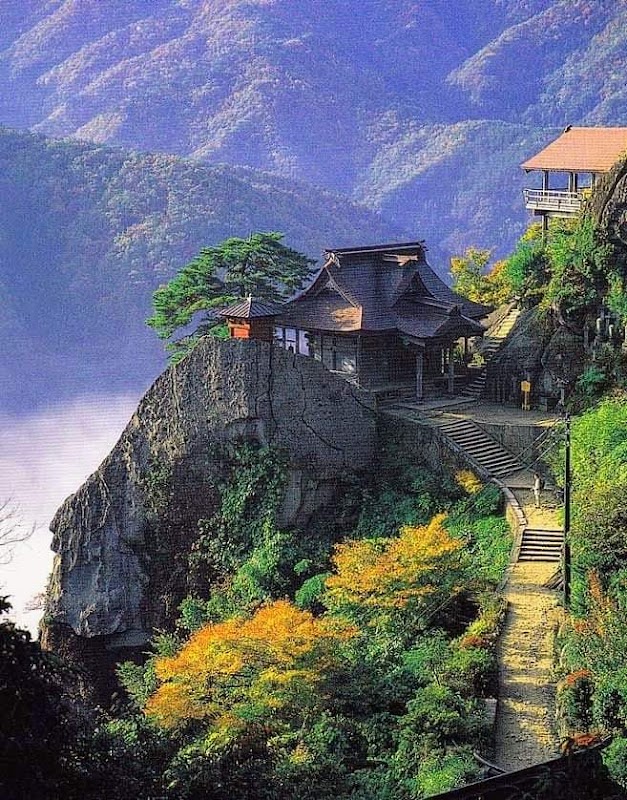
Hojusan Risshakuji Temple
📍 Address: 4456-1 Yamadera, Yamagata, 999-3301, Japan
‘In the utter silence of the cicada’s cry, a sound penetrates the rocks.’ – This incredibly famous haiku by Matsuo Basho sets the stage for Hojusan Risshakuji Temple, commonly known as ‘Yamadera.’ Founded in 860 by Jikaku Daishi Ennin of the Tendai sect, this historic sacred site has long been revered as a power spot for severing bad ties and forming good ones.
The main highlight here is the 1,015 stone steps leading to Okunoin. While ‘over 1,000 steps’ might seem daunting, the path is beautiful with sunlight filtering through the trees, and the height of each step is not too strenuous. Beginners can still experience a sense of accomplishment by enjoying the scenery and climbing at their own pace. It’s said that a worldly desire disappears with each step climbed, making it perfect for mental and physical rejuvenation.
There are plenty of sights to see along the way. The Konponchudo Hall, a National Important Cultural Property, is said to be one of Japan’s oldest beechwood buildings. The view from Godaido Hall, which juts out from the cliffside, is a supreme vista that only those who complete the climb can savor. During long holidays, the approach can get crowded, so ‘first thing in the morning’ is highly recommended if you wish to enjoy a tranquil atmosphere. Also, those collecting goshuin for the Shiji Kairo (Four Temples Pilgrimage) should note that dedicated goshuincho (stamp books) are only available at Konponchudo near the trailhead. Searching for cute ‘Basho-nyan’ goods at the shops along the approach can also be a little delightful break.
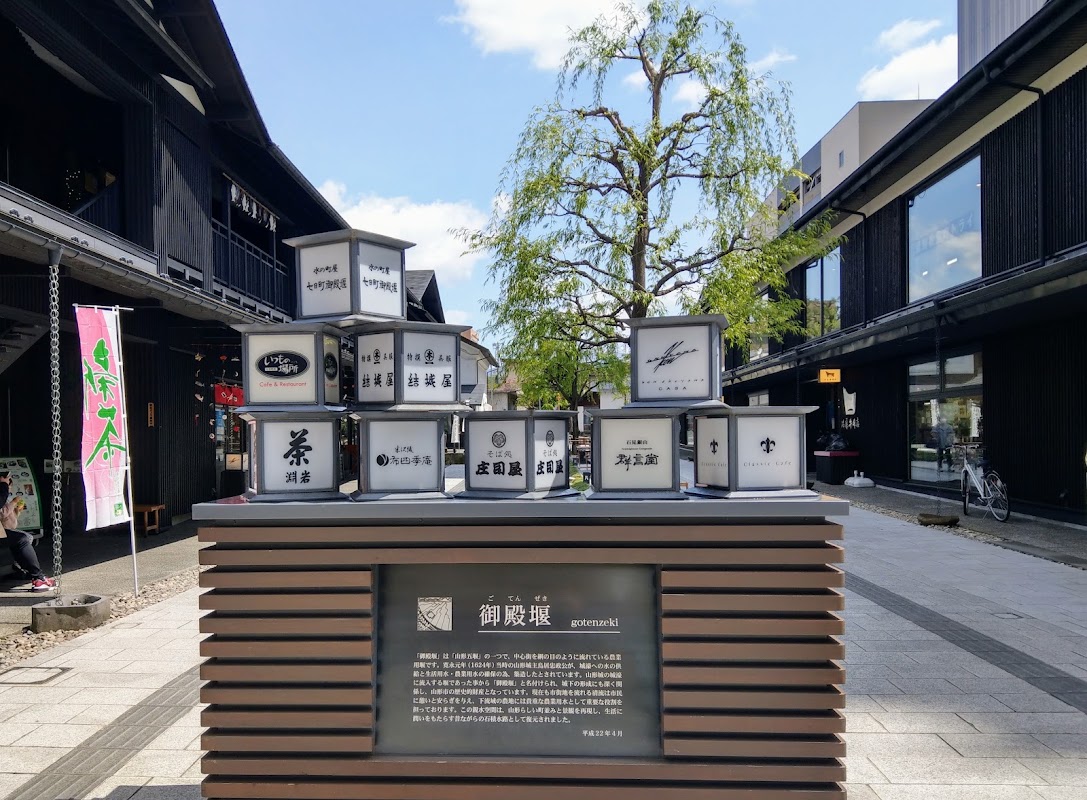
Nanukamachi Gotenzeki Waterways
📍 Address: 2 Chome-7-6 Nanukamachi, Yamagata, 990-0042, Japan
In the heart of Yamagata City’s Nanukamachi area, quietly yet with a definite presence, lies the ‘Mizu no Machiya Nanukamachi Gotenzeki’ (Water Townhouse Nanukamachi Gotenzeki). This historic waterway, one of the ‘Yamagata Goseki’ (Five Waterways of Yamagata) developed in the early Edo period by Yamagata Castle lord Torii Tadamasa for agriculture and daily life, once even supplied water to Yamagata Castle’s moats. It has now been beautifully revitalized as a modern waterside promenade.
Today, weeping willows sway along the stone-lined waterways, and Japanese-modern townhouse-style buildings line the area, creating a charming atmosphere. Cafes, Japanese sundry shops, and kimono stores are clustered here, making it perfect for a leisurely stroll while listening to the sound of the water. Rather than a primary tourist destination, it’s best utilized as a ‘supreme detour spot’ to stop by during a city walk and soak in the atmosphere of Yamagata.
For a deeper way to enjoy it, we recommend taking out delicious dorayaki from the famous nearby shop ‘Eigyokudo’ and savoring it at an outdoor table or bench by the babbling stream. It’s also about a 5-minute walk from the beautifully retro Western-style former prefectural office ‘Bunshokan,’ so combining the two makes for a fulfilling historical and architectural walk.
Zao Snow Monsters (Juhyo)
📍 Address: Zao Onsen, Yamagata, 990-2301, Japan
A rare natural wonder in the world, representing winter in Yamagata: the ‘Snow Monsters’ of Zao, also known as Juhyo. These gigantic formations, created by layers of snow and ice accumulating on Aomori fir trees, possess a power and otherworldly feel that far exceed imagination. Especially the vast juhyo fields viewed under a miraculously clear blue sky are an absolute must-see spectacle at least once in a lifetime.
However, encountering this magnificent sight requires overcoming two trials: ‘extreme cold’ and ‘waiting times.’ Temperatures near the summit often drop below -10 degrees Celsius, and you can lose sensation in your fingertips in a matter of seconds if you take off your gloves for a photo. Serious cold weather gear, including scarves and thick gloves, is essential. Furthermore, gondola waiting times can be very long, sometimes reaching 1.5 to 3 hours during peak periods.
To avoid crowds, strategies like trying to purchase advance tickets (sold online one week prior, often selling out in minutes due to high demand) or utilizing direct bus tours from Sendai or Yamagata Airport are necessary. Nighttime illuminations are also held, offering a fantastical view of massive white monsters emerging from the pitch-black darkness. However, these events have limited dates, so be sure to carefully check the schedule before your visit.
Kajo Park
📍 Address: 1-7 Kajocho, Yamagata, 990-0826, Japan
Just a 10-minute walk from Yamagata Station, in the very heart of the city, lies Kajo Park, the former site of Yamagata Castle, whose foundations were laid by Lord Mogami Yoshiaki. It has been selected as one of Japan’s Top 100 Castles, and with the reconstruction of structures like the Ninomaru East Main Gate and Honmaru Ichimonji Gate, it is gradually regaining its former grandeur.
A must-see for history enthusiasts is the ‘Mogami Yoshiaki Equestrian Statue’ towering within the park. Beyond the valiant figure of the warrior, pay close attention to the fact that this 3-ton bronze statue is supported only by its two hind legs. This is a masterpiece of balance, exceptionally rare worldwide, achieved only through the masterful craftsmanship of Yamagata’s casting artisans, whose history spans 900 years. Be sure to examine its incredible detail from the ground up.
Furthermore, in spring, approximately 1,500 cherry trees bloom here, making it Yamagata’s premier cherry blossom viewing spot. The ancient Edo-higan cherry tree, estimated to be 650 years old, is also not to be missed. During cherry blossom season, trains on the Ou Main Line and other lines, running right alongside the park, ‘reduce speed for cherry blossom viewing,’ a thoughtful gesture that warms the hearts of not only railway enthusiasts. Taking out Yamagata’s soul food, ‘Don-don-yaki,’ from the ‘Oyatsu-san’ (snack shop) near the South Gate and leisurely strolling through the spacious park is the local way to enjoy it.
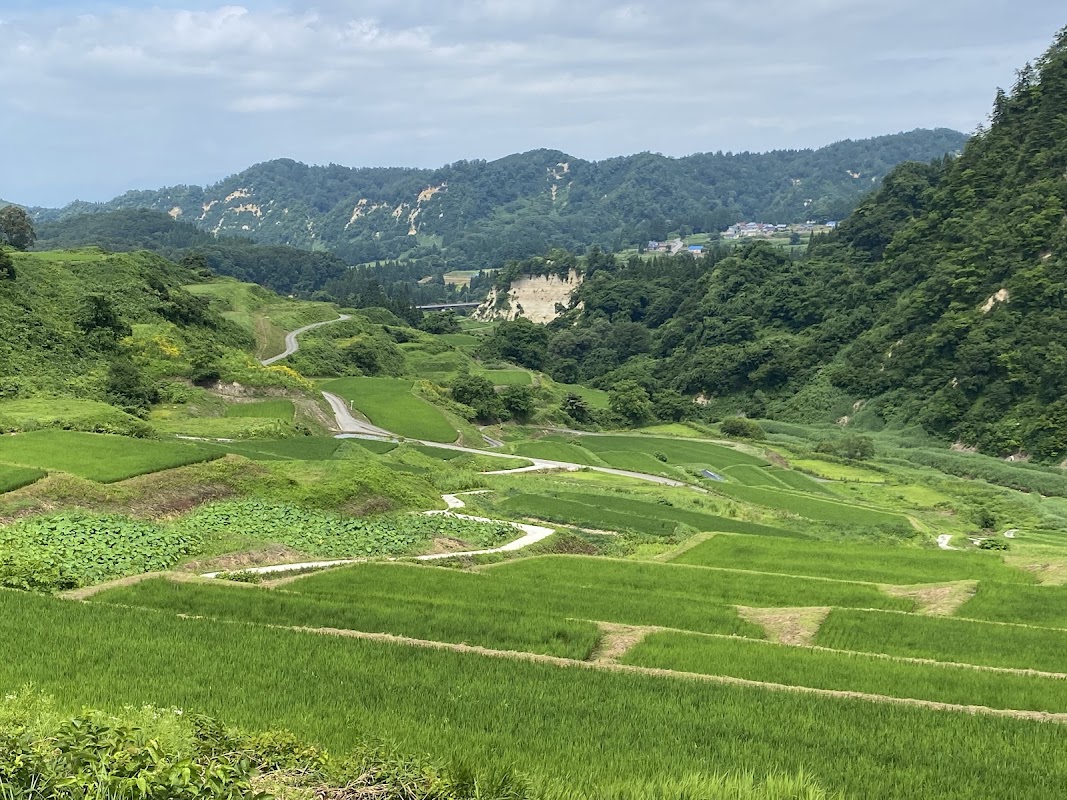
Shikamura Rice Terraces
📍 Address: Minamiyama, Okura, Mogami District, Yamagata, 996-0301, Japan
Spreading across the mountainous region of Okura Village, known for heavy snowfall, are the ‘Shikamura Rice Terraces.’ Boasting a vast scale covering approximately 120 hectares, they have been selected as one of Japan’s Top 100 Terraced Rice Fields. From spring, when they are filled with snowmelt water, to lush green summer, golden autumn, and deep snow in winter, they truly present a beautiful sight worthy of being called ‘Japan’s original landscape.’
If you visit this place, you absolutely must check out the ‘Shikamura Terraced Rice Field Firefly Concert,’ held annually on the first Saturday of August. Around 1,200 candles (firefly lights) illuminate the paths between the rice paddies as dusk falls, and live performances of ocarina, piano, acoustic guitar, and more echo through the mountains. This one-night-only fantastical space, a fusion of flickering flames and music, distinct from artificial illumination, is an overwhelming experience well worth the journey.
Access requires a bit of planning. If driving, be careful on the narrow, winding mountain roads. On the day of the concert, shuttle buses depart from designated parking lots such as ‘Furusato Mirai-kan,’ but you will need to walk approximately 500m along an unpaved rural path after getting off the bus. Avoid heels and sandals; always wear comfortable walking shoes like sneakers. It can get chilly at dusk, so bringing an extra layer is recommended for comfort.
Local Tips for a More Fulfilling Trip
Yamagata Prefecture’s tourist spots vary greatly in charm depending on the area. ‘Risshakuji Temple’ and ‘Kajo Park’ around Yamagata City are easily accessible by train or bus, but natural spots like ‘Shikamura Rice Terraces’ and ‘Zao Snow Monsters’ can drastically change in travel difficulty depending on the weather.
Especially when traveling by car in winter, equipping studless tires is essential, as is scheduling ample buffer time for sudden weather deterioration, such as whiteouts. Yamagata is also a treasure trove of local foods like soba, fruits, and easy-to-eat dishes like ‘Don-don-yaki’ and ‘Tama Konnyaku.’ Turn your travel time between famous spots into an opportunity to savor local delicacies, and fully enjoy your fulfilling Yamagata journey!


'%3E%3Cpath%20stroke='%23000'%20stroke-width='4'%20d='m-35-37-13%2020m5%203%2013-20m5%203-13%2020m63%2042%206-9m1-2%206-9m5%203-6%209m-1%202-6%209m5%203%206-9m1-2%206-9m-96%200%2013%2020m5-3-6-9m-1-2-6-9m5-3%2013%2020m63-42-6-9m-1-2-6-9m5-3%2013%2020m5-3-6-9m-1-2-6-9'/%3E%3Ccircle%20r='24'%20fill='%23cd2e3a'/%3E%3Cpath%20fill='%230047a0'%20d='M0%200a12%2012%200%201%201%2020%2013%2024%2024%200%201%201-40-26A12%2012%200%201%200%200%200'/%3E%3C/g%3E%3C/svg%3E)
'/%3E%3Cpath%20fill='%23b2b2b2'%20d='M241%20382q0%2016%2017%2026%2017%2011%2042%2011t42-11q16-11%2017-26V269H241'/%3E%3Cpath%20fill='%239f7e00'%20d='M241%20379q0%2014%208%2023%209%209%2021%209%2014%200%2021-9%209-9%209-23V269h-59'/%3E%3Cpath%20d='M241%20339v-70h59v110q0%2014-9%2023l-6%205v-68h-15v72q-8%200-14-4v-68zm59%2040c0%2022%2015%2032%2029%2032%2021%200%2030-18%2030-32v-40h-59'/%3E%3Cpath%20fill='%239f7e00'%20d='M266%20277v5h2v12h-3v-5h2v-5h-9v5h2v5h-4v9h3v18h-5v10h34v-10h-5v-18h3v-9h-4v-5h2v-5h-9v5h2v5h-3v-12h2v-5zm42%20101q0%2010%206%2017%206%206%2015%207%2010-1%2016-7%206-7%206-17v-29h-43'/%3E%3Ccircle%20fill='%230044ad'%20cx='329.5'%20cy='372'%20r='6'/%3E%3Cellipse%20fill='%230044ad'%20cx='300'%20cy='340'%20rx='16'%20ry='21'/%3E%3C/svg%3E)


