

Turkey, a captivating country where East and West converge. Among its many wonders, Istanbul’s Old City (Historical Peninsula) stands out as a miraculous area, designated a UNESCO World Heritage site, where you can feel the breath of magnificent history with every step.
However, precisely because it’s a popular tourist destination, prior research on ‘the latest entry rules,’ ‘ticket purchase pitfalls,’ and ‘essential dress codes and safety measures’ can significantly impact your travel satisfaction. This guide picks out the top 4 must-visit spots in Istanbul, perfect for both short-term visitors and those who wish to delve deep into history. We’ll thoroughly explain everything from their historical backgrounds and profound highlights to practical tips and warnings.
Hagia Sophia
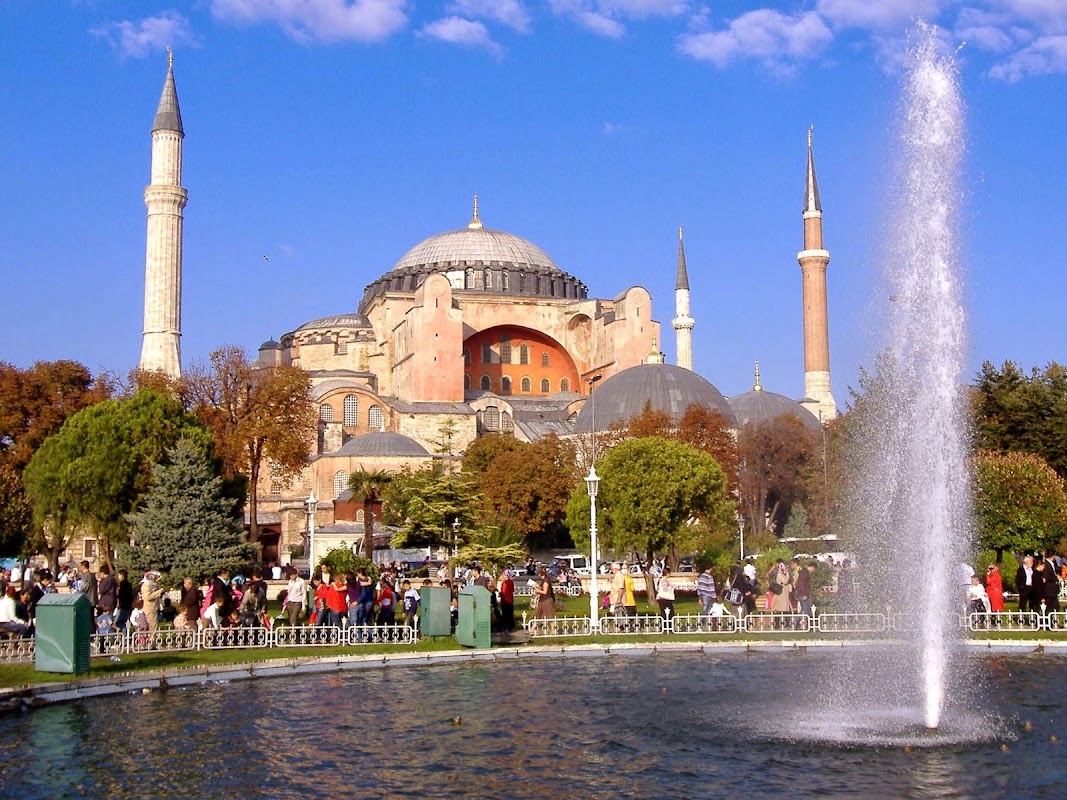
📍 Address: Sultan Ahmet, Ayasofya Meydanı No:1, 34122 Fatih/İstanbul, Turkey
‘Hagia Sophia’ is an iconic symbol of Istanbul. Built in 537 as a Christian cathedral during the Byzantine Empire, it was later converted into a mosque by the Ottoman Empire, making it a miraculous architectural masterpiece where the histories of two religions intertwine.
Since 2024, the rules for visiting Hagia Sophia have significantly changed. Currently, the first floor is a prayer area exclusively for Muslims, and tourists are not permitted to enter. Foreign visitors can only access the second-floor gallery space (entry fee 25 Euros). From the second floor, you can look down upon the magnificent spatial beauty of the colossal dome and admire masterpieces of Byzantine art up close, such as the intricate and vivid ‘Deësis’ (a mosaic depicting Christ, the Virgin Mary, and John the Baptist). Don’t miss the ‘Viking graffiti’ on the marble railings, a profound trace revealing an unexpected connection with Northern Europe.
Practical Tips on Site:
Many travelers have reported being aggressively pressured into buying a combined ticket with the ‘Historical Museum’ (approx. 47.5 Euros) at the local ticket booth, unknowingly ending up with an overpriced ticket. If you wish to visit only Hagia Sophia, firmly state ‘Hagia Sophia only’ or purchase your ticket in advance online through platforms like Klook for peace of mind. Furthermore, as it is a sacred site, women are required to cover their hair with a scarf (scarves can be purchased near the entrance, but it’s recommended to bring your own favorite stole).
Sultan Ahmed Mosque
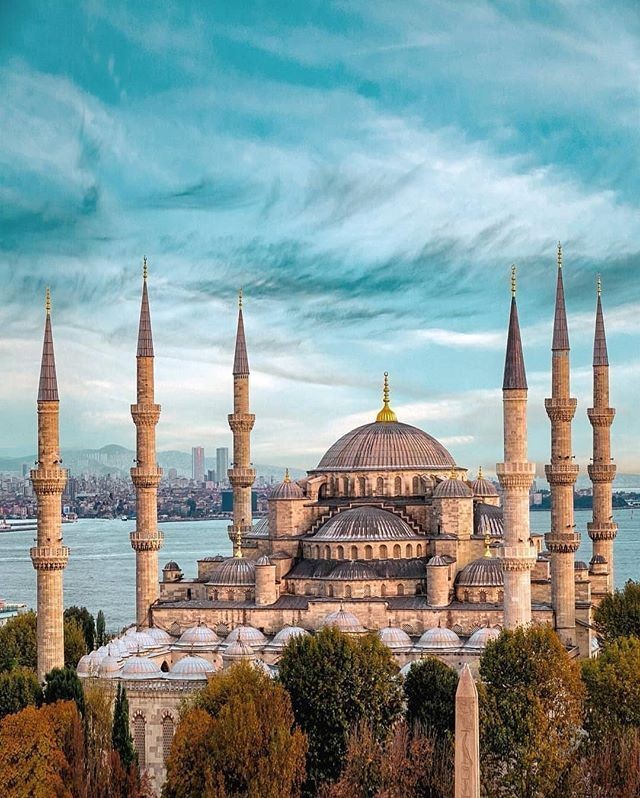
📍 Address: Cankurtaran, At Meydanı Cd No:7, 34122 Fatih/İstanbul, Turkey
Standing opposite Hagia Sophia is the ‘Sultan Ahmed Mosque,’ affectionately known as the ‘Blue Mosque.’ Built in the early 17th century by the young Emperor Ahmed I, this mosque exudes overwhelming majesty with its six minarets (spires) piercing the sky.
Stepping inside, the hustle and bustle of the outside world immediately fades, enveloping you in a soothing ‘sound of silence.’ The walls are adorned with over 20,000 traditional Iznik tiles. Featuring vivid blue botanical patterns like tulips and hyacinths on a white background, these tiles, combined with natural light filtering through stained-glass windows, create a breathtakingly fantastical space. Unlike Hagia Sophia, entry to the Blue Mosque is currently free (donations are optional).
Practical Tips on Site:
As it is an active mosque, tourist entry is restricted during the five daily prayer times. The recommended time to visit is first thing in the morning, right after opening (around 8:30 AM). There are fewer tourists then, allowing you to fully experience the solemn tranquility. You must remove your shoes upon entry, so bringing a plastic bag or shoe bag to carry them will make your visit much smoother (a travel hack for summer is to bring thick socks to prevent foot odor and dirt). Revealing clothing is not allowed for either men or women, and women are required to wear a headscarf.
Basilica Cistern (Yerebatan Sarnıcı)
📍 Address: Alemdar, Yerebatan Cd. 1/3, 34110 Fatih/İstanbul, Turkey
Hidden beneath the ground, just a stone’s throw from Hagia Sophia, lies the ‘Basilica Cistern’ (Yerebatan Sarnıcı), a colossal underground reservoir built during the Byzantine Empire (6th century). The moment you step inside, you’re enveloped by a cool, distinct atmosphere utterly different from above ground.
In the darkness, countless beautifully lit marble columns reflect on the water’s surface, and the quiet sound of dripping water echoes, truly feeling like another world. A must-see mysterious spot at the far end is the ‘Medusa Head’ column base, placed upside down, believed by some to be for warding off evil and by others as repurposed material. In recent years, contemporary art installations have been integrated, offering a unique spatial experience where ancient and modern worlds intersect.
Practical Tips on Site:
The entrance can be a bit hard to find, and the ticket booth is also slightly detached from the main entrance. Entry fees have significantly increased in recent years, costing around 5000 yen (approx. 30-35 USD/Euro depending on current exchange rates), but it’s a majestic space worth the expense. The most troublesome pitfall on site is the presence of ‘smooth-talking scammers who speak Japanese’ and ‘carpet touts’ lurking near the ticket booth and exit. They cleverly approach tourists, saying things like ‘I used to live in Tokyo’s [XX district],’ inviting them for tea, and then pressuring them to buy overpriced carpets. Even if they seem friendly, absolutely do not follow them to their offices or shops; remain vigilant.
Topkapi Palace Museum
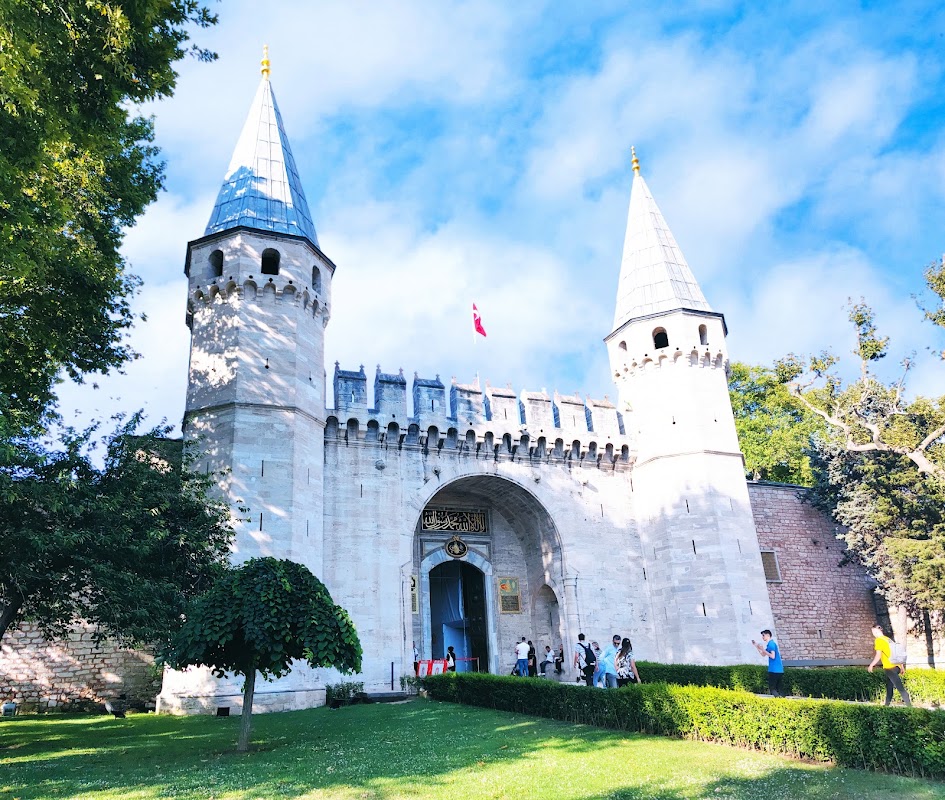
📍 Address: Cankurtaran, Babı Hümayun Cad No: 1, 34122 Fatih/İstanbul, Turkey
The ‘Topkapi Palace,’ which served as the residence for Ottoman sultans (emperors) and the political and cultural heart of the empire for approximately 400 years, is now open as a vast museum. It is a premier tourist attraction that conveys the prosperity of that era to the present day.
The main highlight is the ‘Harem’ area, where the sultan, his family, and many women resided. Iznik tiles with different designs adorn the walls of each room, showcasing the epitome of lavish and brilliant artistry. Furthermore, the immense diamonds and golden daggers displayed in the Treasury will undoubtedly captivate your eyes. The climax of your palace visit will be the ‘Fourth Courtyard,’ from which you can enjoy a spectacular panoramic view of the Bosphorus Strait, separating Europe and Asia.
Practical Tips on Site:
The palace grounds are much larger than they appear, requiring 2-3 hours and a considerable amount of walking to see everything. Be sure to visit in comfortable walking shoes or sneakers. Also, ticket queues can become very long during the day, so visiting first thing in the morning or purchasing your entry ticket online in advance (check if Harem admission is included) is highly recommended. Audio guides are available in Japanese, but the narration might sometimes be slightly out of sync, so it’s efficient to have a clear idea of the areas you wish to see beforehand.
Essential Rules for a Smooth and Enjoyable Istanbul Trip
Istanbul’s Old City is densely packed with the four spots introduced in this guide, all within walking distance or a few tram stops. The ‘Tram T1 line,’ which is central to sightseeing, operates very conveniently every 5-10 minutes. However, it is also a known hotspot for pickpockets, so be sure to take precautions such as wearing your backpack on your front.
Furthermore, on days when you plan to visit mosques and other religious sites, it’s essential to come fully prepared with ‘easy-to-remove shoes,’ a ‘shoe bag for carrying them,’ a ‘scarf for women to cover their heads,’ and ‘modest clothing (long pants or long skirts).’ Just a little extra preparation and awareness of safety will transform your trip to Istanbul into a wonderful, lifelong memory. Go forth and enjoy a journey through history and breathtaking scenery that transcends time!


'%3E%3Cpath%20stroke='%23000'%20stroke-width='4'%20d='m-35-37-13%2020m5%203%2013-20m5%203-13%2020m63%2042%206-9m1-2%206-9m5%203-6%209m-1%202-6%209m5%203%206-9m1-2%206-9m-96%200%2013%2020m5-3-6-9m-1-2-6-9m5-3%2013%2020m63-42-6-9m-1-2-6-9m5-3%2013%2020m5-3-6-9m-1-2-6-9'/%3E%3Ccircle%20r='24'%20fill='%23cd2e3a'/%3E%3Cpath%20fill='%230047a0'%20d='M0%200a12%2012%200%201%201%2020%2013%2024%2024%200%201%201-40-26A12%2012%200%201%200%200%200'/%3E%3C/g%3E%3C/svg%3E)
'/%3E%3Cpath%20fill='%23b2b2b2'%20d='M241%20382q0%2016%2017%2026%2017%2011%2042%2011t42-11q16-11%2017-26V269H241'/%3E%3Cpath%20fill='%239f7e00'%20d='M241%20379q0%2014%208%2023%209%209%2021%209%2014%200%2021-9%209-9%209-23V269h-59'/%3E%3Cpath%20d='M241%20339v-70h59v110q0%2014-9%2023l-6%205v-68h-15v72q-8%200-14-4v-68zm59%2040c0%2022%2015%2032%2029%2032%2021%200%2030-18%2030-32v-40h-59'/%3E%3Cpath%20fill='%239f7e00'%20d='M266%20277v5h2v12h-3v-5h2v-5h-9v5h2v5h-4v9h3v18h-5v10h34v-10h-5v-18h3v-9h-4v-5h2v-5h-9v5h2v5h-3v-12h2v-5zm42%20101q0%2010%206%2017%206%206%2015%207%2010-1%2016-7%206-7%206-17v-29h-43'/%3E%3Ccircle%20fill='%230044ad'%20cx='329.5'%20cy='372'%20r='6'/%3E%3Cellipse%20fill='%230044ad'%20cx='300'%20cy='340'%20rx='16'%20ry='21'/%3E%3C/svg%3E)


