

Step into Chongqing: A ‘3D立体都市’ Where Cyberpunk Meets Ancient History
Chongqing, a direct-controlled municipality located in southwestern China, is often called the ‘Mountain City’ (山城) because of its dramatic landscape. Nestled between the Yangtze River and the Jialing River, it’s a city where high-rise buildings cling to steep hillsides. In recent years, it has captivated travelers worldwide as a ‘cyberpunk world’ and an ‘8D magic city’ – a place where monorails slice through buildings, cableways crisscross the sky, and traditional architecture gleams from cliff faces.
This article curates five absolutely essential tourist spots to experience Chongqing’s vibrant energy firsthand. From ancient streets steeped in thousands of years of history to a UNESCO World Heritage karst landscape that has served as a Hollywood film set, and the authentic, tongue-numbing flavors of mala hotpot culture, we’ll provide an in-depth guide to Chongqing’s deep charms. Get your comfortable shoes and stomach medicine ready, and let’s dive into the exhilarating streets of Chongqing!
Chongqing Hongyadong (Northwest Gate)
📍 Address: 纸盐河街37, Jia Ling Jiang Bin Jiang Lu, Yu Zhong Qu, Chong Qing Shi, 中華人民共和国 400011
Hongyadong (洪崖洞) is a breathtaking spectacle that symbolizes Chongqing’s night. This multi-story commercial complex, built directly into the steep cliffs along the Jialing River, masterfully revives the traditional ‘Diaojiaolou’ (吊脚楼) stilted architecture of Chongqing. As night falls and countless golden lights illuminate, a fantastical and opulent scene unfolds, as if the bathhouse from ‘Spirited Away’ has come to life.
Inside the 11-story structure, souvenir shops, restaurants, street food stalls, and even traditional costume rental studios are packed together, creating a constant festive atmosphere. An essential local tip to navigate this bustling spot is to conquer it ‘from top to bottom.’ Start from the 11th-floor entrance and descend using stairs or escalators to avoid getting tired (elevators are perpetually crowded with long queues).
Also, from inside the building, you can’t see the entire magnificent structure. For the most beautiful panoramic photo, it’s best to look up from the riverside promenade, stand on the adjacent Qiansimen Bridge (千厮門大橋), or cross to the opposite bank. On weekend evenings, it gets extremely crowded, almost to the point of a domino effect, so ensure your belongings are secure against pickpockets and wear comfortable clothing that allows easy movement.
Ciqikou Ancient Town
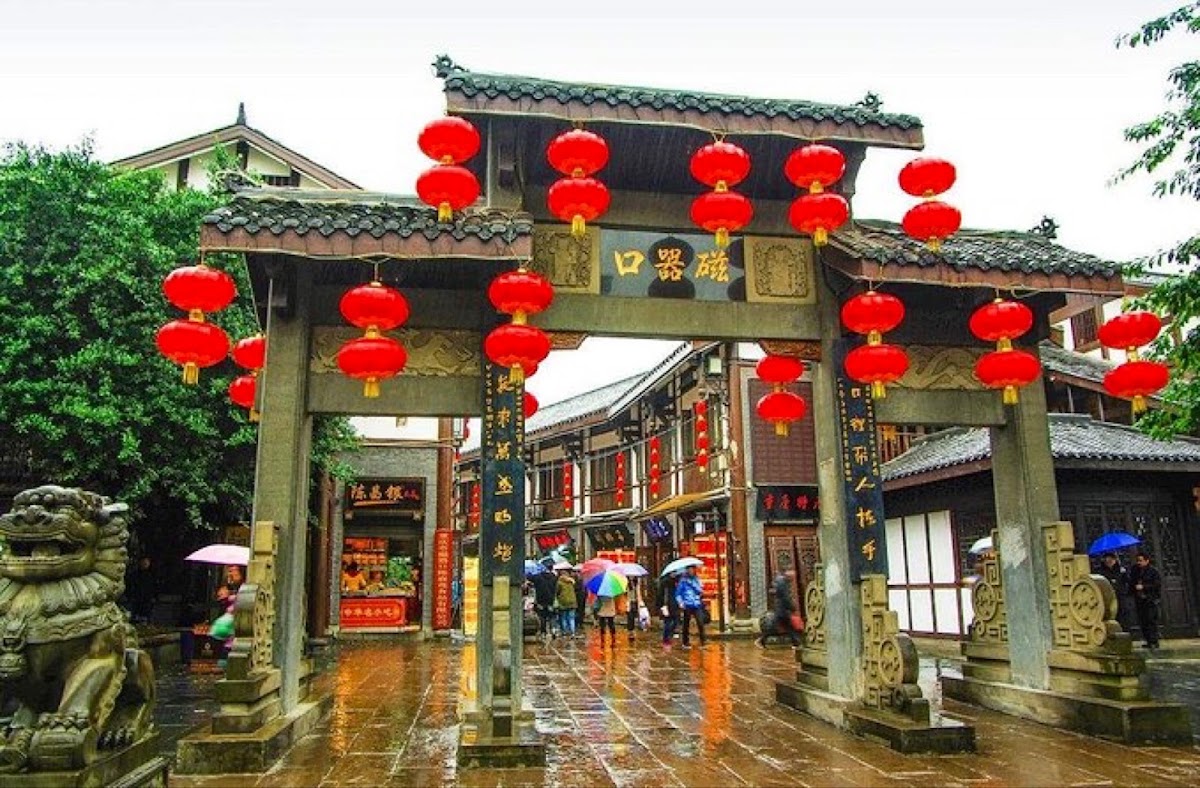
📍 Address: 沙坪ハ, 重慶市, 中華人民共和国 400038
A short metro ride from Chongqing’s skyscraper-filled downtown will transport you back in time. Ciqikou Ancient Town (磁器口古鎮) is a historic port town founded in the Song Dynasty, which flourished during the Ming and Qing dynasties thanks to its ceramics production and Jialing River’s waterway transport. Formerly known as ‘Longyin Town,’ it’s now a popular area that strongly retains Chongqing’s traditional old-town charm, with a history spanning over 1,000 years.
Along the cobblestone streets, wooden ancient buildings with red lanterns swaying line both sides, housing cafes, tea houses, and handicraft stores. The biggest joy here is the bustling street food! Don’t miss Chongqing’s famous twisted fried dough twists, ‘Chen Mahua’ (陳麻花). Their crispy texture and the tantalizing spicy kick of Sichuan peppercorn are addictive, ensuring constant queues. Locals also highly recommend the block-shaped ‘hotpot base’ as a souvenir. As you walk through the aromatic streets, why not try Chongqing noodles (spicy noodles) or even some more adventurous street food like silkworm pupae?
The main street, Ciqikou Zhengjie, is often shoulder-to-shoulder with people, but step into a side alley, and you’ll discover tranquil daily life with bamboo craftspeople at work. If you get tired, head to Baolun Temple (宝輪寺) on a hill. From here, you can enjoy a splendid contrast of old tiled rooftops and modern Chongqing skyscrapers.
Chongqing Chaotianmen Square
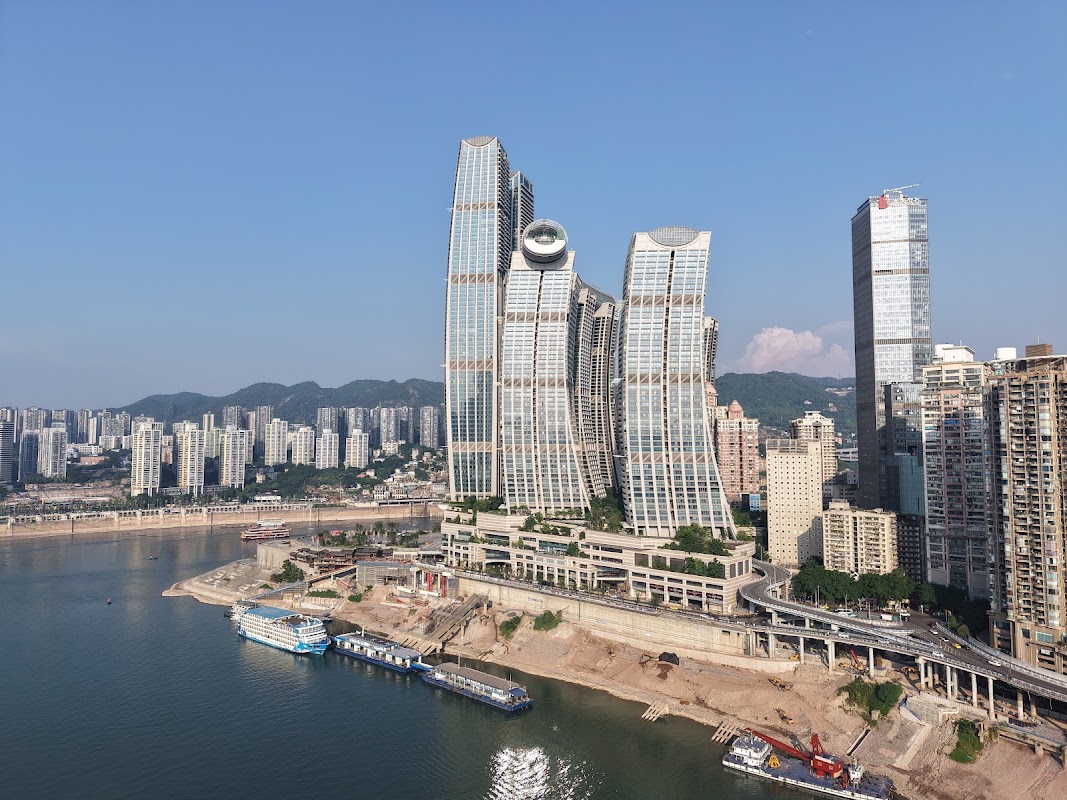
📍 Address: HH8Q+J4V, Chang Jiang Bin Jiang Lu, Yu Zhong Qu, Chong Qing Shi, 中華人民共和国 400062
Chaotianmen Square (朝天門広場) is the most dynamic place to experience Chongqing’s unique geographical features. Situated at the very tip of Chongqing’s urban area, literally the city’s ‘nose,’ it’s the magnificent confluence where the mighty Yangtze River, China’s mother river, meets its tributary, the Jialing River. The boundary where the yellowish-brown waters of the Yangtze and the deep green waters of the Jialing merge powerfully showcases the immense force of nature.
Chaotianmen has historically been a crucial hub for water transportation, and it was here that the Chongqing Customs House was established in 1891, opening the city to the world. Today, behind the square stands Raffles City Chongqing (来福士), a massive, futuristic complex that has become a landmark symbolizing Chongqing’s present—where ancient history coexists with cutting-edge development.
While it’s lovely to watch the passing boats, swept by the river breeze during the day, its true splendor shines at night. The shimmering lights of cruise ships reflected on the water, the illuminated Chongqing Chaotianmen Yangtze River Bridge, and the panoramic night view woven by the buildings on the opposite bank are breathtakingly beautiful. For a deeper experience, a ‘Night Cruise’ (両江遊) departing from here is highly recommended, allowing travelers to enjoy a 360-degree cyberpunk nightscape from the comfort of the boat.
Yangtze River Cableway
📍 Address: HH5M+34J, Xin Hua Lu, Yu Zhong Qu, Chong Qing Shi, 中華人民共和国 400012
The Yangtze River Cableway (長江索道), inaugurated in 1987, is a unique transportation infrastructure born from Chongqing’s challenging terrain of steep hills and rivers. Once an everyday ‘flying bus’ for citizens commuting across the river, it has transformed into an incredibly popular tourist attraction offering an aerial tour of Chongqing, as bridges and subways have developed.
The approximately 1,166-meter, 3-minute journey begins from between buildings, glides past apartment complexes, and then soars over the vast Yangtze River, offering a thrilling, amusement-park-like experience. Below, the murky river swirls, and around you, high-rise buildings tower—a peculiar and overwhelming spectacle you won’t find anywhere else. Riding especially during dusk or at night offers a sublime experience, enveloped in a magnificent night view reminiscent of a blend of Hong Kong and Shanghai.
However, as a highly popular spot, be prepared for waiting times of over an hour. Also, some reviews suggest that foreign visitors purchasing tickets at the manned counter with a passport may only be able to pay in cash, so be sure to have a small amount of Chinese yuan banknotes ready. It’s efficient and recommended to take a one-way trip, explore the retro streets of Longmenhao Old Street (龍門浩老街) in the Nan’an District on the opposite bank, and then return to the city center by subway.
Three Natural Bridges
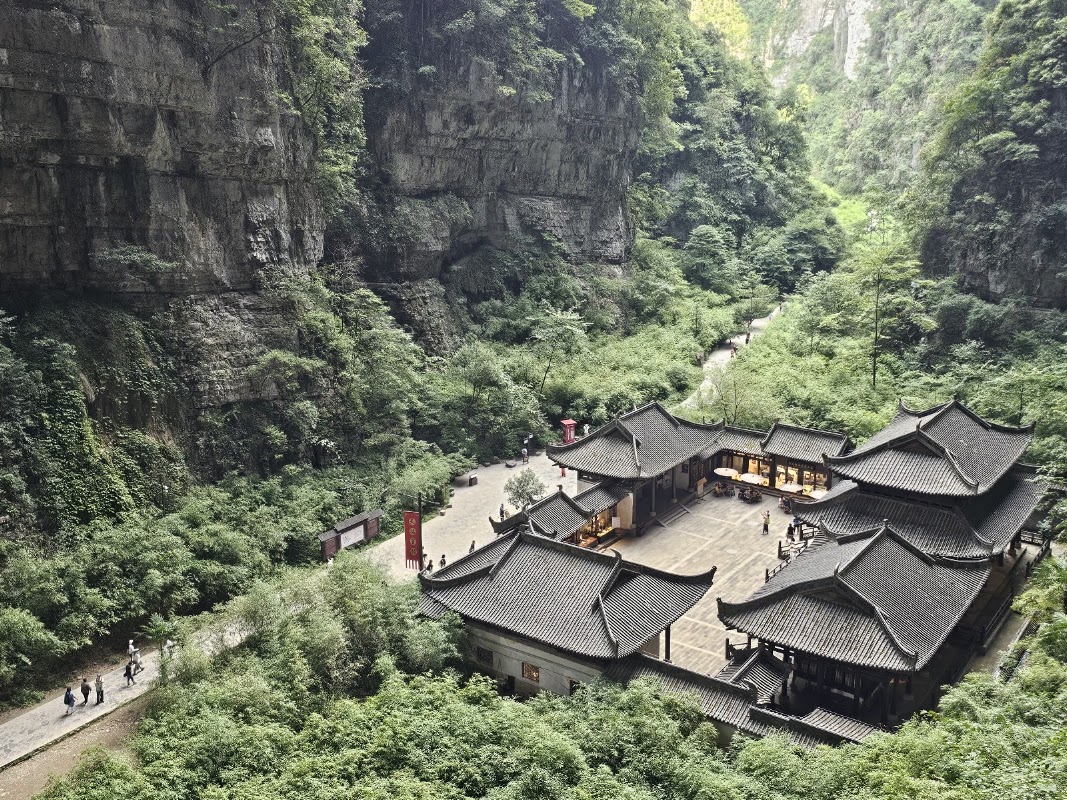
📍 Address: CQHW+95R, 武隆県, 重慶市, 中華人民共和国 408513
To escape the neon and hustle of Chongqing city and experience the awe of nature, a day trip to the Three Natural Bridges (天生三橋) is a must. Located in the Wulong (武隆) district, about 2-3 hours by car or bus from downtown Chongqing, this scenic area was designated a UNESCO World Natural Heritage site in 2007 as part of the ‘South China Karst.’ The three colossal natural stone bridges—Tianlong Bridge, Qinglong Bridge, and Heilong Bridge—formed by tectonic movements and underground water erosion over 100 million years, are truly masterpieces created by the Earth.
The tour route is thrilling from the start. You’ll board a glass-enclosed rotating elevator installed on the side of a sheer cliff, descending rapidly to the valley floor. Looking up from below, the arches of the 200-300-meter-high stone bridges are overwhelmingly vast, making you feel minuscule. The valley floor walkway is cool year-round, offering a leisurely 2-3 hour hiking course accompanied by the sound of the river.
This site is also famous as a filming location for Hollywood movies like ‘Transformers: Age of Extinction’ and Zhang Yimou’s ‘Curse of the Golden Flower.’ The majestic wooden architecture of ‘Tianfu Official Posthouse’ (天福官驛), built as a movie set, remains in the valley, providing a fantastic photo opportunity with the contrast of lush greenery and dark rock faces. Buses to the adjacent Longshuixia Fissure Gorge (龍水峡地縫) also depart from the exit, making it an excellent option to spend a full day hopping between karst landscape wonders. The path involves continuous ups and downs and can be slippery, so trekking shoes are strongly recommended for your visit.
Chongqing Survival Tips to Enjoy Your Trip 120%!
Chongqing is often called ‘a city where flat maps are useless’ due to its extreme elevation differences. It’s a common, strange phenomenon to enter a building thinking it’s the first floor, take an elevator up to the tenth floor, and exit to find yourself on another street (ground level). Therefore, even short distances on a map can involve steep stairs and slopes, making ‘wearing comfortable sneakers’ an absolute rule for your trip.
Furthermore, Chongqing is the mecca of ‘hotpot.’ Just walking through the city, you’ll be enveloped by the stimulating aroma of Sichuan peppercorns (花椒) and chili peppers (唐辛子). Authentic Chongqing hotpot boasts significantly more oil and spiciness than what you might find elsewhere. If you’re concerned about your stomach, opt for ‘wei la’ (微辣 – lightly spicy) or ‘Yuanyang hotpot’ (鴛鴦鍋), which offers a half-spicy, half-non-spicy broth, allowing you to enjoy the local flavors without overdoing it.
From awe-inspiring natural heritage sites with vast panoramas to vibrant ancient towns and futuristic nightscapes, Chongqing is a unique destination that delightfully shatters your expectations. We hope this article helps you fully enjoy your deep dive into Chongqing!


'%3E%3Cpath%20stroke='%23000'%20stroke-width='4'%20d='m-35-37-13%2020m5%203%2013-20m5%203-13%2020m63%2042%206-9m1-2%206-9m5%203-6%209m-1%202-6%209m5%203%206-9m1-2%206-9m-96%200%2013%2020m5-3-6-9m-1-2-6-9m5-3%2013%2020m63-42-6-9m-1-2-6-9m5-3%2013%2020m5-3-6-9m-1-2-6-9'/%3E%3Ccircle%20r='24'%20fill='%23cd2e3a'/%3E%3Cpath%20fill='%230047a0'%20d='M0%200a12%2012%200%201%201%2020%2013%2024%2024%200%201%201-40-26A12%2012%200%201%200%200%200'/%3E%3C/g%3E%3C/svg%3E)
'/%3E%3Cpath%20fill='%23b2b2b2'%20d='M241%20382q0%2016%2017%2026%2017%2011%2042%2011t42-11q16-11%2017-26V269H241'/%3E%3Cpath%20fill='%239f7e00'%20d='M241%20379q0%2014%208%2023%209%209%2021%209%2014%200%2021-9%209-9%209-23V269h-59'/%3E%3Cpath%20d='M241%20339v-70h59v110q0%2014-9%2023l-6%205v-68h-15v72q-8%200-14-4v-68zm59%2040c0%2022%2015%2032%2029%2032%2021%200%2030-18%2030-32v-40h-59'/%3E%3Cpath%20fill='%239f7e00'%20d='M266%20277v5h2v12h-3v-5h2v-5h-9v5h2v5h-4v9h3v18h-5v10h34v-10h-5v-18h3v-9h-4v-5h2v-5h-9v5h2v5h-3v-12h2v-5zm42%20101q0%2010%206%2017%206%206%2015%207%2010-1%2016-7%206-7%206-17v-29h-43'/%3E%3Ccircle%20fill='%230044ad'%20cx='329.5'%20cy='372'%20r='6'/%3E%3Cellipse%20fill='%230044ad'%20cx='300'%20cy='340'%20rx='16'%20ry='21'/%3E%3C/svg%3E)


