

Amman, the capital of Jordan in the Middle East, is a captivating city spread across rolling hills, where the magnificent ruins of ancient Rome seamlessly intertwine with modern Islamic culture.
While a search for ‘Amman tourist attractions’ yields many results, where can a short-term traveler efficiently and deeply experience the authentic atmosphere of Amman?
This guide introduces five carefully selected must-visit spots, from iconic historical landmarks to deep-dive locations where you can feel the local life and pulse. We’ll provide real information that travelers truly want to know, including access details, highlights, and the local ambiance.
Amman Citadel
📍 Address: K. Ali Ben Al-Hussein St. 146, Amman, Jordan
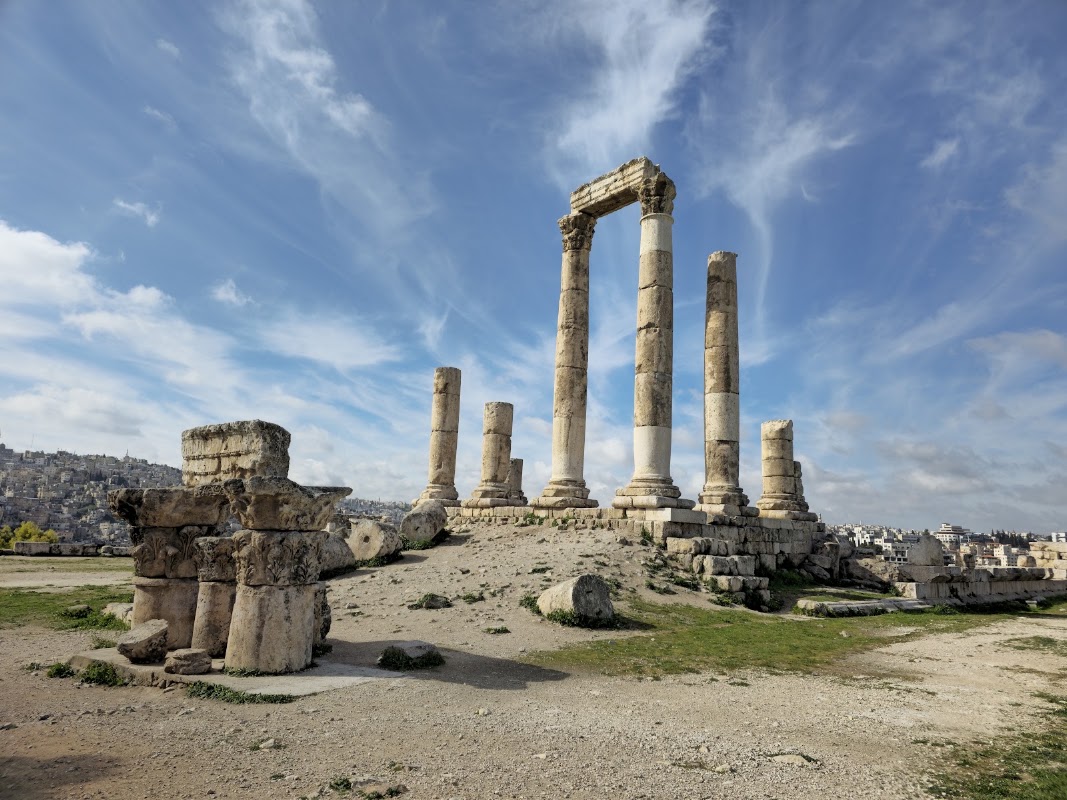
The ‘Amman Citadel,’ towering over the central hill (Jabal al-Qal’a), is an absolute must-see for its breathtaking views in Amman. It’s one of the world’s oldest continuously inhabited sites, with layers of different civilizations—Roman, Byzantine, and Umayyad—marking its history.
From the summit, an astounding panorama unfolds, showcasing Amman’s characteristic white and beige houses densely packed on the sloping hillsides, and the Roman Theatre directly below. The colossal Jordanian flag fluttering within the site evokes a unique sense of nostalgia, as if time itself slows down. While beautiful during the day, it’s also highly recommended to visit at sunset to witness Amman’s cityscape bathed in golden light.
A word of caution: although it appears close to the city center and the Roman Theatre on a map, the path to the summit where the entrance is located involves a steep uphill climb. While walking up is not impossible, travelers are strongly advised to use ride-hailing apps like Uber or Careem. It costs approximately 1.5 JD (Jordanian Dinar) from the city center, saving significant energy and time. If you purchase the ‘Jordan Pass’ in advance, admission is covered, allowing for smooth entry.
Temple of Hercules
📍 Address: Museum St 132, Amman, Jordan
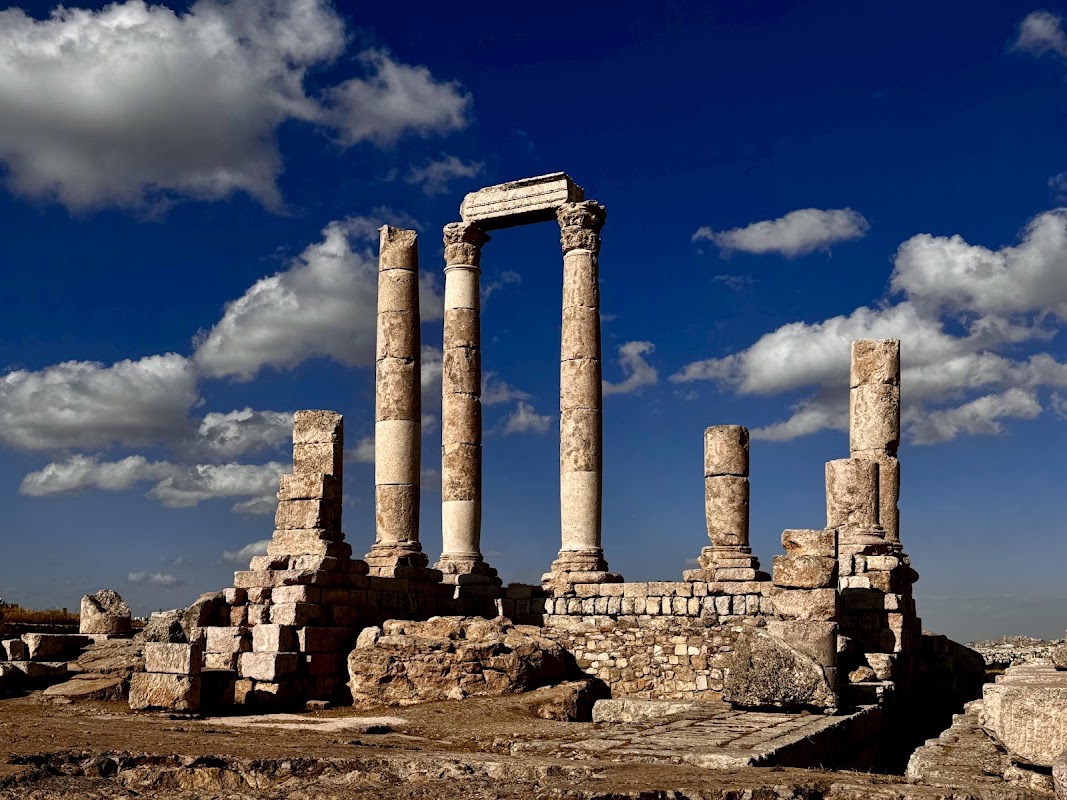
As you explore the Amman Citadel, your eyes will catch the sight of several colossal columns reaching towards the sky. These are the ruins of the ‘Temple of Hercules,’ constructed in the 2nd century during the reign of Roman Emperor Marcus Aurelius Antoninus.
Once the most significant religious center in ancient Philadelphia (Amman’s ancient name), it was built on a vast foundation roughly half the size of a football field. What remains today are only parts of the colossal, restored columns. However, the biggest hidden gem here is the ‘three gigantic marble fingers (hand) and an elbow fragment’ casually placed beside the ruins.
Archaeologists believe these were once parts of a monumental Hercules statue, approximately 13 meters (equivalent to a four-story building) tall, that stood here. Repeated severe earthquakes are thought to have toppled the statue, with other parts likely carried away for local building materials. Yet, even the remaining finger fragments allow you to truly feel the overwhelming scale and engineering prowess of Roman architecture. This spot is easily overlooked amidst the Citadel’s spectacular views, so make it a treasure hunt to find ‘Hercules’s Fingers.’
Roman Theatre
📍 Address: Taha Al Hashemi, Amman, Jordan
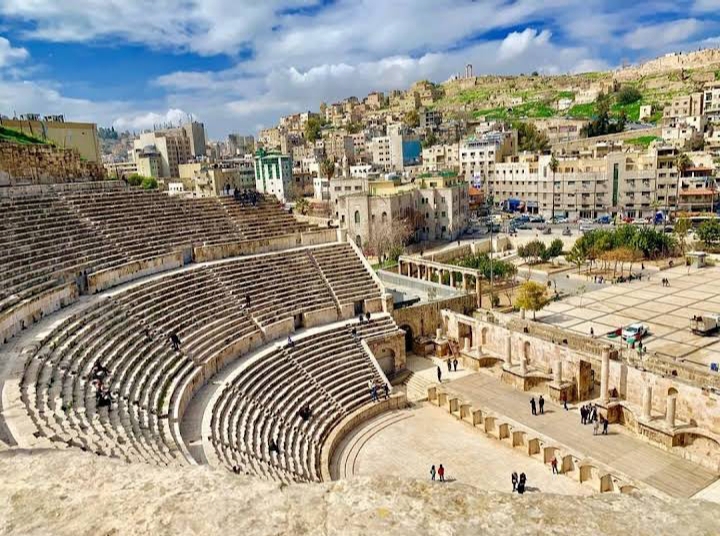
At the foot of the Amman Citadel hill, a colossal ‘Roman Theatre’ with a capacity of approximately 6,000 people suddenly appears in the city center. Carved out of a hillside during the reign of Emperor Antoninus Pius in the 2nd century, this amphitheater was meticulously designed with acoustics and lighting in mind. It faces north to prevent direct sunlight from bothering spectators.
For an admission fee (2 JD, or covered by Jordan Pass), you can climb all the way to the top tier of the spectator seats. The view from the uppermost seats, often called the ‘Gods’ Seats,’ is magnificent, offering a panoramic sweep of the entire bowl-shaped theatre and the hustle and bustle of Amman. Be warned, however, the stairs are extremely steep and can be daunting, so comfortable walking shoes are a must. The acoustic effects are still impressive today: stand in the center of the stage, clap your hands, or speak, and you’ll experience your voice resonating throughout the entire theatre.
The charm of this theatre extends beyond merely being a historical relic; it’s ‘integrated into the daily lives of modern citizens.’ Local children run around in the plaza in front of the theatre, and young people chat casually, allowing you to truly feel the peaceful everyday life of Amman. Adjacent to it are the smaller ‘Odeon Theatre’ and the ‘Jordan Folklore Museum,’ both accessible with a shared ticket, making it advisable to visit them together.
King Abdullah I Mosque
📍 Address: XW67+F4H, Amman, Jordan
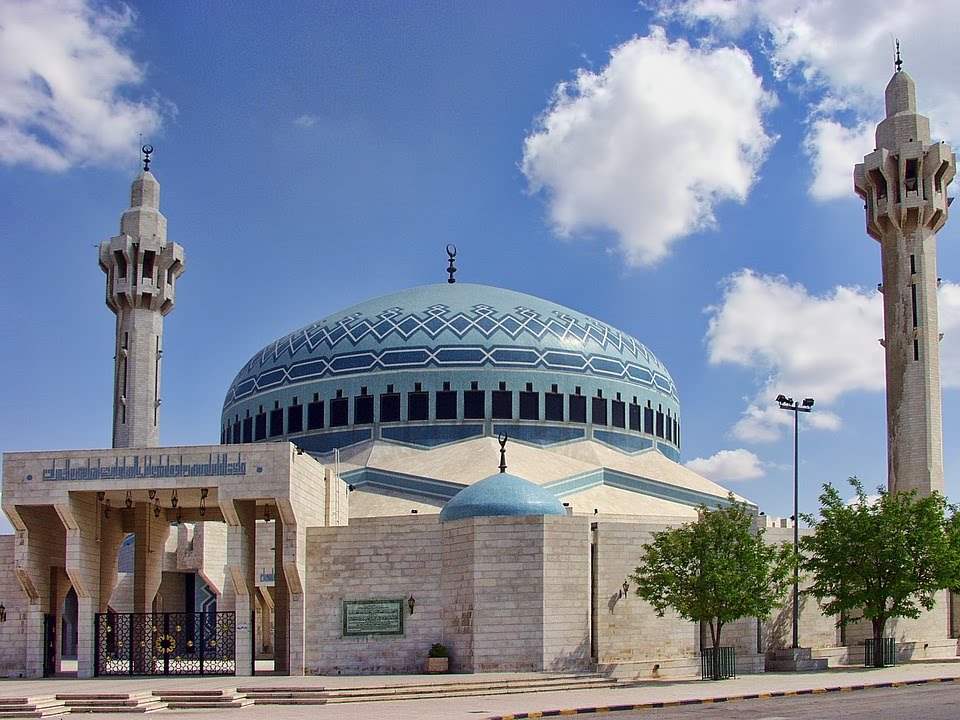
Standing out in the Amman skyline with its vibrant cobalt-blue dome roof is the ‘King Abdullah I Mosque.’ Completed in 1989, this mosque is a masterpiece of modern Islamic architecture, boasting a capacity for up to 10,000 worshippers.
Among the many mosques in Amman, this one is particularly valuable and significant because ‘non-Muslim foreign travelers are permitted to enter and explore its interior.’ Avoiding prayer times, you can step into the vast, tranquil space of prayer. The interior is free of pillars, and the solemn atmosphere created by the beautiful blue-themed carpets, exquisite Quranic calligraphy, and chandeliers is truly awe-inspiring.
For entry, women are required to cover their hair and skin. However, black abayas (traditional robes with hijabs) are provided free of charge at the souvenir shop located next to the entrance within the premises. The souvenir shop staff are fluent in English, not pushy, and even offer delicious Arabic coffee, providing a very hospitable and pleasant experience that is highly praised by travelers. A Christian church also stands adjacent, offering a view that symbolizes Jordan’s religious tolerance.
Jordan Museum
📍 Address: Ali bin Abi Taleb Street, Amman, Jordan
For travelers eager to delve deeper into Jordan’s history, the ‘Jordan Museum,’ located close to downtown, comes highly recommended. Opened in 2014, this modern and sophisticated facility boasts one of the finest exhibition contents in the Middle East.
There are two main highlights here. First, the ‘Ain Ghazal Statues,’ discovered in 1981 at a site on the outskirts of Amman. These are life-sized plaster human figures, dating back approximately 9,000 years to the Neolithic period, making them among the oldest in the world. Their eerie yet mystical double-headed forms vividly convey the spiritual world of people from that era to the present day.
Second, a portion of the globally significant ‘Dead Sea Scrolls,’ particularly the ‘Copper Scroll,’ which is uniquely inscribed on copper. This mysterious scroll, said to detail the hidden locations of treasures, is a must-see. While not covered by the Jordan Pass, requiring a separate admission fee of 5 JD, the museum offers an excellent exhibition layout that appeals to both children and adults, providing invaluable time for understanding Amman’s historical background.
Summary: Tips for a More Comfortable Amman Sightseeing Experience
Amman’s tourist attractions are often scattered across a highly elevated and undulating terrain. While they may appear to be within walking distance on a map, you will frequently encounter steep stairs and inclines. To make effective use of your limited time, avoid overexerting yourself with walking and wisely utilize affordable and reliable ride-hailing apps for getting around the city.
Furthermore, for travelers planning to visit multiple archaeological sites and museums, such as the Amman Citadel and Roman Theatre, it’s highly recommended to purchase the ‘Jordan Pass’ online before your trip. Not only does it waive the visa fee, but it also covers admission to many tourist sites, saving you the hassle of queuing for tickets each time (Note: some facilities like the Jordan Museum are not covered).
Amman, where layers of Middle Eastern history converge, awaits. Feel the gentle breeze sweeping through the ruins and trace the paths walked by ancient civilizations with your own feet.

![[2026 Latest] Top 5 Dubai Tourist Attractions: Must-Visit Classics & Hidden Gems](https://images.unsplash.com/photo-1661630802936-5ff15855cd1f?crop=entropy&cs=tinysrgb&fit=max&fm=jpg&ixid=M3w5MDExNDh8MHwxfHNlYXJjaHwxfHxEdWJhaSUyMGNpdHklMjB2aWV3fGVufDB8MHx8fDE3NzgzMDI5MjV8MA&ixlib=rb-4.1.0&q=80&w=1080 "[2026 Latest] Top 5 Dubai Tourist Attractions: Must-Visit Classics & Hidden Gems")


'%3E%3Cpath%20stroke='%23000'%20stroke-width='4'%20d='m-35-37-13%2020m5%203%2013-20m5%203-13%2020m63%2042%206-9m1-2%206-9m5%203-6%209m-1%202-6%209m5%203%206-9m1-2%206-9m-96%200%2013%2020m5-3-6-9m-1-2-6-9m5-3%2013%2020m63-42-6-9m-1-2-6-9m5-3%2013%2020m5-3-6-9m-1-2-6-9'/%3E%3Ccircle%20r='24'%20fill='%23cd2e3a'/%3E%3Cpath%20fill='%230047a0'%20d='M0%200a12%2012%200%201%201%2020%2013%2024%2024%200%201%201-40-26A12%2012%200%201%200%200%200'/%3E%3C/g%3E%3C/svg%3E)
'/%3E%3Cpath%20fill='%23b2b2b2'%20d='M241%20382q0%2016%2017%2026%2017%2011%2042%2011t42-11q16-11%2017-26V269H241'/%3E%3Cpath%20fill='%239f7e00'%20d='M241%20379q0%2014%208%2023%209%209%2021%209%2014%200%2021-9%209-9%209-23V269h-59'/%3E%3Cpath%20d='M241%20339v-70h59v110q0%2014-9%2023l-6%205v-68h-15v72q-8%200-14-4v-68zm59%2040c0%2022%2015%2032%2029%2032%2021%200%2030-18%2030-32v-40h-59'/%3E%3Cpath%20fill='%239f7e00'%20d='M266%20277v5h2v12h-3v-5h2v-5h-9v5h2v5h-4v9h3v18h-5v10h34v-10h-5v-18h3v-9h-4v-5h2v-5h-9v5h2v5h-3v-12h2v-5zm42%20101q0%2010%206%2017%206%206%2015%207%2010-1%2016-7%206-7%206-17v-29h-43'/%3E%3Ccircle%20fill='%230044ad'%20cx='329.5'%20cy='372'%20r='6'/%3E%3Cellipse%20fill='%230044ad'%20cx='300'%20cy='340'%20rx='16'%20ry='21'/%3E%3C/svg%3E)


