

India Gate
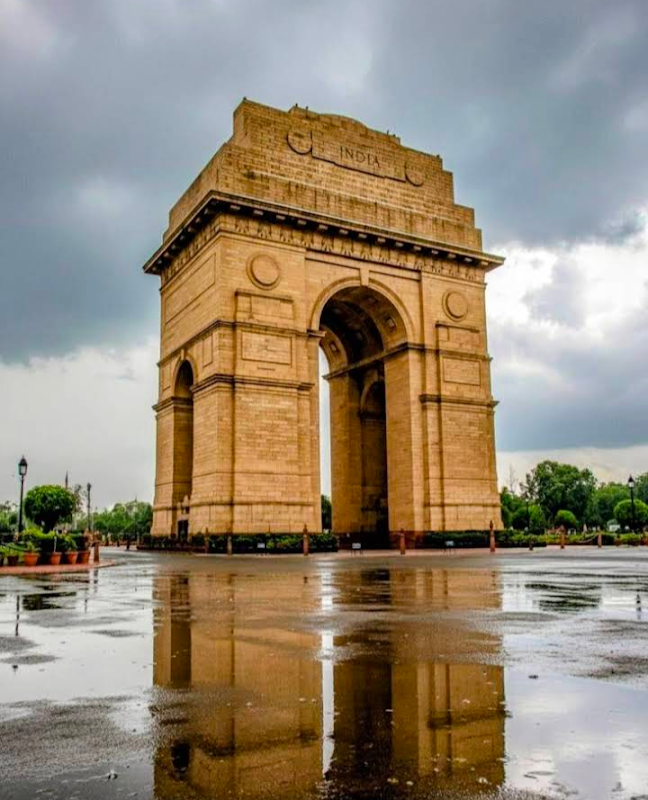
📍 Address: Kartavya Path, India Gate, New Delhi, Delhi 110001, India
“India Gate,” majestically standing at the eastern end of Kartavya Path (formerly Rajpath) in the heart of New Delhi, the capital of India. Completed in 1931 during British rule, this massive memorial arch, approximately 42 meters high, commemorates the nearly 90,000 Indian soldiers who died in World War I and the Afghan Wars. Its impressive arched structure, reminiscent of the Arc de Triomphe in France, was designed by British architect Edwin Lutyens, and the names of the fallen soldiers are intricately inscribed on its pillars.
Looking up from directly beneath the gate, one can feel the immense scale and the profound weight of the historical sacrifices made by India before independence. Since 1971, after India’s independence, the ‘Amar Jawan Jyoti’ (eternal flame) has continuously burned beneath the arch, serving as a symbol of the Indian nation’s soul. It is also famous as the starting point for a spectacular military parade held annually on Republic Day, January 26th.
The best times to visit are ‘early morning,’ when the crowds are sparse and the air is crisp, or ‘after sunset,’ when the gate is illuminated in the three colors of the Indian flag (saffron, white, and green). During the day, many locals gather in the surrounding plaza, enjoying picnics and innocent games, making it a peaceful recreational spot. The contrast between historical grandeur and the vibrant popular culture of modern India is fascinating, but visitors should be wary of pickpockets and unexpected troubles in the crowds.
Red Fort (Lal Qila)
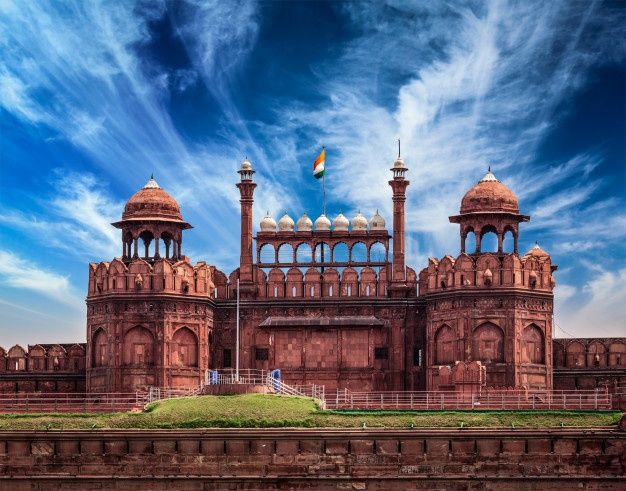
📍 Address: Netaji Subhash Marg, Lal Qila, Chandni Chowk, New Delhi, Delhi, 110006, India
Standing amidst the bustle of Old Delhi, the ‘Red Fort’ is a magnificent fortress built in the 17th century by the 5th Mughal Emperor Shah Jahan when he shifted the capital from Agra to Delhi. As its name suggests, the colossal walls made of red sandstone exude overwhelming power, conveying the glory of the Mughal Empire’s zenith. It is a UNESCO World Heritage site and remains an extremely important national landmark, with the Prime Minister delivering a speech from its ramparts on India’s Independence Day.
The biggest challenge for travelers visiting this historic site is the ‘arduous journey to entry.’ The queue for same-day tickets is perpetually chaotic, and it’s not uncommon to wait 1-2 hours to purchase them. To avoid wasting time, we strongly recommend purchasing tickets ‘online in advance.’ Furthermore, fierce pushing and jostling often occur at the entry point to the grounds, so using the ‘Jama Masjid side entrance,’ which offers relatively more space, is a smart local strategy.
The internal grounds are immensely vast, allowing visitors to explore the ruins of beautiful palace complexes. However, many travelers find the internal exhibits somewhat sparse, and walking around the extensive grounds can lead to annoyance from touts and scammers. If time is limited or you wish to avoid the stress of crowds, simply admiring its enormous red sandstone walls from the outside and taking excellent commemorative photos will be enough to fully appreciate the ‘dignity’ of this place.
Qutub Minar
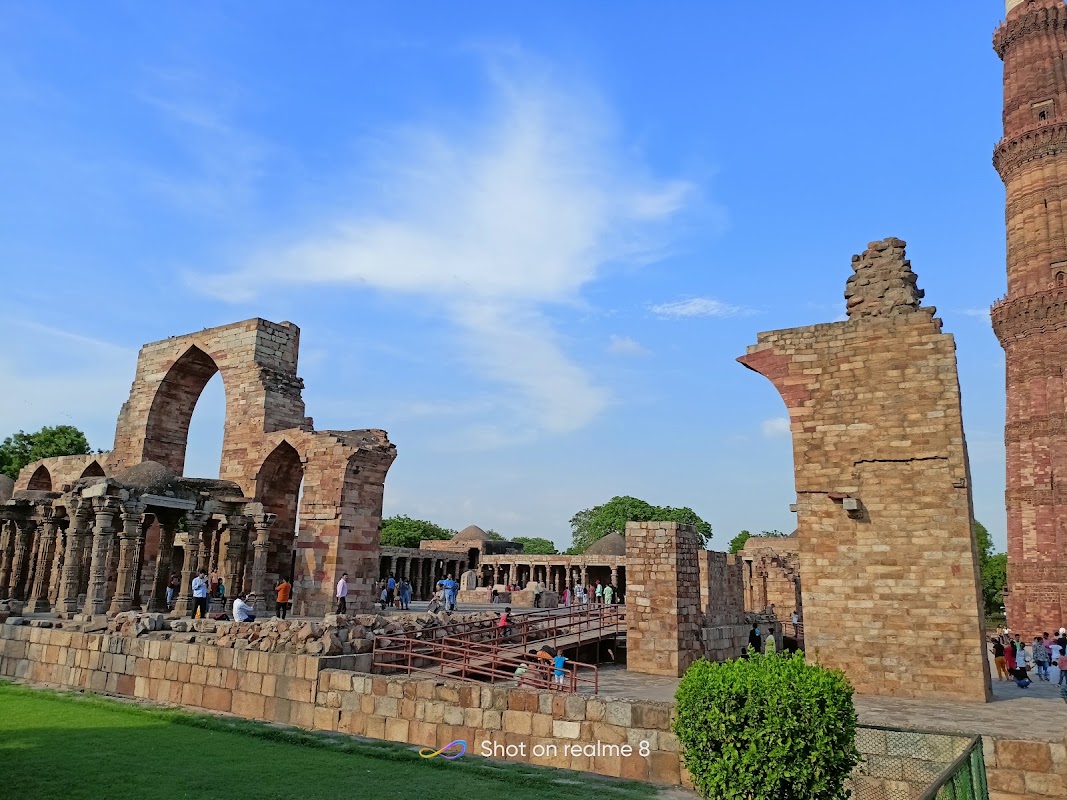
📍 Address: Mehrauli, Seth Sarai, New Delhi, Delhi 110030, India
Standing in the southern suburbs of Delhi, ‘Qutub Minar’ is a historic monument boasting a height of over 70 meters, making it one of the tallest minarets in the world. Its construction began in the late 12th century by Qutb al-Din Aibak, the founder of the Delhi Sultanate, to commemorate his victory over Hindu rulers in North India. Originally even taller, repeated earthquakes and lightning strikes caused the upper sections to collapse, resulting in its current form.
The red sandstone tower, a magnificent fusion of Islamic and Hindu architectural styles, is inscribed with intricate calligraphic decorations from the Quran. Its beauty and grandeur when viewed in person are indescribable. Previously, visitors could climb the internal staircase, but due to a tragic stampede accident caused by a power outage in the past, internal access is now prohibited.
If you plan to visit, ‘weekday mornings (especially right after opening)’ are highly recommended. Although this spot is always bustling with domestic tourists, fewer people are present during early hours, allowing you to capture ‘Instagrammable photos’ without anyone in the background amidst the movie-set-like ruins. The ticket issued upon entry is a ‘coin type’ and is required at the exit gate, so be careful not to lose it during your visit. Wild squirrels scurrying around the grounds and green parakeets flying overhead add a soothing touch to exploring the ancient ruins.
Zafar Mahal
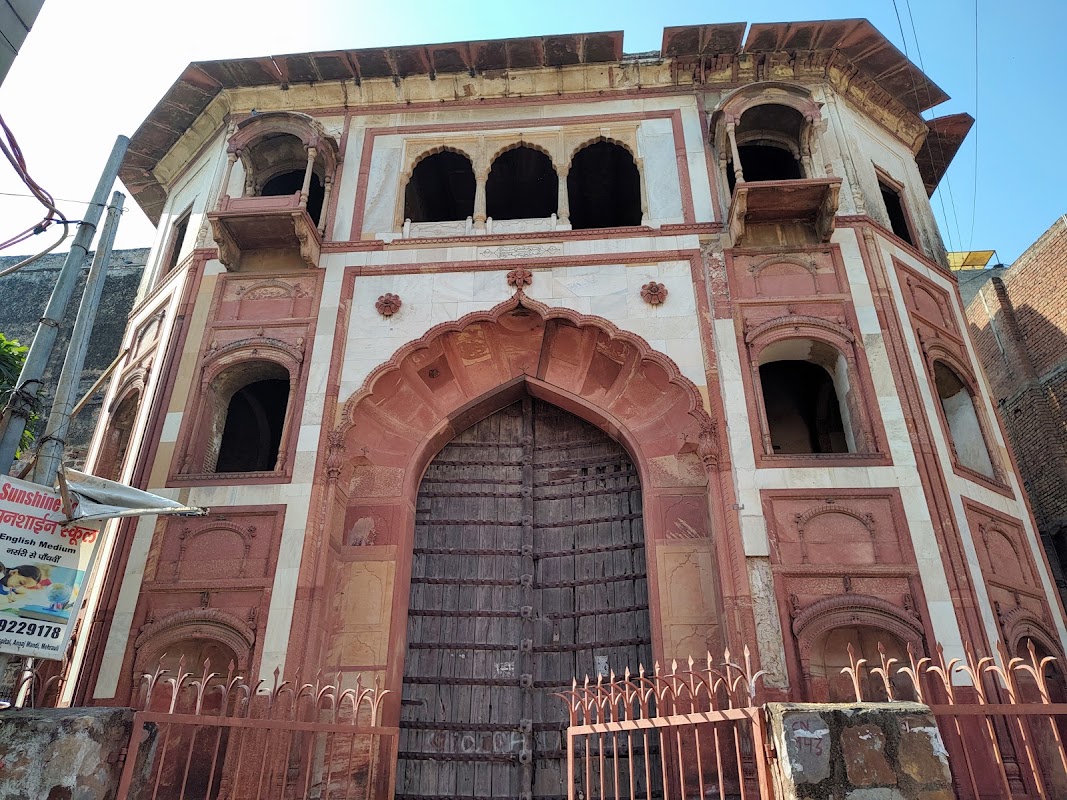
📍 Address: Mehrauli Village, Mehrauli, New Delhi, Delhi 110030, India
Tucked away in the back alleys of the Mehrauli district, the same area as Qutub Minar, ‘Zafar Mahal’ is the ‘last summer palace’ built during the twilight years of the declining Mughal Empire. Construction began in the 18th century under Akbar Shah II and was renovated by Bahadur Shah Zafar II, who became the last emperor of the empire. Particularly, the ‘Hathi Gate’ (a massive gate wide enough for elephants with howdahs to pass through) and the Bengali-style dome roof, which he added, attest to the elegance of Mughal architecture that was not lost even in an era of financial hardship.
Emperor Bahadur Shah Zafar, a poet and mystic, earnestly wished to be buried within the palace grounds, next to the beautiful white marble ‘Moti Masjid’ (Pearl Mosque) after his death. However, after the First Indian War of Independence (Sepoy Mutiny) in 1857, he was exiled by the British army to Rangoon, Burma (now Myanmar), and died in exile without ever setting foot on his homeland again. To this day, the ’empty tomb’ prepared for him remains sorrowfully on these grounds.
Hidden by modern development and surrounded by contemporary apartments, this palace is not particularly well-protected. The grounds are increasingly dilapidated, with local children playing cricket and people enjoying card games, creating a very local scene. However, it is precisely its appearance as a ‘forgotten ruin’ that speaks most eloquently of the tragic history of the Mughal Empire’s end, a once-glorious era. For travelers seeking a deeper understanding of history and architecture, this is one of Delhi’s most profound and moving spots.
Humayun’s Tomb
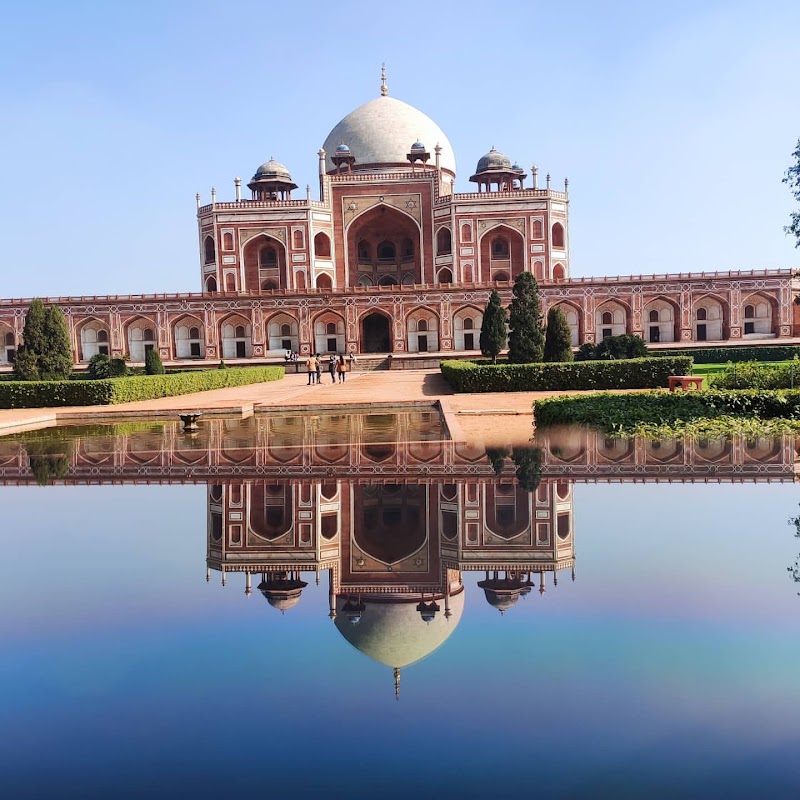
📍 Address: Hazrat Nizamuddin Aulia Dargah, Mathura Rd, Nizamuddin, Nizamuddin East, New Delhi, Delhi 110013, India
An absolute must-visit when in Delhi is ‘Humayun’s Tomb,’ the mausoleum of the second Mughal Emperor, Humayun. Completed in 1570, this magnificent structure, primarily built with red sandstone accented by white marble inlays, is the first masterpiece of Indo-Persian architectural fusion. It is globally renowned for being the direct model (prototype) for the ‘Taj Mahal’ later built in Agra.
Surrounded by Persian-style charbagh (four-part gardens), the symmetrical design of the building is simply exquisite. Unlike the shimmering white grandeur of the Taj Mahal, this tomb possesses a more profound and historically rich beauty that you can feel deeply. Recommended visiting times are ‘early morning’ or ‘dusk.’ Amidst the silence, cut off from the city’s hustle and bustle, the red sandstone structure bathed in morning mist or evening sunlight is breathtakingly divine. Inside, the emperor’s tombstone is enshrined, but the space is intentionally ‘bare’ and devoid of lavish decoration, conveying a spiritual legacy that transcends material power.
However, when enjoying this magnificent architectural beauty, one might also experience the ‘baptism’ unique to Indian tourism. The entrance fee differs significantly for foreigners (600 rupees) and Indians (approx. 40-50 rupees), which is understandable for maintenance costs, but unfair overcharging or change-related issues can occur at the ticket counter. Always maintain a sense of vigilance, even in ‘official’ places, and purchasing tickets online in advance is the best way to avoid trouble.
[COLUMN] Real Tips for a Successful Delhi Sightseeing Trip
Delhi’s tourist attractions are all magnificent places, grand in scale and rich in historical significance. However, it is also true that they come with challenging climates, crowds, and many issues targeting tourists. To enjoy your sightseeing to the fullest, you need to know some ‘real local strategies.’
First, when visiting popular World Heritage sites (such as the Red Fort or Humayun’s Tomb), it’s a golden rule to purchase tickets online in advance from the official Archaeological Survey of India (ASI) website or similar platforms, to avoid long queues at ticket counters and change disputes. For transportation, instead of dealing with auto-rickshaw touts, use ride-hailing apps like Uber or Ola, which offer fixed prices and safety, or the convenient, air-conditioned Delhi Metro.
The best time to plan your visit is ‘first thing in the morning.’ Not only can you avoid the intense heat of the day and the large crowds that gather from midday, but the ancient ruins enveloped in the morning’s quiet are also perfect for photography. The greatest secret to enjoying Delhi tourism is having the spirit to bravely embrace both its beautiful historical monuments and the chaotic energy of modern India.


'%3E%3Cpath%20stroke='%23000'%20stroke-width='4'%20d='m-35-37-13%2020m5%203%2013-20m5%203-13%2020m63%2042%206-9m1-2%206-9m5%203-6%209m-1%202-6%209m5%203%206-9m1-2%206-9m-96%200%2013%2020m5-3-6-9m-1-2-6-9m5-3%2013%2020m63-42-6-9m-1-2-6-9m5-3%2013%2020m5-3-6-9m-1-2-6-9'/%3E%3Ccircle%20r='24'%20fill='%23cd2e3a'/%3E%3Cpath%20fill='%230047a0'%20d='M0%200a12%2012%200%201%201%2020%2013%2024%2024%200%201%201-40-26A12%2012%200%201%200%200%200'/%3E%3C/g%3E%3C/svg%3E)
'/%3E%3Cpath%20fill='%23b2b2b2'%20d='M241%20382q0%2016%2017%2026%2017%2011%2042%2011t42-11q16-11%2017-26V269H241'/%3E%3Cpath%20fill='%239f7e00'%20d='M241%20379q0%2014%208%2023%209%209%2021%209%2014%200%2021-9%209-9%209-23V269h-59'/%3E%3Cpath%20d='M241%20339v-70h59v110q0%2014-9%2023l-6%205v-68h-15v72q-8%200-14-4v-68zm59%2040c0%2022%2015%2032%2029%2032%2021%200%2030-18%2030-32v-40h-59'/%3E%3Cpath%20fill='%239f7e00'%20d='M266%20277v5h2v12h-3v-5h2v-5h-9v5h2v5h-4v9h3v18h-5v10h34v-10h-5v-18h3v-9h-4v-5h2v-5h-9v5h2v5h-3v-12h2v-5zm42%20101q0%2010%206%2017%206%206%2015%207%2010-1%2016-7%206-7%206-17v-29h-43'/%3E%3Ccircle%20fill='%230044ad'%20cx='329.5'%20cy='372'%20r='6'/%3E%3Cellipse%20fill='%230044ad'%20cx='300'%20cy='340'%20rx='16'%20ry='21'/%3E%3C/svg%3E)


