

Introduction
Behind the bustling metropolises teeming with cutting-edge trends, South Korea boasts countless spots where centuries of profound history and rich nature breathe. For first-time visitors and repeat travelers alike, the joy of Korean tourism lies in discovering something new with each visit.
This article introduces 5 carefully selected spots, ranging from classic, unmissable tourist destinations to hidden gems in provincial cities where you can deeply immerse yourself in the local atmosphere. We’ll provide in-depth, real-world information that goes beyond just taking photos, including historical backgrounds, best visiting times, and hidden charms of the surrounding areas.
Bukchon Hanok Village
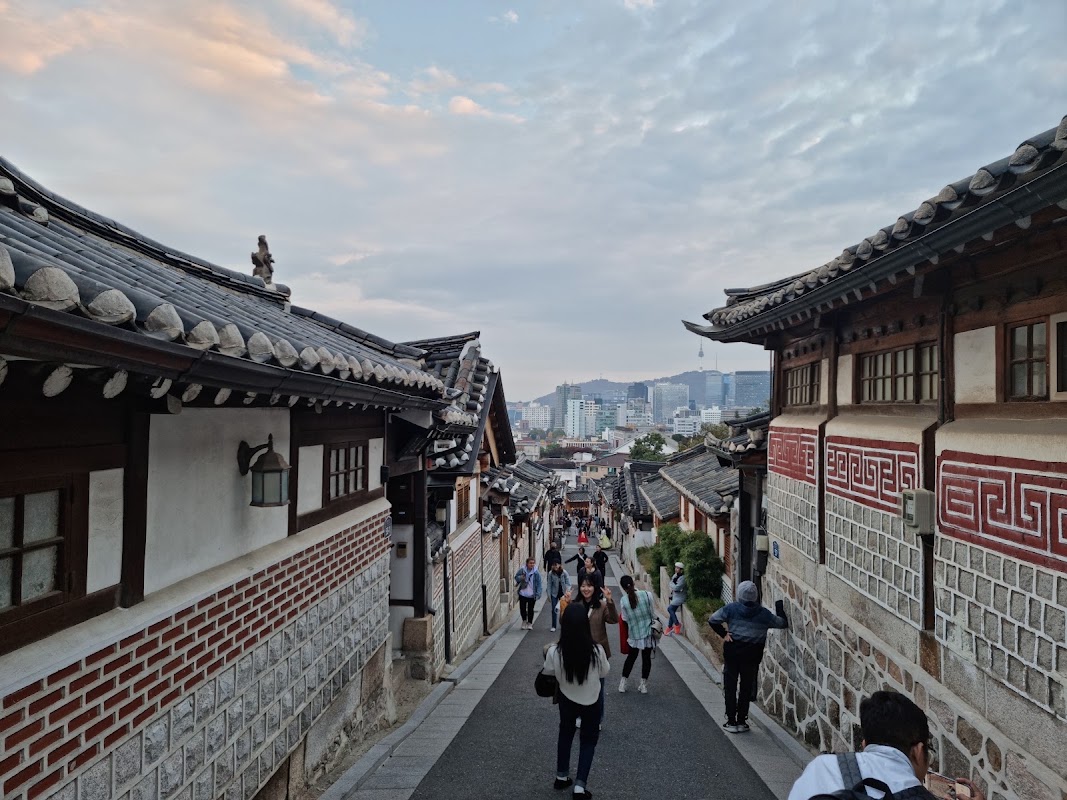
📍 Address: Gyedong-gil, Jongno District, Seoul, South Korea
Situated in the heart of Seoul, Bukchon Hanok Village is a dense cluster of ‘Hanok’ (traditional Korean houses) that date back to the early Joseon Dynasty (14th-15th century). Nestled between Gyeongbokgung Palace and Changdeokgung Palace, this area was once an elegant residential district where royalty and Yangban (the aristocratic class) lived. While many of the existing buildings have been renovated since the 20th century, stepping onto its narrow cobblestone streets lined with orderly tiled roofs feels like a journey back in time to a historical drama.
The greatest charm of this spot is the striking contrast where Seoul’s modern skyscrapers and Namsan Seoul Tower peek out from behind the rows of traditional Hanok rooftops. This seamless coexistence of history and modernity offers a uniquely breathtaking view of Bukchon. Numerous Hanbok (traditional Korean attire) rental shops are available nearby, allowing you to dress up and stroll the streets, creating unforgettable memories and Instagram-worthy photos.
As a highly popular tourist destination, it can get crowded during the day. If your main goal is photography, the early morning hours when there are fewer tourists, or the nostalgic twilight bathed in the setting sun, are ideal. Please note that this is still an active residential area where locals live. It’s essential to enjoy your visit while respecting the residents’ privacy and observing proper etiquette. Entry may be restricted after 5 PM, so please plan your visit accordingly. With many steep stairs and slopes, wearing comfortable sneakers is a must.
Bukchon Hanok Village (Main Street)
📍 Address: 31-45 Gahoe-dong, Jongno District, Seoul, South Korea
Among the many beautiful areas of Bukchon Hanok Village, the main street area is particularly unmissable. Well-preserved Hanoks line both sides of a gentle uphill slope, presenting the most ‘Bukchon-esque’ scenery and serving as a true highlight. Recently, it gained significant attention as a filming location for the hit Japanese drama ‘Eye Love You’, where the protagonists Teo and Yuri enjoyed a date, drawing a continuous stream of fans on ‘pilgrimage’.
While the main street is always bustling with tourists, stepping into the back alleys reveals a completely different atmosphere. Like Onomichi in Japan, a labyrinth of intricate stairs and narrow alleys awaits, with fewer crowds, allowing you to discover your own quiet and beautiful photo spots.
The surrounding area also features modern cafes housed in traditional Hanok spaces, sophisticated galleries, and small workshops where you can experience traditional crafts. If you get tired from walking, it’s highly recommended to relax on a Hanok porch with a cup of traditional tea.
Cheonggyecheon Stream
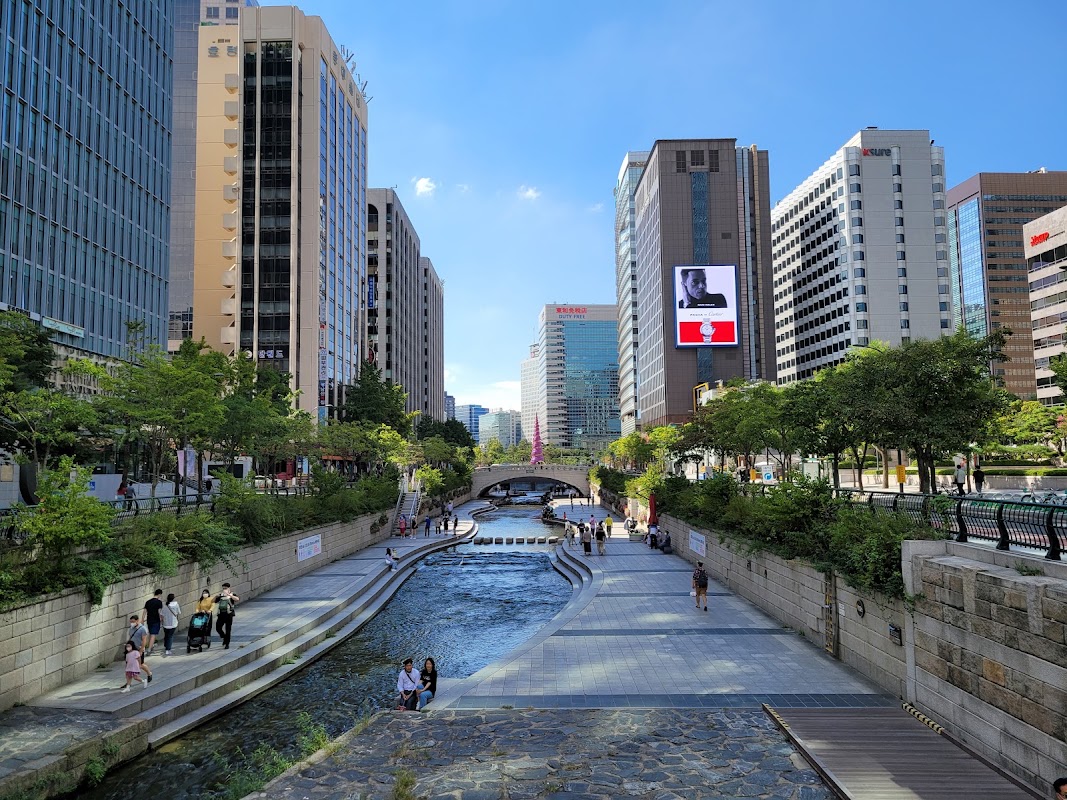
📍 Address: Jongno District, Seoul, South Korea
Flowing east to west through the heart of Seoul, Cheonggyecheon Stream is an approximately 11km-long recreational space for citizens. During Korea’s rapid economic growth, the stream suffered from severe water pollution and was covered by an elevated highway, becoming a culvert. However, thanks to a massive restoration project initiated in 2003, it has been reborn as a beautiful waterfront space overflowing with greenery and water. It is now recognized globally as a successful example of urban regeneration.
A beautifully maintained promenade stretches along both banks of the stream, offering excellent accessibility from major areas like Myeongdong and Gwanghwamun. During the day, you can see children playing on stepping stones and office workers strolling with coffee in hand, allowing you to experience the local rhythm of Seoul life.
Even more captivating is its nighttime ambiance. As the sun sets, the stream is beautifully lit up, creating a highly romantic atmosphere. Especially during the ‘Seoul Lantern Festival’ held annually in winter, colorful giant lanterns and media art installations line the stream, offering a fantastic spectacle of light. It’s a perfect healing spot to escape the urban hustle and bustle or shopping fatigue, where you can simply stop by and listen to the sounds of the flowing water.
Hwaseong Haenggung Palace
📍 Address: 825 Jeongjo-ro, Paldal-gu, Suwon, Gyeonggi-do, South Korea
Located in Suwon, Gyeonggi-do, about an hour’s train or subway ride from Seoul, Hwaseong Haenggung Palace is an absolute must-visit for history enthusiasts. It was built as a temporary palace (Haenggung) for King Jeongjo, the 22nd monarch of the Joseon Dynasty, during his visits to his father’s tomb, who met a tragic end. Boasting the largest scale among all Haenggung in Korea, its magnificent presence reflects the king’s authority and his deep filial piety.
Compared to Gyeongbokgung Palace in Seoul, Hwaseong Haenggung is less crowded, allowing visitors to leisurely explore its vast grounds at their own pace. It has frequently served as a filming location for Korean historical dramas, and taking photos in traditional attire here is particularly striking. Additionally, in conjunction with the nearby UNESCO World Heritage site, Suwon Hwaseong Fortress, there are plenty of activities such as gukgung (traditional Korean archery) experiences and the ‘Flying Suwon’ hot-air balloon, which offers panoramic views of the fortress walls.
Furthermore, right next to Hwaseong Haenggung Palace is ‘Haengnidan-gil’ (Haenggung-dong Cafe Street), a trendy area. It features a dense collection of unique cafes and specialty shops renovated from old residential houses. This ‘old meets new’ style of enjoying sophisticated cafes after a historical stroll has become immensely popular among young people and travelers. The palace is also beautifully illuminated at night, making it an area that can be enjoyed all day long.
Changwon Metasequoia Road
📍 Address: 19-4 Yongji-ro 239beon-gil, Yongji-dong, Seongsan-gu, Changwon-si, Gyeongsangnam-do, South Korea
The Metasequoia-lined Road in Changwon, Gyeongsangnam-do, in southeastern South Korea, is a beautiful street known to those ‘in the know’. While Seoul’s ‘Garosu-gil’ (Tree-lined Street) in Sinsa-dong is famous, Changwon’s Metasequoia Road offers a dynamic natural experience with metasequoia trees towering hundreds of meters high.
Changwon City, said to be modeled after Australian urban planning, is characterized by its wide, flat, and well-maintained roads. This makes it ideal not only for walks but also for cycling. While it presents different beautiful scenes each season, the autumn foliage season is particularly recommended. The tunnel of metasequoia trees dyed in yellow and orange is breathtakingly beautiful and makes for an excellent photo opportunity.
Along both sides of the street and in the surrounding alleys, you’ll find high-sense bakery cafes, artisanal roasteries, and stylish restaurants that rival those in Seoul. Although there can be a bit more car traffic, it lacks the hurried pace of Seoul, offering a relaxed, local atmosphere unique to a provincial city. It’s also easily accessible from Busan, making it a perfect spot for those seeking a deeper provincial travel experience.
Tips for Maximizing Your South Korea Travel Experience
Here are a few tips to make your travel and city exploration around South Korea’s tourist attractions more comfortable.
First, South Korea is a highly ‘cashless society’. Cash is only used in street stalls and some markets, so having a credit card or a rechargeable prepaid card like ‘WOWPASS’ will make things much smoother. If you get a card with integrated ‘Tmoney’ functionality for public transport, you can simply tap to pay for subways and buses.
Also, South Korea’s cafe culture is world-class. No matter which tourist destination you visit, you’re bound to find charming cafes just a short walk away. If you get tired from walking, don’t push yourself; frequent cafe breaks are the local way to enjoy. Order a cold Americano (‘A-Ah’) and observe how the locals spend their time – it’s an interesting experience!
Finally, regarding clothing: many of Korea’s historical tourist sites, such as Bukchon Hanok Village and Suwon Hwaseong Fortress, feature cobblestone paths, steep slopes, and numerous stairs. We strongly recommend wearing comfortable, well-cushioned sneakers rather than focusing solely on design.


'%3E%3Cpath%20stroke='%23000'%20stroke-width='4'%20d='m-35-37-13%2020m5%203%2013-20m5%203-13%2020m63%2042%206-9m1-2%206-9m5%203-6%209m-1%202-6%209m5%203%206-9m1-2%206-9m-96%200%2013%2020m5-3-6-9m-1-2-6-9m5-3%2013%2020m63-42-6-9m-1-2-6-9m5-3%2013%2020m5-3-6-9m-1-2-6-9'/%3E%3Ccircle%20r='24'%20fill='%23cd2e3a'/%3E%3Cpath%20fill='%230047a0'%20d='M0%200a12%2012%200%201%201%2020%2013%2024%2024%200%201%201-40-26A12%2012%200%201%200%200%200'/%3E%3C/g%3E%3C/svg%3E)
'/%3E%3Cpath%20fill='%23b2b2b2'%20d='M241%20382q0%2016%2017%2026%2017%2011%2042%2011t42-11q16-11%2017-26V269H241'/%3E%3Cpath%20fill='%239f7e00'%20d='M241%20379q0%2014%208%2023%209%209%2021%209%2014%200%2021-9%209-9%209-23V269h-59'/%3E%3Cpath%20d='M241%20339v-70h59v110q0%2014-9%2023l-6%205v-68h-15v72q-8%200-14-4v-68zm59%2040c0%2022%2015%2032%2029%2032%2021%200%2030-18%2030-32v-40h-59'/%3E%3Cpath%20fill='%239f7e00'%20d='M266%20277v5h2v12h-3v-5h2v-5h-9v5h2v5h-4v9h3v18h-5v10h34v-10h-5v-18h3v-9h-4v-5h2v-5h-9v5h2v5h-3v-12h2v-5zm42%20101q0%2010%206%2017%206%206%2015%207%2010-1%2016-7%206-7%206-17v-29h-43'/%3E%3Ccircle%20fill='%230044ad'%20cx='329.5'%20cy='372'%20r='6'/%3E%3Cellipse%20fill='%230044ad'%20cx='300'%20cy='340'%20rx='16'%20ry='21'/%3E%3C/svg%3E)


