

Among the Tohoku region, Fukushima Prefecture boasts a vast area, abundant nature, and a profound history. It’s overflowing with charms that captivate travelers, including breathtaking scenery throughout the four seasons, traditional cultures passed down through generations, and unique local gourmet delights.
This time, for all travelers searching for ‘Fukushima Prefecture tourist spots,’ we will thoroughly explain everything from classic attractions to deeper, more immersive ways to enjoy them. We’ll provide real information to help you enjoy the local area 120%, including the best times to have beautiful views all to yourself, must-try local foods, and tips for avoiding crowds.
Ouchijuku
📍 Address: Ouchi Yamamoto, Shimogo-machi, Minamiaizu-gun, Fukushima 969-5207, Japan
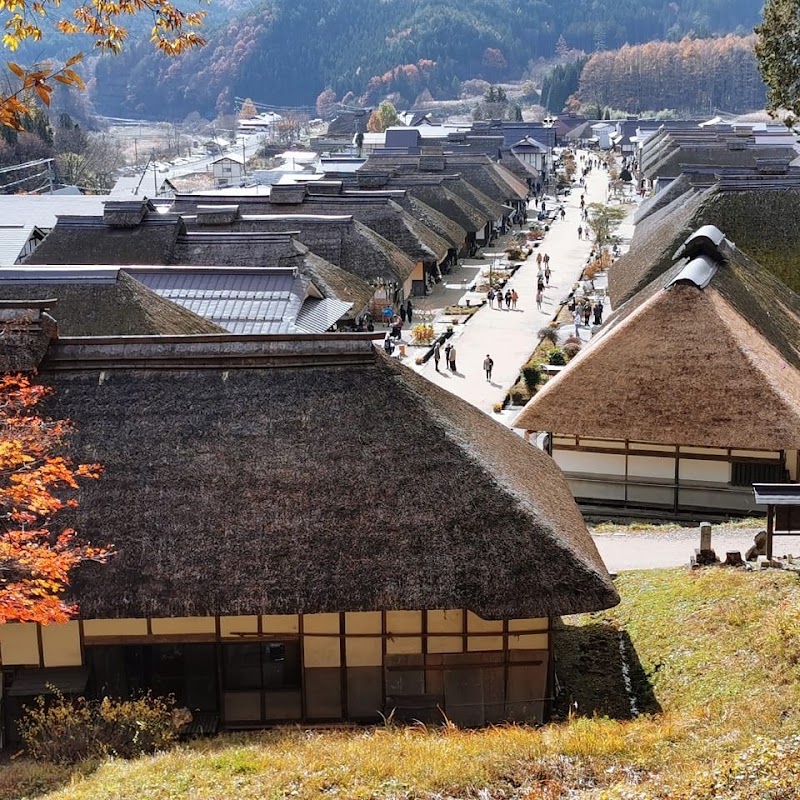
Ouchijuku prospered as a post town on the Aizu Nishi Kaido road during the Edo period and served as an important relay point for ‘sankin kōtai’ (alternate attendance system). It miraculously retained its old appearance by being left behind by the development of transportation networks after the Meiji era. Today, about 30 thatched-roof private houses line the street, operating as actual shops and residences while adhering to the village’s three principles: ‘don’t sell, don’t lend, don’t destroy.’ Walking through the street, you’ll be enveloped in a nostalgic atmosphere as if you’ve traveled back in time to the Edo period.
The greatest pleasure here is trying the local gourmet on a food tour. An absolute must-try is the famous ‘negi soba’ (Takato soba). This impactful local dish involves slurping soba noodles with an entire long green onion as chopsticks, and taking bites of the onion as a condiment. The popular restaurant ‘Misawaya’ is always crowded, so it’s a smart move to register your name as soon as you arrive.
There’s also a wide variety of street food to enjoy, making it hard to choose: ‘Yamagataya’s’ 15cm diameter hand-baked senbei (rice crackers, freshly grilled over charcoal by a grandmother after you order), ‘Yamadaya’s’ dashimaki tamago (rolled omelet) sandwich, and ‘Nansen-in Honke’s’ crispy fried soba flour tempura manju (steamed buns). ‘Honke Kanouya’ also receives high praise in reviews. Besides selling colorful chirimen (crepe fabric) goods, it’s a warm, locally-flavored spot where you can enjoy cheerful conversations with local grandmas while sampling over 20 types of pickles and rare ‘mushroom tea.’
As it’s a popular destination visited by many tour buses, the parking lot starts to get crowded around 11 AM. If you want to photograph the quiet townscape and sightsee smoothly, arriving around 9 AM is best. From the observatory on the hill at the far end of the post town, you can enjoy a panoramic view of the thatched-roof village, so be sure to visit.
Goshikinuma Ponds
📍 Address: Hibarakenga Mine, Kitashiobara-mura, Yama-gun, Fukushima 966-0501, Japan
Goshikinuma Ponds are a representative scenic spot in Urabandai, having earned one star in the Michelin Green Guide. Known as the ‘Mysterious Ponds,’ their surfaces shimmer in completely different colors depending on the pond, ranging from emerald green to cobalt blue and turquoise blue. The hiking trail that circles dozens of ponds, large and small, formed by volcanic activity, is relatively flat and well-maintained, making it enjoyable even for beginner hikers.
The key to enjoying Goshikinuma 120% is ‘early morning.’ While it’s bustling with many tourists during the day, Goshikinuma in the 7 AM hour is truly a world of silence. On a calm, windless morning, the blue sky and trees are reflected like a mirror on the vibrant water surface, creating a breathtaking view that is praised as being ‘like the Uyuni Salt Flat.’ The vivid colors of ‘Aonuma’ (Blue Pond) are particularly exceptional; when sunlight hits it, the water sparkles, making every shot photogenic.
Walking the entire course takes about an hour one way (over two hours round trip), but if your time is limited, a one-hour shortcut is recommended: start walking from the west entrance (Urabandai Bussankan side), see Aonuma and Bentennuma, and then return. The gelato shop near the west entrance is also highly reputed for its delicious treats, making it perfect as a reward after your hike.
However, being a richly natural area, bear sightings are not uncommon. There are real traveler reviews stating, ‘While early morning strolls are nice due to fewer people, measures like bear bells and whistles are essential.’ Avoid solitary walks and safely enjoy the mysteries of nature while making some noise.
Abukuma-do Cave
📍 Address: 1 Higashikama Yama, Sugaya, Takine-machi, Tamura-shi, Fukushima 963-3601, Japan
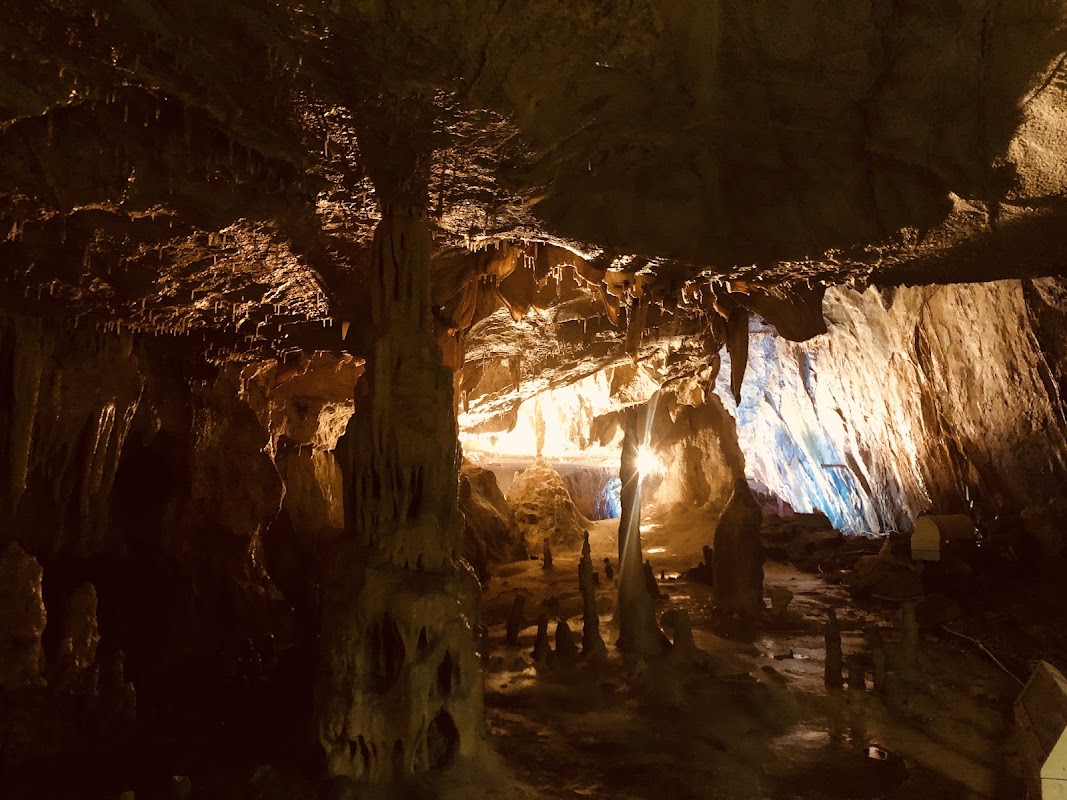
Abukuma-do Cave is a masterpiece of natural beauty created by groundwater over countless years. Its public course, approximately 600m long, features a variety and number of stalactites said to be the best in the Orient. The cave maintains a cool temperature of around 13-15 degrees Celsius throughout the year, making it an excellent summer retreat, but it can feel chilly if you’re lightly dressed, so it’s wise to bring an extra layer.
The main highlights are ‘Takine Goten,’ a grand chamber boasting a height of approximately 29m, and ‘Tsuki no Sekai’ (World of the Moon), the first stalactite cave in Japan to feature a stage lighting system. The illuminated stalactites are enchanting, offering an adventurous feeling as if you’ve stumbled into another world or an RPG dungeon.
Furthermore, we highly recommend the ‘Exploration Course’ (Adventure Course), which you can challenge for an additional 300 yen on top of the admission fee. This route, branching off from the general course, is packed with thrilling athletic elements: narrow gaps where you must stoop to pass, low areas where you have to crawl, and stepping stones or log bridges to cross. As some areas can be slippery, it’s essential to wear comfortable sneakers and clothes that you don’t mind getting dirty. It’s highly praised in reviews, with visitors saying, ‘Even adults can feel like kids again and get excited.’ If the regular tourist route isn’t enough for you, definitely choose this one.
Tassawa Fudo-taki Waterfall
📍 Address: Aza Tassawa, Kawai Hikageyama, Inawashiro-machi, Yama-gun, Fukushima 969-2752, Japan
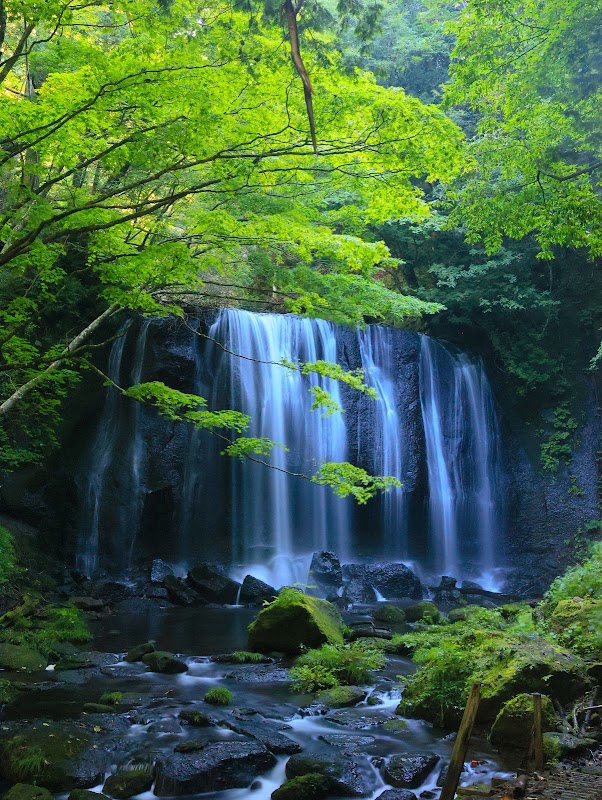
Tassawa Fudo-taki Waterfall is a hidden power spot, known to those in the know, located a drive away from Fukushima City’s inner sanctuary. Situated amidst a dense primeval beech forest, it features a 10m-high ‘Otaki’ (male waterfall) where water cascades down the rock face like a lace curtain or bamboo blind, and a gracefully flowing ‘Metaki’ (female waterfall) quietly beside it, creating a beautiful contrast.
Its charm lies in its easy access: from the parking lot, it’s just a 10-minute walk along a flat forest path, listening to the gentle murmur of the stream. However, after rain, the path can become muddy and slippery, so caution is advised. Also, the path extending to the right from the entrance torii gate is a steep mountain trail used for forestry, so be careful not to mistakenly wander onto it.
The waterfall reveals completely different expressions with each season: the contrast of vibrant green and white water flow shines in early summer, autumn leaves adorn the falls in fall, and a serene snowy landscape in winter. Standing before the waterfall, you can bathe your entire body in negative ions along with the spray, experiencing a pleasant sensation that seems to wash away the fatigue of daily life. For travelers looking to easily recharge with nature’s energy, this magnificent waterfall is an absolute must-visit.
Hanamiyama Park
📍 Address: 17 Watarihara, Fukushima-shi, Fukushima 960-8141, Japan PFQW+8H
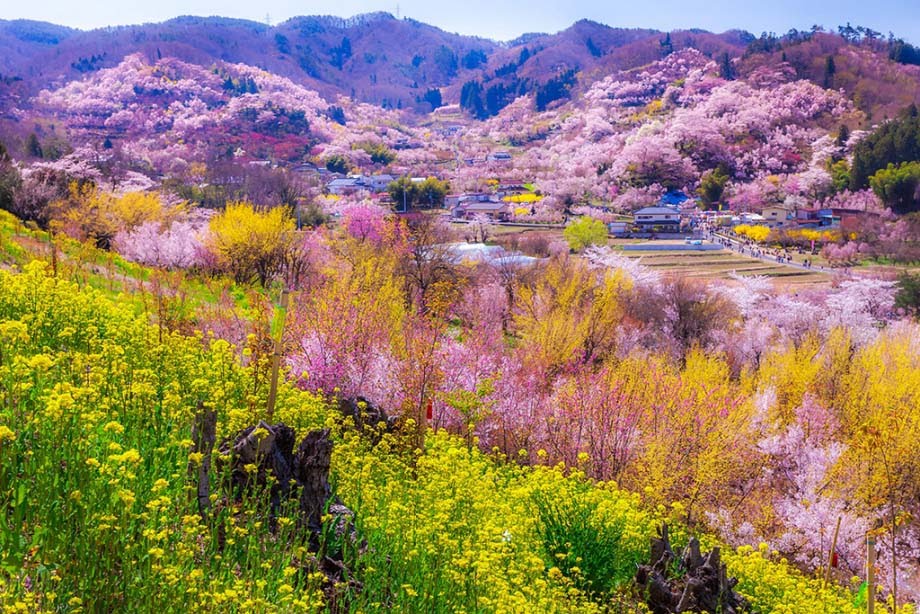
Hanamiyama Park is one of Fukushima Prefecture’s foremost flower viewing spots, famously praised by renowned Japanese photographer Shotaro Akiyama as ‘a utopia in Fukushima.’ What’s remarkable is that this is not a public park, but private land that the Abe family, local flower farmers, spent decades cultivating their own mountain and opened to the public for free, wanting ‘many people to enjoy beautiful flowers.’ It’s a miraculous landscape preserved by the warm sentiments of the local community.
During the peak spring season (late March to mid-April), about 70 varieties of flowers, including plum blossoms, Somei Yoshino cherries, Tokai-zakura cherries, forsythias, flowering peaches, and quinces, burst into bloom simultaneously, dyeing the entire mountain in shades of pink and yellow. The park features well-maintained walking courses of 30, 45, and 60 minutes, allowing visitors to enjoy hiking according to their fitness levels. From near the summit, you can enjoy a panoramic view of the contrast between the snow-capped Azuma mountain range and the vibrant flowers, an absolutely breathtaking sight. Free-to-borrow walking sticks available near the entrance are a great help for a light hike.
A practical tip to note is that private car access is regulated during the cherry blossom season. You’ll need to park your car in temporary parking lots set up along the riverbed of ‘Abukuma Shinsui Park’ and then transfer to a shuttle bus (500 yen round trip for environmental preservation cooperation fee). Even on weekdays, cars start gathering in the parking lots around 6:30 AM, aiming for the first bus at 7 AM, a testament to its popularity. To avoid traffic and crowds, we strongly recommend planning your visit for the very first slot in the morning.
Conclusion
From a post town retaining the charm of the Edo period to mysterious ponds woven by grand nature, a thrilling stalactite cave, a soul-cleansing magnificent waterfall, and a floral utopia filled with the heartfelt wishes of local people. Fukushima Prefecture’s tourist spots are not just about admiring the scenery; they leave a deeper impression on your heart by allowing you to touch history, savor local gourmet, and feel the atmosphere by walking through it yourself. Please use this article as a guide to plan your own wonderful trip to Fukushima.


'%3E%3Cpath%20stroke='%23000'%20stroke-width='4'%20d='m-35-37-13%2020m5%203%2013-20m5%203-13%2020m63%2042%206-9m1-2%206-9m5%203-6%209m-1%202-6%209m5%203%206-9m1-2%206-9m-96%200%2013%2020m5-3-6-9m-1-2-6-9m5-3%2013%2020m63-42-6-9m-1-2-6-9m5-3%2013%2020m5-3-6-9m-1-2-6-9'/%3E%3Ccircle%20r='24'%20fill='%23cd2e3a'/%3E%3Cpath%20fill='%230047a0'%20d='M0%200a12%2012%200%201%201%2020%2013%2024%2024%200%201%201-40-26A12%2012%200%201%200%200%200'/%3E%3C/g%3E%3C/svg%3E)
'/%3E%3Cpath%20fill='%23b2b2b2'%20d='M241%20382q0%2016%2017%2026%2017%2011%2042%2011t42-11q16-11%2017-26V269H241'/%3E%3Cpath%20fill='%239f7e00'%20d='M241%20379q0%2014%208%2023%209%209%2021%209%2014%200%2021-9%209-9%209-23V269h-59'/%3E%3Cpath%20d='M241%20339v-70h59v110q0%2014-9%2023l-6%205v-68h-15v72q-8%200-14-4v-68zm59%2040c0%2022%2015%2032%2029%2032%2021%200%2030-18%2030-32v-40h-59'/%3E%3Cpath%20fill='%239f7e00'%20d='M266%20277v5h2v12h-3v-5h2v-5h-9v5h2v5h-4v9h3v18h-5v10h34v-10h-5v-18h3v-9h-4v-5h2v-5h-9v5h2v5h-3v-12h2v-5zm42%20101q0%2010%206%2017%206%206%2015%207%2010-1%2016-7%206-7%206-17v-29h-43'/%3E%3Ccircle%20fill='%230044ad'%20cx='329.5'%20cy='372'%20r='6'/%3E%3Cellipse%20fill='%230044ad'%20cx='300'%20cy='340'%20rx='16'%20ry='21'/%3E%3C/svg%3E)


