

Japan is home to countless tourist attractions that endlessly fascinate travelers from around the world, ranging from historical buildings steeped in rich history to breathtaking scenic wonders. However, many visitors often wonder, ‘Since these places are so famous, when is the best time to visit them to fully enjoy them?’ or ‘What are some unique ways to experience them that aren’t in guidebooks?’
In this guide, we’ve carefully selected five classic, must-visit sightseeing and leisure spots in Japan. We’ll provide real, actionable information, including breathtaking places you must see once in your lifetime, the best times to visit to avoid crowds, and a sense of the local atmosphere you can experience there.
Kinkaku-ji (Golden Pavilion)
📍 Address: 1 Kinkakujicho, Kita Ward, Kyoto, 603-8361, Japan
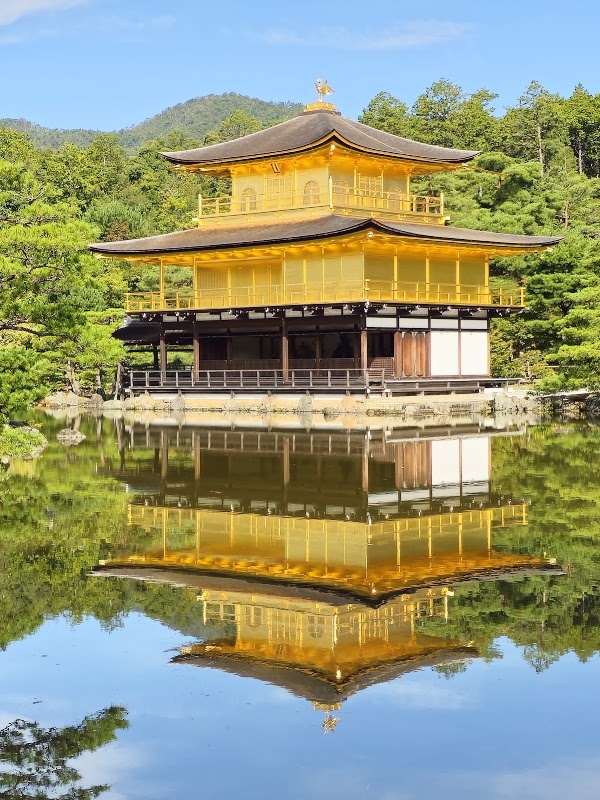
Kinkaku-ji (officially known as Rokuon-ji), originated as a mountain villa built by Ashikaga Yoshimitsu, the third shogun of the Muromachi Shogunate. It is registered as a World Heritage Site and is a quintessential Kyoto attraction. Its main highlight is undoubtedly the dazzling ‘Shariden’ (Golden Pavilion), covered in gold leaf.
This Shariden is actually a three-story structure, featuring a distinctive harmony of different architectural styles: the first floor is ‘Shinden-zukuri’ (palace style) favored by Heian aristocrats, the second floor is ‘Buke-zukuri’ (samurai house style), and the third floor is ‘Zenshu Butsuden-zukuri’ (Chinese Zen temple style). The moment you stand before the Golden Pavilion, its overwhelming presence and perfected beauty will leave you speechless.
The best time to visit is on a clear, windless morning. The gold leaf, bathed in sunlight, shines even more brightly, and you can capture a breathtaking view of the ‘inverted Kinkaku’ clearly reflected on the surface of ‘Kyōkochi’ (Mirror Pond) in front. Although it’s a popular spot bustling with tourists, the Golden Pavilion itself is across the pond, which is a nice bonus as it means you can take beautiful photos without crowds obstructing your view. Don’t miss the different charm of the Golden Pavilion as seen from ‘Sekka-tei’ tea house on a hillside, located in the latter part of the route.
Tokyo Skytree
📍 Address: 1 Chome-1-2 Oshiage, Sumida City, Tokyo 131-0045, Japan
Rising as a new landmark in Tokyo’s downtown area, Tokyo Skytree stands tall at 634 meters (Musashi), making it Japan’s tallest broadcasting tower. Its overwhelming scale is impressive not only from afar but also astonishing when you look up at it from directly below.
From the Tembo Deck at 350 meters above ground and the Tembo Galleria, which reaches a maximum height of 451.2 meters, you can enjoy a 360-degree panoramic view of Tokyo’s vast cityscape. The recommended time to visit is from dusk into the night. The transition from the orange-hued magic hour to a night view sparkling with countless lights like a jewelry box is truly an otherworldly experience. On clear days from autumn to winter, when the air is dry and crisp, you might even see the silhouette of Mount Fuji emerge beyond the sunset.
At its base, the ‘Tokyo Solamachi’ commercial complex offers a full day’s worth of entertainment with gourmet dining, shopping, an aquarium, and a planetarium. As same-day tickets for Skytree can lead to long queues, it’s essential to book your tickets online in advance for a smoother visit.
Tsunoshima Ohashi Bridge
📍 Address: Kanda, Hōhoku-chō Ōaza, Shimonoseki, Yamaguchi 759-5331, Japan
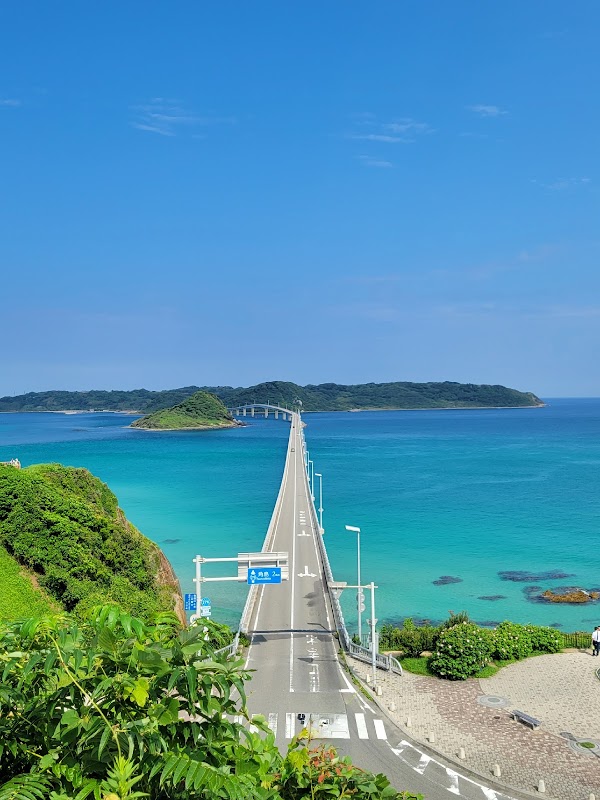
Connecting the main island of Honshu with the isolated island of Tsunoshima, ‘Tsunoshima Ohashi Bridge’ is one of Japan’s premier scenic spots, frequently featured in car commercials and films. Stretching 1,780 meters, it boasts one of Japan’s longest lengths for a free-to-cross public road.
The bridge’s greatest charm lies in the beautiful ocean that spreads out on both sides, transitioning from cobalt blue to emerald green. Designed to preserve the scenery within the National Park, the height of the bridge piers was intentionally kept low, creating a unique floating sensation and sense of liberation as you drive or ride across it, as if gliding over the sea.
For the best photos, head to the observation deck at ‘Amagase Park’ on the Honshu side of the bridge. The contrast between the straight white bridge and the blue sea, viewed from the elevated position, looks like a perfect painting no matter where you frame it. Parking is free, but it can get crowded on weekends and holidays, so visiting in the early morning or before sunset, when the light is most romantic, is recommended.
Kiyomizu-dera Temple
📍 Address: 1 Chome-294 Kiyomizu, Higashiyama Ward, Kyoto, 605-0862, Japan
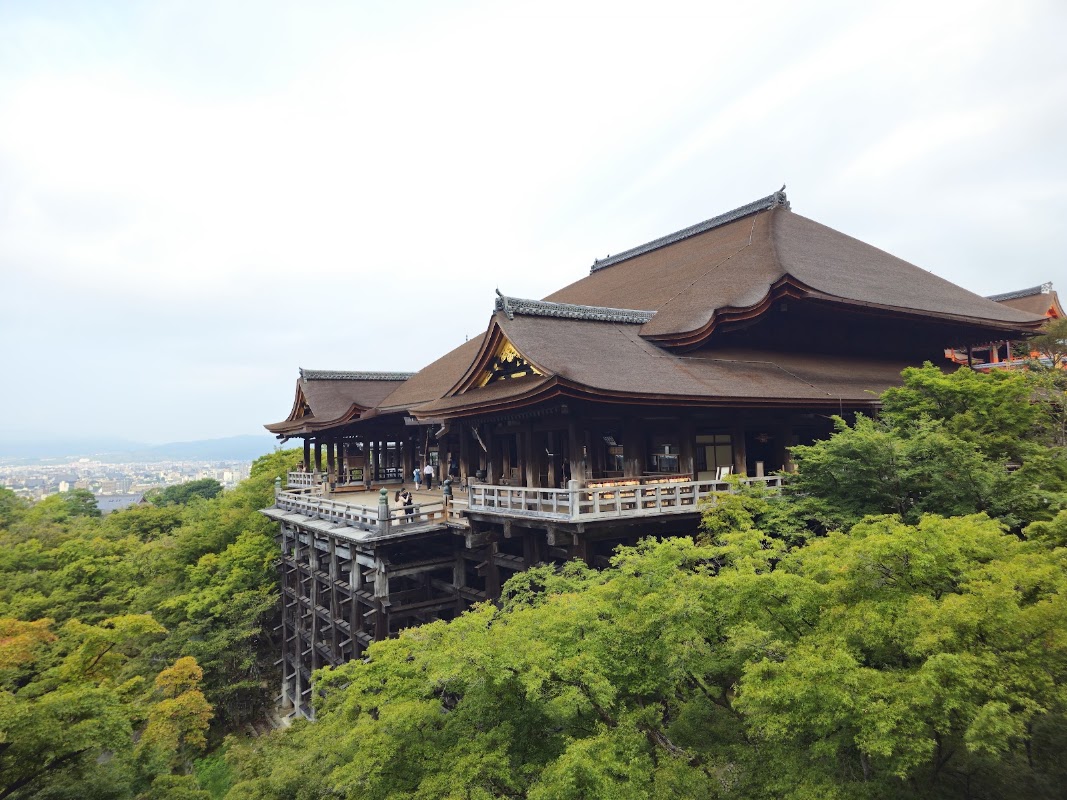
Kiyomizu-dera Temple in Kyoto is famous for the Japanese proverb ‘to jump off the stage of Kiyomizu.’ With over 1200 years of history, it’s one of Japan’s most prominent temples, registered as a World Heritage Site.
Its main highlight, the ‘Kiyomizu Stage’ (main hall), is built jutting out from the cliff of Mount Otowa, approximately 13 meters above ground. What’s truly astonishing is that it was constructed using a traditional architectural method called ‘Kakezukuri,’ employing 139 massive zelkova pillars without a single nail, interlocking the wooden pieces. From the stage, you can enjoy panoramic views of Kyoto city, with beautiful seasonal landscapes of cherry blossoms in spring and vibrant autumn leaves. Furthermore, at ‘Otowa-no-taki’ (Otowa Waterfall), which gave the temple its name, three streams of pure water flow down, each believed to bring blessings for academic success, love, and longevity.
While Sannenzaka (also known as Sanneizaka or Sannen-zaka) and the Kiyomizu Stage are incredibly crowded with domestic and international visitors during the day, Kiyomizu-dera actually opens at ‘6 AM.’ If you want to leisurely visit and take photos in the quiet, serene temple grounds, enveloped in the chirping of birds and free from crowds, an early morning visit is highly recommended.
Fushimi Inari-taisha Shrine
📍 Address: 68 Fukakusa Yabunouchicho, Fushimi Ward, Kyoto, 612-0882, Japan
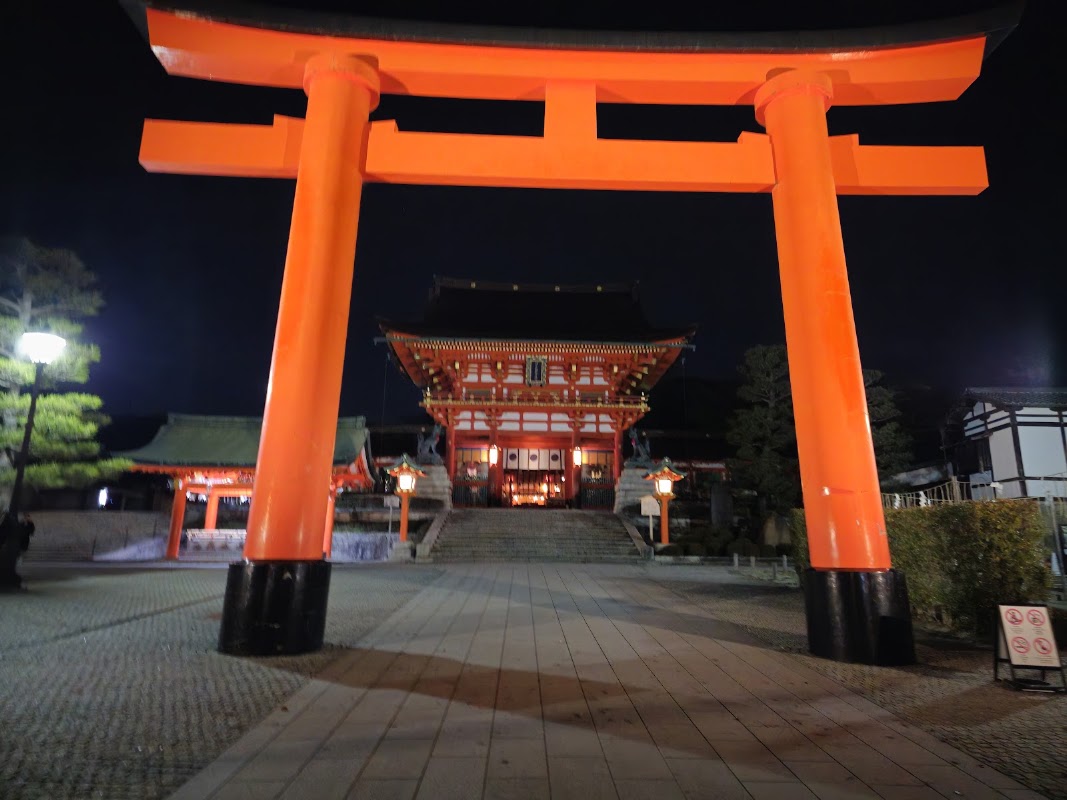
Fushimi Inari-taisha Shrine is the head shrine of the estimated 30,000 Inari shrines throughout Japan. It garners strong faith as the deity of business prosperity and abundant harvests, with fox (divine messenger) statues enshrined throughout its grounds.
The iconic symbol of this shrine is the ‘Senbon Torii’ (Thousands of Torii Gates), an endless corridor of vermillion torii gates. Since the Edo period, these torii have been donated by worshippers whose wishes ‘passed through,’ creating a fantastic scene like a tunnel to another world. However, the entrance area of Senbon Torii is always extremely crowded. Therefore, we recommend the ‘O-yama Meguri,’ a pilgrimage that circumnavigates the entire Inari Mountain.
After passing through the Senbon Torii and beyond the Oku-sha Hohaisho (where the Omokaru-ishi stones are located), as you climb further up the mountain, the number of tourists gradually decreases, and you’ll be enveloped in a serene and mystical atmosphere. Reaching ‘Yotsutsuji’ at the halfway point rewards you with a magnificent panoramic view overlooking Kyoto city. Beyond that point, the path becomes more of a light hike, so comfortable sneakers are a must. Fushimi Inari-taisha is accessible 24 hours a day, so if you want to avoid crowds and experience its original solemn atmosphere, aiming for before 8 AM or around dusk is best.
Tips for Enjoying Your Japan Trip to the Fullest
Japan’s famous tourist attractions draw many visitors from around the world, so considerable crowds can be expected depending on the time of day. Especially at Kinkaku-ji, Kiyomizu-dera, and Fushimi Inari-taisha in Kyoto, it’s often difficult to experience their inherent tranquility and mystical atmosphere during peak daytime hours. Therefore, embracing the adage ‘the early bird catches the worm’ and planning your schedule for early mornings right after opening, or in the evenings when crowds begin to thin, is the biggest secret to maximizing your satisfaction.
Moreover, each spot invariably has ‘rewarding places to soothe minor fatigue.’ By combining sightseeing with ‘local delights’ – such as enjoying street food along the approach to Kiyomizu-dera, taking a break at a tea house during the Fushimi Inari-taisha mountain pilgrimage, or shopping at Tokyo Solamachi by Skytree – your travel memories will become richer and deeper.

![Aomori Prefecture’s Top 5 Tourist Attractions [2026 Update]! Best Times to Visit and Real Highlights Travelers Should Know](https://images.unsplash.com/photo-1714999667643-d811c009309e?crop=entropy&cs=tinysrgb&fit=max&fm=jpg&ixid=M3w5MDExNDh8MHwxfHNlYXJjaHwxfHxBb21vcmklMjBIaXJvc2FraSUyMGNhc3RsZSUyMHNwcmluZ3xlbnwwfDB8fHwxNzgyMzYzNjg5fDA&ixlib=rb-4.1.0&q=80&w=1080 "Aomori Prefecture’s Top 5 Tourist Attractions [2026 Update]! Best Times to Visit and Real Highlights Travelers Should Know")


'%3E%3Cpath%20stroke='%23000'%20stroke-width='4'%20d='m-35-37-13%2020m5%203%2013-20m5%203-13%2020m63%2042%206-9m1-2%206-9m5%203-6%209m-1%202-6%209m5%203%206-9m1-2%206-9m-96%200%2013%2020m5-3-6-9m-1-2-6-9m5-3%2013%2020m63-42-6-9m-1-2-6-9m5-3%2013%2020m5-3-6-9m-1-2-6-9'/%3E%3Ccircle%20r='24'%20fill='%23cd2e3a'/%3E%3Cpath%20fill='%230047a0'%20d='M0%200a12%2012%200%201%201%2020%2013%2024%2024%200%201%201-40-26A12%2012%200%201%200%200%200'/%3E%3C/g%3E%3C/svg%3E)
'/%3E%3Cpath%20fill='%23b2b2b2'%20d='M241%20382q0%2016%2017%2026%2017%2011%2042%2011t42-11q16-11%2017-26V269H241'/%3E%3Cpath%20fill='%239f7e00'%20d='M241%20379q0%2014%208%2023%209%209%2021%209%2014%200%2021-9%209-9%209-23V269h-59'/%3E%3Cpath%20d='M241%20339v-70h59v110q0%2014-9%2023l-6%205v-68h-15v72q-8%200-14-4v-68zm59%2040c0%2022%2015%2032%2029%2032%2021%200%2030-18%2030-32v-40h-59'/%3E%3Cpath%20fill='%239f7e00'%20d='M266%20277v5h2v12h-3v-5h2v-5h-9v5h2v5h-4v9h3v18h-5v10h34v-10h-5v-18h3v-9h-4v-5h2v-5h-9v5h2v5h-3v-12h2v-5zm42%20101q0%2010%206%2017%206%206%2015%207%2010-1%2016-7%206-7%206-17v-29h-43'/%3E%3Ccircle%20fill='%230044ad'%20cx='329.5'%20cy='372'%20r='6'/%3E%3Cellipse%20fill='%230044ad'%20cx='300'%20cy='340'%20rx='16'%20ry='21'/%3E%3C/svg%3E)


