

Discover Budapest, Hungary! A Guide to ‘The Pearl of the Danube’
‘The Pearl of the Danube’ is a fitting moniker for Budapest, Hungary’s capital, renowned for its stunning cityscape. The city is gracefully divided by the Danube River, with the historic ‘Buda’ district, home to historical buildings perched on hills, on one side, and the modern urban sprawl of the ‘Pest’ district on the flat plains on the other.
The city’s allure extends far beyond its superficial beauty. Its deep and complex history is etched into every corner, having endured cycles of glory and destruction: the splendor of the Middle Ages, Ottoman rule, reconstruction during the Habsburg monarchy, and the devastating damage of World War II.
This article curates the essential Budapest attractions that even short-term visitors shouldn’t miss. Going beyond typical guidebook information, we’ll delve into the profound historical backgrounds hidden within these sites, practical tips for navigating them like a local, and how to best enjoy the breathtaking night views.
Buda Castle
📍 Address: Budapest, Szent György tér, 1014 Hungary
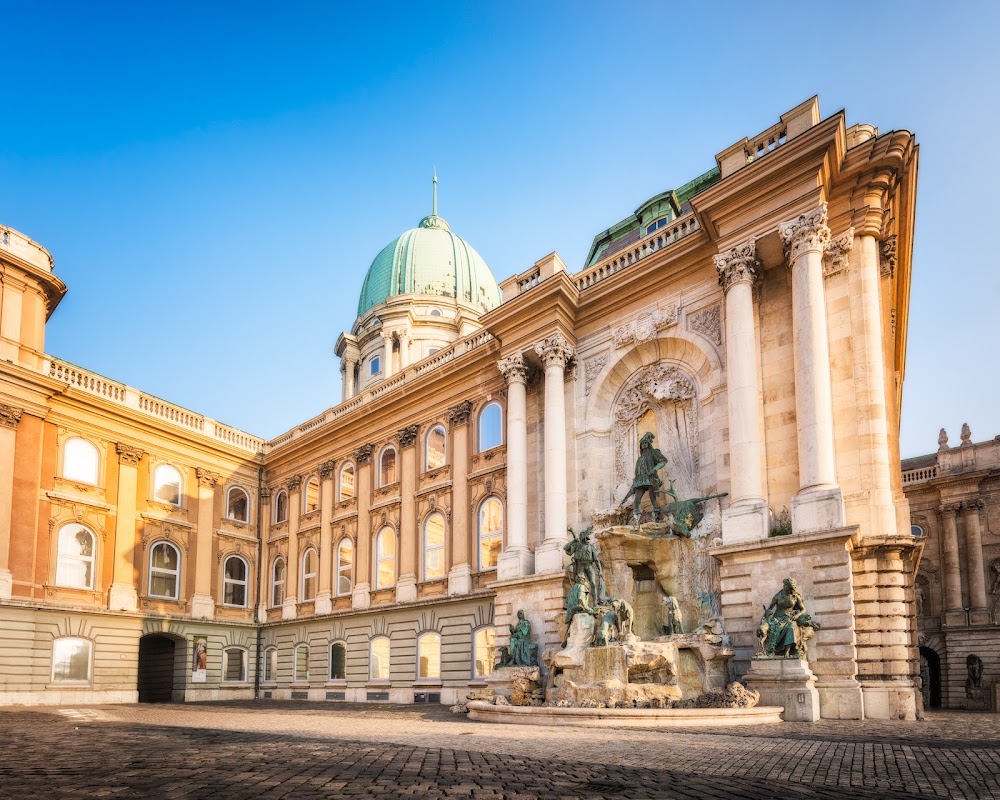
Buda Castle (Royal Palace) stands majestically atop a hill, serving as a highlight of Budapest tourism and a symbol of the city. Despite its elegant exterior, this castle is a living witness to Hungary’s turbulent history.
Its construction was prompted by the Mongol invasion in the 13th century. The king, realizing the vulnerability of the plains, began building a fortress on the hill for defense. It flourished as one of Europe’s most cultured palaces during the Renaissance in the 15th century but was subsequently occupied and devastated by the Ottoman Empire in the 16th century. Rebuilt as a beautiful Baroque palace by Maria Theresa of the Habsburg family in the 18th-19th centuries, it once again became a pile of rubble during World War II, a fierce battleground between Nazi and Soviet forces.
The current Buda Castle was restored after the war, and its interior now houses the Hungarian National Gallery, Budapest History Museum, and Széchenyi National Library rather than a royal residence. While much of its lavish interior was lost in the war, making it relatively modest compared to its magnificent exterior, seeing the exposed foundations of ancient castle walls makes one reflect on the severe memories this place has endured.
The best time to visit is from dusk into the evening. The panoramic view of the Danube River from the vast terraces, with the Parliament Building and Széchenyi Chain Bridge on the Pest side lighting up in golden hues, is a truly once-in-a-lifetime sight. Take a moment to feel the preciousness of being able to admire this view peacefully, with the wind on your face.
Széchenyi Chain Bridge
📍 Address: Budapest, Széchenyi Lánchíd, 1051 Hungary
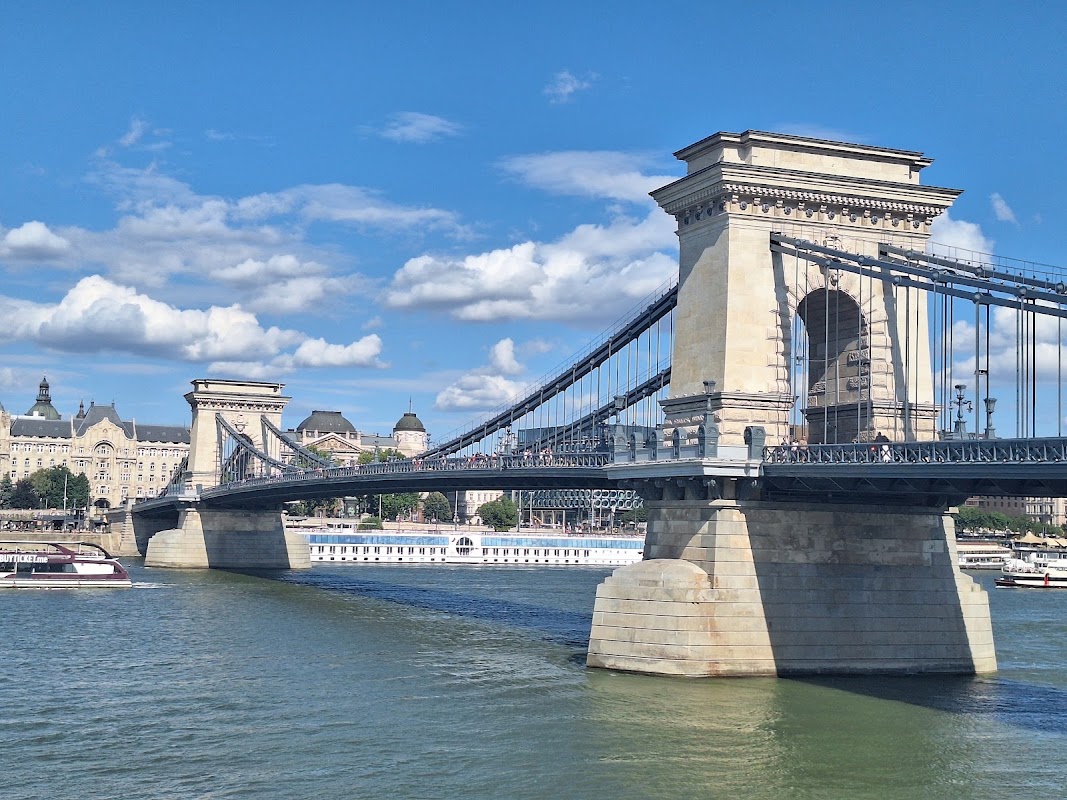
The Széchenyi Chain Bridge is the oldest and most famous bridge spanning the Danube River, connecting the Buda and Pest districts. Before the early 19th century, there was no permanent bridge across the river, posing a significant problem as passage between the two banks ceased when the river froze in winter.
Thus, Count István Széchenyi, often called the ‘Father of Modern Hungary,’ spearheaded its construction, incorporating the latest British technology. Completed in 1849, this enormous suspension bridge dramatically increased traffic and physically and economically linked ‘Buda’ and ‘Pest,’ ultimately becoming the decisive catalyst for the birth of the single metropolis known as ‘Budapest.’
Tragically, it was blown up by the Nazis during their retreat in World War II but was magnificently rebuilt after the war. Furthermore, extensive renovation work was carried out recently (around 2021-2023), improving pedestrian safety and introducing new lighting facilities, giving it a renewed look.
The four lion statues guarding the bridge entrance and its robust construction featuring ‘Ibar chains’ (layered iron plates) are a must-see. The pedestrian path is wide enough for two adults to pass comfortably, and walking across the illuminated bridge at night while admiring Buda Castle and the Parliament Building on the opposite bank will surely be one of the most romantic moments of your Budapest trip.
Fisherman’s Bastion
📍 Address: Budapest, 1014 Hungary
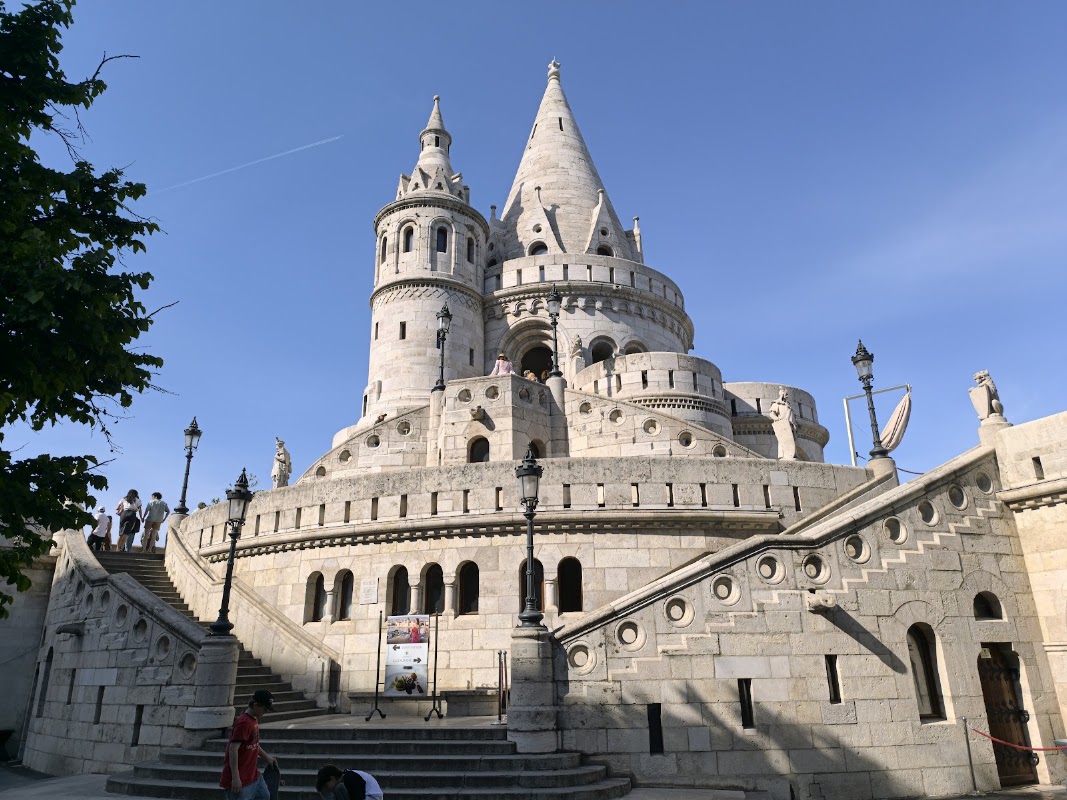
Located on the same Castle Hill as Buda Castle, and drawing crowds alongside the adjacent Matthias Church, is Fisherman’s Bastion. Despite its formidable name ‘Bastion,’ it’s not a military fortress. It’s a beautiful Neo-Romanesque viewing terrace built as part of a city beautification project to commemorate the millennium of Hungary’s foundation, dating from the late 19th to early 20th centuries.
Its distinctive features are the white limestone corridors and seven pointy, conical towers, which symbolize the tents of the ‘Seven Magyar Tribes’ who founded Hungary. It’s an enchanting, fairytale-like space where medieval knights and princesses might appear.
The view overlooking the Danube River and the Pest side from here is simply breathtaking. It’s especially known as the best photo spot to capture the entire grandeur of the Parliament Building on the opposite bank. The first floor of the bastion is open to the public for free exploration (the second-floor observation deck usually requires a fee, though it’s sometimes free in winter).
During the day, it gets very crowded with tourists from all over the world, often requiring queues to take photos through its arches. If you want to avoid the crowds and enjoy photography peacefully, an early morning visit at sunrise is highly recommended. At night, the entire bastion is lit up, transforming into a popular romantic spot for couples, complementing the glittering Budapest cityscape below.
Hungarian Parliament Building
📍 Address: Budapest, Kossuth Lajos tér 1-3, 1055 Hungary
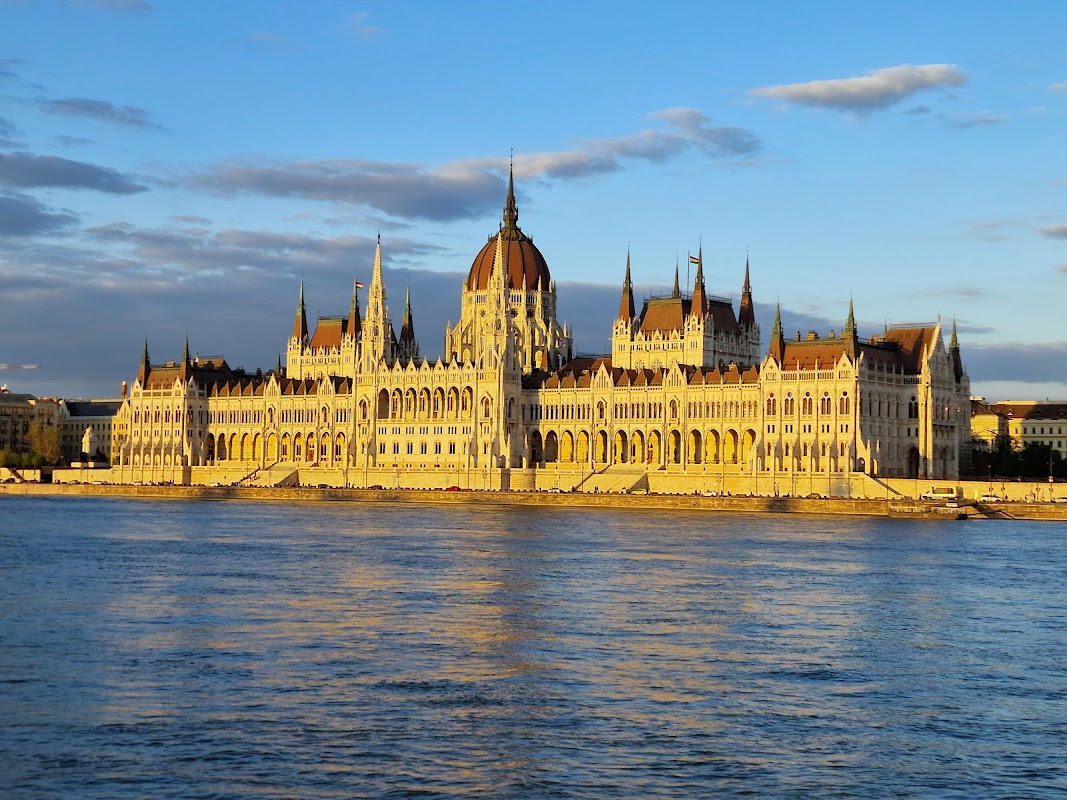
Hailed as ‘the most beautiful Parliament building in the world,’ the Hungarian Parliament Building stands on the Pest side of the Danube, an exceptionally dominant presence in Budapest’s cityscape. Its white stone walls, countless delicate spires, and the contrast of a massive Renaissance-style red dome make it resemble a magnificent palace.
For admiring its exterior, the best vantage point is from the Buda side, near ‘Parliament Viewpoint’ (Batthyány tér metro station). Especially from dusk into night, when it’s illuminated in golden light and its reflection shimmers like a mirror on the dark waters of the Danube, the sight is indescribably beautiful. Taking a boat cruise to view it from the river is also a popular way to enjoy it.
And what you absolutely must experience is the ‘internal guided tour.’ Inside the Parliament Building is a lavish, opulent space adorned with approximately 40 kg of gold, countless jewels, and stained-glass windows. The interior, accessible only by tour, boasts many highlights such as the grand staircase with its red carpet and the solemn Chamber of Deputies still in use. The main attraction, the ‘Dome Hall,’ displays the ‘Holy Crown of St. Stephen,’ a symbol of the Hungarian Kingdom passed down through generations of kings, under strict guard, allowing visitors to deeply feel the weight of history.
Tickets for the internal tour are highly sought after, and same-day tickets often lead to long queues or sell out, so we strongly recommend booking online via the official website well in advance of your trip.
Széchenyi Thermal Bath
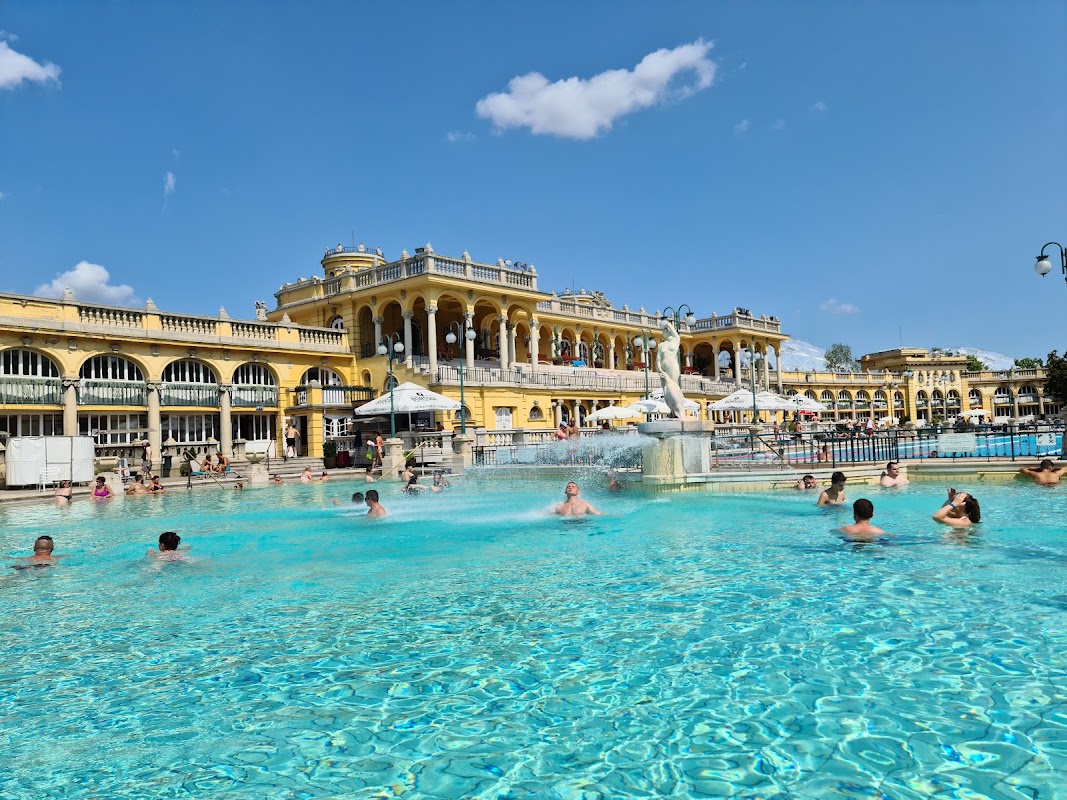
📍 Address: Budapest, Állatkerti krt. 9-11, 1146 Hungary
Budapest is also one of the ‘world’s leading spa cities,’ with rich thermal waters gushing from nearly 100 springs. Among them, Széchenyi Thermal Bath is the most popular among tourists and one of Europe’s largest. The huge yellow Neo-Baroque palace that suddenly appears in City Park looks more like an art museum or a castle, making it hard to believe it’s a thermal bath facility.
Unlike Japanese hot springs, this is a co-ed facility where ‘swimsuits are mandatory.’ It’s more akin to a giant heated swimming pool complex, and the sight of local men playing chess while soaking in the outdoor pools is a famous local scene unique to Budapest. The facility also offers numerous indoor thermal baths of varying temperatures and saunas, perfect for spending a leisurely half-day.
There’s a little trick to the system when using it. Entrance tickets come in two types: ‘locker use’ and ‘cabin (private changing room) use.’ A cabin is perfectly spacious for two people to share, so if you’re going as a couple or with friends, a clever tip is for one person to buy a cabin ticket for changing and storing belongings, while the other buys the cheaper locker ticket.
Essential items to bring are a ‘swimsuit,’ ‘bath towel,’ and ‘flip-flops (a must-have for moving around the facility).’ Also, when using the outdoor pools, sunglasses are highly recommended in summer due to strong sunlight, and a bathrobe will significantly enhance comfort during colder winter transitions. On weekend afternoons, there are long queues at the entrance, so the smart traveler’s strategy is to aim for early weekday mornings (before 9 AM), when it’s less crowded and tickets are often cheaper.
Real Tips for a Successful Budapest Trip
Finally, here are some practical tips to help you enjoy Budapest safely and smoothly.
First, when using the metro, tram, or bus for city travel, absolutely do not forget to ‘validate your ticket.’ You must insert your ticket into the orange machine at the station entrance or inside the vehicle to stamp the date and time. Forgetting to do this will be considered ‘fare evasion’ during spot checks, and even tourists will be unceremoniously subjected to hefty fines.
Also, while Budapest is a relatively safe city, be cautious of pickpockets and elaborate scams on the way to popular tourist spots and scenic hills (like Gellért Hill). There have been reports of troubles where visitors were ‘skillfully enticed into gambling or games and ended up losing large sums of cash.’ Absolutely do not follow strangers who suddenly approach you in a friendly manner; have the courage to firmly ignore them and walk away.
Budapest, where the weight of history and overwhelming beauty coexist. Be sure to prepare thoroughly in advance and fully savor the exquisite scenery and culture offered by the Pearl of the Danube.


'%3E%3Cpath%20stroke='%23000'%20stroke-width='4'%20d='m-35-37-13%2020m5%203%2013-20m5%203-13%2020m63%2042%206-9m1-2%206-9m5%203-6%209m-1%202-6%209m5%203%206-9m1-2%206-9m-96%200%2013%2020m5-3-6-9m-1-2-6-9m5-3%2013%2020m63-42-6-9m-1-2-6-9m5-3%2013%2020m5-3-6-9m-1-2-6-9'/%3E%3Ccircle%20r='24'%20fill='%23cd2e3a'/%3E%3Cpath%20fill='%230047a0'%20d='M0%200a12%2012%200%201%201%2020%2013%2024%2024%200%201%201-40-26A12%2012%200%201%200%200%200'/%3E%3C/g%3E%3C/svg%3E)
'/%3E%3Cpath%20fill='%23b2b2b2'%20d='M241%20382q0%2016%2017%2026%2017%2011%2042%2011t42-11q16-11%2017-26V269H241'/%3E%3Cpath%20fill='%239f7e00'%20d='M241%20379q0%2014%208%2023%209%209%2021%209%2014%200%2021-9%209-9%209-23V269h-59'/%3E%3Cpath%20d='M241%20339v-70h59v110q0%2014-9%2023l-6%205v-68h-15v72q-8%200-14-4v-68zm59%2040c0%2022%2015%2032%2029%2032%2021%200%2030-18%2030-32v-40h-59'/%3E%3Cpath%20fill='%239f7e00'%20d='M266%20277v5h2v12h-3v-5h2v-5h-9v5h2v5h-4v9h3v18h-5v10h34v-10h-5v-18h3v-9h-4v-5h2v-5h-9v5h2v5h-3v-12h2v-5zm42%20101q0%2010%206%2017%206%206%2015%207%2010-1%2016-7%206-7%206-17v-29h-43'/%3E%3Ccircle%20fill='%230044ad'%20cx='329.5'%20cy='372'%20r='6'/%3E%3Cellipse%20fill='%230044ad'%20cx='300'%20cy='340'%20rx='16'%20ry='21'/%3E%3C/svg%3E)


