

Journey to Discover the Deep Charms of Nagasaki
A cityscape rich in exotic charm, a world-class beautiful night view, and an unwavering prayer for peace that must never be forgotten. Nagasaki Prefecture is dotted with special tourist attractions that move the hearts of all visitors, from short-term tourists to long-term stayers.
In this article, we’ve carefully selected five absolutely must-visit spots in Nagasaki City. Beyond textbook explanations, we deliver a wealth of information useful for navigating the local scene, including tips for avoiding crowds, best visiting times, and little-known deep historical backgrounds.
Glover Garden
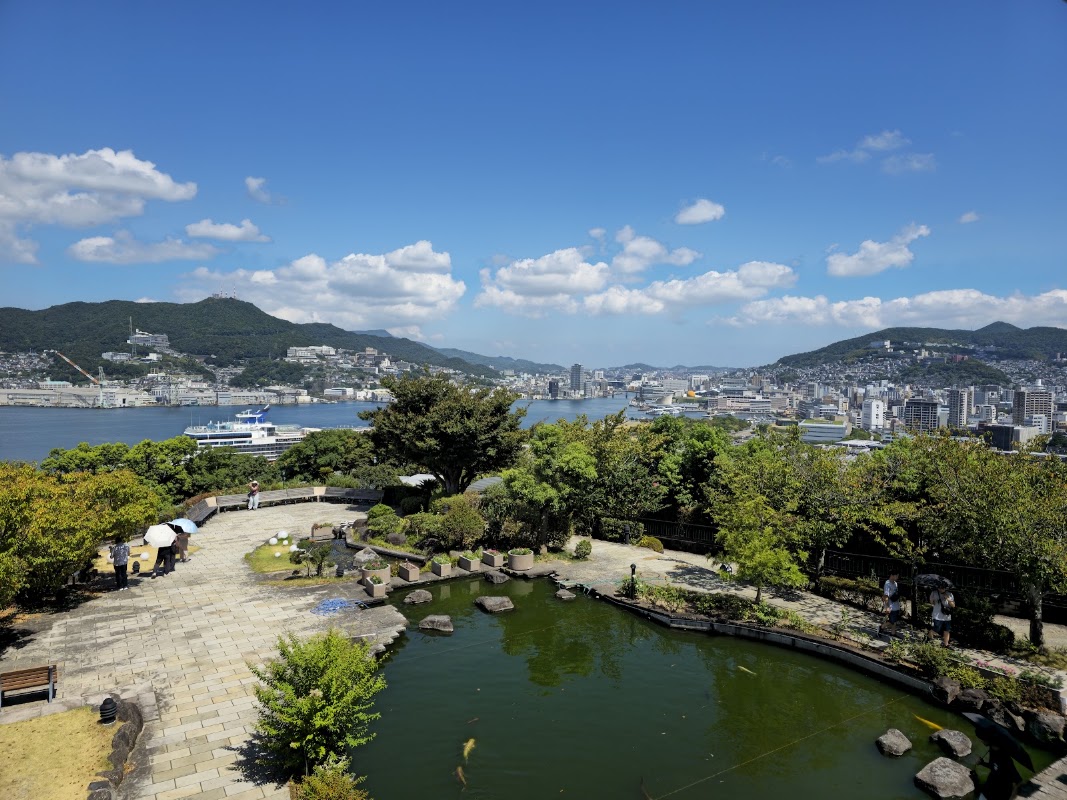
📍 Address: 8-1 Minamiyamate-machi, Nagasaki, Nagasaki Prefecture 850-0931, Japan
Located on the Minamiyamate hill overlooking a panoramic view of Nagasaki Port, this is one of Nagasaki’s most popular tourist spots, brimming with exotic atmosphere. The ‘Former Glover House,’ a National Important Cultural Property, is Japan’s oldest existing wooden Western-style building and is also registered as a UNESCO World Heritage Site as part of the ‘Sites of Japan’s Meiji Industrial Revolution.’ Meiji-era Western-style buildings, such as the Former Ringer House and Former Alt House, which were scattered throughout the city, have been relocated here, and the cobblestone paths reminiscent of the settlement era enhance the cultural ambiance.
Although the garden’s terrain is steep, typical of Nagasaki, moving walkways and escalators are fully equipped, allowing visitors with mobility concerns to comfortably reach near the summit. We recommend the route where you enjoy the scenery as you descend. If your timing is right, utilizing a free volunteer guide is a good idea. You can hear fascinating anecdotes and historical tidbits that aren’t written in the exhibition captions.
Also, the ‘Heart Stone,’ located in a corner of the cobblestones, is a power spot for romantic success, said to grant wishes for love if you touch it. Be sure to look for it while strolling through the garden. Even if you visit on a rainy day, there’s no need to be disappointed. At the ‘Retro Photo Studio’ within the garden, you can sometimes rent dress costumes at a rain-day-only discount (e.g., 500 yen for 15 minutes), offering a perfect chance to capture extraordinary, classic photos.
Mount Inasa Park
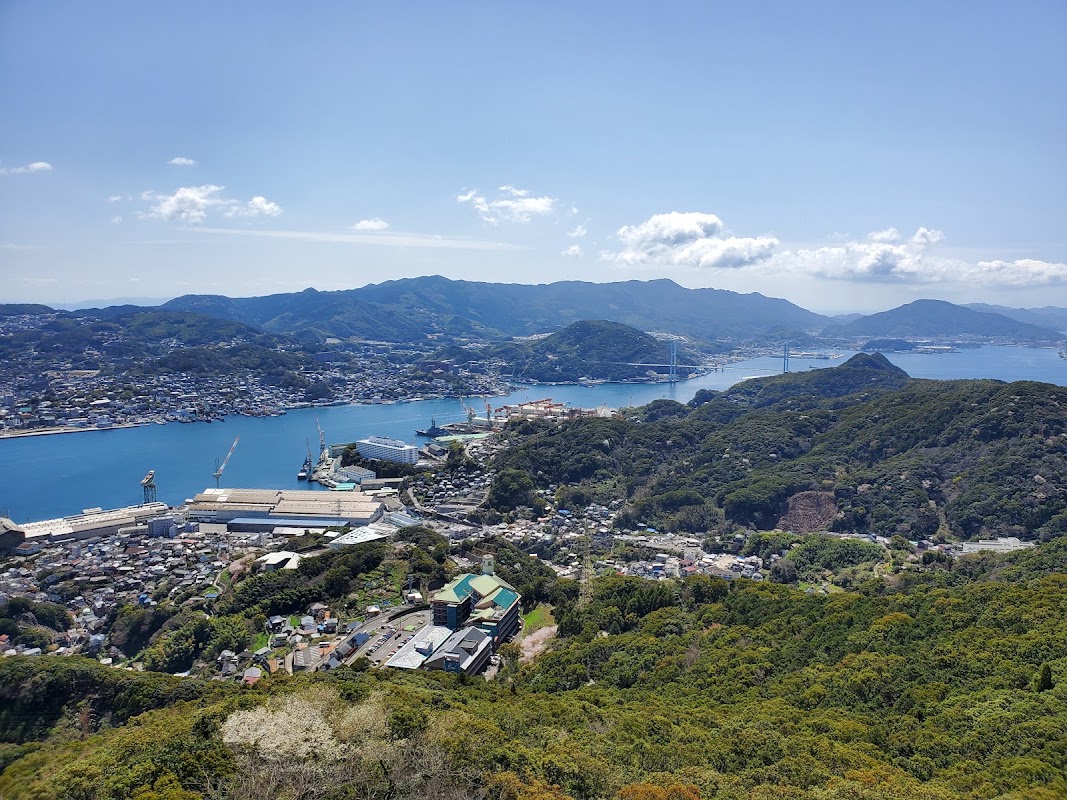
📍 Address: 407-6 Fuchi-machi, Nagasaki, Nagasaki Prefecture 852-8012, Japan
Certified as one of the ‘New World’s Three Great Night Views’ and ‘New Japan’s Three Great Night Views,’ this is Nagasaki’s iconic scenic spot. From the observatory at the 333m summit, you can enjoy a unique, three-dimensional panoramic view of Nagasaki, where the lights of houses glitter like jewels in the bowl-shaped terrain.
Access to the summit is convenient via the ropeway from the foot of the mountain, or by using the ‘Nagasaki Inasayama Slope Car’ departing from the mid-mountain parking lot (pre-check for maintenance closures recommended). With its sophisticated design, the vehicle feels like it’s speeding through the forest, allowing you to leisurely enjoy the scenery on the way to the top. There’s also a café inside the observatory where you can take a break while admiring the view.
As a famous night view spot, it gets extremely crowded with tourists from sunset to night. For those who want to avoid crowds and enjoy taking photos at a leisurely pace, an insider tip is to visit ‘early in the morning, right after sunrise.’ There are fewer people, and you can have the beautiful morning glow scenery, including Nagasaki City and the sea, all to yourself. Also, if you visit by car at night, the summit parking lot opens after 10 PM, so a late-night drive is another option. If using the bus, aim for a bus departing from Nagasaki Station around sunset.
Fountain of Peace
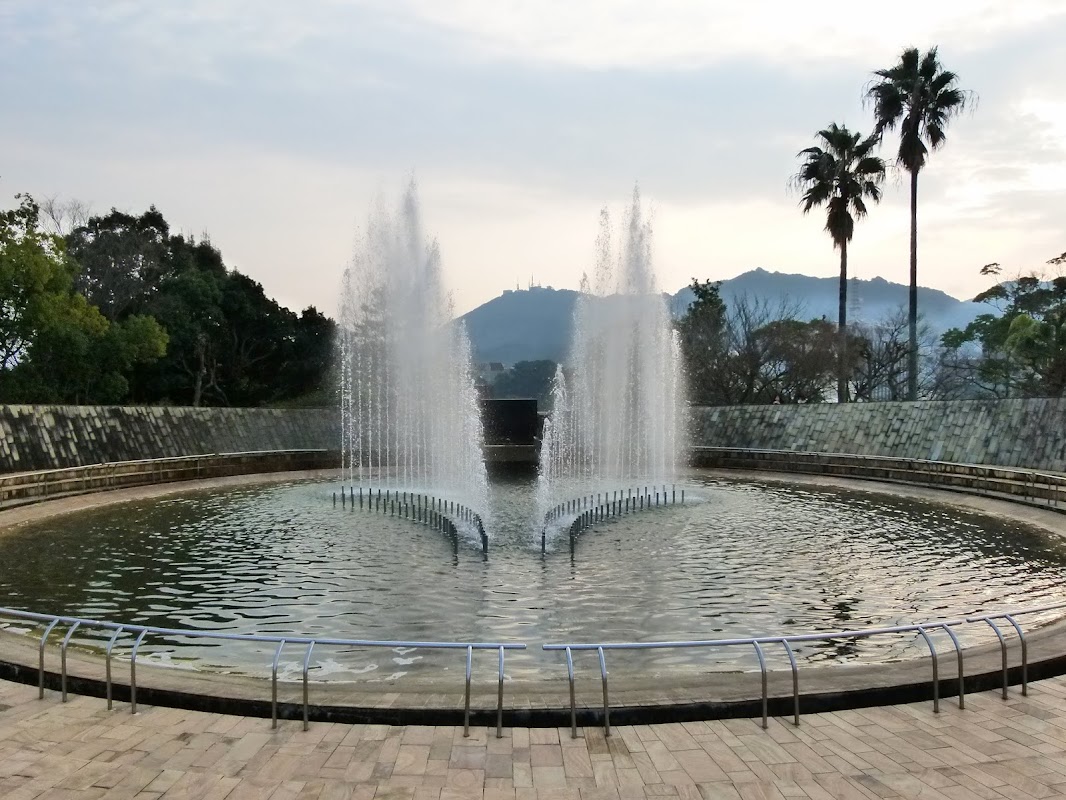
📍 Address: 9-9 Matsuyama-machi, Nagasaki, Nagasaki Prefecture 852-8118, Japan
This circular fountain is located in a corner of Peace Park, in front of the Peace Statue. Immediately after the atomic bombing, victims whose bodies were scorched from within died groaning ‘Water, water!’ This fountain was constructed in 1969 to offer water to those painful souls, pray for their repose, and express wishes for lasting world peace and the abolition of nuclear weapons. Fountains soar in shapes resembling peace doves and crane’s wings, and the water from this spot is offered as a dedication during the annual ‘Nagasaki Peace Ceremony’ on August 9.
On the stone monument in front, an account by a 9-year-old girl (Sachiko Yamaguchi) who wandered seeking water after the bombing is inscribed. The words, ‘My throat was so dry. The water had an oily film all over it. I wanted water so badly that I finally drank it with the oil still on top,’ deeply wrench the hearts of visitors.
This is not merely a tourist fountain, but a sacred place that conveys the ongoing pain of the bombing and offers prayers for the repose of souls. When you visit Nagasaki, stand before this fountain and quietly offer a prayer, reflecting on the words on the monument. There is no other place that makes you feel the preciousness of peace so profoundly.
Nagasaki Atomic Bomb Museum
📍 Address: 7-8 Hirano-machi, Nagasaki, Nagasaki Prefecture 852-8117, Japan
August 9, 1945, 11:02 AM. This museum is dedicated to conveying to future generations the devastation of the atomic bomb dropped on Nagasaki, the city’s path to recovery, and the wish for a world free of nuclear weapons. Numerous actual artifacts and photographs are displayed, such as steel beams bent by the blast and a clock whose hands stopped at 11:02, directly conveying the immense destructive power of the atomic bomb and the tragedy of war.
The museum can be crowded with students on school trips and many foreign tourists, but this ‘atmosphere of many people seeking to learn about history and peace’ also deepens the significance of this place. Revisiting as an adult offers a completely different perspective that is deeply moving, and you’ll find yourself engrossed in the exhibits, losing track of time.
Furthermore, when visiting the museum, we highly recommend stopping by the adjacent ‘National Peace Memorial Hall for the Atomic Bomb Victims in Nagasaki.’ In the silent memorial space, registers of atomic bomb victims are enshrined, and at night, approximately 70,000 memorial lights illuminate the water basin. You can also listen to readings of atomic bomb survivors’ testimonies, allowing you to spend precious time calming your mind and offering prayers after absorbing the overwhelming information from the museum.
Peace Park
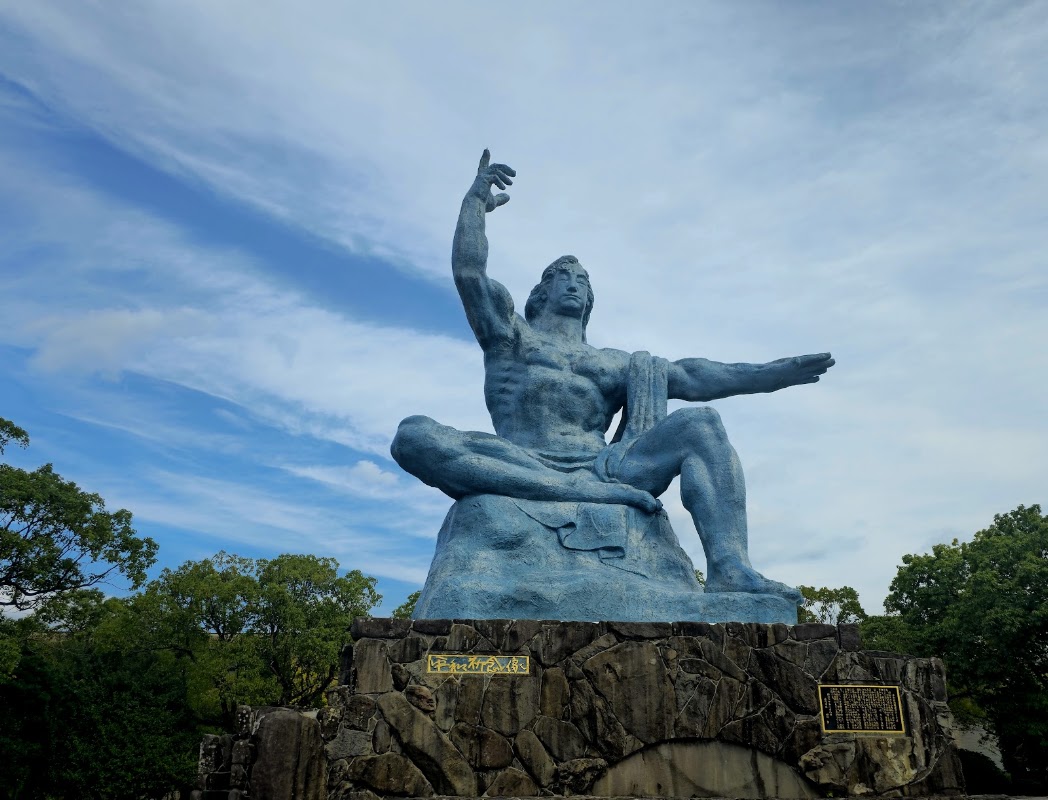
📍 Address: 9 Matsuyama-machi, Nagasaki, Nagasaki Prefecture 852-8118, Japan
Peace Park, spreading across a small hill north of the hypocenter, was created with a vow never to repeat the tragedy of war and a wish for world peace. The massive bronze ‘Peace Statue’ (created by Seibo Kitamura), enshrined at the furthest end of the park, has an overwhelming presence. Its right hand pointing to the sky symbolizes the ‘threat of the atomic bomb,’ its left hand extended horizontally signifies ‘peace,’ and its gently closed eyes represent ‘praying for the repose of atomic bomb victims.’
The park is beautifully maintained and appears at first glance to be a tranquil green space, but it was originally the site of the ‘Nagasaki Prison Urakami Branch.’ At this facility, just over 100 meters from the hypocenter, all 134 staff and prisoners lost their lives instantly when the bomb exploded. Even today, remnants of the original concrete walls and foundations remain in parts of the grounds, quietly telling the story of history’s scars.
Although the park is on a hill, access from the tram stop (Peace Park) side is facilitated by an escalator (moving walkway), allowing visitors in wheelchairs or those less confident in their physical strength to visit without difficulty. In the early morning, with fewer people, you can listen to birdsong in a tranquil atmosphere, allowing for a deeper appreciation of the preciousness of peace.
Nagasaki: A Journey to Consider Peace Through History and Scenery
Nagasaki City’s famous spots juxtapose places to enjoy beautiful scenery and exotic charm with places to deeply contemplate the preciousness of peace. The beautiful cityscape seen from Glover Garden and Mount Inasa is also a testament to ‘human resilience,’ having wonderfully recovered from once being reduced to scorched earth.
All the spots introduced here can be visited relatively easily using streetcars and local buses. We encourage you to visit this land and experience its unique atmosphere and the weight of its history for yourself.


'%3E%3Cpath%20stroke='%23000'%20stroke-width='4'%20d='m-35-37-13%2020m5%203%2013-20m5%203-13%2020m63%2042%206-9m1-2%206-9m5%203-6%209m-1%202-6%209m5%203%206-9m1-2%206-9m-96%200%2013%2020m5-3-6-9m-1-2-6-9m5-3%2013%2020m63-42-6-9m-1-2-6-9m5-3%2013%2020m5-3-6-9m-1-2-6-9'/%3E%3Ccircle%20r='24'%20fill='%23cd2e3a'/%3E%3Cpath%20fill='%230047a0'%20d='M0%200a12%2012%200%201%201%2020%2013%2024%2024%200%201%201-40-26A12%2012%200%201%200%200%200'/%3E%3C/g%3E%3C/svg%3E)
'/%3E%3Cpath%20fill='%23b2b2b2'%20d='M241%20382q0%2016%2017%2026%2017%2011%2042%2011t42-11q16-11%2017-26V269H241'/%3E%3Cpath%20fill='%239f7e00'%20d='M241%20379q0%2014%208%2023%209%209%2021%209%2014%200%2021-9%209-9%209-23V269h-59'/%3E%3Cpath%20d='M241%20339v-70h59v110q0%2014-9%2023l-6%205v-68h-15v72q-8%200-14-4v-68zm59%2040c0%2022%2015%2032%2029%2032%2021%200%2030-18%2030-32v-40h-59'/%3E%3Cpath%20fill='%239f7e00'%20d='M266%20277v5h2v12h-3v-5h2v-5h-9v5h2v5h-4v9h3v18h-5v10h34v-10h-5v-18h3v-9h-4v-5h2v-5h-9v5h2v5h-3v-12h2v-5zm42%20101q0%2010%206%2017%206%206%2015%207%2010-1%2016-7%206-7%206-17v-29h-43'/%3E%3Ccircle%20fill='%230044ad'%20cx='329.5'%20cy='372'%20r='6'/%3E%3Cellipse%20fill='%230044ad'%20cx='300'%20cy='340'%20rx='16'%20ry='21'/%3E%3C/svg%3E)


