

Namba Tourism Becomes 100 Times More Interesting When You Know Its ‘Historical Passion’
Namba, the vibrant heart of Osaka’s Minami district, bustles with tourists every day. It’s a classic tourist destination packed with all the ‘classic Osaka’ elements everyone knows: giant three-dimensional signs, neon lights, and a food culture dedicated to eating until you drop.
However, it would be a waste to simply eat delicious food and take photos! The true charm of this city lies in the ‘resilient history of survival’ and ‘compassionate faith’ hidden behind its flashy facade.
This article introduces carefully selected spots for both first-time visitors and repeat travelers to enjoy Namba more deeply. Understanding their origins will make familiar sights appear completely different.
Dotonbori
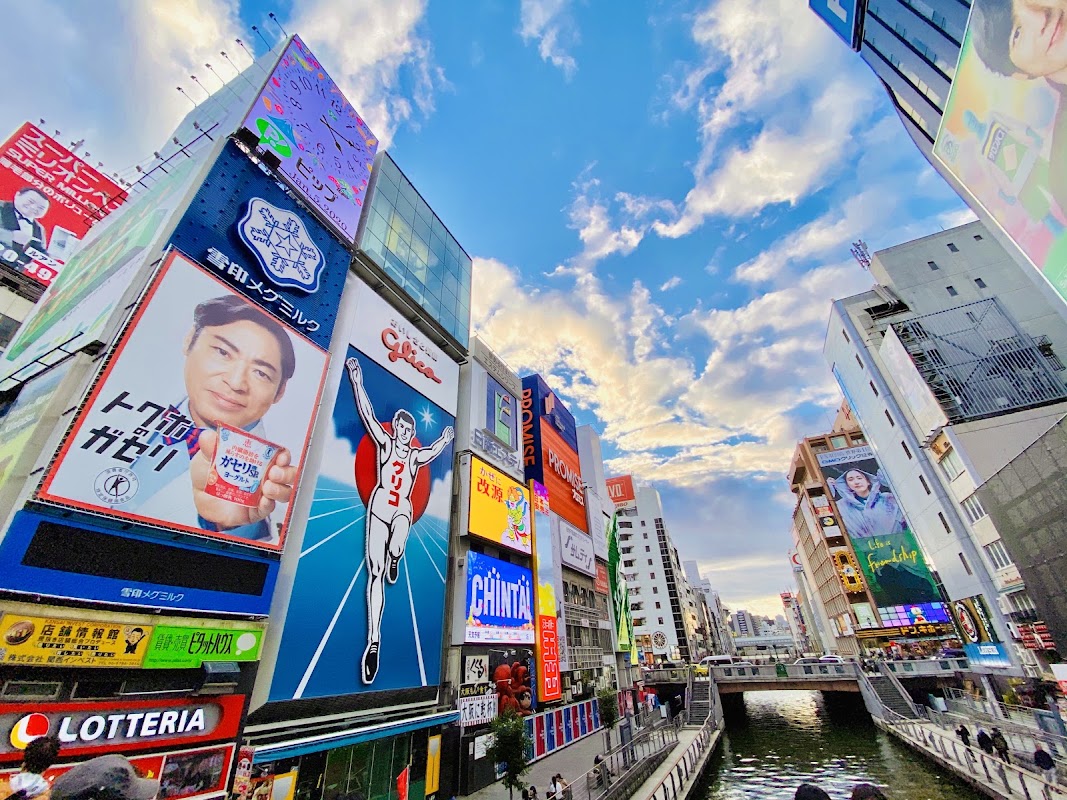
📍 Address: 1-9 Dotonbori, Chuo Ward, Osaka, 542-0071, Japan
This iconic Osaka tourist spot is where visitors to Namba unanimously say, ‘You absolutely have to come here.’ The sheer scale and energy of giant three-dimensional signs featuring crabs, octopuses, and dragons standing side by side make the entire street feel like a theme park.
The history of this entertainment-filled district began in 1612 with a canal, initiated by Yasui Doton, who invested his private fortune to reclaim wasteland. Later, around 1626, theater houses relocated here, developing it into a major theater district, often called ‘Japan’s Broadway.’ Restaurants gathered to satisfy the appetites of actors and audiences, laying the foundation for today’s ‘eat-till-you-drop’ culture.
Why did Dotonbori’s signs become so massive and three-dimensional? It was due to the need for them to be ‘instantly and intuitively understood’ rather than read in a narrow, densely populated entertainment district. Amidst fierce post-war competition for customers, the spirit of merchants striving to stand out created a unique landscape unlike any other in the world. As you walk with takoyaki or okonomiyaki in hand, gazing upwards, you’ll feel the passionate energy of Osaka’s merchants.
Tombori River Walk
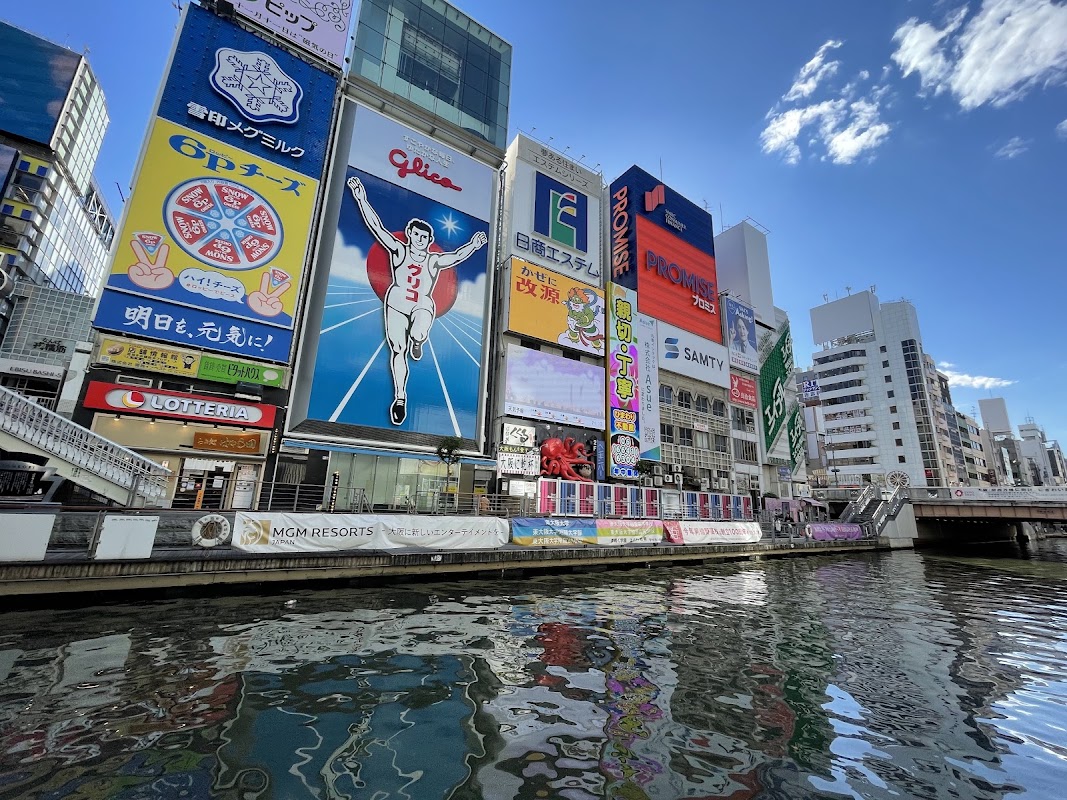
📍 Address: 1-1 Dotonbori, Chuo Ward, Osaka, 542-0071, Japan
This waterfront promenade is developed along both banks of the Dotonbori River. In contrast to the hustle and bustle of the ground level, it offers a relatively calm stroll while gazing at the water, making it a popular resting spot for tired travelers.
The top recommendation here is the ‘Tombori River Cruise,’ which you can board along the promenade (under Don Quijote’s Ferris wheel). It’s about a 20-minute mini-cruise, and the guide’s lively Kansai dialect patter greatly enlivens the atmosphere. The unique sense of unity you get from waving to people walking along the river is a highlight unique to this water cruise.
From the boat, you can also enjoy the ‘underneath of bridges,’ a unique perspective. Osaka was once called ‘Hachihyakuyabashi’ (808 bridges) during the Edo period, and even today, each bridge over the Dotonbori River has a different structure, with some being so thrilling that you have to duck your head to pass. You can experience entirely different atmospheres depending on the time of day you cruise: the city’s vibrancy during the day, and the vivid neon reflections on the water at night.
Hozenji Temple
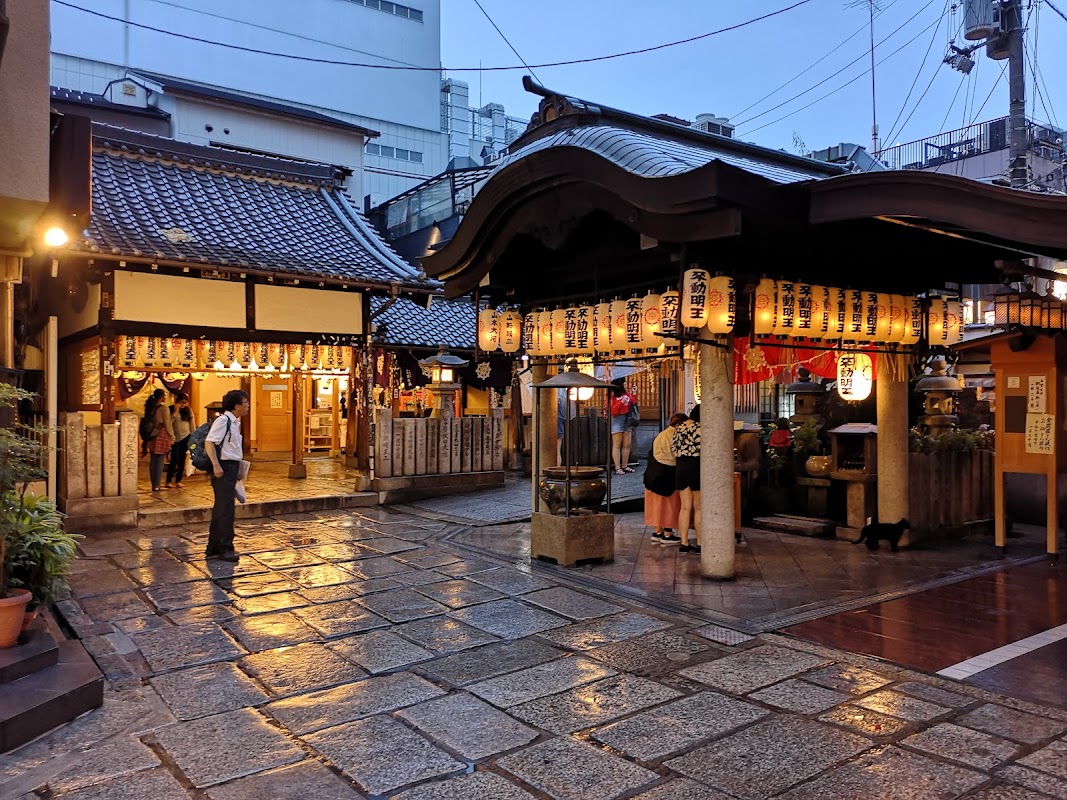
📍 Address: 1-2-16 Namba, Chuo Ward, Osaka, 542-0076, Japan
This Jodo Buddhist temple is quietly nestled in ‘Hozenji Yokocho,’ just one alley away from bustling Dotonbori. The moment you step in, a separate world unfolds, where the clamor of the outside world falls silent as if by magic.
The symbol of Hozenji Temple is the ‘Mizukake Fudo-son (West-facing Fudo Myo-o),’ a statue entirely covered in vibrant green moss. During the Great Osaka Air Raid in World War II, when all surrounding temple buildings were burned down, this Fudo Myo-o statue miraculously survived. After the war, a custom of pouring water with a wish began, and the countless prayers of people have resulted in its current moss-covered, mystical appearance.
If you visit in the evening or later, you can enjoy the nostalgic Showa-era atmosphere of the alley lit by lanterns, but to truly experience the ‘sanctuary’ quietness of this place, ‘early morning worship’ is highly recommended. In the deserted temple grounds before restaurants open, quietly pouring water and offering prayers will provide such deep healing that you’ll forget you’re in the middle of a bustling city. After your visit, it’s a classic route to enjoy the famous ‘Meoto Zenzai’ at the shop right next door, warming both body and soul.
Namba Yasaka Shrine
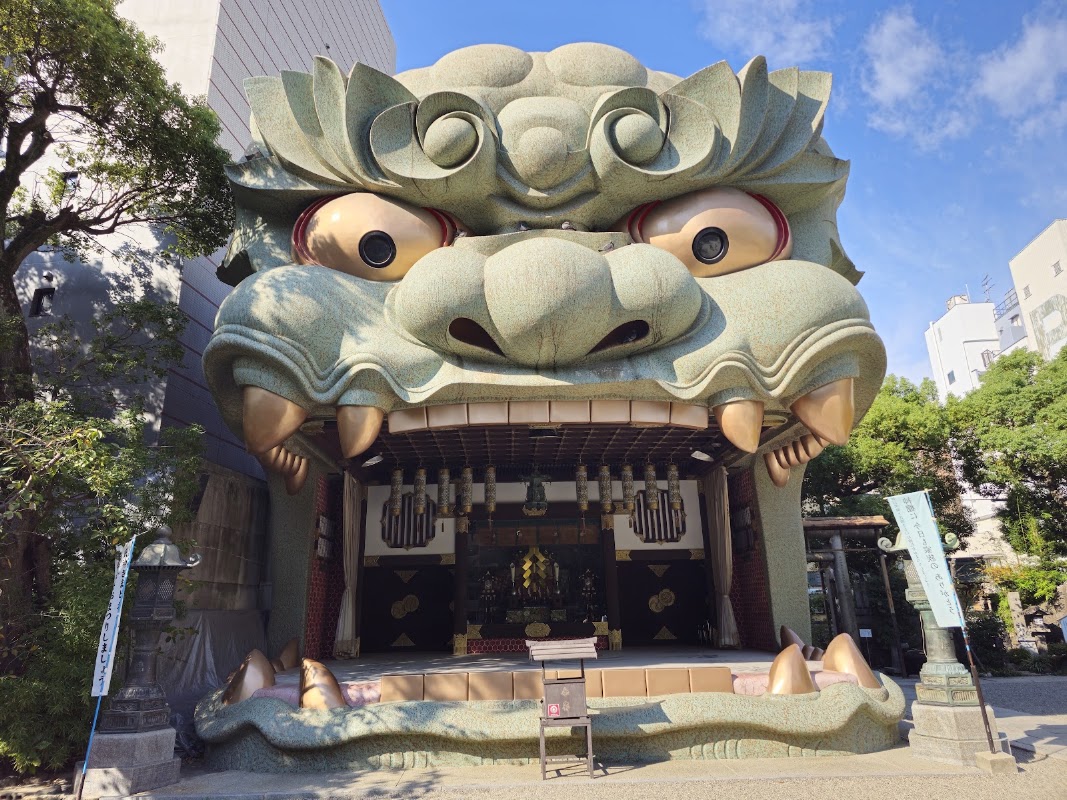
📍 Address: 2-9-19 Motomachi, Naniwa Ward, Osaka, 556-0016, Japan
The biggest highlight is the massive ‘Lion Head Building,’ 12m high and 11m wide, that suddenly appears in a quiet residential area. In recent years, it has become a highly popular shrine, attracting many tourists from Japan and abroad as an SNS-worthy power spot.
The immense mouth of this impactful lion is believed to ‘devour evil spirits and usher in victory and good fortune,’ making it known for benefits in business prosperity and academic success. But why was such a massive and unusual structure built? Its origin lies in the history of reconstruction after the shrine buildings were destroyed in the Great Osaka Air Raid. During its rebuilding in 1974, it was born from the unique idea of ‘creating a shrine symbol that would astonish Osaka locals,’ featuring surprising specifications like lights for eyes and speakers for its nose.
At first glance, it might seem like a photo-op-focused, tourist-oriented shrine, but it is actually a historic ancient shrine with a distinguished lineage dating back to Emperor Nintoku’s era, enshrining Susanoo-no-Mikoto and other deities. The main sanctuary, located further back, is a very simple Shinmei-zukuri style, highlighting the striking contrast with the enormous Lion Head building. When viewed as ‘the ultimate form of Osaka-style evolution’ chosen to survive amidst post-war urbanization, it is a profoundly deep and interesting shrine.
Kujira Park (Whale Park)
📍 Address: Niji-no-Machi 3-5, 1-4-4 Namba, Chuo Ward, Osaka, 542-0076, Japan
This square is located within ‘Namba Walk,’ a vast underground shopping street beneath the Namba area. It features a monument of a semi-whale powerfully protruding its body and tail fin from the ground.
Above ground, there are often crowds and complex alleyways, making it easy for tourists to lose their way when trying to meet. However, Kujira Park serves as a clear, weather-independent landmark in the underground mall. Its decorations change seasonally, making it a convenient spot for a quick break or a photo opportunity during your Namba exploration.
Tips for Maximizing Your Namba Sightseeing Experience
The Namba area is enjoyable just by walking around, but understanding the ‘historical background’ and ‘people’s sentiments embedded in each spot’ will dramatically enhance your sightseeing experience.
During the day, immerse yourself in Dotonbori’s ‘eat-till-you-drop’ culture and the energy of its signs. When you’re tired from walking, enjoy a special view from the water on the Tombori River Walk cruise. And when you wish to escape the city’s hustle and bustle to clear your mind, a smart move is to visit Hozenji Temple or Namba Yasaka Shrine early in the morning.
The true essence of Namba’s mysterious charm lies in the coexistence of flashy entertainment and tranquil spiritual spaces, side by side. We hope you use this information to enjoy your own deep dive into Osaka.


'%3E%3Cpath%20stroke='%23000'%20stroke-width='4'%20d='m-35-37-13%2020m5%203%2013-20m5%203-13%2020m63%2042%206-9m1-2%206-9m5%203-6%209m-1%202-6%209m5%203%206-9m1-2%206-9m-96%200%2013%2020m5-3-6-9m-1-2-6-9m5-3%2013%2020m63-42-6-9m-1-2-6-9m5-3%2013%2020m5-3-6-9m-1-2-6-9'/%3E%3Ccircle%20r='24'%20fill='%23cd2e3a'/%3E%3Cpath%20fill='%230047a0'%20d='M0%200a12%2012%200%201%201%2020%2013%2024%2024%200%201%201-40-26A12%2012%200%201%200%200%200'/%3E%3C/g%3E%3C/svg%3E)
'/%3E%3Cpath%20fill='%23b2b2b2'%20d='M241%20382q0%2016%2017%2026%2017%2011%2042%2011t42-11q16-11%2017-26V269H241'/%3E%3Cpath%20fill='%239f7e00'%20d='M241%20379q0%2014%208%2023%209%209%2021%209%2014%200%2021-9%209-9%209-23V269h-59'/%3E%3Cpath%20d='M241%20339v-70h59v110q0%2014-9%2023l-6%205v-68h-15v72q-8%200-14-4v-68zm59%2040c0%2022%2015%2032%2029%2032%2021%200%2030-18%2030-32v-40h-59'/%3E%3Cpath%20fill='%239f7e00'%20d='M266%20277v5h2v12h-3v-5h2v-5h-9v5h2v5h-4v9h3v18h-5v10h34v-10h-5v-18h3v-9h-4v-5h2v-5h-9v5h2v5h-3v-12h2v-5zm42%20101q0%2010%206%2017%206%206%2015%207%2010-1%2016-7%206-7%206-17v-29h-43'/%3E%3Ccircle%20fill='%230044ad'%20cx='329.5'%20cy='372'%20r='6'/%3E%3Cellipse%20fill='%230044ad'%20cx='300'%20cy='340'%20rx='16'%20ry='21'/%3E%3C/svg%3E)


