

Nara Park
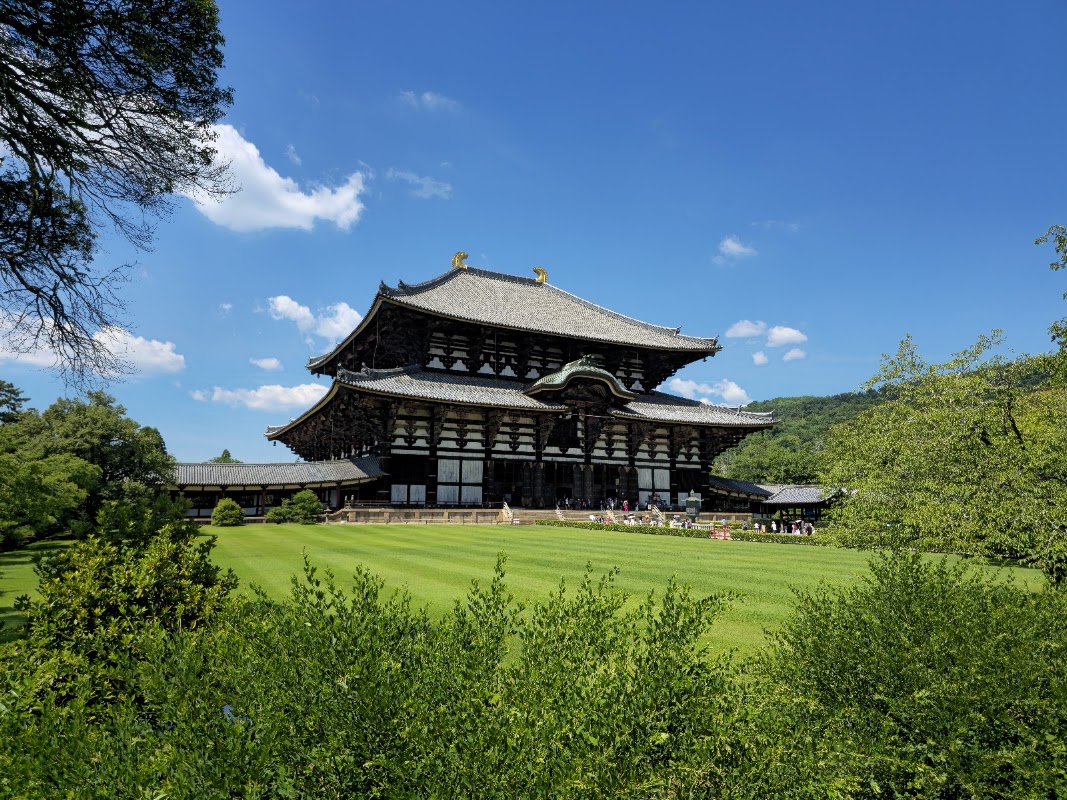
📍 Address: Nara City, Nara Prefecture, Japan
When you hear ‘Nara Prefecture tourist spots,’ Nara Park is the first thing that comes to mind for everyone. Spanning an expansive area equivalent to about 108 Tokyo Domes, it is dotted with World Heritage Sites such as Kasuga Taisha Shrine, Todai-ji Temple, and Kofukuji Temple, all established with the relocation of the capital to Heijo-kyo in 710. This park, where rich nature and historical structures harmoniously coexist, is not merely a tourist destination but a sacred space where over 1300 years of history breathe.
The greatest charm of Nara Park is interacting with its approximately 1,300 wild deer, which have been protected as ‘messengers of the gods’ since ancient times. If you want to interact directly with the deer, an early morning visit is overwhelmingly recommended. In the morning, hungry deer approach with great energy, so if you have ‘shika senbei’ (deer crackers), you might be surrounded with surprising vigor. On the other hand, around 3 PM on busy days, deer crackers may sell out, or the deer might be full and pay no attention, making it crucial to choose the right time.
Furthermore, the presence of cleaning staff, who beautifully maintain this vast park, is indispensable when talking about it. The beautiful lawns and clean paths are sustained by their daily efforts. It takes more than half a day to walk around everything, so comfortable sneakers are a must. Allow yourself ample time and slowly savor the miracle of coexistence with nature, history, and the deer.
Kofukuji Temple
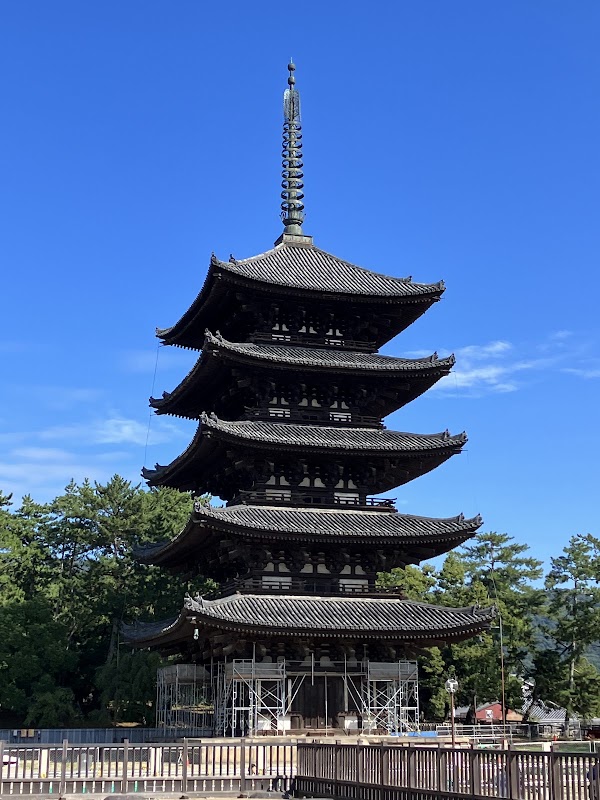
📍 Address: 48 Noboriojicho, Nara, Nara 630-8213, Japan
Adjacent to Nara Park, Kofukuji Temple stands out with an overwhelming presence as a symbol of the ancient capital. Its history is old, originating from Yamashina-dera Temple, built in 669 to pray for the recovery of Nakatomi (Fujiwara) Kamatari from illness. It was later moved to its current location by Fujiwara no Fuhito during the relocation of the capital to Heijo-kyo and named ‘Kofukuji Temple.’ The temple grounds, which flourished as the family temple of the Fujiwara clan, are still enveloped in a profound and solemn atmosphere.
Its deep attractions are, without a doubt, its numerous National Treasures. Kofukuji Temple boasts the largest number of National Treasure Buddha statues in Japan, and at the National Treasure Museum, you can admire precious Buddha statues, including the famous Ashura statue, up close. Furthermore, the Central Golden Hall, though simple, stands majestically, and on a clear day, the contrast between its vermilion pillars and the blue sky makes for an excellent photo spot.
As a point of caution for travelers, the symbolic ‘Five-Story Pagoda’ is currently undergoing extensive preservation work during the Reiwa era, and its full appearance will not be visible until around 2034. It’s essential to know this in advance, as you might be disappointed if you go without this knowledge. While the temple grounds themselves are freely accessible, the queues for ‘Goshuin’ (temple stamps) and admission tickets can get crowded depending on the time. Visiting early in the morning (immediately after opening at 9 AM) allows for a relatively smooth visit and lets you immerse yourself in the depths of history amidst the clear air.
Ukimi-do Pavilion
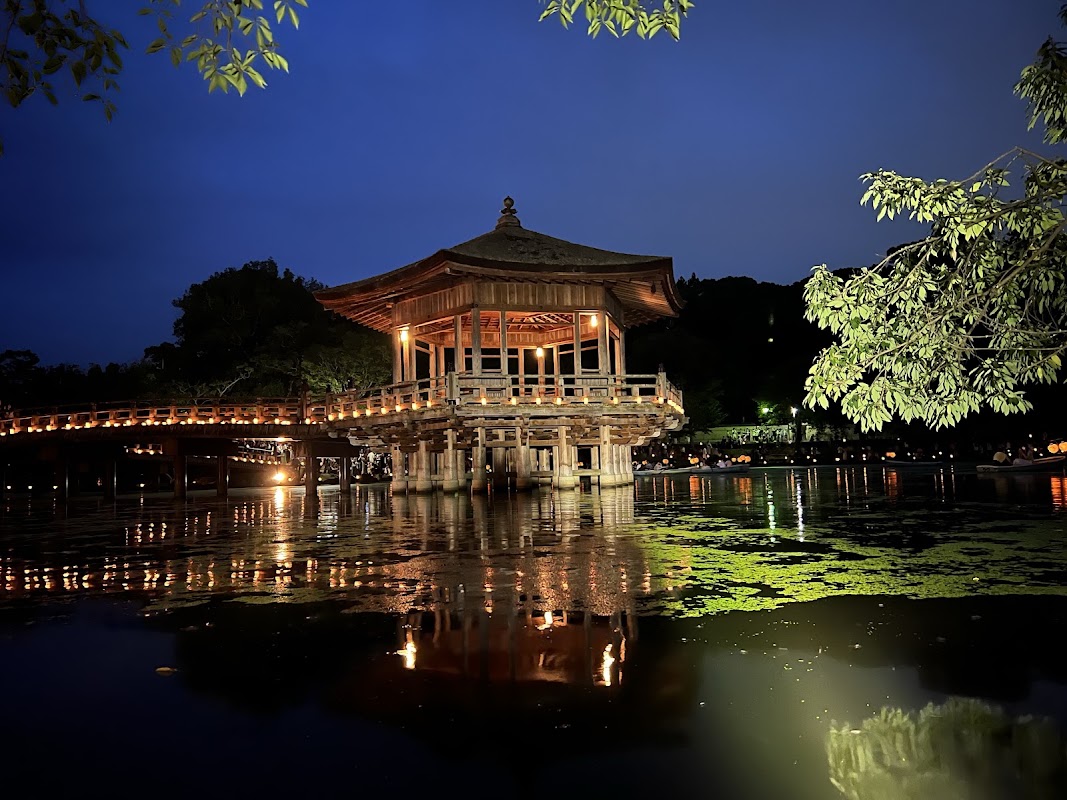
📍 Address: Takahata-cho, Nara, Nara 630-8301, Japan
Tucked away in Asajigahara Park on the south side of Nara Park, Ukimi-do Pavilion is a beautiful hexagonal hall with a cypress bark roof (hiwadabuki), built in 1916 (Taisho 5) and rebuilt in the Heisei era. Its appearance, as if floating on the surface of Sagi-ike Pond, harmonizes exquisitely with the seasonal nature—cherry blossoms in spring, crape myrtle in summer, and autumn leaves—creating a picturesque, breathtaking view.
During the day, it becomes the perfect healing spot for tired travelers, where you can rent a boat to look up at the pavilion from the water, or sit on a bench inside the pavilion, listening to birdsong and feeling the breeze. Especially in the early morning, when no one is around, the water surface becomes perfectly still like a mirror, offering a breathtaking beauty.
However, there are also deep points of caution to be aware of. One is that if your visit coincides with ‘ikeboshi’ (draining the pond to purify the water), which occurs once every few years, you won’t be able to see its elegant floating appearance. Another is that while the night illumination is said to be beautiful, the area around the pond has few streetlights, and visiting at night can be surprisingly dark and a bit eerie. It’s best to avoid walking alone, especially for women, and instead enjoy the romantic atmosphere until dusk.
Naramachi Lattice House
📍 Address: 44 Gangoji-cho, Nara, Nara 630-8332, Japan
‘Naramachi’ is an area centered around what was once the former grounds of Gangoji Temple, where charming old townscapes remain. At its heart is the ‘Naramachi Koshinoie’ (Naramachi Lattice House), a facility that recreates a traditional ‘machiya’ (townhouse) from the late Edo period to the Meiji era. Here, you can experience firsthand the wisdom of people’s lives from that time, such as the ‘unagi no nedoko’ (eel’s bed) style, characterized by a narrow frontage and deep interior, and ‘hako-kaidan’ (box stairs) designed to effectively utilize small spaces.
A deep highlight to note here is the ‘Nara Lattice’ (Horen Lattice) that characterizes its exterior. This thick and sturdy lattice not only blocks outside gazes while allowing wind to pass through, but there’s also a theory that it was designed to withstand collisions from the deer that once roamed freely throughout Nara’s streets, and to prevent the deer themselves from getting hurt. It is an architectural style unique to Nara, a city that has coexisted with deer.
This facility is open to the public for free and serves as an excellent resting spot during a stroll through Naramachi. You can take off your shoes, step onto the tatami mats, and relax with the soft light streaming in from the ‘tsuboniwa’ (courtyard garden), making it truly an oasis for tired travelers.
Heijo Palace Site Historical Park
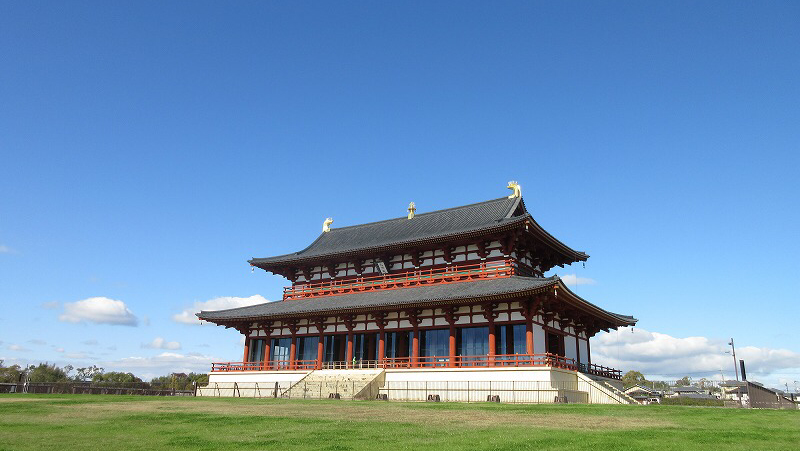
📍 Address: 3-5-1 Nijooji Minami, Nara, Nara 630-8012, Japan
Approximately 1300 years ago, the central site of Heijo-kyo, which was the political and cultural heart of Japan, is now the ‘Heijo Palace Site Historical Park.’ On its vast grounds, spanning about 120 hectares, the restored Suzaku-mon Gate and the First Great Audience Hall stand majestically, conveying the overwhelming scale of the ancient capital. Exhibition facilities like the ‘Heijo Palace Izanai-kan’ (Heijo Palace Welcome Museum) are also well-equipped, allowing visitors to easily learn about the life and work of officials at that time.
A truly unique and profound sight specific to this park is the view of ‘Kintetsu trains running across a historical heritage site.’ The scene of modern trains passing by with the Suzaku-mon Gate in the background evokes a mysterious feeling where past and present intersect, making it a popular spot for photography enthusiasts.
A practical piece of advice for travelers visiting is that there is very little shade within the grounds. Therefore, if visiting in summer, heatstroke prevention measures such as hats, parasols, and drinks are absolutely essential. On the other hand, in the evening, tourists decrease, and you can leisurely enjoy the nostalgic scenery of ancient architecture silhouetted against a vast, crimson sky, all to yourself, avoiding crowds. Accessing from Kintetsu Yamato-Saidaiji Station or other nearby stations and using rental bicycles to explore the expansive park is also recommended.
Deep Strategies to Enjoy Nara Tourism 120%
A characteristic of Nara Prefecture’s tourist spots is that each one is very large in scale. Therefore, trying to ‘see everything in one day’ can lead to exhaustion just from moving between sites. Especially in the Nara Park area, even though it appears flat, walking distances often exceed 10km.
The key to increasing satisfaction is to ‘make early mornings your ally.’ Stroll through Kofukuji Temple and Ukimi-do Pavilion in the clear morning air when there are fewer tourists, interact with the energetic deer, then take a break in the shade at Naramachi cafes or the Lattice House during the daytime. Finally, head to Heijo Palace Site Historical Park at dusk to enjoy the magnificent evening scenery. Creating a well-paced plan like this will allow you to more deeply and comfortably savor the charm of the ancient capital.
Cultural properties undergoing repair and seasonal maintenance (such as draining and refilling ponds) are also part of the valuable scenery that can only be seen during that particular era. Rather than pursuing a perfect view, embrace the mindset of enjoying the ‘now’ of evolving history, and fully savor Nara’s profound charm.


'%3E%3Cpath%20stroke='%23000'%20stroke-width='4'%20d='m-35-37-13%2020m5%203%2013-20m5%203-13%2020m63%2042%206-9m1-2%206-9m5%203-6%209m-1%202-6%209m5%203%206-9m1-2%206-9m-96%200%2013%2020m5-3-6-9m-1-2-6-9m5-3%2013%2020m63-42-6-9m-1-2-6-9m5-3%2013%2020m5-3-6-9m-1-2-6-9'/%3E%3Ccircle%20r='24'%20fill='%23cd2e3a'/%3E%3Cpath%20fill='%230047a0'%20d='M0%200a12%2012%200%201%201%2020%2013%2024%2024%200%201%201-40-26A12%2012%200%201%200%200%200'/%3E%3C/g%3E%3C/svg%3E)
'/%3E%3Cpath%20fill='%23b2b2b2'%20d='M241%20382q0%2016%2017%2026%2017%2011%2042%2011t42-11q16-11%2017-26V269H241'/%3E%3Cpath%20fill='%239f7e00'%20d='M241%20379q0%2014%208%2023%209%209%2021%209%2014%200%2021-9%209-9%209-23V269h-59'/%3E%3Cpath%20d='M241%20339v-70h59v110q0%2014-9%2023l-6%205v-68h-15v72q-8%200-14-4v-68zm59%2040c0%2022%2015%2032%2029%2032%2021%200%2030-18%2030-32v-40h-59'/%3E%3Cpath%20fill='%239f7e00'%20d='M266%20277v5h2v12h-3v-5h2v-5h-9v5h2v5h-4v9h3v18h-5v10h34v-10h-5v-18h3v-9h-4v-5h2v-5h-9v5h2v5h-3v-12h2v-5zm42%20101q0%2010%206%2017%206%206%2015%207%2010-1%2016-7%206-7%206-17v-29h-43'/%3E%3Ccircle%20fill='%230044ad'%20cx='329.5'%20cy='372'%20r='6'/%3E%3Cellipse%20fill='%230044ad'%20cx='300'%20cy='340'%20rx='16'%20ry='21'/%3E%3C/svg%3E)


