

This article goes beyond textbook explanations, offering a real traveler’s perspective on ‘when to visit,’ ‘what traps to watch out for,’ and ‘how to navigate the local scene’ as we introduce 4 absolutely essential tourist spots in New Delhi. Prepare to experience breathtaking architectural beauty and the unique, deep atmosphere of India firsthand.
India Gate
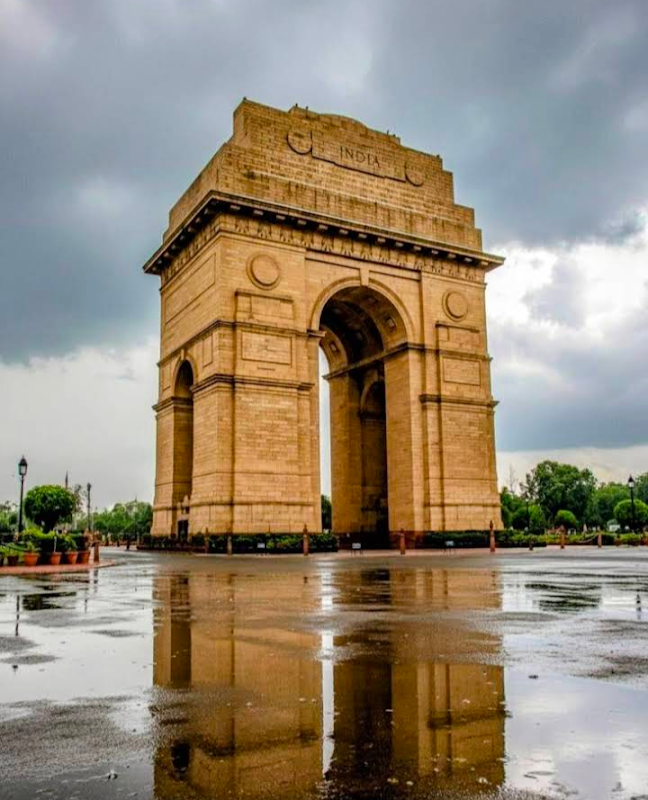
📍 Address: Kartavya Path, India Gate, New Delhi, Delhi 110001, India
Standing majestically at the eastern end of ‘Kartavya Path’ (formerly Rajpath), the grand avenue that cuts across the heart of New Delhi, is the colossal ‘India Gate,’ towering approximately 42 meters high. This solemn arch, reminiscent of the Arc de Triomphe in Paris, was designed by British architect Edwin Lutyens and completed in 1931.
It serves as a ‘War Memorial’ commemorating the approximately 90,000 Indian soldiers who died fighting for the British Indian Army in various conflicts, including World War I and the Third Anglo-Afghan War. The names of these soldiers are intricately carved into the walls of the gate. Since the Indo-Pakistani War in 1971, the ‘Amar Jawan Jyoti’ (Eternal Flame) has burned beneath the arch, symbolizing the soul and pride of the Indian nation, making it a sacred site.
While steeped in historical significance, the surrounding plaza is also a peaceful recreational area where many Delhi residents come for picnics with their families. From evening to night, it’s illuminated and abuzz with the lively energy of street performers, food stalls, and the joyous shouts of children. However, for tourists, the unexpected crowds and persistent vendors can sometimes be a source of stress.
For those who wish to quietly contemplate its historical weight or capture majestic photos without crowds, an ‘early morning’ visit is highly recommended. Especially on mornings after rain, the colossal grandeur of the gate reflects beautifully on the wet cobblestones, allowing you to experience the best of its history in a pure atmosphere.
Humayun’s Tomb
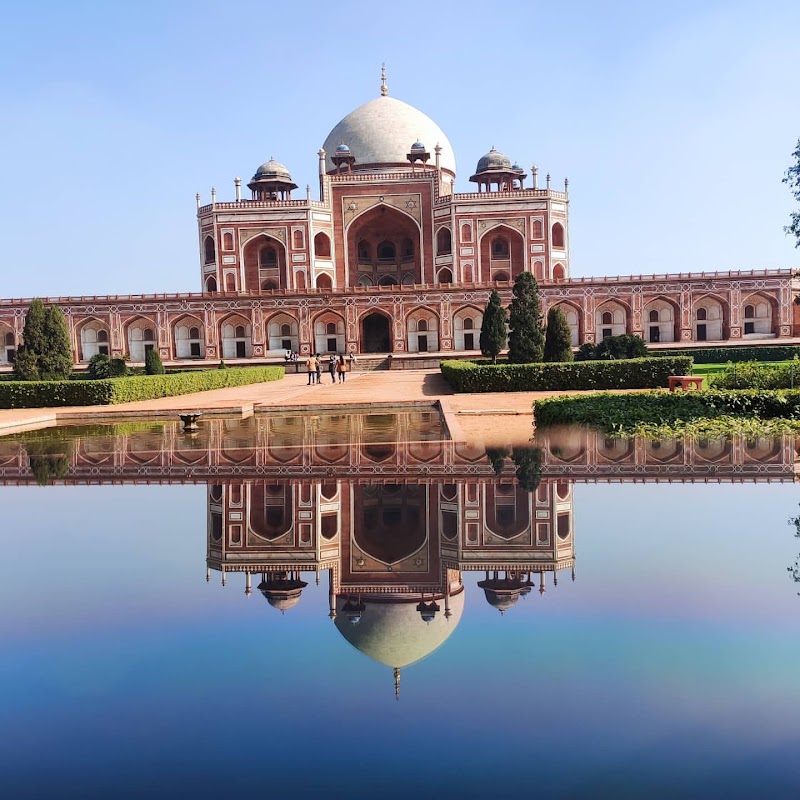
📍 Address: Hazrat Nizamuddin Aulia Dargah, Mathura Rd, Nizamuddin, Nizamuddin East, New Delhi, Delhi 110013, India
Humayun’s Tomb is the mausoleum of the second Mughal Emperor, Humayun, and is considered a masterpiece of Mughal architecture, often referred to as the prototype for the later ‘Taj Mahal.’ Its design was overseen by Haji Begum, the emperor’s wife, and crafted by Persian architect Mirak Mirza Ghiyas around 1570.
The contrast between the powerful red of the red sandstone and the exquisite white marble inlay is striking. It exudes a profound, warm sense of history, distinct from the flawless white beauty of the Taj Mahal. The extensive gardens surrounding the monument are laid out in a geometric Persian style known as ‘Chahar Bagh’ (four-part garden), symbolizing paradise on Earth in Islamic tradition. Given the vastness of the grounds, it offers a precious space to experience a tranquil passage of time amidst the hustle and bustle of Delhi.
However, it is also a place where you might experience the unique challenges of Indian tourism. Despite being an official UNESCO World Heritage Site, many travelers encounter persistent touts near the entrance gate or unscrupulous staff who attempt to overcharge by adding inflated costs to the official price (600 rupees for foreigners, 40 rupees for Indians). Don’t let your guard down just because it’s an ‘official counter’; always verify the official ticket with the printed price before paying.
The interior of the main tomb is surprisingly simple and empty, which can be interpreted as a message that ‘material authority eventually fades, leaving only the spirit.’ There are several other impressive mausoleums scattered throughout the complex, so it’s best to allocate at least 1.5 to 2 hours and wear comfortable walking shoes for your visit.
Jama Masjid
📍 Address: Jama Masjid, Old Delhi, Delhi 110006, India
Towering amidst the chaotic cityscape of Old Delhi, ‘Jama Masjid’ is one of India’s largest Islamic mosques. It was constructed between 1650 and 1656 by the fifth Mughal Emperor, Shah Jahan, who also built the Taj Mahal. Characterized by its three massive domes and two minarets made of red sandstone and white marble, its expansive courtyard can accommodate up to 25,000 worshippers.
At this site, you will experience the overwhelming scale of India, coupled with a 120% dose of deep local challenges. First, as the mosque interior is a sacred space, ‘shoes are strictly prohibited.’ You’ll need to leave your shoes at the entrance at the top of the stairs, but it’s commonplace for the shoe attendant to forcefully demand a tip (around 100 rupees). Furthermore, if you’re wearing shorts or revealing clothing, you’ll be required to wear a scarf or robe, and vendors will swarm the entrance trying to sell you ‘slippers’ or ‘scarves’ at exorbitant prices.
As an ‘absolute insider tip for travelers,’ walking barefoot on the red sandstone tiles, heated by the scorching Indian sun, can ‘burn’ the soles of your feet. Therefore, we strongly recommend bringing ‘thick socks (ones you don’t mind getting dirty)’ and carrying your shoes in your own backpack.
The entry fee for foreigners is 300 rupees, but self-proclaimed officials frequently attempt to extract additional fees, such as for ‘camera permits.’ Point to the official price board on the wall and firmly refuse. The divine beauty of the Azaan (call to prayer) echoing at dusk and the silhouette of the illuminated mosque are enough to make all these troubles worthwhile.
Agrasen ki Baoli
📍 Address: Hailey Rd, Hamdard Nagar, Vakil Lane, Mandi House, New Delhi, Delhi 110001, India
Nestled discreetly amidst the modern skyscrapers around Connaught Place, Delhi’s bustling commercial hub, ‘Agrasen ki Baoli’ opens up as if you’ve stepped back in time. This historical ‘stepwell’ (baoli) once served as a community space for collecting rainwater and offering respite from the heat.
Legend claims King Agrasen built it during the Mahabharata era, but the arched structures and intricate stone masonry seen today are believed to have been reconstructed during the Tughlaq and Lodi dynasties in the 14th century. Its 108 steep steps descending straight down into the earth, flanked by symmetrical arched niches on both sides, are geometrically stunning and have recently gained immense popularity among young people and travelers as a highly photogenic spot. It’s also famous as a filming location for the blockbuster Indian movie ‘PK.’
As you descend the steps, the blare of horns and city clamor miraculously fade away, replaced by a cool, hushed atmosphere. While the water is often mostly dry, its unfathomable depth and dimness evoke a mysterious ambiance.
Admission is free, but since closing time is early, visiting ‘before dusk’ when the intense daytime sun has softened and casts beautiful shadows is best. However, remember to apply plenty of insect repellent before your visit, as it can be poorly ventilated and very mosquito-ridden. It’s a strangely serene space hidden right in the heart of the city.
Tips and Mindset for Surviving New Delhi Sightseeing
New Delhi’s tourist attractions are magnificent places that will overwhelm you with their sheer scale and historical value. However, it’s also true that you will constantly be surrounded by ‘touts targeting tourists’ and ‘people demanding tips at every opportunity.’
You’ll likely encounter many unreasonable situations, such as exorbitant demands at shoe deposit areas, inflated ticket prices at official gates, or individuals who unsolicitedly start guiding you only to demand money at the end. The key is to understand the typical prices and rules beforehand (foreigner prices, bringing socks, checking official tickets, etc.), and to firmly say ‘no’ with a resolute attitude.
This chaotic energy is also a real aspect of India. With a reasonable amount of caution and a resilient mindset that can even laugh off minor troubles, fully immerse yourself in the deep history and culture of New Delhi.


'%3E%3Cpath%20stroke='%23000'%20stroke-width='4'%20d='m-35-37-13%2020m5%203%2013-20m5%203-13%2020m63%2042%206-9m1-2%206-9m5%203-6%209m-1%202-6%209m5%203%206-9m1-2%206-9m-96%200%2013%2020m5-3-6-9m-1-2-6-9m5-3%2013%2020m63-42-6-9m-1-2-6-9m5-3%2013%2020m5-3-6-9m-1-2-6-9'/%3E%3Ccircle%20r='24'%20fill='%23cd2e3a'/%3E%3Cpath%20fill='%230047a0'%20d='M0%200a12%2012%200%201%201%2020%2013%2024%2024%200%201%201-40-26A12%2012%200%201%200%200%200'/%3E%3C/g%3E%3C/svg%3E)
'/%3E%3Cpath%20fill='%23b2b2b2'%20d='M241%20382q0%2016%2017%2026%2017%2011%2042%2011t42-11q16-11%2017-26V269H241'/%3E%3Cpath%20fill='%239f7e00'%20d='M241%20379q0%2014%208%2023%209%209%2021%209%2014%200%2021-9%209-9%209-23V269h-59'/%3E%3Cpath%20d='M241%20339v-70h59v110q0%2014-9%2023l-6%205v-68h-15v72q-8%200-14-4v-68zm59%2040c0%2022%2015%2032%2029%2032%2021%200%2030-18%2030-32v-40h-59'/%3E%3Cpath%20fill='%239f7e00'%20d='M266%20277v5h2v12h-3v-5h2v-5h-9v5h2v5h-4v9h3v18h-5v10h34v-10h-5v-18h3v-9h-4v-5h2v-5h-9v5h2v5h-3v-12h2v-5zm42%20101q0%2010%206%2017%206%206%2015%207%2010-1%2016-7%206-7%206-17v-29h-43'/%3E%3Ccircle%20fill='%230044ad'%20cx='329.5'%20cy='372'%20r='6'/%3E%3Cellipse%20fill='%230044ad'%20cx='300'%20cy='340'%20rx='16'%20ry='21'/%3E%3C/svg%3E)


