

Amanohashidate in Kyoto Prefecture, counted as one of Japan’s Three Scenic Views, hides deep history and natural mystique, making it a shame to simply consider it ‘just a beautiful tourist spot.’
The approximately 3.6 km sandbar is full of attractions that can only be discovered on foot, such as legends related to dragons and mysterious wells where fresh water springs up despite being surrounded by the sea. This article thoroughly explains everything you need to know to fully enjoy Amanohashidate, from the superb ‘Hiryu-kan’ (Flying Dragon View) to deep exploration spots accessible by rental bicycle.
Amanohashidate View Land
📍 Address: 437 Monju, Miyazu, Kyoto 626-0001, Japan
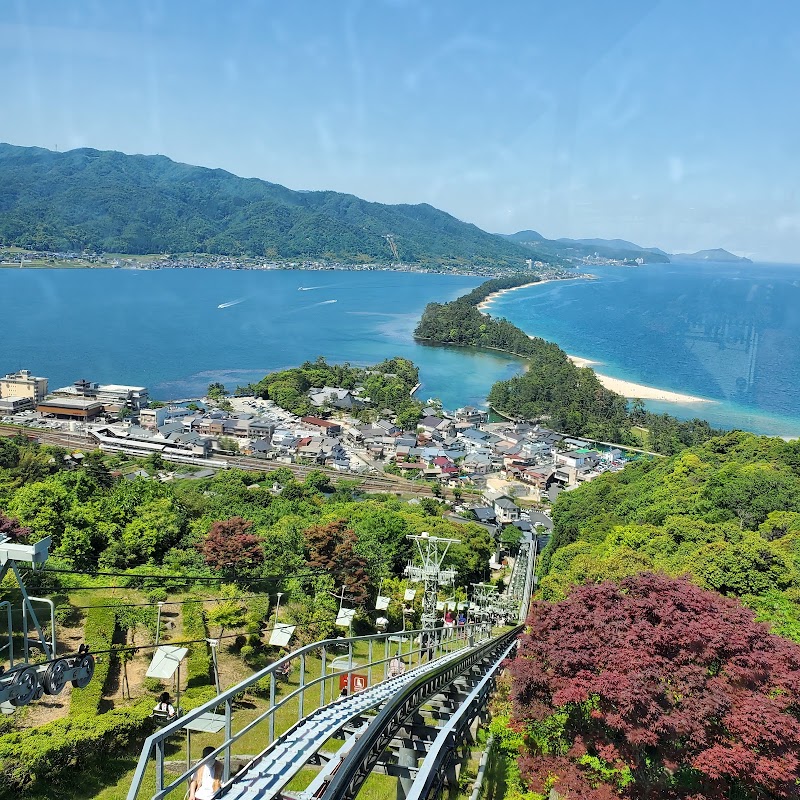
If you visit Amanohashidate, ‘Amanohashidate View Land’ on Monju Mountain is an absolute must-see. Amanohashidate, when viewed from the south here, is likened to a dragon soaring into the sky and is called ‘Hiryu-kan’ (Flying Dragon View). Access is available via a lift (approx. 6 minutes) or monorail (approx. 7 minutes), with round-trip tickets and admission included. The descent on the lift is especially recommended, as you can fully immerse yourself in the magnificent scenery unfolding before your eyes.
Several famous ‘Matanozoki stands’ (gazing between your legs) are installed at the observation deck on the mountaintop. Standing on a platform and peering at the scenery upside down between your legs, the sea and sky invert, creating a mystical illusion as if a dragon is ascending to heaven. It might feel a little daunting at first, but it’s an unforgettable experience unique to this place. Furthermore, there are plenty of attractions to enjoy with the superb view, such as the 360-degree panoramic view from the ‘Hiryu-kan Corridor,’ approximately 8.5m high and modeled after a dragon’s body, and ‘kawarake-nage’ (earthenware throwing) aimed at the ‘Chie-no-wa’ (Ring of Wisdom).
On holiday mornings (especially after 10 AM), the queue for the descending lift tends to get long, so the trick to avoid crowds is to aim for opening time right at 9 AM. After enjoying the magnificent view, taking a break to savor the ‘Amanohashidate Pudding’ sold in the park is also a good idea.
Amanohashidate
📍 Address: Monju, Miyazu, Kyoto 626-0001, Japan
After enjoying the superb view from above, let’s actually cross Amanohashidate’s pine groves. Amanohashidate is an approximately 3.6 km long sandspit that separates Miyazu Bay from the inland Aso Sea, said to have been formed by colliding ocean currents over 2200 years ago. In ancient times, it was recounted in the ‘Fudoki of Tango Province’ as the ‘myth of the floating bridge of heaven,’ a ladder created by gods to connect heaven and earth that collapsed.
It takes about 40-50 minutes one-way on foot, but the classic way to enjoy it is by combining a sightseeing boat and a rental bicycle. If you take a rental bicycle on the way there, riding through the approximately 6,700 pine trees while feeling the sea breeze, and then return by sightseeing boat or motorboat to view Amanohashidate from the sea, you can experience nature’s scale from a different perspective. If you visit early in the morning, you might even encounter the magical sight of the sunrise reflecting on the water.
Along the way, there are countless attractions, such as named majestic black pines and the unique ‘Kaisenkyo Bridge’ that rotates 90 degrees each time a boat passes. Rather than just passing through, a deeper local way to enjoy it is to compare the differing sea views on both sides – the calm Aso Sea and the outer Miyazu Bay – as you proceed.
Amanohashidate Shrine (Amanohashidate Myojin)
📍 Address: 643-1 Monju, Miyazu, Kyoto 626-0001, Japan
Quietly nestled about halfway through Amanohashidate’s pine groves is ‘Amanohashidate Shrine (Amanohashidate Myojin).’ Though a small shrine that might be easily overlooked at first glance, it has recently gained quiet popularity as a power spot for romantic fulfillment. It’s also known as the starting point for the ‘Amanohashidate Sansha Mairi’ (Three Shrine Pilgrimage), along with the nearby ‘Motoise Kono Shrine’ and ‘Manai Shrine.’
This shrine enshrines Hachidai Ryuo (Eight Great Dragon Kings), Toyouke-Omikami, and Okawa Daimyojin. Hachidai Ryuo is said to be the form of an evil dragon that once rampaged in this area but reformed through the teachings of Monju Bodhisattva, becoming a benevolent dragon. This makes the shrine the stage for a dragon god legend deeply connected to Amanohashidate’s ‘Hiryu-kan’ (Flying Dragon View). The serene precincts, enveloped in tranquility, offer an ideal space to quietly reflect away from the hustle and bustle of tourist crowds.
Please note that Amanohashidate Shrine is unattended, so ‘goshuin’ (red stamps) can be obtained at nearby shrines beyond the pine groves (such as Motoise Kono Shrine or Chion-ji Temple) or at Sannomiya Hiyoshi Shrine in the city. Additionally, an Armstrong gun that was mounted on the battleship Kasuga, active in the Russo-Japanese War, is enshrined very close to the precincts, offering a fascinating historical intersection.
Iso-shimizu Spring
📍 Address: 643-1 Monju, Miyazu, Kyoto 626-0001, Japan
Located right next to Amanohashidate Shrine is ‘Iso-shimizu’ (Iso Spring Water), selected as one of the Ministry of the Environment’s ‘100 Exquisite Waters of Japan.’ It is a truly mysterious well where perfectly fresh water, completely free of salt, springs up in the middle of a sandspit only a few tens of meters wide, meaning it is entirely surrounded by the sea. It is also known for being immortalized in a waka poem by Izumi Shikibu during the Heian period.
This mysterious phenomenon is explained by modern science through a mechanism called a ‘freshwater lens’ (Ghyben-Herzberg lens). Rainwater that infiltrates underground floats and accumulates in a lens shape above the denser saltwater layer, maintaining the freshwater layer. The lush green growth of Amanohashidate’s pine forest is also thanks to this underground fresh water nourishing its roots.
It is used as a ‘temizuya’ (water purification basin), and scooping it with your hands reveals a sensation so pure you might forget you’re surrounded by the sea. *Please note that it is currently not potable, so refrain from drinking it and simply experience this mysterious gift of nature as hand-washing water.
How to Enjoy Amanohashidate 120%
To fully appreciate Amanohashidate’s charm, the key is to combine ‘superb views from above’ with ‘exploration from below’ in a balanced way. The recommended route is to head to ‘Amanohashidate View Land’ first thing in the morning before the crowds, and enjoy the ‘Matanozoki’ (gazing between your legs) and ‘Hiryu-kan’ (Flying Dragon View). Afterwards, descend to the base, rent a bicycle, and cycle through the pine groves, stopping at ‘Amanohashidate Shrine’ and ‘Iso-shimizu’ spring.
For the entire 3.6 km path, if you enjoy nature by bicycle or on foot one way and then take a motorboat or pleasure cruise back to admire the scenery from the sea, you’ll experience less fatigue and a significant boost in satisfaction. The return journey by boat, in particular, is highly praised in reviews for its exhilarating sensation of cutting through the wind, making it the perfect spice for your trip.
The mysterious terrain said to have been created by a dragon, the history that breathes within it, and the natural miracle of fresh water springing forth. Please use this article as a guide and go find your own special Amanohashidate scenery.


'%3E%3Cpath%20stroke='%23000'%20stroke-width='4'%20d='m-35-37-13%2020m5%203%2013-20m5%203-13%2020m63%2042%206-9m1-2%206-9m5%203-6%209m-1%202-6%209m5%203%206-9m1-2%206-9m-96%200%2013%2020m5-3-6-9m-1-2-6-9m5-3%2013%2020m63-42-6-9m-1-2-6-9m5-3%2013%2020m5-3-6-9m-1-2-6-9'/%3E%3Ccircle%20r='24'%20fill='%23cd2e3a'/%3E%3Cpath%20fill='%230047a0'%20d='M0%200a12%2012%200%201%201%2020%2013%2024%2024%200%201%201-40-26A12%2012%200%201%200%200%200'/%3E%3C/g%3E%3C/svg%3E)
'/%3E%3Cpath%20fill='%23b2b2b2'%20d='M241%20382q0%2016%2017%2026%2017%2011%2042%2011t42-11q16-11%2017-26V269H241'/%3E%3Cpath%20fill='%239f7e00'%20d='M241%20379q0%2014%208%2023%209%209%2021%209%2014%200%2021-9%209-9%209-23V269h-59'/%3E%3Cpath%20d='M241%20339v-70h59v110q0%2014-9%2023l-6%205v-68h-15v72q-8%200-14-4v-68zm59%2040c0%2022%2015%2032%2029%2032%2021%200%2030-18%2030-32v-40h-59'/%3E%3Cpath%20fill='%239f7e00'%20d='M266%20277v5h2v12h-3v-5h2v-5h-9v5h2v5h-4v9h3v18h-5v10h34v-10h-5v-18h3v-9h-4v-5h2v-5h-9v5h2v5h-3v-12h2v-5zm42%20101q0%2010%206%2017%206%206%2015%207%2010-1%2016-7%206-7%206-17v-29h-43'/%3E%3Ccircle%20fill='%230044ad'%20cx='329.5'%20cy='372'%20r='6'/%3E%3Cellipse%20fill='%230044ad'%20cx='300'%20cy='340'%20rx='16'%20ry='21'/%3E%3C/svg%3E)


