

Sky Tower
📍 Address: Victoria Street West, Auckland CBD, Auckland 1010, New Zealand
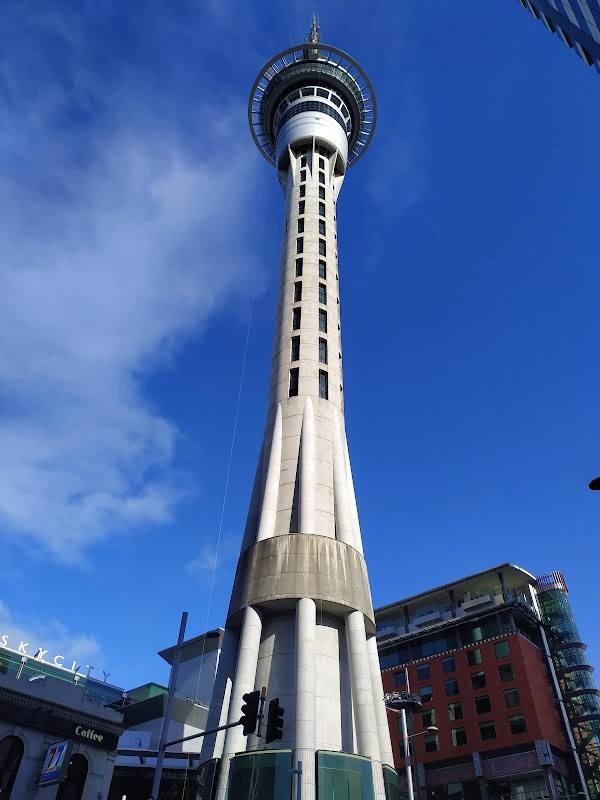
Towering over the heart of Auckland, the ‘Sky Tower’ stands at 328m, making it the tallest tower in the Southern Hemisphere and an icon of New Zealand’s largest city. A landmark visible from anywhere in the city, this tower is more than just an observation deck; it’s a treasure trove of entertainment.
From the 60th-floor observation deck, you can enjoy 360-degree panoramic views of Auckland city, the Hauraki Gulf, and even mountains 80km away on a clear day. The period from dusk to night (around 5 PM to 8 PM) is especially recommended. The changing gradients of the sea and sky, moment by moment, and the city lights gradually illuminating the nightscape, are breathtakingly beautiful. The observation deck also features a glass-floor area, offering the thrilling sensation of seeing cars on the ground like grains of rice.
For travelers seeking more thrills, the ‘Skywalk,’ where you walk along the edge of an outdoor deck 192m above the ground, and the ‘Skyjump,’ a controlled freefall jump to the ground on a single wire, are hugely popular. These activities, a blend of fear and excitement, are sure to become a quintessential New Zealand memory.
At the base of the tower, ‘SkyCity’ also houses New Zealand’s largest casino. Entry is permitted for those aged 20 and over, and the dress code is relatively relaxed smart casual. You can even enter in jeans and sneakers (as long as they are not excessively dirty), making it a real local way to enjoy an adult night out after dinner. During Christmas or sports events, the tower is lit up in special colors to match the occasion, which is also a must-see.
Waitomo Glowworm Caves
📍 Address: 39 Waitomo Village Road, Waitomo Caves 3977, New Zealand
About a 4-hour drive south of Auckland, the ‘Waitomo Glowworm Caves’ unfold beneath a pastoral landscape, offering a mystical experience as if you’ve stepped into another world. The stars of the show here are the ‘glowworms’ (Arachnocampa luminosa), bioluminescent insects unique to New Zealand.
The tour begins with a walk through magnificent limestone stalactite caves, sculpted by nature over countless millennia. Māori guides respectfully share the cave’s history and legends. Inside the cave, where the acoustics are superb, guides sometimes perform traditional Māori songs, and you’ll be captivated by the sacred atmosphere.
The highlight is a boat cruise across the underground lake. All lights are extinguished, and in the darkness, with only the gentle ripple of water echoing, you look up to find countless pale blue lights emitted by glowworms stretching across the cave ceiling. It’s truly an ‘underground starry sky’ or a fantastic scene straight out of an animated movie.
A realistic tip for travelers to know in advance: photography is strictly prohibited inside the caves (especially in the glowworm areas). This is to protect the light-sensitive glowworms. Put your camera away and soak in the scene with your own eyes. Also, the boats used for the cruise are made of stainless steel and can be quite chilly, so even in summer, it’s smart to bring an extra layer to stay warm.
Huka Falls
📍 Address: Wairakei, Taupō 3384, New Zealand
Formed when the Waikato River, flowing from Lake Taupō in the North Island, is dramatically squeezed into a narrow gorge, ‘Huka Falls’ boasts a breathtaking natural beauty. While the drop itself is only just over 10m, the sheer volume of water—220,000 liters per second (enough to fill an Olympic swimming pool in a few seconds)—makes it one of New Zealand’s most visited natural attractions.
The main highlight is its intense power and the mint-blue color of the water, often referred to as ‘Huka Blue.’ As its Māori name suggests, meaning ‘great body of foam,’ the sight of the vibrant blue water crashing furiously and being sucked into the plunge pool as white foam vividly conveys the awe-inspiring power and beauty of nature. A delightful bonus is that the water remains clear and a brilliant blue even on rainy days.
Access is also incredibly convenient; from the free car park, it’s just a 5-minute walk to bridges and viewpoints where you can gaze down at the falls from above. This easy accessibility, allowing even those with limited stamina or families with children to effortlessly enjoy the spectacular view, is a major draw.
For those who want to feel the full force of the falls and get drenched in spray, participating in a ‘jet boat tour’ that races upstream against the fierce current is highly recommended. Approaching the very brink of the plunge pool by boat and being enveloped in the roar and mist offers a thrilling experience utterly different from viewing it from land.
Aoraki/Mount Cook National Park
📍 Address: Canterbury Region 7999, New Zealand
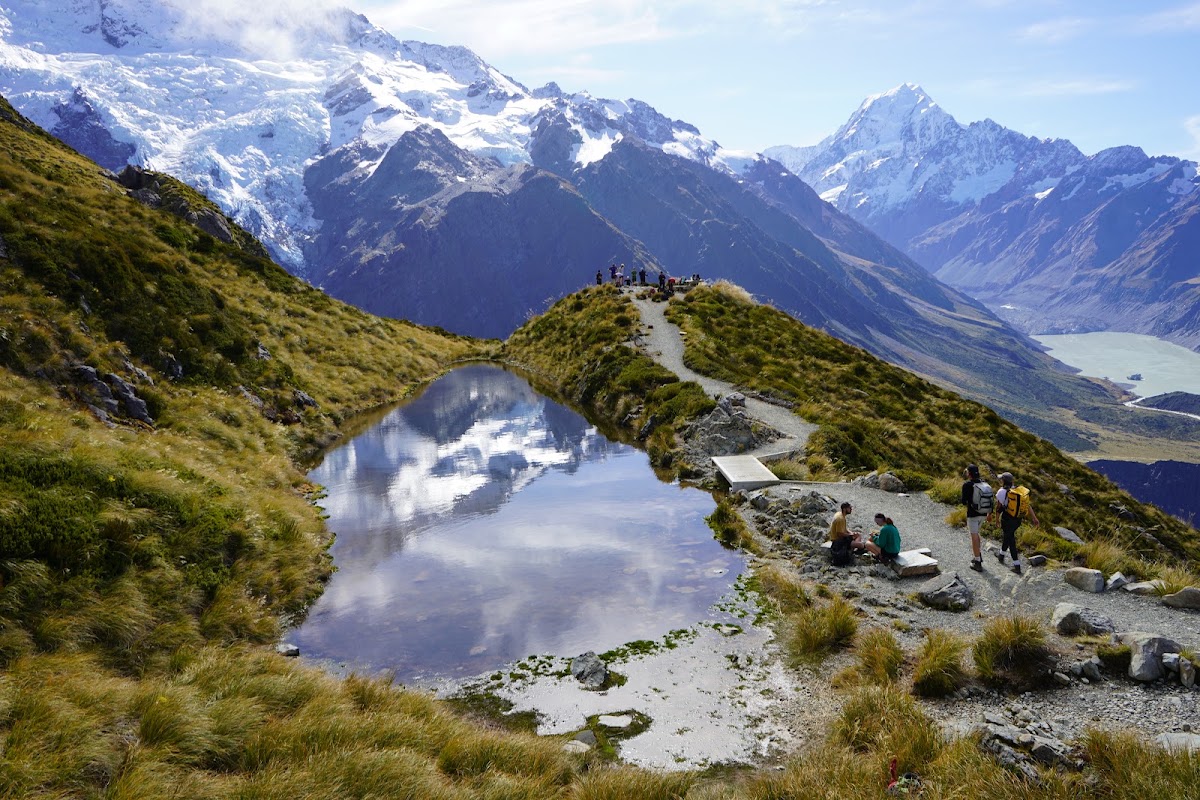
Located in the central part of the South Island, ‘Aoraki/Mount Cook National Park’ is a sacred natural haven, featuring New Zealand’s highest peak, Aoraki (meaning ‘Cloud Piercer’ in Māori) at 3,724m, alongside other 3,000m-class mountains and vast glaciers. It offers breathtaking scenery for everyone, from serious mountaineers to casual hikers.
Overwhelmingly popular with travelers is the ‘Hooker Valley Track,’ where you walk while admiring glacial lakes and the Southern Alps. Known as an easy course for families with children due to its minimal elevation gain and dynamic scenery enjoyed by crossing suspension bridges. *However, as of 2026, some routes may be closed due to weather or bridge maintenance, so checking the latest trail conditions at the local Visitor Centre (DOC) before departure is a golden rule for safe travel.
If you’re up for a more strenuous route, the ‘Sealy Tarns Track’ is also recommended, offering panoramic glacier views after climbing steep stairs. Though it’s a challenging ascent, the beauty of the glacial lake scenery below is enough to banish any fatigue.
Furthermore, this national park is part of an International Dark Sky Reserve. If you stay overnight and look up at the night sky, you can observe a magnificent, ‘spilling’ blanket of stars and the Southern Cross with the naked eye. Mountain weather can change very rapidly, so even in summer, be sure to bring warm clothing and a waterproof jacket suitable for layering.
Fiordland National Park
📍 Address: Southland Region, New Zealand
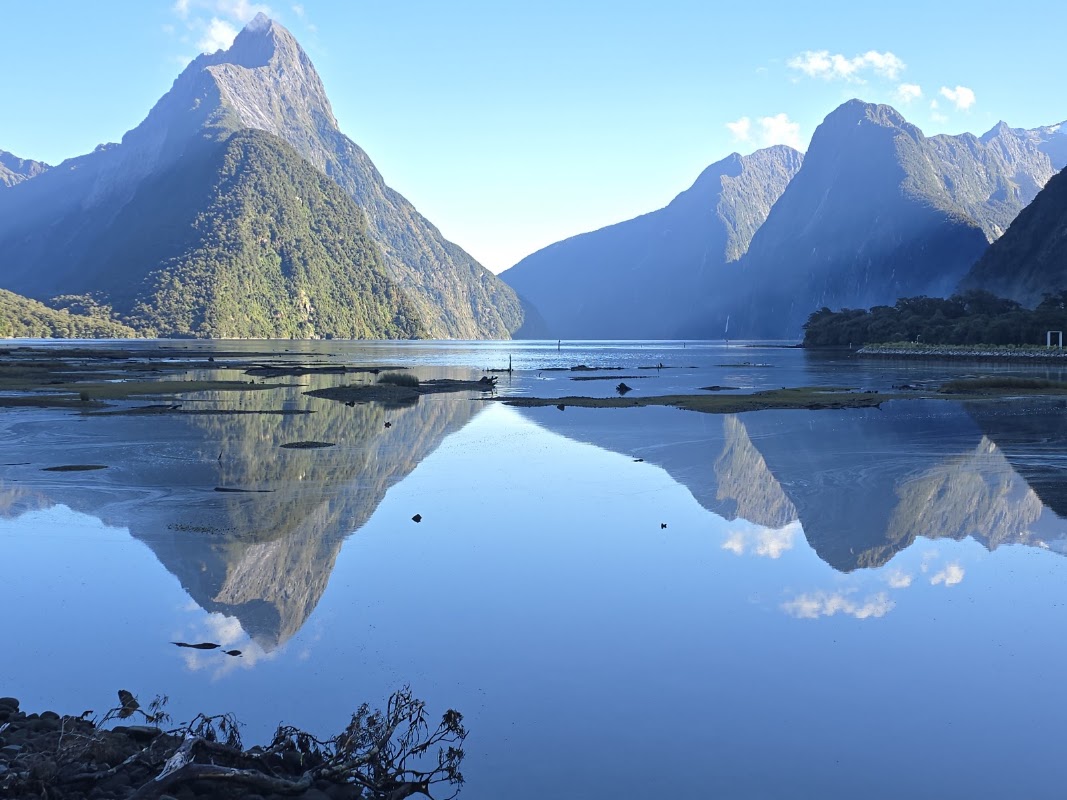
New Zealand’s largest national park, ‘Fiordland National Park,’ is a UNESCO World Heritage site preserving untouched nature on an overwhelming scale. The U-shaped valleys carved by glaciers, towering cliffs, and countless waterfalls cascading from them powerfully remind us of nature’s might and humanity’s insignificance.
The ultimate highlight is the ‘Milford Sound Cruise,’ sailing among mountains that rise dramatically from the sea. Although it’s a region with frequent rainfall, it’s a special place where temporary waterfalls appear all over the rock faces during rainy weather, presenting an even more mystical and powerful sight than on clear days.
A profound charm of this area lies not just in the destination but in the ‘Milford Road’ drive itself. The scenery outside your car window constantly changes, revealing vast alpine meadows, moss-covered primeval forests, and crystal-clear streams. Even waiting at the traffic light before the famous Homer Tunnel is an acclaimed experience, with travelers remarking that they ‘don’t mind at all’ as they are mesmerized by the majestic glacial views.
A local tip: this area is highly committed to nature conservation, so gas stations and grocery stores along the way are extremely scarce. Before leaving the town of Te Anau, it is absolutely essential to fill your car with gas and stock up on lunch and drinks. Along the way, mischievous Kea parrots, said to be the world’s smartest birds, might approach your car, but never feed them; enjoy photographing them from a respectful distance.
Local Tips for Making Your New Zealand Trip an Unforgettable Memory
When traveling through New Zealand’s nature and cities, ‘rapid climate changes’ and ‘meticulous travel planning’ are key to a successful trip.
‘New Zealand’s weather is so changeable that it’s often said to have ‘four seasons in one day.’ Even in urban areas like the Sky Tower, evening sea breezes can be chilly. In mountainous and fiordland regions such as Mount Cook and Milford Sound, even in summer (December to February), preparing for ‘layering’ with items like fleeces and windbreakers that can be easily put on or taken off is essential.
Furthermore, many of New Zealand’s appealing tourist spots are scattered in rural areas, making travel by rental car highly convenient. However, once you leave urban centers, it’s not uncommon to find no convenience stores or gas stations for tens of kilometers. By making it a rule to ‘refuel/resupply whenever you find an opportunity’ and planning your road trip with ample buffer, you’re sure to wholeheartedly enjoy unexpected scenic views and encounters with wildlife along the way.
![[UAE Tourist Attractions] 5 Must-See Spots in Dubai & Abu Dhabi for Every Traveler](https://images.unsplash.com/photo-1629892665176-2c27769e6775?crop=entropy&cs=tinysrgb&fit=max&fm=jpg&ixid=M3w5MDExNDh8MHwxfHNlYXJjaHw0fHxEdWJhaSUyMEJ1cmolMjBLaGFsaWZhJTIwbGFuZHNjYXBlfGVufDB8MHx8fDE3NzYwNDIwNzR8MA&ixlib=rb-4.1.0&q=80&w=1080 "[UAE Tourist Attractions] 5 Must-See Spots in Dubai & Abu Dhabi for Every Traveler")


'%3E%3Cpath%20stroke='%23000'%20stroke-width='4'%20d='m-35-37-13%2020m5%203%2013-20m5%203-13%2020m63%2042%206-9m1-2%206-9m5%203-6%209m-1%202-6%209m5%203%206-9m1-2%206-9m-96%200%2013%2020m5-3-6-9m-1-2-6-9m5-3%2013%2020m63-42-6-9m-1-2-6-9m5-3%2013%2020m5-3-6-9m-1-2-6-9'/%3E%3Ccircle%20r='24'%20fill='%23cd2e3a'/%3E%3Cpath%20fill='%230047a0'%20d='M0%200a12%2012%200%201%201%2020%2013%2024%2024%200%201%201-40-26A12%2012%200%201%200%200%200'/%3E%3C/g%3E%3C/svg%3E)
'/%3E%3Cpath%20fill='%23b2b2b2'%20d='M241%20382q0%2016%2017%2026%2017%2011%2042%2011t42-11q16-11%2017-26V269H241'/%3E%3Cpath%20fill='%239f7e00'%20d='M241%20379q0%2014%208%2023%209%209%2021%209%2014%200%2021-9%209-9%209-23V269h-59'/%3E%3Cpath%20d='M241%20339v-70h59v110q0%2014-9%2023l-6%205v-68h-15v72q-8%200-14-4v-68zm59%2040c0%2022%2015%2032%2029%2032%2021%200%2030-18%2030-32v-40h-59'/%3E%3Cpath%20fill='%239f7e00'%20d='M266%20277v5h2v12h-3v-5h2v-5h-9v5h2v5h-4v9h3v18h-5v10h34v-10h-5v-18h3v-9h-4v-5h2v-5h-9v5h2v5h-3v-12h2v-5zm42%20101q0%2010%206%2017%206%206%2015%207%2010-1%2016-7%206-7%206-17v-29h-43'/%3E%3Ccircle%20fill='%230044ad'%20cx='329.5'%20cy='372'%20r='6'/%3E%3Cellipse%20fill='%230044ad'%20cx='300'%20cy='340'%20rx='16'%20ry='21'/%3E%3C/svg%3E)


