

Beijing, the capital of China, boasts a history of approximately 3,000 years, having flourished as the imperial city for numerous dynasties. World Heritage Sites are dotted throughout the city, and their sheer scale far exceeds anything familiar to the Japanese sensibility. This city, where ancient echoes intertwine with a modern metropolis, is truly a treasure trove of attractions that never ceases to captivate travelers.
However, Beijing’s tourist attractions are all vast, and with ticket booking methods and access conditions changing rapidly, prior research is essential. In this article, we’ve carefully selected five major must-visit attractions in Beijing, providing real-time information including unmissable deep dive highlights and the latest access details as of 2026.
The Forbidden City (Palace Museum)
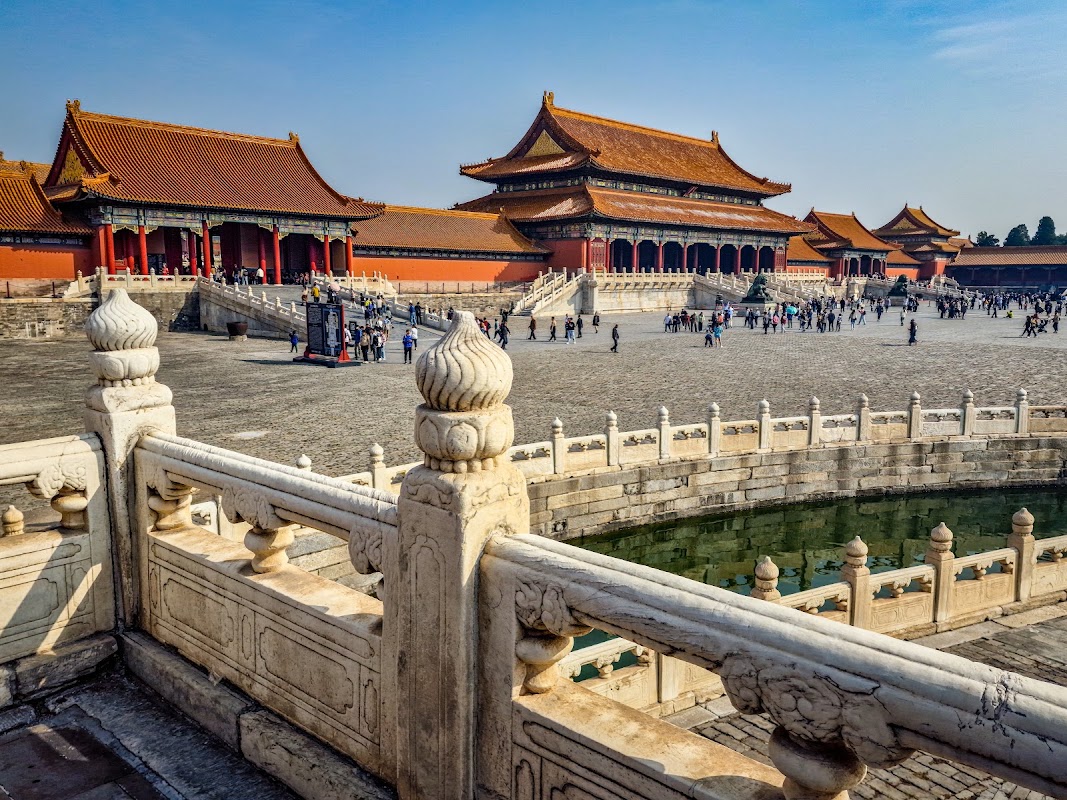
📍 Address: 4 Jing Shan Qian Jie, Dong Cheng Qu, Bei Jing Shi, People’s Republic of China 100009
The Forbidden City (now the Palace Museum), the absolute center of Beijing tourism and known as the world’s largest wooden architectural complex, is a true symbol of power and history. Construction began in 1406 by Emperor Yongle of the Ming Dynasty, and for approximately 500 years until the fall of the Qing Dynasty, 24 emperors resided here. Its vast expanse is equivalent to about 15 Tokyo Domes (approximately 720,000 square meters), and it is said to contain about 9,000 rooms.
Highlights include the magnificent palace complexes, such as the ‘Hall of Supreme Harmony’ (Taihe Dian), where important state ceremonies like the emperor’s enthronement took place. Walking along the endless red and gold city walls and vast courtyards, you’ll be speechless at the overwhelming sense of scale, feeling as if you’ve wandered into the world of the film ‘The Last Emperor.’ Furthermore, permanent exhibitions like the Clock Exhibition Hall and the Treasure Gallery offer a glimpse into the opulent lifestyle of the imperial family of that era.
As a point of caution, the Forbidden City has strict admission limits, and tickets ‘must be pre-booked via WeChat starting 7 days before your visit.’ Tickets are often highly sought after, and foreigners may sometimes be rejected by the system, so if you’re concerned, it’s safer to arrange through a travel agency or join a local tour. While it’s sometimes possible to purchase tickets at the counter on the day of your visit, be sure to bring your passport. Since you’ll be walking around for half a day or more, we strongly recommend wearing comfortable sneakers.
Badaling Great Wall
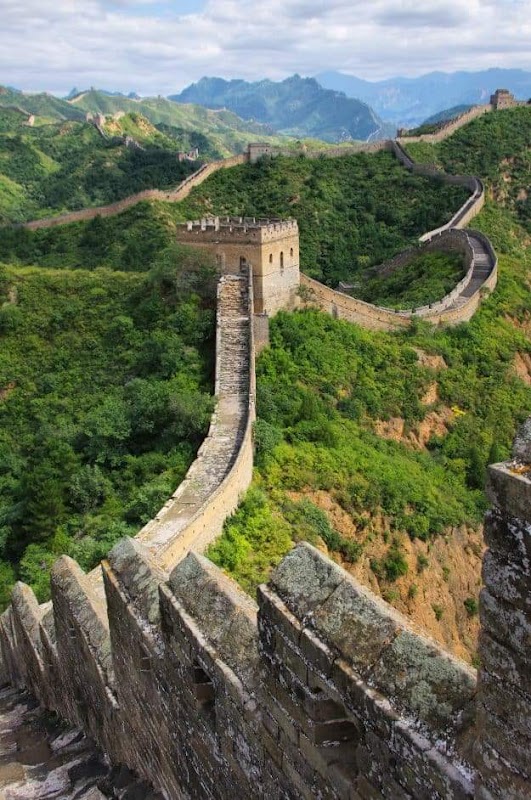
📍 Address: Yanqing District, Beijing, People’s Republic of China, Postal Code: 102112
The Great Wall of China, a World Heritage Site that many travelers ‘dream of visiting at least once before they die.’ Among its walls, which stretch over 21,000 km in total, ‘Badaling Great Wall’ is the most accessible from Beijing city center and enjoys immense popularity among tourists. The panoramic view of the wall winding like a dragon along the mountain ridges is truly breathtaking. The sense of accomplishment you’ll feel after climbing the steep stairs on your own will surely become a lifelong memory.
Generally, the best ways to access Badaling Great Wall are by high-speed rail (Gaotie) or direct bus. The high-speed rail takes about 40 minutes from Qinghe Station, and combined with the cable car, you can reach the highest point relatively easily. Many travelers also use the affordable and reliable ‘Bus Route 877,’ but here’s a **CRITICAL update for 2026**: Route 877’s departure point, which used to be Deshengmen Bus Terminal, has moved to ‘Beitucheng Subway Station’ as of March 2025. Old information is scattered online, so be absolutely careful not to get it wrong.
Near the top of the Great Wall, there’s no shelter from the wind, so strong winds are common regardless of the season. Especially in winter, it can be sub-zero cold, so warm clothing such as down jackets and gloves are essential. Take your time to reflect on the ancient history and imprint the breathtaking scenery into your memory.
Temple of Heaven
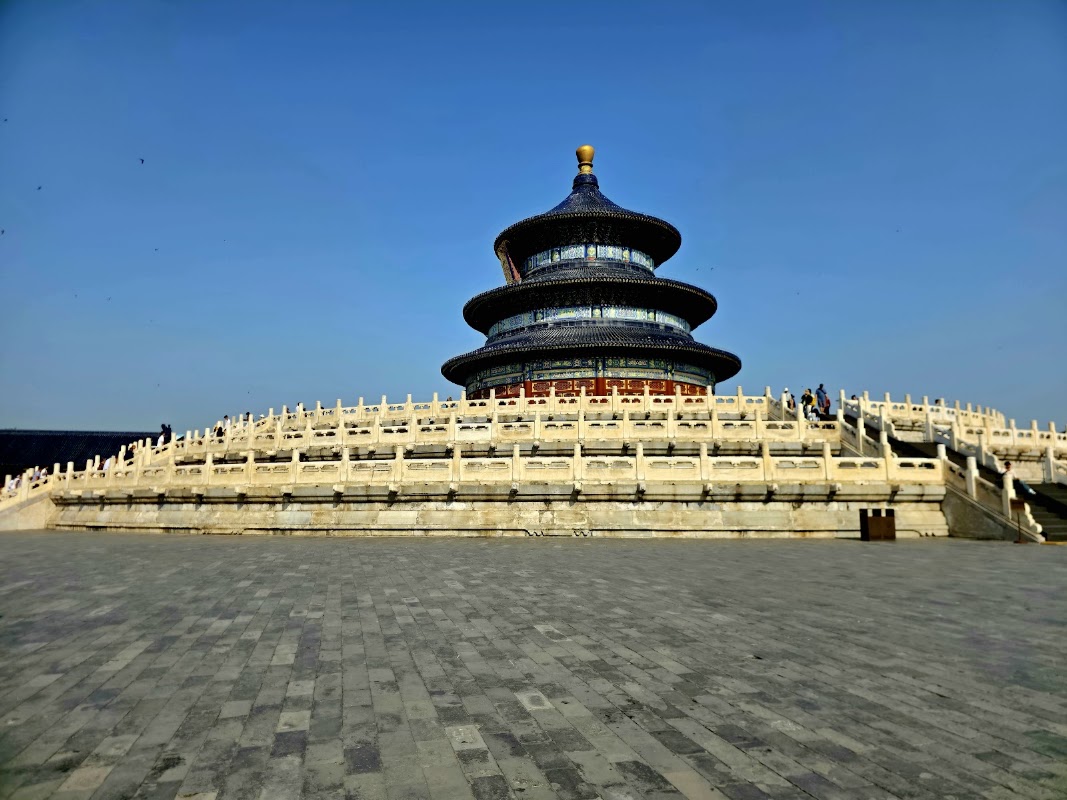
📍 Address: Dongcheng District, Beijing, People’s Republic of China, Postal Code: 100061
Located southeast of the Forbidden City, the ‘Temple of Heaven’ is a sacred site where emperors of the Ming and Qing dynasties performed ‘Jitian’ (sacrifices to Heaven) and ‘Qigu’ (prayers for good harvests). Its vast grounds, approximately 273 hectares, are about four times the size of the Forbidden City, featuring beautiful architecture that embodies the ancient Chinese cosmology of ‘Tianyuan Difang’ (Heaven is round, Earth is square).
The Temple of Heaven is divided into the ‘Outer Altar’ and the core ‘Inner Altar,’ but the highlight of any visit is undoubtedly the Inner Altar. Must-sees include the ‘Hall of Prayer for Good Harvests’ (Qinian Dian), a triple-eaved circular building with blue glazed tiles constructed without a single nail, and the ‘Circular Mound Altar’ (Huanqiu), a round stone platform where emperors offered prayers on the winter solstice. Standing in these geometrically perfect spaces, you can feel the solemn atmosphere where ancient emperors communicated with Heaven.
At the ticket office, two types of tickets are sold: one for park entry only, and a ‘combined ticket’ (all-inclusive pass) that grants access to the Inner Altar (including the Hall of Prayer for Good Harvests). For sightseeing purposes, always purchase the combined ticket to access all famous spots. Also, while the park itself is open until evening, major structures like the Hall of Prayer for Good Harvests close in the late afternoon, so be sure to schedule your visit for earlier in the day.
Summer Palace
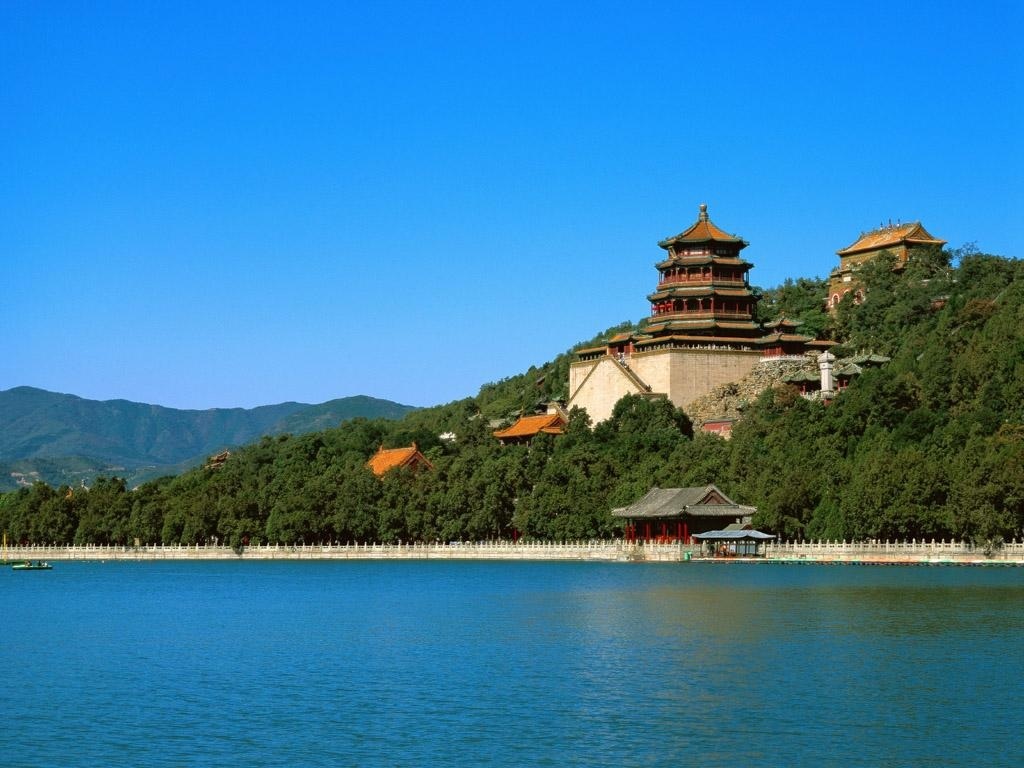
📍 Address: Haidian District, Beijing, People’s Republic of China, Postal Code: 100091
Located approximately 15 km northwest of central Beijing, the ‘Summer Palace’ (Yiheyuan) is China’s largest and most completely preserved imperial garden. Built by Emperor Qianlong in 1750, it is famously known for being rebuilt by Empress Dowager Cixi, a powerful figure in the late Qing Dynasty, who invested enormous national funds. The massive artificial Kunming Lake occupies about three-quarters of its total area, leaving visitors simply awestruck by its sheer scale.
While there are many highlights, one of the most famous is the ‘Long Corridor’ (Changlang), which stretches 728 meters along the northern shore of Kunming Lake. The beams of this world’s longest covered walkway are adorned with approximately 14,000 intricate paintings depicting Chinese myths, classical literature, and natural scenery, allowing you to stroll as if in a museum while sheltered from the sun. Furthermore, from the ‘Tower of Buddhist Incense’ (Foxiangge), rising about 36.5 meters on the slopes of Longevity Hill, you can enjoy a breathtaking panoramic view of the vast Kunming Lake and the Seventeen-Arch Bridge below.
Just walking around the vast grounds requires half a day to a full day. If you feel tired, taking a sightseeing boat to view the palace complex from the lake is one of the luxurious, local ways to enjoy it. Take your time to leisurely explore and savor the traces of the splendor cherished by Empress Dowager Cixi.
Beihai Park
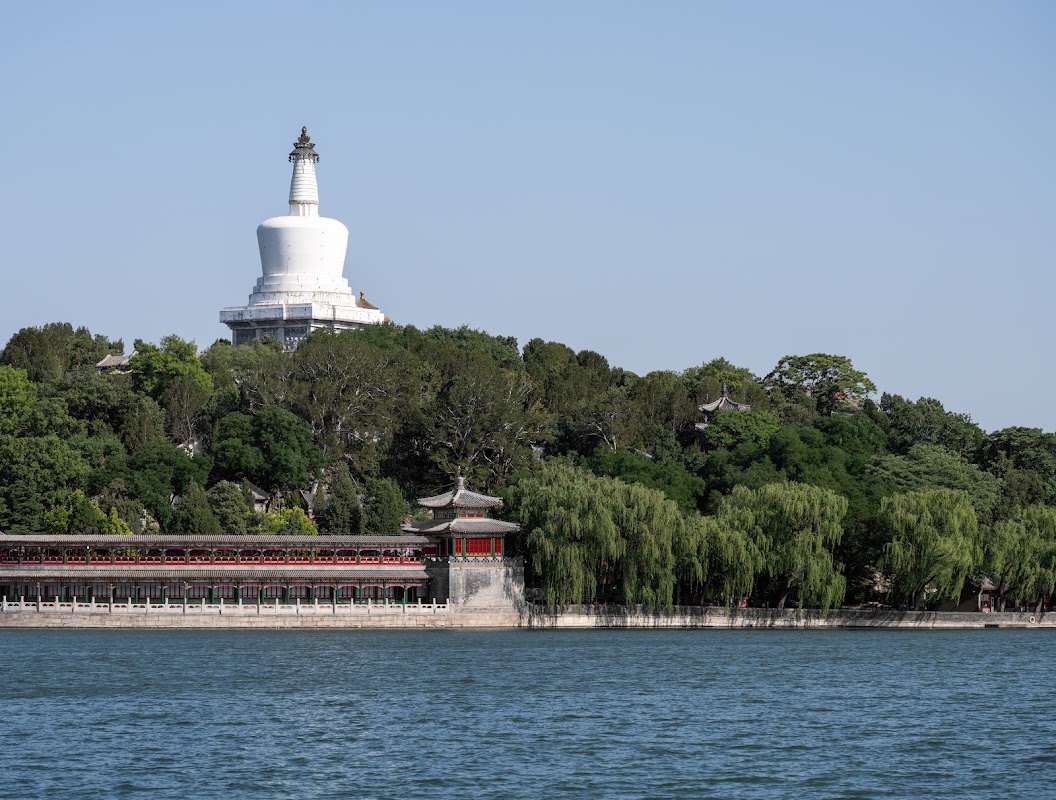
📍 Address: 1 Wen Jin Jie, Xicheng District, People’s Republic of China 100034
Adjacent to the northwest of the Forbidden City, ‘Beihai Park’ is the world’s oldest surviving imperial garden, with a history dating back to the Liao Dynasty, about 1000 years ago. It is said that Kublai Khan, who founded the Yuan Dynasty, built Dadu (the predecessor of modern-day Beijing) centered around this very spot. The park is so inextricably linked to Beijing’s history that the saying ‘First there was Beihai, then there was Beijing’ remains.
The park incorporates the ‘One Pond, Three Hills’ (three immortal islands floating in the sea) landscaping style, based on Taoist immortal philosophy. The most prominent symbol is the ‘White Dagoba,’ a Tibetan Buddhist-style stupa crowning Qionghua Island. Also a must-see is the vibrantly colored ‘Nine-Dragon Wall,’ made of glazed tiles, one of only three such walls in China.
Compared to mega tourist destinations like the Forbidden City, the crowds are moderate, and admission fees are reasonable. Visiting in the early morning or evening, you’ll see locals practicing Tai Chi by the lake, playing traditional instruments, or enjoying dances in the square, creating a very peaceful and local atmosphere. A savvy way to enjoy it is to drop by after visiting the Forbidden City, take a break on a lakeside bench, and soak in the ambiance where Beijing’s daily life and history intersect.
Local Tips for a Smart Beijing Sightseeing Experience
Beijing’s tourist attractions are, simply put, ‘off the charts in scale.’ What appears ‘right next door’ on a map can often take tens of minutes to reach on foot. Therefore, the trick to conserving energy is to limit your daily itinerary to 2-3 spots and take frequent breaks.
Furthermore, digitalization has advanced dramatically in China; while cash is not entirely unusable, QR payment methods like ‘Alipay’ and ‘WeChat Pay’ are dominant for everything from purchasing tickets and riding the subway to buying small items at street stalls. We strongly recommend downloading the apps and linking your credit card before departing from your home country.
Finally, many historical buildings require ‘presentation of your original passport’ for foreign visitors. Forgetting it at your hotel could lead to the unfortunate situation of being denied entry, so always double-check that your passport is in your bag before heading out for sightseeing. Prepare thoroughly and fully experience the magnificent history and scale of China!

![[2026 Update] Must-Visit Kaohsiung! 5 Top Attractions & Essential Local Eats](https://images.unsplash.com/photo-1677607220167-1abe92f648b0?crop=entropy&cs=tinysrgb&fit=max&fm=jpg&ixid=M3w5MDExNDh8MHwxfHNlYXJjaHw0fHxLYW9oc2l1bmclMjBUYWl3YW4lMjBsYW5kc2NhcGV8ZW58MHwwfHx8MTc3NzAxMDQ3Nnww&ixlib=rb-4.1.0&q=80&w=1080 "[2026 Update] Must-Visit Kaohsiung! 5 Top Attractions & Essential Local Eats")


'%3E%3Cpath%20stroke='%23000'%20stroke-width='4'%20d='m-35-37-13%2020m5%203%2013-20m5%203-13%2020m63%2042%206-9m1-2%206-9m5%203-6%209m-1%202-6%209m5%203%206-9m1-2%206-9m-96%200%2013%2020m5-3-6-9m-1-2-6-9m5-3%2013%2020m63-42-6-9m-1-2-6-9m5-3%2013%2020m5-3-6-9m-1-2-6-9'/%3E%3Ccircle%20r='24'%20fill='%23cd2e3a'/%3E%3Cpath%20fill='%230047a0'%20d='M0%200a12%2012%200%201%201%2020%2013%2024%2024%200%201%201-40-26A12%2012%200%201%200%200%200'/%3E%3C/g%3E%3C/svg%3E)
'/%3E%3Cpath%20fill='%23b2b2b2'%20d='M241%20382q0%2016%2017%2026%2017%2011%2042%2011t42-11q16-11%2017-26V269H241'/%3E%3Cpath%20fill='%239f7e00'%20d='M241%20379q0%2014%208%2023%209%209%2021%209%2014%200%2021-9%209-9%209-23V269h-59'/%3E%3Cpath%20d='M241%20339v-70h59v110q0%2014-9%2023l-6%205v-68h-15v72q-8%200-14-4v-68zm59%2040c0%2022%2015%2032%2029%2032%2021%200%2030-18%2030-32v-40h-59'/%3E%3Cpath%20fill='%239f7e00'%20d='M266%20277v5h2v12h-3v-5h2v-5h-9v5h2v5h-4v9h3v18h-5v10h34v-10h-5v-18h3v-9h-4v-5h2v-5h-9v5h2v5h-3v-12h2v-5zm42%20101q0%2010%206%2017%206%206%2015%207%2010-1%2016-7%206-7%206-17v-29h-43'/%3E%3Ccircle%20fill='%230044ad'%20cx='329.5'%20cy='372'%20r='6'/%3E%3Cellipse%20fill='%230044ad'%20cx='300'%20cy='340'%20rx='16'%20ry='21'/%3E%3C/svg%3E)


