

What’s the Real Charm of Ximending, the Forefront of Taiwanese Culture?
Located in Taipei’s Wanhua District, ‘Ximending (Xīméndīng)’ is a vibrant commercial district often likened to ‘Taiwan’s Harajuku’ or ‘Taipei’s Shibuya.’ It’s always bustling with young people and tourists from around the world, teeming with the latest fashion trends, street art, and affordable delicious food.
However, Ximending’s charm extends beyond just being a ‘youth district.’ A short walk down its alleys reveals red-brick historical buildings and temple ruins from the Japanese colonial era, and even rainbow monuments symbolizing Taiwan’s groundbreaking legalization of same-sex marriage in Asia, showcasing a coexistence of diversity and deep historical layers.
In this article, we’ll introduce carefully selected must-visit attractions in the Ximending area that are too good to just pass by. Beyond textbook explanations, we’ll delve deep into the local energy, best times to visit, and the unknown historical backgrounds.
Ximending Pedestrian Area
📍 Address: No. 9, Lane 50, Hanzhong St, Wanshou Village, Wanhua District, Taipei City, Taiwan 108
This ‘Ximending Pedestrian Area’ is the main street for sightseeing in Ximending. Walking through the district, you’ll see tourists enjoying street food like bubble milk tea, large fried chicken cutlets, and piping hot beef noodles. On weekday evenings and weekends, street concerts and performances are frequently held, enveloping the entire area in a festive, lively atmosphere.
With trendy clothing stores, character shops, and even specialty stores dealing in used electronics, it has a chaotic charm that appeals to all ages, not just the youth. This area is also a mecca for street art, and the contrast between the vibrant graffiti and old brick buildings is a must-see. Interestingly, it was also a filming location for the music video of the popular Japanese band Official Hige Dandism’s song ‘Pretender,’ making it an irresistible pilgrimage spot for fans.
Many shops operate late into the night, allowing visitors to enjoy a night market-like atmosphere, which is a big plus. However, despite being a pedestrian zone, cars and motorcycles can sometimes enter at certain times, so be sure to pay close attention to surrounding traffic while taking photos and enjoying street food, without getting too engrossed.
Ximen Red House
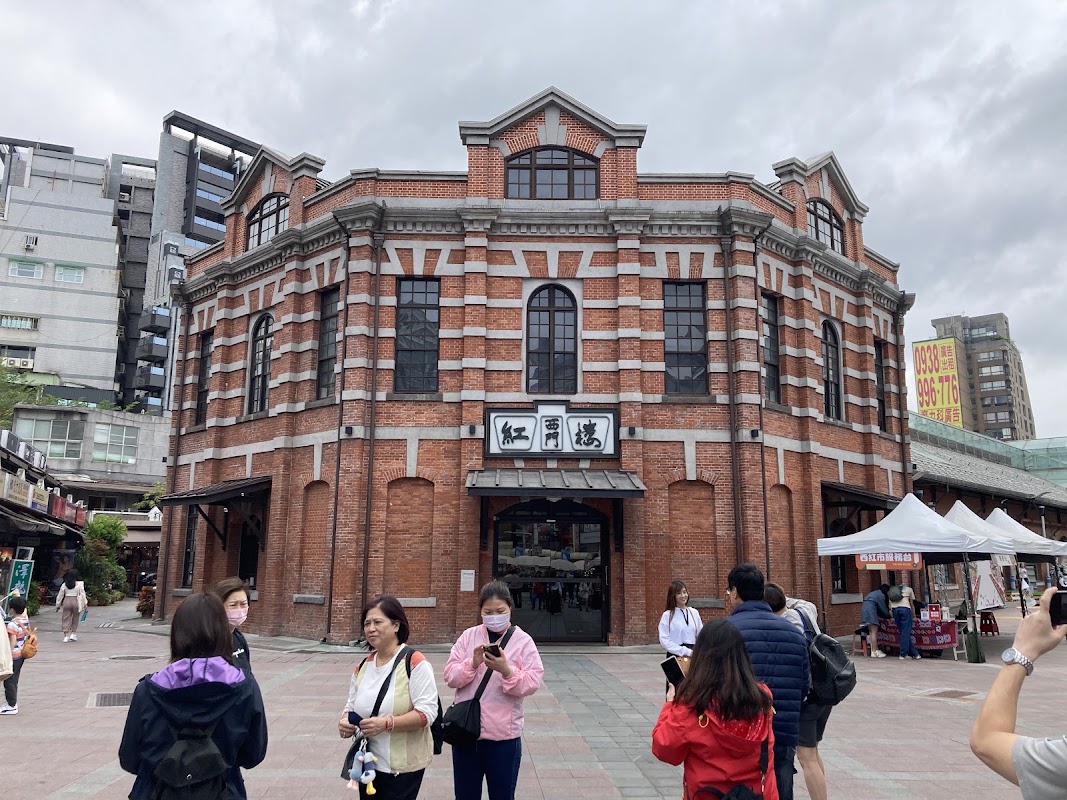
📍 Address: No. 10號, Chengdu Rd, Ximen Village, Wanhua District, Taipei City, Taiwan 108
The ‘Ximen Red House,’ with its beautiful red-brick construction, stands as an overwhelming landmark of Ximending. This building, which from a distance might resemble Tokyo Station, was constructed in 1908 during the Japanese colonial era as Taiwan’s first public market. Designed by Japanese architect Juro Kondo, who was active in the Taiwan Governor-General’s Office, it features a very rare design in both Eastern and Western architectural history: an ‘octagonal’ entrance (symbolizing people gathering from all directions) followed by a ‘cross-shaped’ market section.
After the war, it became a cinema (Red House Theater), serving as an entertainment venue for young people, and was designated a historical monument in 1997. In 2000, it suffered a tragic fire, and severe burn marks still remain blackened at the junction of the cross-shaped and octagonal sections, silently telling its harsh history. After extensive renovation, it has now been reborn as an important hub for Taiwan’s ‘Wen-Chuang (cultural and creative industries).’
The select shops inside the building are packed with stylish retro-modern goods and accessories by young Taiwanese designers, making it perfect for finding unique souvenirs. Also, symbolizing Taiwan’s diverse society, the restrooms include gender-neutral facilities alongside separate male and female toilets. There are many open-air cafes and bars nearby, where you can enjoy drinks in the evening while admiring the beautifully lit-up red bricks.
Rainbow Six
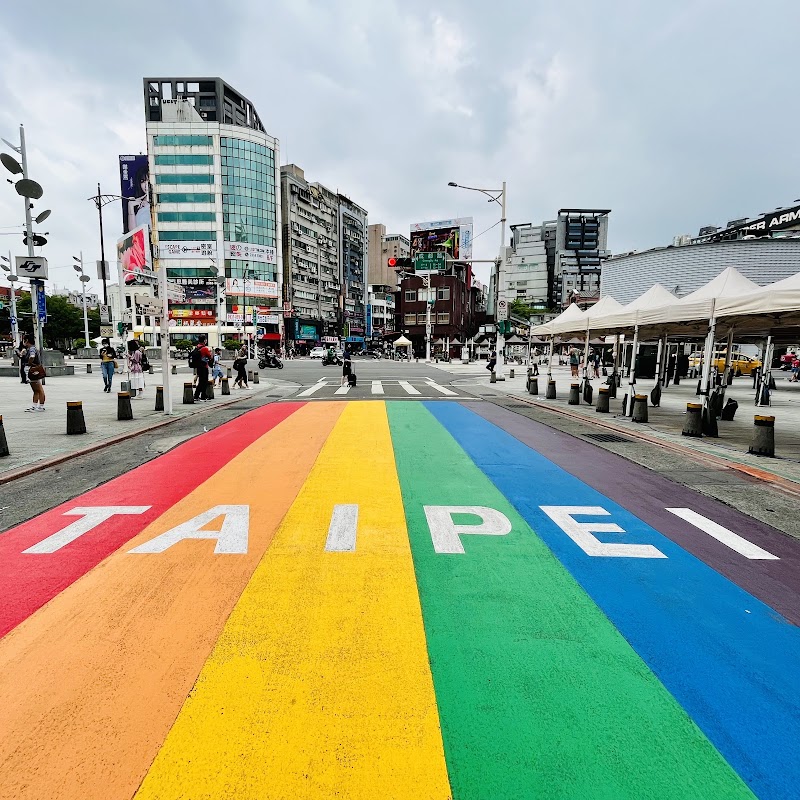
📍 Address: No. 116, No. 120, Hanzhong St, Ximen Village, Wanhua District, Taipei City, Taiwan 108
Immediately outside MRT Ximen Station’s Exit 6, you’ll find ‘Rainbow Six,’ a trending photo spot on social media. This vibrant rainbow-colored street art, spelling out ‘TAIPEI’ on the road, was created in 2019 to commemorate Taiwan becoming the first country in Asia to legalize same-sex marriage. It stands as a powerful symbol of Ximending’s ‘tolerance for diversity’ and ‘respect for human rights and gender equality.’
Though just a part of a crossroads, its pop and colorful hues are incredibly photogenic, constantly attracting many young people and tourists taking selfies with their smartphones. As it’s on a road with traffic, you must pay attention to surrounding conditions when taking photos. Since it tends to be very crowded from daytime into the evening, making it difficult to get the desired shot, visiting in the early morning (around 8-9 AM) before rush hour is highly recommended for clear, Instagram-worthy photos.
Xihonjinji Square
📍 Address: No. 174號, Section 1, Zhonghua Rd, Xinqi Village, Wanhua District, Taipei City, Taiwan 108
A little distance from the hustle and bustle of Ximending, a tranquil space appears, as if time has stopped. This is ‘Xihonjinji Square,’ the former site of the Taiwan branch temple (Xihonjinji) of the Jodo Shinshu Honganji-ha sect, which began construction in 1922 during the Japanese colonial era. At the time, it boasted Taiwan’s largest wooden religious architecture, but many buildings, including the main hall, were destroyed in a fire in 1975 after the war.
Subsequently, after a period of dense shantytowns (juan cun) built by people who migrated from mainland China, extensive development and restoration took place from the 2000s onwards. While the temple itself no longer stands, the preserved remnants include the imposing ‘Bell Tower,’ the ‘Stone Steps’ that formed the foundation of the main hall, and the ‘Rinban-sho’ (monk’s quarters), serving as a relaxing park for local residents.
On the walls of the square, there are stone tablets and a museum explaining Taiwan’s complex history, allowing visitors to deeply feel Taiwan’s journey from the Japanese colonial period to the post-war turmoil. The contrast of immersing oneself in the charm of Japanese-style houses and historical romance right next to modern Ximending is a strong draw for many travelers. By the way, the restrooms within the grounds are Japanese-style but free to use, making it a convenient resting spot during sightseeing.
Deep Tips for Enjoying Ximending Sightseeing
To help you enjoy Ximending 120%, here are some real insider tips that travelers should know.
Beware of Street Food Traps
Ximending boasts many attractive food stalls and vendors, but exercise a little caution with roadside ‘cut fruit sellers.’ While tempting to buy cold watermelon on a hot day, some cases charge exorbitant prices relative to local costs, sometimes nearly 900 JPY (approx. 180 NTD) for weighed portions. It’s safer to fill up on cheap and delicious beef noodles (approx. 160 NTD) or xiaolongbao, and purchase desserts from shops with clearly marked prices.
Restroom Situation and What to Bring
In older facilities and station restrooms in Taiwan, it’s common for toilet paper not to be provided, or for a rule to exist where paper cannot be flushed and must be disposed of in a bin. While the clean gender-neutral restrooms at Ximen Red House are an exception, it’s strongly recommended to always carry pocket tissues or wet wipes as a precaution.
The Changing Faces of the City by Time of Day
Ximending has a strong ‘night city’ aspect, and most shops are closed in the morning. If shopping is your main goal, visit from afternoon to evening. For enjoying street food and the vibrant neon atmosphere, the best time is after 7 PM when the night market truly comes alive. Conversely, for photography at Rainbow Six or a quiet historical stroll at Xihonjinji Square, it’s a smart strategy to divide your objectives by time, such as visiting in the less crowded morning.


