

Known as the ‘Island of the Gods,’ Bali, Indonesia, offers more than just beautiful beaches and resorts. Its profound history and culture of prayer, which permeate the entire island, are what truly captivate countless travelers.
This time, we introduce five carefully selected spots that every visitor, from first-timers to repeat travelers, absolutely must experience in Bali. Beyond typical guidebook history, we’ve packed this guide with truly useful ‘insider information’ for your trip, including the best times to visit, tips to avoid crowds, measures against mischievous monkeys, and the authentic etiquette for holy bathing.
Tanah Lot Temple
📍 Address: Beraban, Kediri, Tabanan Regency, Bali 82121, Indonesia
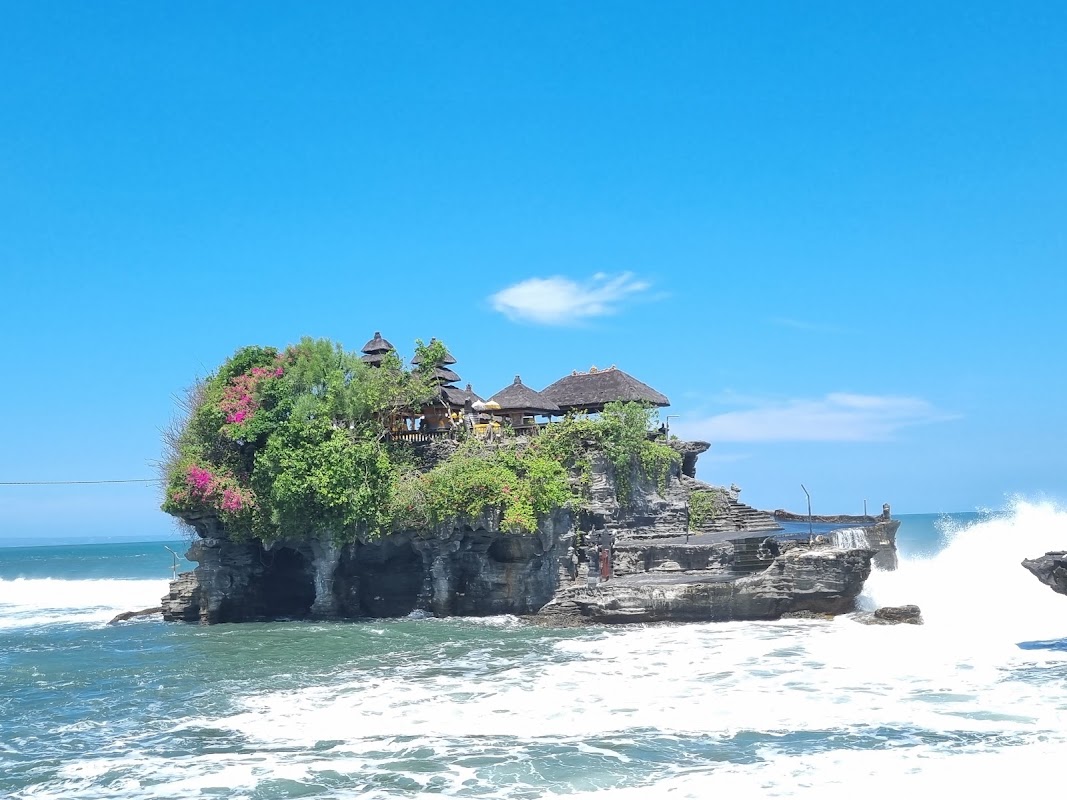
Counted as one of Bali’s six principal temples, Tanah Lot Temple is renowned for its mystical silhouette, appearing to float on the sea. Its origins date back to the 16th century, when the high priest Dang Hyang Nirartha from Java visited this site, deeming it ‘a suitable place for the gods to descend,’ and thus established a temple dedicated to the sea gods.
The temple’s greatest charm is undoubtedly its breathtaking contrast with the sunset over the Indian Ocean. During sunset, spectacular views unfold, with the high waves and rugged rock formations creating an overwhelming presence. However, traffic to the access roads can be severely congested around sunset, so it’s essential to allow ample time in your schedule.
On the other hand, for those who wish to ‘avoid traffic and crowds’ or ‘take photos leisurely,’ visiting in the morning or early afternoon is recommended. You can enjoy the cool sea breeze and a tranquil atmosphere, as if you have the stunning view all to yourself.
Additionally, during low tide, it’s possible to walk across to the rocky outcrop where the main temple stands (access to the main temple structure itself is restricted for religious reasons). In a cave on the coast, there’s a nest of sea snakes, considered guardians of the temple. For a small offering, you can witness them along with holy water—a truly unique experience. While you might not be able to cross on days with high waves, the sight of the temple amidst the crashing waves is also well worth seeing.
Monkey Forest
📍 Address: Jl. Monkey Forest, Ubud, Kecamatan Ubud, Kabupaten Gianyar, Bali 80571, Indonesia
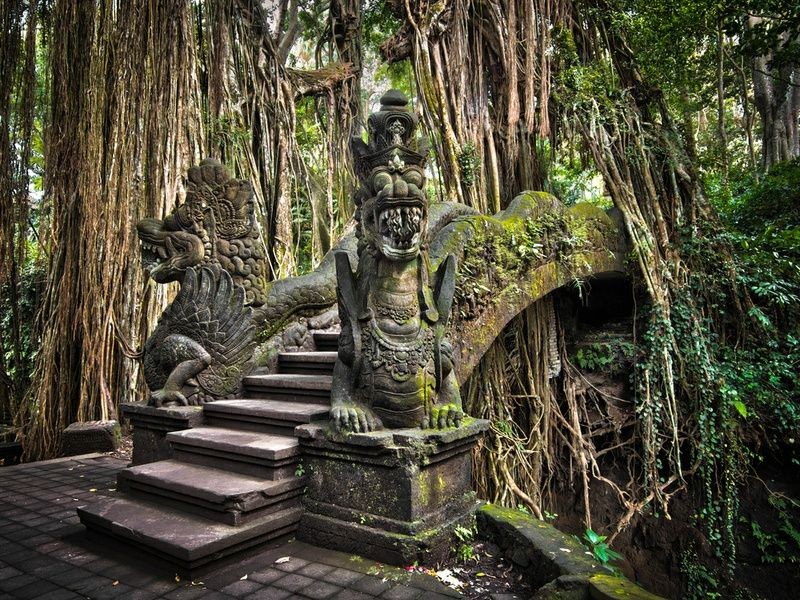
The ‘Monkey Forest’ (Sacred Monkey Forest), located very close to the center of Ubud, is not merely a zoo or a tourist attraction. It is a sacred nature reserve imbued with deep spirituality, preserved based on the Balinese Hindu philosophy of ‘Tri Hita Karana’ (harmony between God, humans, and nature).
Within the dense forest, where moss-covered ancient temples and giant banyan trees grow luxuriantly, hundreds of wild long-tailed macaques live freely. The charm lies in being able to observe their behavior up close, much like a human society—baby monkeys playing in the pond, adult monkeys grooming each other, and more.
However, the monkeys are very accustomed to humans and are clever, so utmost caution is required with your belongings. They can skillfully unzip backpacks to snatch water bottles or jump at shiny keychains and sunglasses. When walking through the park, make sure to store easily targeted small items deep inside your bag. Also, you might encounter scenes where some tourists irritate the monkeys by feeding them sweets or trying to touch them forcibly; this is dangerous, so absolutely do not imitate them. The golden rule is to maintain distance and enjoy their natural behavior.
On some days, free dance shows and events are held, offering hospitality-filled experiences such as inviting audience members onto the stage to dance together.
Tirta Empul Temple
📍 Address: Tampaksiring, Gianyar Regency, Bali 80552, Indonesia
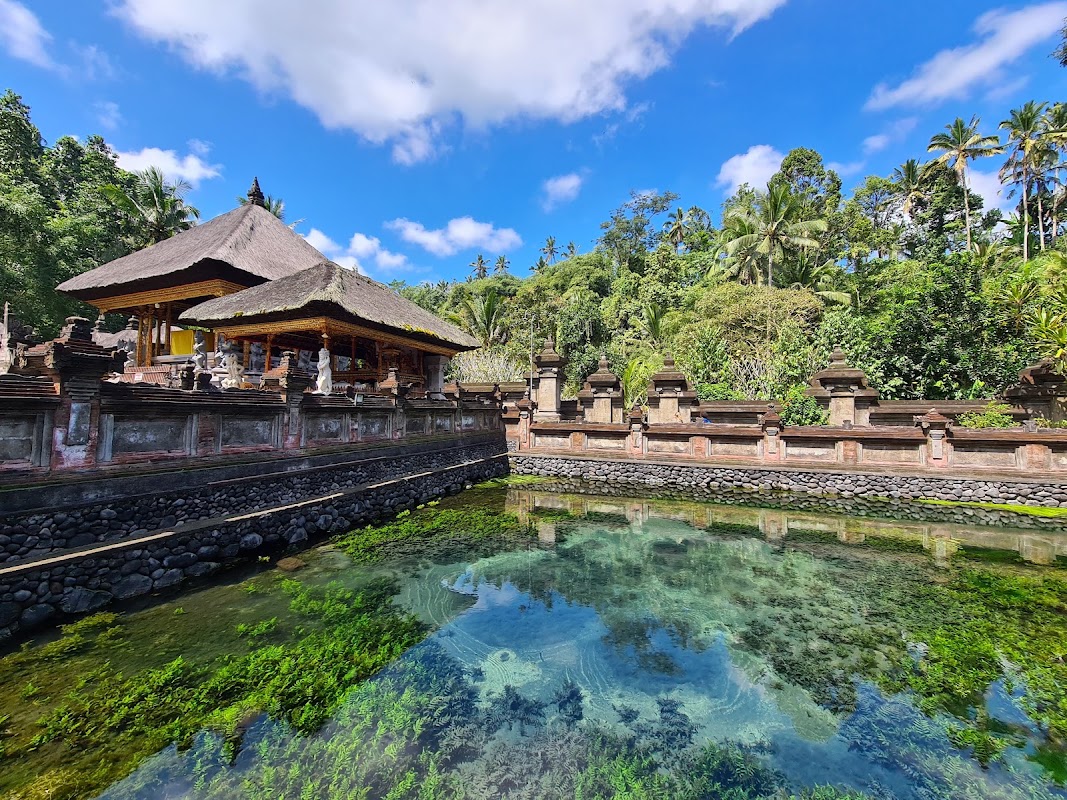
Located north of Ubud, Tirta Empul Temple is a historic site believed to have been discovered during the Warmadewa dynasty, which flourished from the 10th to the 14th century. ‘Tirta’ means water and ‘Empul’ means holy, and pristine springs continuously gush forth within its grounds. Registered as a UNESCO World Heritage site, it is a powerful spiritual spot where Balinese people come to purify themselves.
A major feature is that tourists can also experience the ‘Melukat’ purification ritual, but there are rules to follow. Numerous holy water spouts line the bathing area walls, and the correct procedure is to proceed in order ‘from the leftmost to the right.’ At each spout, offer a prayer and immerse your face and head three times in the water. An absolute caution here is that some spouts on the right side are ‘for rituals to mourn the deceased.’ To avoid mistakenly bathing in them, it’s best to hire a local guide or carefully observe the movements of the locals before entering the water.
Furthermore, wearing a sarong (waist wrap) is mandatory for temple entry, and they are available for free rental. However, a common complaint is that since many people use them, ‘the smell can be quite strong.’ If you are sensitive to smells, a smart tip is to purchase an inexpensive sarong in advance at a local market and bring it with you. Also, water sold around the parking area might be overpriced at tourist rates (several times the usual), so it’s recommended to purchase drinking water beforehand at a supermarket. The exit path is deliberately designed to lead you through a long stretch of souvenir shops, so don’t rush; enjoy the bargaining as you make your way through.
Uluwatu Temple
📍 Address: Pecatu, South Kuta, Badung, Bali, Indonesia
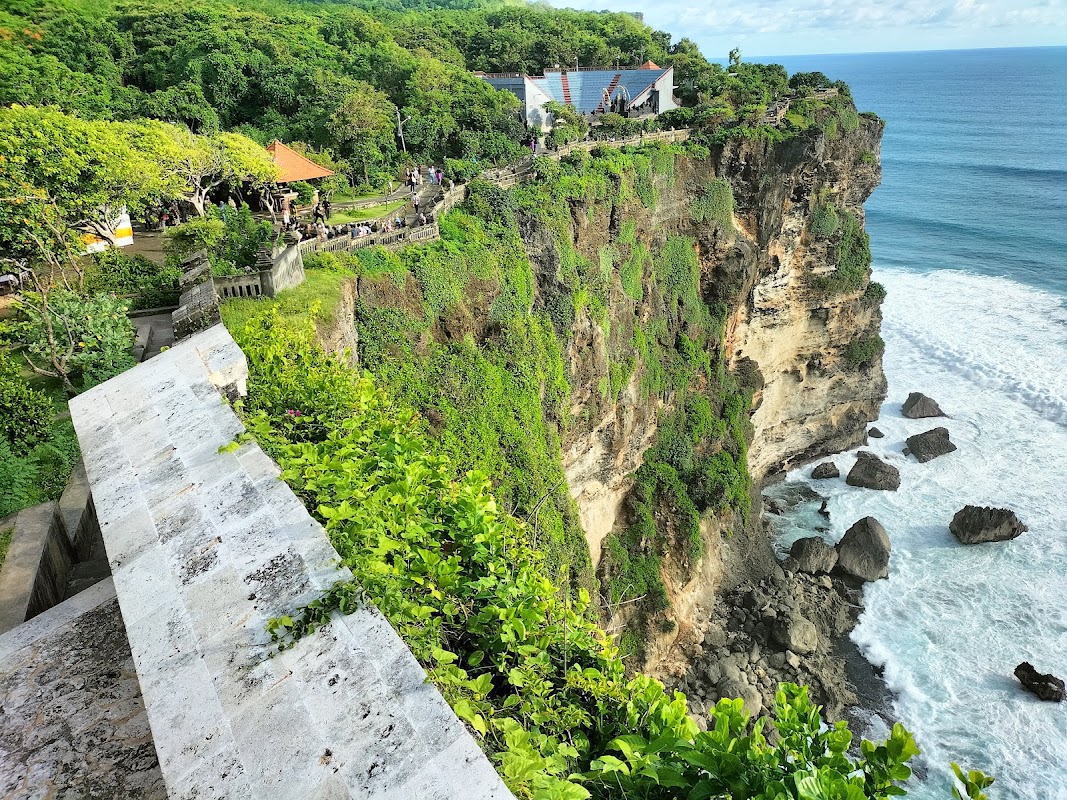
Perched on a dramatic 70-meter-high cliff overlooking the Indian Ocean on Bali’s southern Badung Peninsula is Uluwatu Temple. This temple, believed to protect the island from evil sea spirits, is known as one of Bali’s premier sunset viewing spots.
An absolute must-see here is the ‘Kecak Dance’ (Kecak) performance, which begins at dusk. Without any musical instruments, dozens of bare-chested men form a circle and chant the distinctive ‘chak, chak, chak’ sound to create a mesmerizing rhythm—it’s simply spectacular. The narrative, based on the ancient Indian epic ‘Ramayana,’ unfolds, culminating in a powerful scene where Hanuman, the white monkey god, kicks fire. The experience of the sky’s gradients as the sun sets, fused with the mystical fire dance, is sure to become a lifelong memory.
However, due to its immense popularity, seating is first-come, first-served. To secure good seats, it’s best to queue at least an hour before admission begins. As there’s no roof to block the setting sun, preparation with hats, portable fans, and hydration is essential. Wild monkeys also inhabit this area, and they are incredibly cunning, specifically targeting smartphones and selfie sticks. Scenes resembling a ‘monkey show’ where staff retrieve stolen items and demand tips have been observed, so be extra vigilant with your belongings. After the performance, the single road causes enormous traffic jams, so while savoring the afterglow, it’s a smart tip to get into your car early to reduce stress on your way back.
Ubud Royal Palace
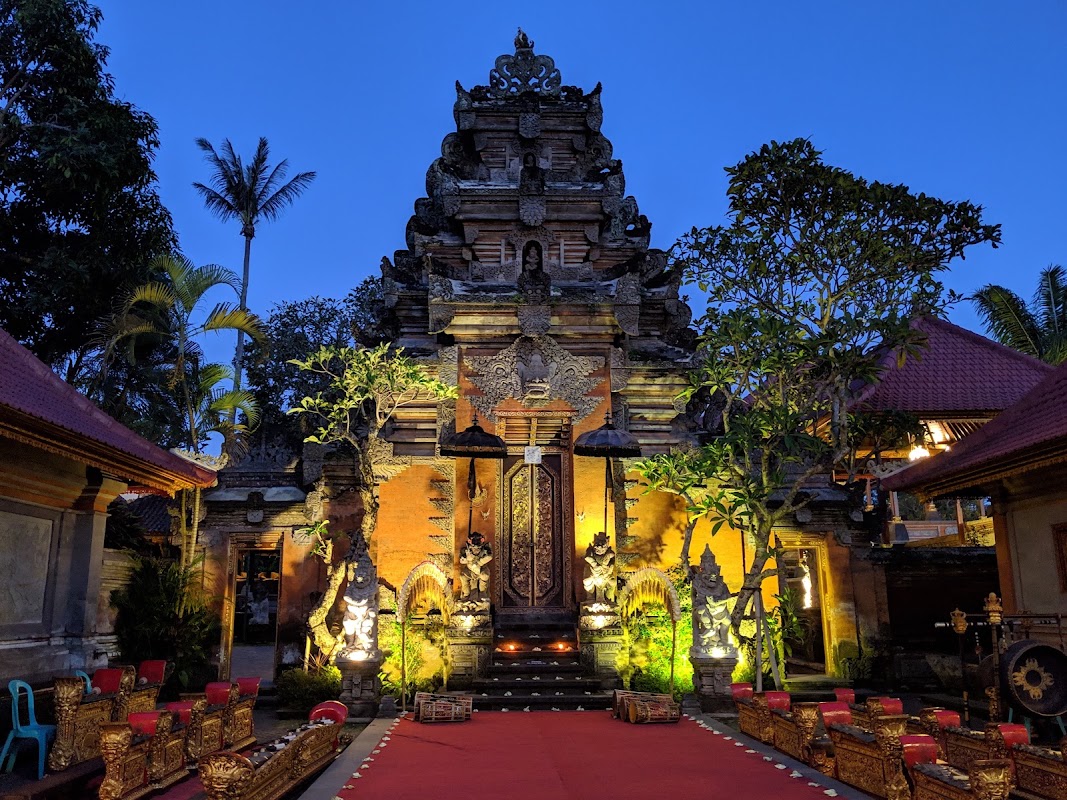
📍 Address: F7V7+72R, Jl. Raya Ubud No.8, Ubud, Kecamatan Ubud, Kabupaten Gianyar, Bali 80571, Indonesia
Located right next to the intersection in the heart of Ubud, Ubud Royal Palace (Puri Saren Agung) is a historic complex where the Ubud royal family has resided, with descendants still living in parts of it today. Its central location in Ubud makes it easily accessible, and what’s more, admission to explore the grounds is free! You can admire the intricate carvings and beautiful gates of traditional Balinese architecture up close, allowing you to imagine its former glory.
While it’s a serene historical site during the day, by night, the palace courtyard transforms into a vibrant stage. Traditional dances like the ‘Legong Dance,’ featuring dancers in dazzling costumes accompanied by live Gamelan music, are held nightly (paid admission for performances), offering a magical evening experience.
Tickets can be purchased from within the palace or at nearby information centers during the day, but seating is free style, not assigned. If you arrive just before the show starts, you’ll likely be left with standing room at the back or seats with obstructed views. Therefore, if you wish to enjoy the performance from good seats, it’s recommended to arrive at least 15 to 30 minutes before the start. As it’s entirely outdoors, evening performances during the wet season can sometimes be interrupted by sudden downpours. It’s wise to bring rain gear just in case. Also, be very careful when crossing the road in front of the palace, as many motorcycles speed past.
Local Tips to Enjoy Your Bali Trip 120%
Getting around Bali can be challenging as public transportation is limited, and massive traffic jams on single roads are commonplace. Therefore, to visit attractions efficiently and comfortably, the best option is to utilize a ‘car charter’ and ask a local driver who knows the roads well for shortcuts.
Furthermore, in Bali’s temples, where Hindu faith is deeply rooted, revealing clothing (such as tank tops or short shorts) is considered inappropriate. While most temples offer sarongs (waist wraps) for rent, buying an inexpensive sarong with a pattern you like at Ubud Market beforehand will not only make for better photos but also allow you to visit temples comfortably from a hygiene perspective. While showing respect for these sacred places, enjoy an unforgettable trip to Bali!


'%3E%3Cpath%20stroke='%23000'%20stroke-width='4'%20d='m-35-37-13%2020m5%203%2013-20m5%203-13%2020m63%2042%206-9m1-2%206-9m5%203-6%209m-1%202-6%209m5%203%206-9m1-2%206-9m-96%200%2013%2020m5-3-6-9m-1-2-6-9m5-3%2013%2020m63-42-6-9m-1-2-6-9m5-3%2013%2020m5-3-6-9m-1-2-6-9'/%3E%3Ccircle%20r='24'%20fill='%23cd2e3a'/%3E%3Cpath%20fill='%230047a0'%20d='M0%200a12%2012%200%201%201%2020%2013%2024%2024%200%201%201-40-26A12%2012%200%201%200%200%200'/%3E%3C/g%3E%3C/svg%3E)
'/%3E%3Cpath%20fill='%23b2b2b2'%20d='M241%20382q0%2016%2017%2026%2017%2011%2042%2011t42-11q16-11%2017-26V269H241'/%3E%3Cpath%20fill='%239f7e00'%20d='M241%20379q0%2014%208%2023%209%209%2021%209%2014%200%2021-9%209-9%209-23V269h-59'/%3E%3Cpath%20d='M241%20339v-70h59v110q0%2014-9%2023l-6%205v-68h-15v72q-8%200-14-4v-68zm59%2040c0%2022%2015%2032%2029%2032%2021%200%2030-18%2030-32v-40h-59'/%3E%3Cpath%20fill='%239f7e00'%20d='M266%20277v5h2v12h-3v-5h2v-5h-9v5h2v5h-4v9h3v18h-5v10h34v-10h-5v-18h3v-9h-4v-5h2v-5h-9v5h2v5h-3v-12h2v-5zm42%20101q0%2010%206%2017%206%206%2015%207%2010-1%2016-7%206-7%206-17v-29h-43'/%3E%3Ccircle%20fill='%230044ad'%20cx='329.5'%20cy='372'%20r='6'/%3E%3Cellipse%20fill='%230044ad'%20cx='300'%20cy='340'%20rx='16'%20ry='21'/%3E%3C/svg%3E)


