

Discover the Two Faces of Manila, the Capital of the Philippines
Manila, the vibrant capital of the Philippines, is a fascinating city where the energy of a rapidly growing metropolis intersects with a rich history dating back to the Spanish colonial era. While it embodies the bustling charm of Southeast Asia, a turn into a side street can transport you to a European-esque cobblestone alley, and at dusk, you might witness a breathtaking sunset, renowned as one of the world’s top three.
However, with its scattered attractions, aimless wandering in Manila is ill-advised. Knowing in advance about the intense heat, traffic, and specific rules for tourist areas will significantly enhance your travel experience. This time, we’ve carefully selected five essential ‘Manila tourist attractions’ that offer particularly rich information and local insights. We’ll provide real-world tips, covering not just textbook history, but also the local atmosphere, crowd-avoidance strategies, and deeper points of interest.
Manila Cathedral
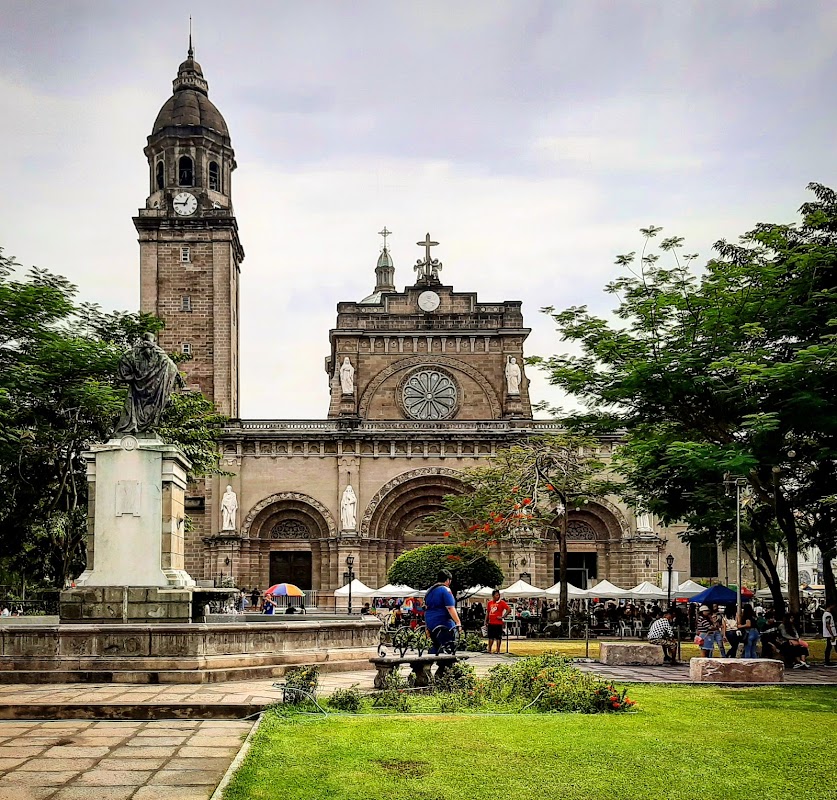
📍 Address: Cabildo, 132 Beaterio St, Intramuros, Manila, 1002 Metro Manila, Philippines
Rising majestically in the heart of Manila’s historic walled city, Intramuros, stands Manila Cathedral. It’s a classic must-visit for any traveler to Manila. Since its original construction in 1571, the cathedral has been destroyed multiple times by earthquakes, typhoons, and the ravages of World War II. The current magnificent Neo-Romanesque structure, rebuilt in 1958, is its ‘eighth’ iteration.
Stepping inside, you’re immediately enveloped in a profound sense of quietude and sacredness, a stark contrast to the intense heat and bustle outside. The light streaming through the high stained-glass windows is breathtaking, and the solemn atmosphere created by what is said to be one of Asia’s largest pipe organs makes you momentarily forget you’re in the Philippines. If you’re lucky enough to witness a solemn mass, you might even see visitors moved to tears by the priest’s blessing – it’s truly a deeply resonant space.
A crucial point to remember when visiting is that this is primarily a ‘place of worship’. While it is a tourist attraction, etiquette is strictly enforced; wearing hats inside will quickly draw a warning, so always remove them at the entrance. Also, around Plaza Roma, the square in front of the cathedral, many peddlers offering ‘kalesa’ (horse-drawn carriages) await. While taking a carriage to escape the scorching sun is an option, it’s advisable to firmly decline any overly persistent solicitations.
San Agustin Church
📍 Address: General Luna St, Intramuros, Manila, 1002 Metro Manila, Philippines
Located not far from Manila Cathedral, ‘San Agustin Church’ is the Philippines’ oldest stone church, with construction beginning in 1587 and completed in 1607. While surrounding buildings crumbled due to numerous natural disasters and wars, this church miraculously survived, and it is now Manila’s sole UNESCO World Cultural Heritage Site (part of the Baroque Churches of the Philippines).
The church’s greatest highlight is the magnificent ‘trompe l’oeil’ painting on the arched ceiling of the main chapel. What appears at first glance to be elaborate three-dimensional sculptures are, in fact, painted on a flat surface. This visual trickery is breathtakingly beautiful. While photography is prohibited in some areas, climbing to the second floor from the adjacent former monastery museum (which requires an entrance fee) offers a panoramic view of the entire chapel that you absolutely must engrave in your memory.
The museum area is also incredibly impressive. You can feel the echoes of the monks’ lives, from the solemn cloisters and ancient religious paintings dating back to the Spanish colonial era. The surrounding cobblestone streets exude a European charm, and it’s a delight to browse the local markets selling handmade sweets and accessories during a stroll. However, like around the cathedral, there are many touts, so it’s best to visit during bright daytime hours.
Fort Santiago
📍 Address: Intramuros, Manila, 1002 Metro Manila, Philippines
Located at the northwestern tip of Intramuros, ‘Fort Santiago’ is a stone fortress built during the Spanish colonial period as a crucial military stronghold. Having served as a military facility and prison under the rule of various nations—Spain, America, and even the Japanese army—this site is an important spot where you can vividly experience the turbulent modern history of the Philippines.
Particularly noteworthy is the ‘Rizal Shrine’ located deep within the grounds. This building served as the prison where Jose Rizal, the national hero of the Philippine independence movement, was confined just before his execution by firing squad in 1896. His footsteps are preserved as they were. For locals, this is a vital site for historical education, and you’ll often see students intently listening to guides. It is a sacred place that commands immense popularity and respect from Filipinos, even more so than from international tourists.
A practical tip for sightseeing: the fortress grounds are much larger than they appear, and there are few shaded areas. Therefore, visiting in the relatively cooler morning hours is highly recommended. Comfortable walking shoes, a sun umbrella, and insect repellent are essential, as there are many riverside and green areas. You can access the entrance directly via Grab taxi, allowing you to explore smartly while conserving energy.
Ayala Museum
📍 Address: Makati Avenue, corner Dela Rosa Street, Ayala Center, Makati City, 1229 Metro Manila, Philippines
After immersing yourself in Spanish colonial history in Intramuros, consider visiting the ‘Ayala Museum’ in the modern and sophisticated Makati district. Operated by the Philippines’ massive conglomerate, Ayala Corporation, this museum is adjacent to large shopping malls like Greenbelt, offering a cool and comfortable space to delve into the depths of Philippine history and art. The entrance fee of 750 pesos for adults (subject to change) might seem high considering the cost of living in the Philippines, but it undeniably offers value beyond its price.
The museum’s biggest highlight is the ‘Gold of Our Ancestors’ exhibition on the top floor (4th floor). Here, over 1,000 gold artifacts excavated from various parts of the Philippines dating back to the pre-Hispanic era are meticulously displayed. From sacred gold chains weighing about 4kg to intricately adorned masks, this impressive collection eloquently illustrates the advanced civilization and wealth that existed in the Philippines before colonization.
Additionally, the ‘Historical Dioramas’ spread across the first and second floors are another interesting highlight. Divided into 60 scenes, they intricately recreate the journey of the Philippines from its hunting era through colonial rule to independence, using detailed miniatures. While many tourist websites state ’10 AM opening,’ the actual opening time has sometimes shifted to 11 AM, so it’s safer to plan your schedule with some flexibility.
Manila Bay Sunset (Manila Bay Beach)
📍 Address: 1909 Radial Rd. 10 Tondo, Ermita, Manila, 1000 Metro Manila, Philippines
The sunset over Manila Bay, celebrated as one of the ‘world’s three greatest sunsets’ alongside Bali and Kushiro Wetlands, is a truly spectacular sight, perfect for concluding your Manila tour. The magic hour, as the sky and sea transform moment by moment into hues of orange, pink, and purple, is particularly well-viewed from the recently developed artificial ‘Manila Bay Beach’.
However, there are a few ‘real-world caveats’ you should know to fully appreciate this spectacular view. First, there’s a security check to enter the beach area, and bringing plastic bottles is strictly prohibited (you’ll be instructed to discard them before entry). Moreover, it’s not a sandy beach but rather a coarse, rocky shore that crunches underfoot, making it unsuitable for barefoot walking like a resort beach.
Another point of caution is access. At dusk, Roxas Blvd, the coastal road, experiences severe traffic congestion. If using Grab, it’s smoother to set your pick-up/drop-off point slightly before the crowded area on the Malate side or near a pedestrian bridge, rather than right in the middle of the congestion. Also, Manila Bay is often cloudy, so whether you’ll see a perfect sunset is somewhat ‘up to chance’. The sky is most beautifully painted right after the sun sets, so don’t leave immediately; linger a bit to fully enjoy the magic hour – that’s the connoisseur’s way.
Maximizing Your Manila Sightseeing Experience: Essential Tips
Manila’s tourist attractions boast entirely different vibes depending on the area. The Intramuros district can be brutally hot for walking, so the classic itinerary is to focus on exploring it in the early morning hours, then moving to the Makati district (Ayala Museum, etc.) or large malls in an air-conditioned taxi after midday.
Furthermore, it can be difficult to hail a taxi in historical districts like Intramuros, so using the ride-hailing app ‘Grab’ is highly recommended for transportation. It helps prevent overcharging and ensures you reach your destination comfortably in an air-conditioned vehicle. Manila’s charm grows the more you delve into its history. If you research a little about heroes like Jose Rizal and the backdrop of Spanish rule before your visit, each stone wall will reveal a different story.


