
![[2026 Update] Must-Visit Kaohsiung! 5 Top Attractions & Essential Local Eats](https://images.unsplash.com/photo-1677607220167-1abe92f648b0?crop=entropy&cs=tinysrgb&fit=max&fm=jpg&ixid=M3w5MDExNDh8MHwxfHNlYXJjaHw0fHxLYW9oc2l1bmclMjBUYWl3YW4lMjBsYW5kc2NhcGV8ZW58MHwwfHx8MTc3NzAxMDQ3Nnww&ixlib=rb-4.1.0&q=80&w=1080 "[2026 Update] Must-Visit Kaohsiung! 5 Top Attractions & Essential Local Eats")
Kaohsiung: Where Southern Taiwan’s Vibrancy Meets Port City Charm
As Taiwan’s second-largest city, Kaohsiung boasts a warm climate year-round and an open, welcoming atmosphere characteristic of a port city. Easily accessible from Taipei by Taiwan High-Speed Rail (THSR) in about 1.5 to just under 2 hours, day trips are possible, but we highly recommend staying for several days to leisurely soak in the local vibe.
In recent years, the complete loop of the city’s LRT (Light Rail Transit) has dramatically improved access to previously hard-to-reach bay areas and tourist attractions. From cutting-edge art spaces housed in renovated old buildings to bustling night markets swirling with old-school Taiwanese energy, and power spots imbued with magnificent nature and history, Kaohsiung presents a multitude of faces.
This article picks out five ‘must-visit’ attractions for travelers to Kaohsiung. Beyond mere spot introductions, we provide real insider information, including the best times to visit, local favorite must-try foods, and unique deep insights.
Formosa Boulevard Station: The Dome of Light
📍 Address: No. 115, Zhongshan 1st Rd, Sinsing District, Kaohsiung City, Taiwan 800
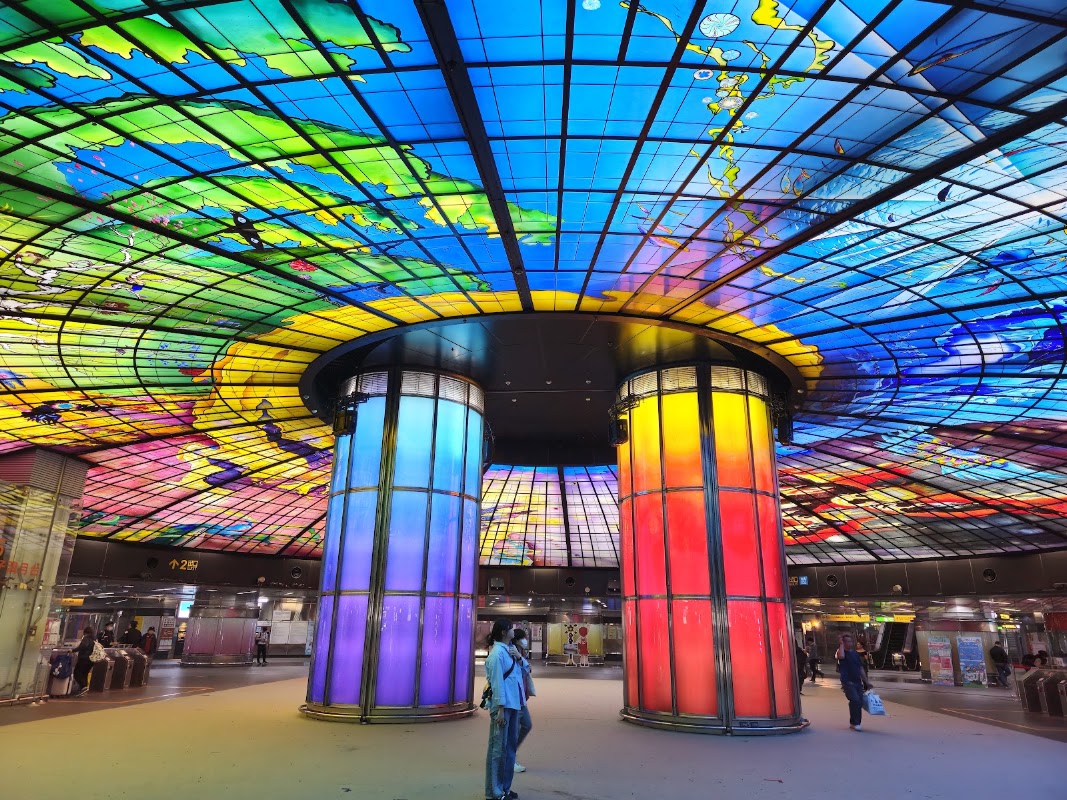
Formosa Boulevard (Meilidao) Station, a major MRT hub, can be considered the starting point for Kaohsiung tourism. More than just a transit point, the station itself is an art space akin to a world-class museum. It’s renowned for once being ranked among the ‘world’s most beautiful subway stations’ by a British newspaper.
As you descend to the B1 concourse outside the ticket gates, you’re greeted by the magnificent ‘Dome of Light,’ a colossal stained-glass dome spanning 30 meters in diameter. Crafted over four and a half years by Italian stained-glass artist Maestro Narcissus Quagliata, this masterpiece utilizes 4,500 pieces of glass to depict human history and the cycle of life through the four elements: ‘water, earth, light, and fire.’ Its rich colors and overwhelming scale consistently captivate travelers, who often pause in awe amidst the hurrying locals.
Beneath the dome, a light and music show is performed several times a day. While catching a show is a treat, even outside showtimes, projection mapping videos are often displayed on the floor, offering plenty to enjoy. Beyond the underground stained glass, pay attention to the station’s entrances and exits above ground. Designed by Japanese architect Shin Takamatsu, the glass structures, inspired by the ‘gassho’ (praying hands) gesture, are striking landmarks in their own right.
Liuhe Night Market
📍 Address: Liuhe 2nd Rd, Sinsing District, Kaohsiung City, Taiwan 800
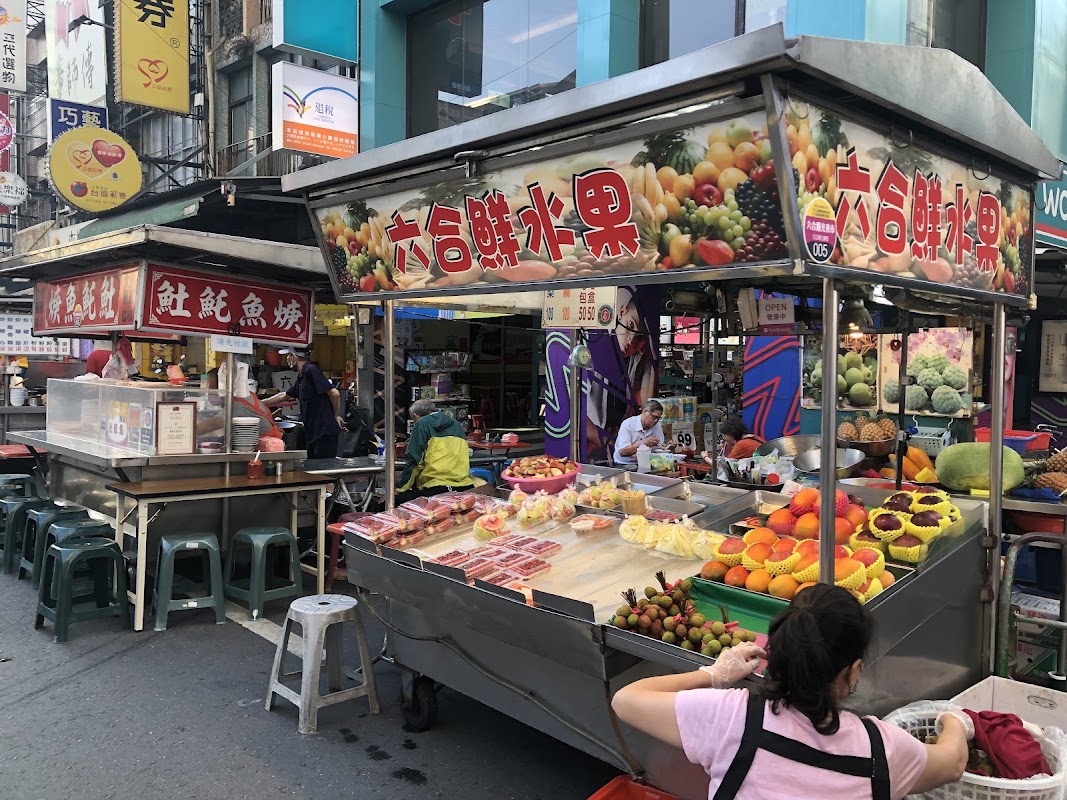
Just a short walk from Exit 11 of Formosa Boulevard Station, ‘Liuhe Night Market’ boasts excellent accessibility. As one of Kaohsiung’s premier tourist night markets, it’s a culinary paradise that still retains a strong local flavor. Stalls line both sides of the street, but the pedestrian-only thoroughfare is exceptionally wide, eliminating the cramped feeling of other night markets. This allows even travelers with strollers or children to comfortably enjoy wandering and eating, which is its biggest appeal.
Befitting a port city like Kaohsiung, the night market is rich in seafood stalls offering fresh shrimp, oysters, and fried squid. And one local delicacy you absolutely must try is ‘Ba-Wan’ (肉圓). Said to be the inspiration for the mysterious food in Hayao Miyazaki’s ‘Spirited Away,’ Ba-Wan is typically ‘fried’ in northern Taiwan, but here in the south, including Kaohsiung, the ‘steamed’ style is common. With a chewy, springy skin filled with meat, it’s exquisite when paired with the sweet and savory sauce and garlic. Popular stalls might use queue tickets or number systems, so don’t hesitate to order if you spot one. For a refreshing palate cleanser, the rich ‘Papaya Milk’ (木瓜牛乳), a staple of Taiwanese night markets, is perfect.
While stall owners might not always speak Japanese, they’re warm and eager to communicate using gestures and some English. The market truly comes alive after 6 PM. Shared tables and chairs are set up in the middle of the street, so you can gather your favorite street foods and toast with a Taiwanese beer for a perfect evening.
Dragon and Tiger Pagodas
📍 Address: No. 9, Liantan Rd, Zuoying District, Kaohsiung City, Taiwan 813
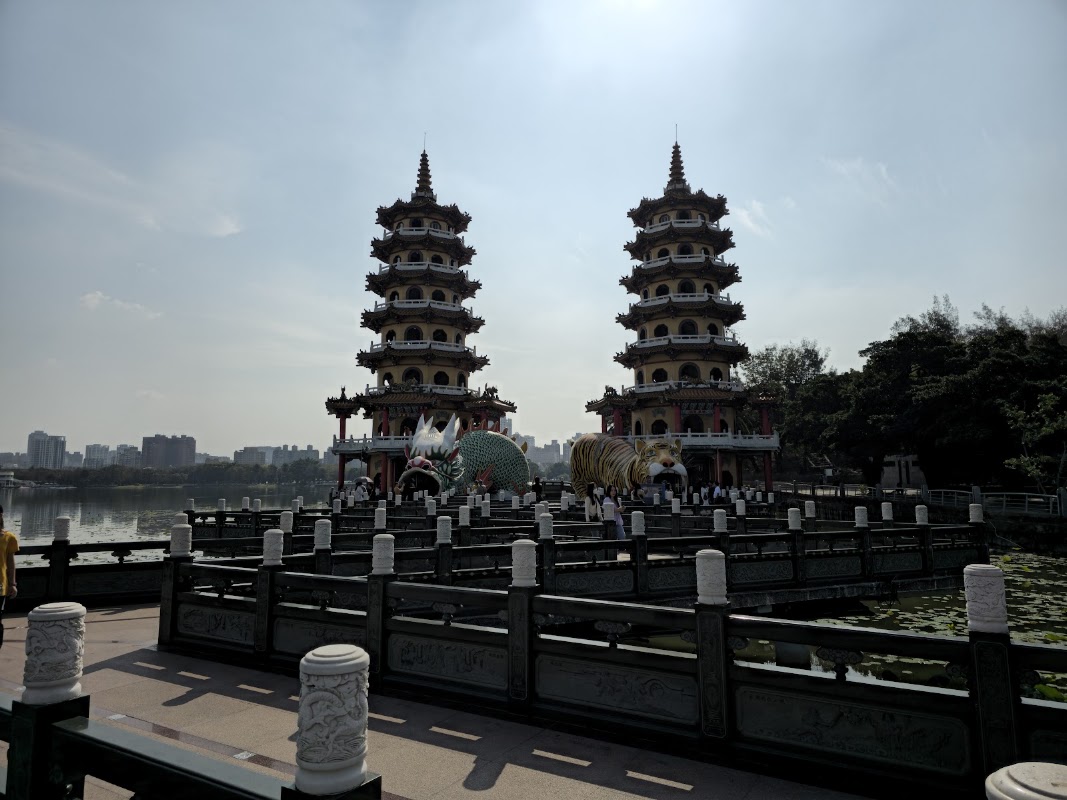
Lotus Pond (Lianchitan), located in the Zuoying area a short distance from central Kaohsiung, is one of the city’s foremost power spots, featuring colorful Taoist temples and Chinese-style pavilions lining the shores of a large lake. The twin towers of the ‘Dragon and Tiger Pagodas,’ rising majestically from the water, are arguably the most iconic symbol of Lotus Pond.
After extensive renovation work, completed in 2025, the pagodas have, as of 2026, regained their beautifully repainted, vibrant appearance. The main rule here is to ‘always enter through the dragon’s mouth and exit through the tiger’s mouth.’ In Taiwan, the dragon is considered the most benevolent animal, while the tiger is the fiercest. Following this sequence and walking through the pagodas is believed to ‘purify past sins and misfortunes, transforming them into blessings.’ Be careful not to enter through the tiger. The vividly colored Buddhist and Taoist stories (such as tales of filial piety) depicted on the interior walls are also well worth seeing.
Climbing the stairs to the upper levels of the pagodas rewards you with a breathtaking panoramic view of Lotus Pond, accompanied by a pleasant breeze. During the day, it can get very crowded with tourists, and there are few places to shelter from the strong sunlight of southern Taiwan. Therefore, the best time to visit is right after opening around 8 AM. Enjoy a leisurely stroll along the lakeside while it’s still cool, and take in the exotic Taiwanese scenery, along with nearby attractions like the Spring and Autumn Pavilions and the Five Mile Pavilion floating on the lake.
Pier-2 Art Center
📍 Address: No. 1, Dayong Rd, Yancheng District, Kaohsiung City, Taiwan 803
Located along the coast of Kaohsiung Port, the ‘Pier-2 Art Center’ is Kaohsiung’s cultural hub, transformed from a cluster of old warehouses used from the Japanese colonial era through the post-war period. Today, monumental wall art by domestic and international artists, along with unique outdoor sculptures, are scattered throughout the extensive grounds, making it a hugely popular ‘Instagrammable’ spot for young people and tourists alike, with picture-perfect scenes everywhere you look.
The vast area is divided into three main sections, with the warehouses housing trendy design goods shops, cafes, galleries, and even microbreweries as tenants. The contrast between the rugged red bricks and rusty iron doors, remnants of past industries, and the vibrant, contemporary art creates a unique atmosphere that can only be experienced here.
LRT (Light Rail Transit) tracks run through the premises, and enjoying a stroll while watching the tram slowly pass between the lawns and art installations is another pleasure. However, there’s limited shade within the area, and walking around under the scorching sun can be more draining than you’d expect. Don’t forget your parasol or hat and frequent hydration. Locals recommend visiting around sunset when the sunlight softens, allowing you to cool off in a stylish cafe while enjoying the sea breeze – a smart way to experience the center.
Former British Consulate at Takao
📍 Address: No. 20, Lianhai Rd, Gushan District, Kaohsiung City, Taiwan 804
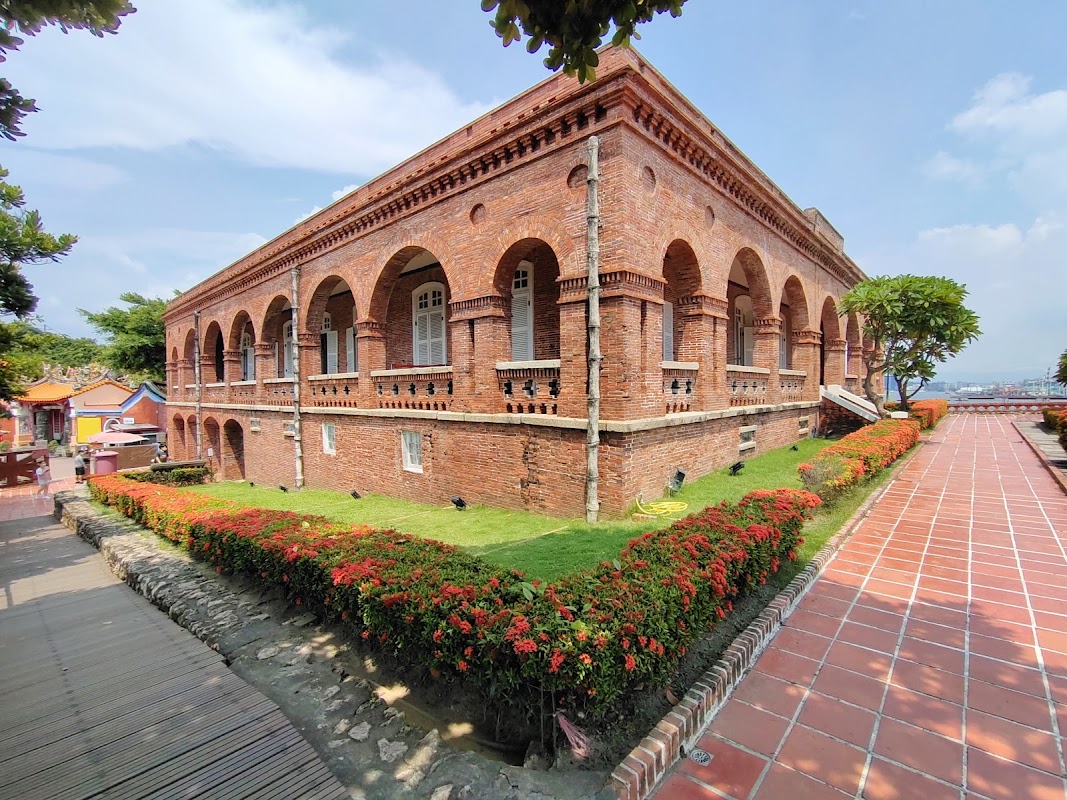
Nestled quietly on a small hill overlooking Sizihwan at the entrance to Kaohsiung Port is the ‘Former British Consulate at Takao.’ Constructed in 1879, this building is the oldest existing Western-style edifice in Taiwan. ‘Takao’ is the old name for Kaohsiung, and this consulate stands as a valuable cultural heritage site, recounting the era when the port city flourished as a Western trading hub.
The greatest allure of this consulate lies in its panoramic views from atop the hill. While it requires climbing about 140 steep steps from the base, the reward for your breathless ascent is a spectacular vista of Kaohsiung’s modern skyline, large ships traversing the waters, and the boundless expanse of the sea. Visiting specifically around sunset allows you to witness a breathtaking sunset as the sun dips into the Sizihwan sea, making it a popular romantic dating spot.
The consulate, characterized by its elegant red-brick corridors, houses historical documents from the period and also features an authentic cafe, ‘Classical Rose Garden Tea & Art.’ In a setting adorned with antique furniture or on the scenic terrace, you can indulge in a classic British-style afternoon tea, offering a graceful experience as if you’ve traveled back 100 years in time.
[Tips] Local Advice to Enjoy Kaohsiung 120%
Kaohsiung, situated further south than Taipei, is warm enough to wear short sleeves even in winter during the daytime, but the humidity and sunlight during summer (May to October) are intense. For outdoor sightseeing during the day (especially Lotus Pond and Pier-2 Art Center), it’s best to go in the early morning or evening. Cooling off indoors at cafes, museums, or department stores during the hottest afternoon hours is the fundamental local style for conserving energy in Taiwan.
Furthermore, for essential city travel on the MRT (subway), LRT (Light Rail), as well as ferries and rental bikes, all Kaohsiung’s public transportation can be smoothly utilized with a single IC card like an ‘EasyCard’ (悠遊カード) or ‘iPASS’ (一卡通). You can easily purchase and recharge these at station counters or convenience stores, so make sure to get one immediately upon arrival. The LRT, in particular, allows you to enjoy the city’s scenery while traveling, making it a recommended experience as a sightseeing attraction in itself.
Kaohsiung is a city where the convenience of a major metropolis coexists with the relaxed atmosphere unique to a tropical region. Using the spots introduced in this article as a guide, find your own favorite shops and views, and enjoy a memorable trip to Taiwan.


'%3E%3Cpath%20stroke='%23000'%20stroke-width='4'%20d='m-35-37-13%2020m5%203%2013-20m5%203-13%2020m63%2042%206-9m1-2%206-9m5%203-6%209m-1%202-6%209m5%203%206-9m1-2%206-9m-96%200%2013%2020m5-3-6-9m-1-2-6-9m5-3%2013%2020m63-42-6-9m-1-2-6-9m5-3%2013%2020m5-3-6-9m-1-2-6-9'/%3E%3Ccircle%20r='24'%20fill='%23cd2e3a'/%3E%3Cpath%20fill='%230047a0'%20d='M0%200a12%2012%200%201%201%2020%2013%2024%2024%200%201%201-40-26A12%2012%200%201%200%200%200'/%3E%3C/g%3E%3C/svg%3E)
'/%3E%3Cpath%20fill='%23b2b2b2'%20d='M241%20382q0%2016%2017%2026%2017%2011%2042%2011t42-11q16-11%2017-26V269H241'/%3E%3Cpath%20fill='%239f7e00'%20d='M241%20379q0%2014%208%2023%209%209%2021%209%2014%200%2021-9%209-9%209-23V269h-59'/%3E%3Cpath%20d='M241%20339v-70h59v110q0%2014-9%2023l-6%205v-68h-15v72q-8%200-14-4v-68zm59%2040c0%2022%2015%2032%2029%2032%2021%200%2030-18%2030-32v-40h-59'/%3E%3Cpath%20fill='%239f7e00'%20d='M266%20277v5h2v12h-3v-5h2v-5h-9v5h2v5h-4v9h3v18h-5v10h34v-10h-5v-18h3v-9h-4v-5h2v-5h-9v5h2v5h-3v-12h2v-5zm42%20101q0%2010%206%2017%206%206%2015%207%2010-1%2016-7%206-7%206-17v-29h-43'/%3E%3Ccircle%20fill='%230044ad'%20cx='329.5'%20cy='372'%20r='6'/%3E%3Cellipse%20fill='%230044ad'%20cx='300'%20cy='340'%20rx='16'%20ry='21'/%3E%3C/svg%3E)


