

Oslo Opera House
📍 Address: Kirsten Flagstads plass 1, 0150 Oslo, Norway
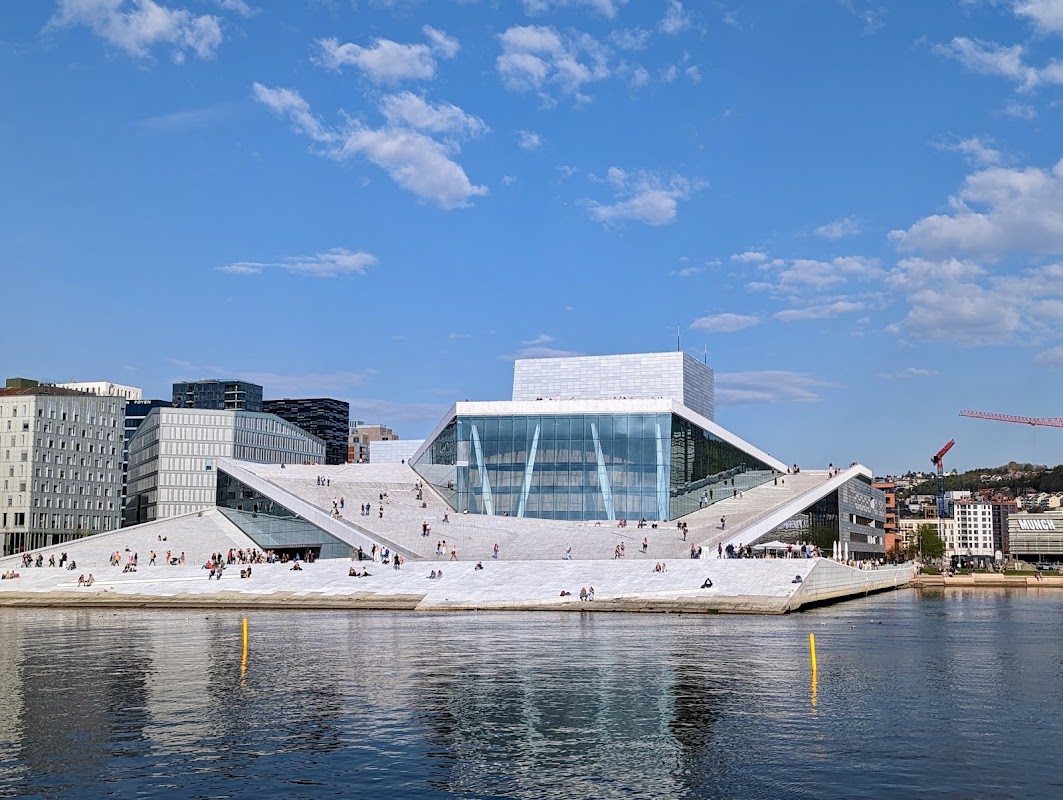
Like a massive iceberg, this dazzling white structure suddenly appears on the waterfront, close to Oslo Central Station. It’s the Oslo Opera House, designed by Snøhetta, Norway’s leading architectural firm, and completed in 2008.
The most striking feature of this building, lavishly constructed with marble and glass, is its sloping roof that extends from the ground up to the summit. Amazingly, anyone can walk up to the roof for free, 24 hours a day.
Even without a ticket for an opera or ballet, the experience of walking on the exterior of the building is an entertainment in itself. From the roof, you can enjoy a 360-degree panoramic view of the calm waters of the Oslo Fjord and the beautiful Oslo city skyline. Sunset is a particularly recommended time; the view of the sea and city bathed in the evening light is breathtakingly beautiful. However, there are some design-based steps on the slope, so watch your step to avoid tripping while admiring the view.
Stepping inside, the sharp external impression gives way to a warm ‘Wave Wall’ crafted from oak wood that envelops the space. The spacious, glass-enclosed lobby is the epitome of refined Nordic design.
Even if you’re concerned about taking small children to a theatrical performance, the sheer experience of ‘being in’ this magnificent space will surely be a wonderful inspiration to nurture their senses.
Oslo National Museum

📍 Address: Brynjulf Bulls plass 3, 0250 Oslo, Norway
Reopened in June 2022, the ‘Oslo National Museum (Nasjonalmuseet)’ has been transformed into a colossal art sanctuary, boasting the largest scale in the Nordic region. Integrating facilities like the former National Gallery, it houses over 6,500 works, including art, architecture, design, and crafts from the Middle Ages to the present day, across a vast 55,000 square meter space.
The absolute highlight here is one of the world’s most famous paintings, Edvard Munch’s ‘The Scream.’ Munch’s collection of works is gathered in a single room, allowing visitors to deeply understand the unique nature and overwhelming energy of ‘The Scream’ by comparing it with his other pieces.
The museum is vast, and a thorough visit can take half a day or more. If you’re short on time during your trip, it’s highly recommended to prioritize the ‘second floor’ (European first floor) which features beautiful Norwegian landscape paintings from before 1960 and Munch’s exhibitions.
Additionally, the spacious open-air cafe on the second floor is perfect for a break during your visit. The seating is generously spaced, and you can relax while enjoying wonderful views of the Nobel Peace Center and the harbor from the windows. The free coffee refills are also a welcome bonus in expensive Norway.
Please note that large luggage must be stored in free lockers in the basement before entry. The locker area can get crowded relative to the museum’s size. To prevent the common traveler’s dilemma of ‘losing track of your locker number,’ we strongly recommend taking a photo of your locker number with your smartphone before locking it.
Vigeland Sculpture Park
📍 Address: 0268 Oslo, Norway
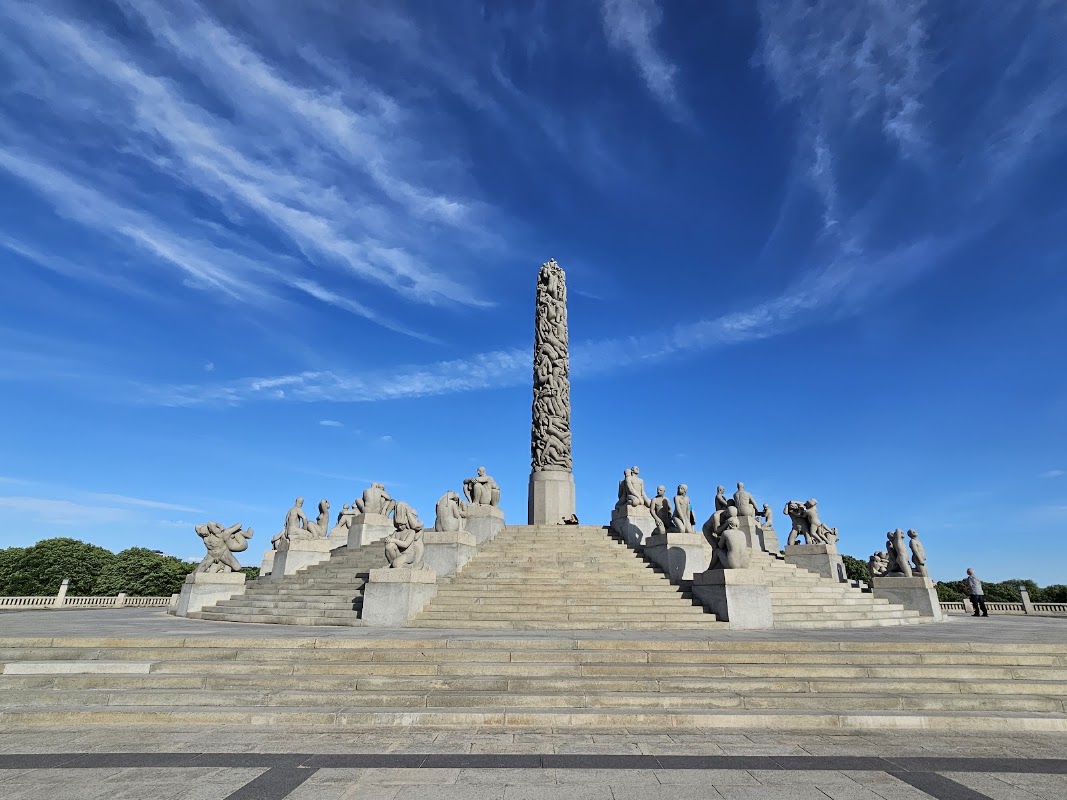
Within a corner of the expansive Frogner Park, a beloved recreational spot for Oslo residents, lies the ‘Vigeland Sculpture Park’ – a collection solely of works by Norway’s world-renowned sculptor, Gustav Vigeland. Vigeland is a national artist also known for designing the Nobel Peace Prize medal. The park features 212 sculptures made of bronze and granite, totaling over 600 human figures scattered throughout.
The theme of this park is ‘The Cycle of Life’ (a journey from birth to death). It depicts men and women of all ages, exposing every emotion and intricately intertwined.
Among them, a must-see is ‘The Monolith’ (Tower of Humanity), a colossal tower approximately 14 meters high, soaring at the park’s center. It features 121 naked human figures, entangled as if climbing towards the heavens, forming a single stone pillar. This powerful depiction vividly portrays human desires and spirituality, possessing an overwhelming impact. Furthermore, in the bridge area, ‘The Angry Boy’ (Sinnataggen), a bronze statue of a scowling, stomping boy, is an iconic figure in the park. Many people touch his left hand for good luck, causing it to shine brightly.
While it may seem like an abstract art facility at first glance, it is actually a very informal space, bustling with tourists posing for photos imitating the sculptures and locals jogging. It might seem far from the city center, but its accessibility is a charm, reachable in about 15 minutes by tram or subway from Oslo Central Station. Open 24 hours for free, it’s also perfect for an early morning stroll in the crisp air.
Fram Museum
📍 Address: Bygdøynesveien 39, 0286 Oslo, Norway
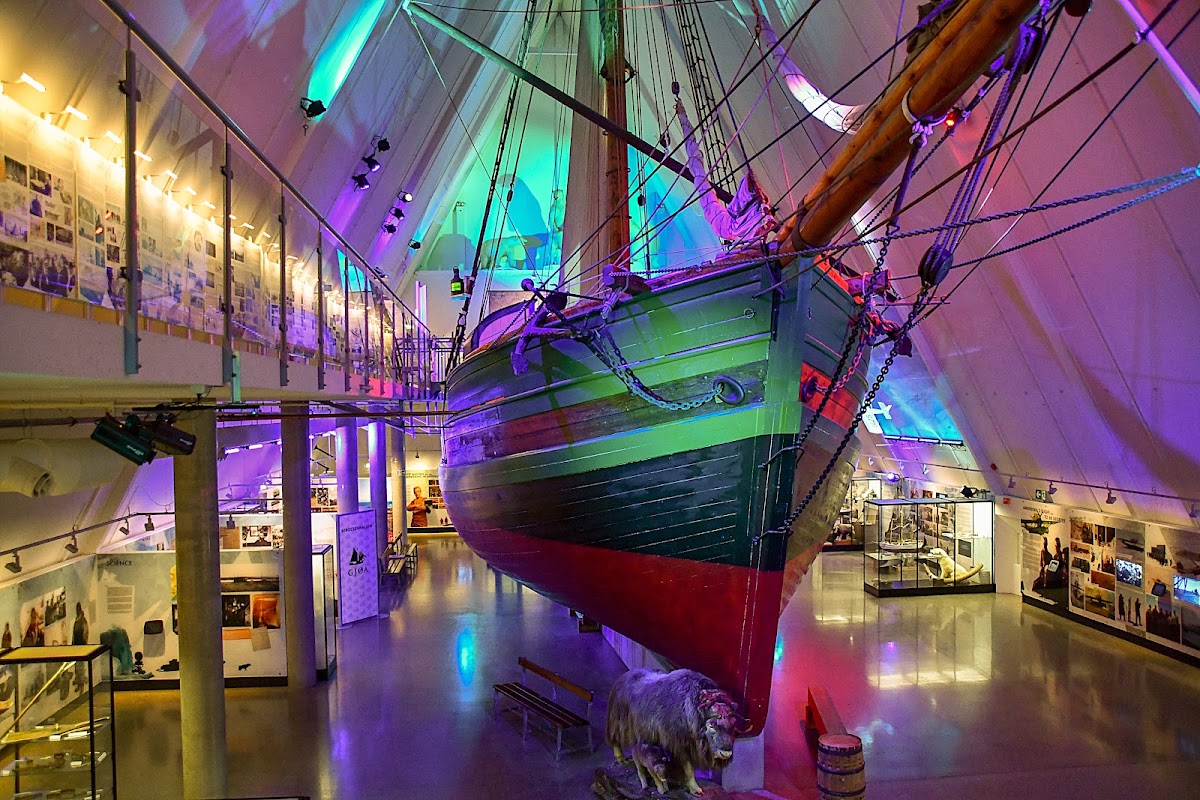
Among the many unique museums on the Bygdøy Peninsula, the ‘Fram Museum’ is particularly captivating for those with a sense of adventure. Here, the actual polar exploration vessel ‘Fram,’ which supported humanity’s historic achievements like Fridtjof Nansen’s Arctic expedition and Roald Amundsen’s attainment of the South Pole, sits prominently at the center of the building.
The greatest appeal is not just admiring the exhibit from the outside, but actually being able to walk on Fram’s deck and explore deep inside the ship.
Walking through the ship, you’ll be amazed by the robust construction designed to survive years in extreme cold. You can feel firsthand that these were not just reckless romantic ventures, but challenges built upon thorough ‘preparation and rationality,’ from the rounded hull designed to withstand ice pressure to the crew’s private cabins, dining room, and even the piano brought along to maintain morale – all preserved with the very breath of life from that era.
The museum also features a 4D immersive theater and exhibits simulating the cold, making it intuitively enjoyable for visitors of all ages. For access, taking the ferry from the pier in front of Oslo City Hall during the summer is highly recommended. The short boat trip to the Bygdøy Peninsula, feeling the fjord’s breeze, makes for a perfect prologue to your journey following the history of exploration.
Conclusion: How to Deeply Enjoy Oslo Tourism
Oslo is a compact city, packed with world-class art and the history of humanity challenging the extreme cold of nature. Each facility offers experiential approaches, not just viewing, such as ‘climbing the roof,’ ‘imitating sculpture poses,’ and ‘stepping inside a historic ship.’
Even on a short stay, instead of just rushing to take photos, try to immerse yourself deeply in the local atmosphere – perhaps by enjoying a coffee with a view at a museum cafe or feeling the wind on a ferry. This will undoubtedly enhance your Oslo travel satisfaction many times over.

![Top 5 Philadelphia Tourist Attractions [2026 Latest]! A Must-See Local Guide for Travelers](https://images.unsplash.com/photo-1761559406862-834b0350b72c?crop=entropy&cs=tinysrgb&fit=max&fm=jpg&ixid=M3w5MDExNDh8MHwxfHNlYXJjaHwyfHxQaGlsYWRlbHBoaWElMjBjaXR5c2NhcGUlMjBoaXN0b3JpY3xlbnwwfDB8fHwxNzc3MDg2MDc3fDA&ixlib=rb-4.1.0&q=80&w=1080 "Top 5 Philadelphia Tourist Attractions [2026 Latest]! A Must-See Local Guide for Travelers")


'%3E%3Cpath%20stroke='%23000'%20stroke-width='4'%20d='m-35-37-13%2020m5%203%2013-20m5%203-13%2020m63%2042%206-9m1-2%206-9m5%203-6%209m-1%202-6%209m5%203%206-9m1-2%206-9m-96%200%2013%2020m5-3-6-9m-1-2-6-9m5-3%2013%2020m63-42-6-9m-1-2-6-9m5-3%2013%2020m5-3-6-9m-1-2-6-9'/%3E%3Ccircle%20r='24'%20fill='%23cd2e3a'/%3E%3Cpath%20fill='%230047a0'%20d='M0%200a12%2012%200%201%201%2020%2013%2024%2024%200%201%201-40-26A12%2012%200%201%200%200%200'/%3E%3C/g%3E%3C/svg%3E)
'/%3E%3Cpath%20fill='%23b2b2b2'%20d='M241%20382q0%2016%2017%2026%2017%2011%2042%2011t42-11q16-11%2017-26V269H241'/%3E%3Cpath%20fill='%239f7e00'%20d='M241%20379q0%2014%208%2023%209%209%2021%209%2014%200%2021-9%209-9%209-23V269h-59'/%3E%3Cpath%20d='M241%20339v-70h59v110q0%2014-9%2023l-6%205v-68h-15v72q-8%200-14-4v-68zm59%2040c0%2022%2015%2032%2029%2032%2021%200%2030-18%2030-32v-40h-59'/%3E%3Cpath%20fill='%239f7e00'%20d='M266%20277v5h2v12h-3v-5h2v-5h-9v5h2v5h-4v9h3v18h-5v10h34v-10h-5v-18h3v-9h-4v-5h2v-5h-9v5h2v5h-3v-12h2v-5zm42%20101q0%2010%206%2017%206%206%2015%207%2010-1%2016-7%206-7%206-17v-29h-43'/%3E%3Ccircle%20fill='%230044ad'%20cx='329.5'%20cy='372'%20r='6'/%3E%3Cellipse%20fill='%230044ad'%20cx='300'%20cy='340'%20rx='16'%20ry='21'/%3E%3C/svg%3E)


