
![[2026 Latest] 5 Must-Visit Tourist Spots in Asakusa! A Classic Walking Guide to History and Deep Local Charms](https://images.unsplash.com/photo-1636119294076-35f248ad2462?crop=entropy&cs=tinysrgb&fit=max&fm=jpg&ixid=M3w5MDExNDh8MHwxfHNlYXJjaHwyfHxBc2FrdXNhJTIwdHJhZGl0aW9uYWwlMjBzdHJlZXR8ZW58MHwwfHx8MTc4MTE2MTI2N3ww&ixlib=rb-4.1.0&q=80&w=1080 "[2026 Latest] 5 Must-Visit Tourist Spots in Asakusa! A Classic Walking Guide to History and Deep Local Charms")
What Makes Asakusa So Appealing for Tourists?
Asakusa, one of Tokyo’s most iconic tourist destinations, attracts numerous visitors from both Japan and abroad. It’s a unique area where popular culture, dating back to the Edo period, intersects with modern Tokyo landscapes.
While taking a commemorative photo at the iconic Kaminarimon Gate and enjoying street food is certainly enjoyable, understanding a bit of its historical background and exploring with a different perspective will multiply Asakusa’s charm many times over.
This time, we will thoroughly explain five carefully selected spots, ranging from must-visit landmarks for first-time visitors to deeper attractions you’ll want to tell everyone about.
Nakamise Shopping Street
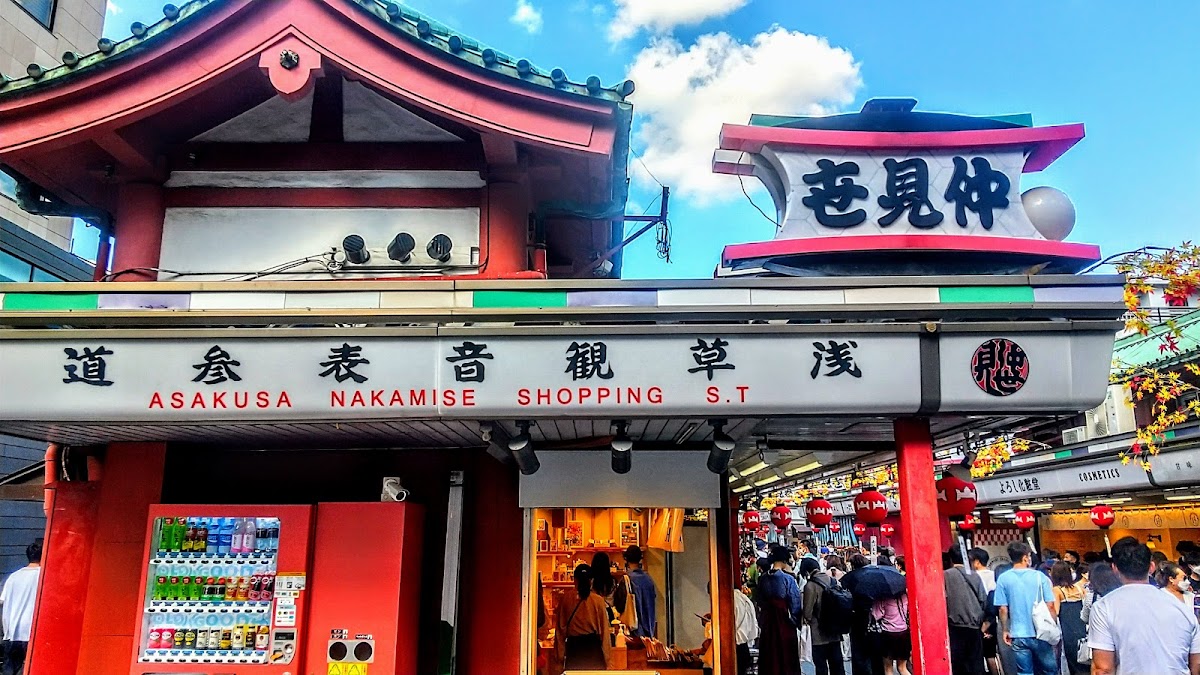
📍 Address: 1-36-3 Asakusa, Taito City, Tokyo 111-0032, Japan
Beyond Kaminarimon Gate, extending for approximately 250 meters towards Senso-ji Temple’s Hozomon Gate, lies ‘Nakamise Shopping Street’. Its history is ancient, reportedly beginning in the Edo period when local residents, responsible for cleaning the Senso-ji grounds, were granted the privilege of opening stalls along the approach.
Currently, a total of 89 shops—54 on the east side and 35 on the west—line the street, offering a wide array of goods from traditional Japanese sweets like Ningyo-yaki, Kaminari-okoshi, and Age-manju to Japanese sundry goods.
Always bustling with energy, it’s filled with travelers enjoying dango skewers and strawberry skewers. However, a rule of the shopping street prohibits ‘eating while walking’. The smart etiquette in Asakusa is to enjoy your purchases at the shop’s eat-in space or in designated areas.
An even deeper charm can be found at ‘night’. After the shops close in the evening, the street transforms as the shutters come down. The ‘Asakusa Emaki’ shutter murals, painted in 1989 (Heisei 1), are revealed.
Depicting Asakusa’s seasonal events and history on all the shop shutters, you can walk along the fantastically lit approach to Senso-ji Temple in a quietness that belies the daytime hustle and bustle. Visiting at night is highly recommended for those who wish to avoid crowds or take atmospheric photos.
Senso-ji Temple
📍 Address: 2-3-1 Asakusa, Taito City, Tokyo 111-0032, Japan
Tokyo’s oldest temple and the heart of Asakusa tourism, ‘Senso-ji Temple’. Its origins trace back to the Asuka period, specifically 628 AD, during the reign of Empress Suiko. It is said to have begun when two brothers, fishing in the Sumida River, pulled up a statue of Sho Kannon Bosatsu (the Bodhisattva of Compassion) in their net and enshrined it.
As you proceed from Kaminarimon Gate to the Main Hall, the scent of incense and the chanting of sutras fill the air, enveloping you in a solemn atmosphere that truly feels like ‘a place of Japanese faith’.
Surprisingly, Senso-ji’s architecture incorporates modern innovations. The roofs of the Main Hall, Hozomon Gate, and Five-Storied Pagoda, though appearing to be heavy clay tiles, are actually made of lightweight, highly durable ‘titanium tiles’. Here lies a fusion of tradition and cutting-edge technology, preserving beauty while being resistant to earthquakes.
A must-see for visitors is ‘directly beneath Kaminarimon’s giant lantern’. If you look up at the bottom of the lantern, you’ll discover magnificent wooden carvings of dragons. Don’t forget to enjoy not only frontal photos but also an upward angle.
Furthermore, Senso-ji’s omikuji (fortunes) are famous for often drawing ‘bad luck’ (kyo). Even if you draw a harsh fortune, don’t be discouraged; it’s a long-standing custom to tie it to a designated spot within the temple grounds and pray for protection.
Asakusa Shrine
📍 Address: 2-3-1 Asakusa, Taito City, Tokyo 111-0032, Japan
Located immediately to the right of Senso-ji Temple’s Main Hall, beyond a large stone torii gate, stands ‘Asakusa Shrine’. Stepping away from the overwhelming bustle of Senso-ji, the air softly changes, and you are enveloped in a pleasant tranquility.
This shrine enshrines three individuals as ‘Sanja Gongen’: the fishing brothers (Himanokuma Hamanari and Takenari) who discovered the Kannon statue, the principal image of Senso-ji Temple, and Haji no Nakamichi, the village chief who enshrined the statue in his home and established the temple.
The ‘Sanja Matsuri’, which sweeps through Asakusa in a whirlwind of excitement in early summer, is precisely the annual festival of this Asakusa Shrine. Historically, due to the syncretism of Shinto and Buddhism, Senso-ji and Asakusa Shrine held rituals as a single entity. Although separated by the Meiji-era ‘Shinbutsu Bunri’ (separation of Shinto and Buddhism) order, it continues to attract fervent devotion as Asakusa’s general guardian deity.
The main shrine building, a nationally designated Important Cultural Property donated by Tokugawa Iemitsu, conveys the architectural beauty of the Edo period with its vibrant polychrome decoration.
Amidst your bustling sightseeing, try standing before the haiden (hall of worship), where the scent of wood lingers, and quietly offer a prayer. It’s a serene and sacred spot where you can engage in the pure act of ‘praying’ and find peace of mind.
Asakusa Hanayashiki
📍 Address: 2-28-1 Asakusa, Taito City, Tokyo 111-0032, Japan
Located to the west of Senso-ji Temple, ‘Asakusa Hanayashiki’ is Japan’s oldest amusement park, originally opened in 1853 (Kaei 6, the year of Commodore Perry’s arrival) as a botanical garden called ‘Hanayashiki’.
Distinct from large theme parks featuring the latest thrill rides, its Showa-era retro and nostalgic atmosphere surprisingly feels fresh in today’s world.
The biggest highlight is Japan’s oldest existing ‘Roller Coaster’, born in 1953. While its maximum speed of 42 km/h is modest, its course design, rushing through narrow gaps between buildings and mere inches from residential walls, creates a unique thrill found nowhere else.
Moreover, the coin-operated ‘Panda Car’ rides often seen on department store rooftops actually originated here at Hanayashiki. The park offers spots where you can ride a Panda Car for commemorative photos, as well as a wide range of original goods featuring Panda Car motifs.
Its compact layout is also a welcome feature, meaning less worry about getting tired from walking. With attractions suitable for children aged 0 and up, and well-equipped facilities like diaper changing stations, it’s also highly popular with families with small children.
Both adults and children can relive their childhood and enjoy an endless fun-filled recreational experience.
Star Plaza
📍 Address: Taito City Asakusa Public Hall, 1-38-6 Asakusa, Taito City, Tokyo 111-0032, Japan
Extending in front of the main entrance of ‘Taito City Asakusa Public Hall’, which faces Orange Street, is ‘Star Plaza’.
True to Asakusa’s reputation as a sacred place for popular entertainment, life-sized handprints and signatures of stars who have greatly contributed to the development of Japan’s entertainment world, rakugo, and kabuki, are embedded in the sidewalk tiles.
Installation began in 1979 (Showa 54), and today, a spectacular sight unfolds with nearly 300 handprints of renowned actors, singers, and comedians arranged in rows.
It’s also an interactive spot where you can find handprints of famous entertainers like Beat Takeshi and Cha Kato, and compare your own hands, exclaiming, ‘Their hands are surprisingly small!’ or ‘What powerful handprints!’
Located slightly off the main street, it’s relatively less crowded, allowing you to leisurely search for handprints.
Why not enjoy a treasure hunt-like experience, searching for your favorite star’s handprint while feeling the history of Japanese entertainment?
[Column] Local Tips for Smart Asakusa Sightseeing
Experience Asakusa’s Different Faces by Adjusting Your Visit Time
While Asakusa is extremely lively during the day, a ‘secret tip’ for travelers is to leverage the ‘early morning’ and ‘night’.
Before 8 AM, Nakamise Street has few people, allowing you to enjoy the shutter murals and stroll through the quiet temple grounds as if you have them all to yourself.
Also, the illumination of Senso-ji Temple from sunset until around 11 PM is a must-see. The vermilion main hall and five-storied pagoda float in the night sky, creating a vibrant and fantastical world completely different from daytime. Enjoying an evening stroll after dinner to cool off is a classic local way to spend time.
The Charm of ‘Oku-Asakusa’ (Inner Asakusa) Beyond Kaminarimon
After visiting the main tourist spots, it’s also recommended to extend your exploration to the ‘Oku-Asakusa’ (also known as ‘Kannon-ura’, or ‘behind Kannon’) area, located further north of Senso-ji Temple.
This is a deeper area dotted with old-fashioned coffee shops, local Chinese diners beloved by residents, and stylish izakayas. Away from the tourist crowds, you can encounter a more authentic downtown atmosphere and local cuisine. It’s no exaggeration to say that Asakusa’s true charm is hidden in its back alleys.


'%3E%3Cpath%20stroke='%23000'%20stroke-width='4'%20d='m-35-37-13%2020m5%203%2013-20m5%203-13%2020m63%2042%206-9m1-2%206-9m5%203-6%209m-1%202-6%209m5%203%206-9m1-2%206-9m-96%200%2013%2020m5-3-6-9m-1-2-6-9m5-3%2013%2020m63-42-6-9m-1-2-6-9m5-3%2013%2020m5-3-6-9m-1-2-6-9'/%3E%3Ccircle%20r='24'%20fill='%23cd2e3a'/%3E%3Cpath%20fill='%230047a0'%20d='M0%200a12%2012%200%201%201%2020%2013%2024%2024%200%201%201-40-26A12%2012%200%201%200%200%200'/%3E%3C/g%3E%3C/svg%3E)
'/%3E%3Cpath%20fill='%23b2b2b2'%20d='M241%20382q0%2016%2017%2026%2017%2011%2042%2011t42-11q16-11%2017-26V269H241'/%3E%3Cpath%20fill='%239f7e00'%20d='M241%20379q0%2014%208%2023%209%209%2021%209%2014%200%2021-9%209-9%209-23V269h-59'/%3E%3Cpath%20d='M241%20339v-70h59v110q0%2014-9%2023l-6%205v-68h-15v72q-8%200-14-4v-68zm59%2040c0%2022%2015%2032%2029%2032%2021%200%2030-18%2030-32v-40h-59'/%3E%3Cpath%20fill='%239f7e00'%20d='M266%20277v5h2v12h-3v-5h2v-5h-9v5h2v5h-4v9h3v18h-5v10h34v-10h-5v-18h3v-9h-4v-5h2v-5h-9v5h2v5h-3v-12h2v-5zm42%20101q0%2010%206%2017%206%206%2015%207%2010-1%2016-7%206-7%206-17v-29h-43'/%3E%3Ccircle%20fill='%230044ad'%20cx='329.5'%20cy='372'%20r='6'/%3E%3Cellipse%20fill='%230044ad'%20cx='300'%20cy='340'%20rx='16'%20ry='21'/%3E%3C/svg%3E)


