

Yamaguchi Prefecture is an appealing region, open to the sea on three sides, with rich nature and historical heritage thriving inland. From scenic drive courses boasting overwhelming scale, mysterious underground spaces created over vast ages, to historical buildings showcasing Japan’s traditional techniques, it’s dotted with must-visit spots that travelers should experience at least once in their lifetime.
This article carefully selects 5 major tourist spots in Yamaguchi Prefecture. In addition to classic highlights, we deliver practical information for a deeper local experience, such as times to avoid crowds and often-overlooked, profound ways to enjoy the sights.
Tsunoshima Ohashi Bridge
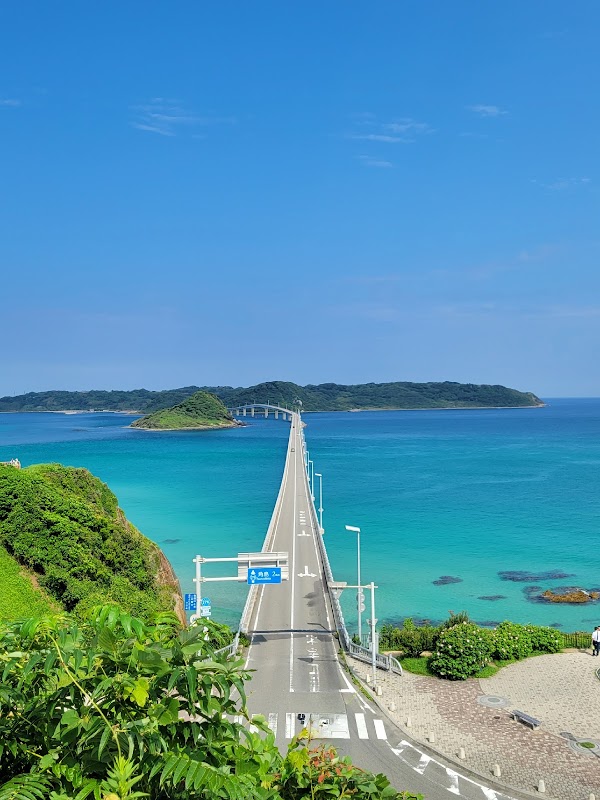
📍 Address: Japan, 〒759-5331 Kanda, Hōhoku-chō, Shimonoseki, Yamaguchi
The Tsunoshima Ohashi Bridge, spanning approximately 1,780 meters, stretches straight across the emerald green Amagase Inland Sea. Since its opening in 2000, it has been featured in numerous car commercials and films, continuing to captivate visitors with its extraordinary, resort-like atmosphere reminiscent of a southern paradise.
For the best photos, the classic angles are from ‘Amagase Park’ on a hill on the Honshu side, or from observation decks in the surrounding area. On clear, sunny days, the contrast between the cobalt blue sea and white sandy beaches is breathtaking, while at dusk, the bridge and sea are bathed in a golden glow, transforming into a romantic scene.
It’s also an excellent drive course, offering an exhilarating sensation as if gliding over the sea. However, traffic jams are common on Tsunoshima Island itself on weekends and holidays, so it’s wise to aim for early morning hours to avoid the crowds. Designed with a low height to preserve the surrounding landscape, this bridge’s beautiful proportion in harmony with nature is truly something to behold.
Akiyoshido Cave
📍 Address: Japan, 〒754-0511 Akiyoshi, Shūhō-chō, Mine, Yamaguchi
Akiyoshido Cave, extending over 11 km beneath Akiyoshidai Quasi-National Park, is one of Japan’s largest limestone caves, stretching 100 meters underground. Just walking the approximately 1 km public route is enough to be overwhelmed by the natural artistry carved out over hundreds of thousands of years.
The cave maintains a comfortable temperature of around 17°C throughout the year, making it cool in summer and warm in winter. Highlights include ‘Hyakumaizara’ (One Hundred Plates), which resemble terraced rice paddies, and the gigantic ‘Ogonbashira’ (Golden Pillar). The cave is dimly lit, and water droplets constantly fall, making the ground wet, so wearing comfortable, non-slip shoes and bringing a light long-sleeved top to wear is a must.
For a deeper experience, we recommend the ‘Adventure Course,’ which costs an additional 300 yen at the entrance to rent a flashlight. You can climb rock faces and squeeze through narrow gaps, experiencing the thrill of a small underground exploration. Also, if the main entrance route is crowded, a ‘secret tip’ is to enter from the ‘Elevator Entrance’ or ‘Kurotani Entrance,’ which lead towards Akiyoshidai Plateau, for a smoother visit.
Akiyoshidai Quasi-National Park
📍 Address: Japan, 〒754-0602 Mine, Yamaguchi
Akiyoshidai Plateau, spreading directly above Akiyoshido Cave, is Japan’s largest karst plateau. Long ago, approximately 350 million years ago, it was born as a coral reef in the southern sea and transformed into a limestone plateau over vast ages. The landscape, with white limestone pillars scattered across an endless grassland like a flock of sheep, creates a sense of scale as if lost in a foreign land or another planet.
The recommended way to enjoy this magnificent karst plateau is by driving along the ‘Akiyoshidai Karst Road’ (Prefectural Road 242). From spring to summer, it’s a vibrant green carpet; in autumn, pampas grass sways, turning the landscape into autumn colors; and in winter, dry grasses or the blackened earth after controlled burning reveal completely different expressions throughout the seasons.
Using the elevator directly connected from Akiyoshido Cave, you can reach an observation deck in about 5 minutes on foot from the ground level. It’s a great spot to refresh and forget the hustle and bustle of daily life, enjoying panoramic views with a sense of openness or walking the promenades to feel the breath of ancient Earth on your skin.
Kintaikyo Bridge
📍 Address: Japan, 〒741-0062 Iwakuni, Iwakuni 1-chome, Yamaguchi
The Kintaikyo Bridge, spanning the clear stream of Nishiki River, is one of Japan’s ‘Three Great Bridges,’ built in 1673. It is a unique wooden five-arch bridge in the world, constructed using a distinctive interlocking technique without a single nail, instead relying on ‘makigane’ (metal bands) and ‘kasugai’ (metal clamps).
Beyond just walking across the bridge, make sure to descend to the riverbed and look up at the ‘underside of the bridge.’ You’ll be astonished by the immense civil engineering skill of the Edo period, marveling at the geometric and intricate structural beauty of the interlocking wood, which actually increases in strength under pressure from above. Since the arches have an incline when crossing, it’s advisable to wear comfortable shoes.
It also boasts rich seasonal charms, known as a famous spot for cherry blossoms in spring and autumn leaves in fall. Furthermore, traditional ‘ukai’ (cormorant fishing), with a 400-year history, is held on summer evenings, offering viewing from pleasure boats. From sunset into the night, the five-color illumination creates a magical scene where golden arches appear to float on the water’s surface. A smart tip for enjoying the surrounding area at a discount is to purchase a combination ticket that includes the ropeway to Iwakuni Castle, located across the bridge.
Rurikoji Temple
📍 Address: Japan, 〒753-0081 Kōzan-chō, Yamaguchi, Yamaguchi
The highlight of Rurikoji Temple, nestled in Kōzan Park in Yamaguchi City, is undoubtedly its ‘Rurikoji Temple Five-Story Pagoda,’ designated as a National Treasure. Built in the mid-Muromachi period (1442), this pagoda is praised as the masterpiece of Ōuchi culture and is counted among Japan’s ‘Three Great Pagodas,’ alongside Horyuji Temple in Nara and Daigoji Temple in Kyoto.
Good news for travelers is the recent completion of the ‘Reiwa Grand Renovation.’ The extensive re-roofing project, using cypress bark shingles (hiwadabuki), for the first time in approximately 70 years, finished between late 2025 and early 2026. Visitors can now admire its beautifully restored, inherently dignified appearance.
Compared to famous temples in Kyoto and Nara, its greatest charm is the ability to quietly and calmly appreciate this historical structure without being jostled by crowds of tourists. Strolling around the pond, you can enjoy the pagoda’s graceful proportions, which change expression depending on the viewing angle, receive a Goshuin (temple stamp), and feel the nature of the four seasons, spending a truly refreshing time.
Tips for a 120% Enjoyable Tour of Yamaguchi
Tourist spots within Yamaguchi Prefecture are relatively spread out across the western Shimonoseki area (Tsunoshima Ohashi Bridge), the central Mine area (Akiyoshido Cave, Akiyoshidai Plateau), and the eastern Iwakuni area (Kintaikyo Bridge). Therefore, for travelers looking to efficiently visit scenic spots, renting a car offers unmatched flexibility and is highly recommended.
For example, you could enjoy a scenic drive on Tsunoshima Ohashi Bridge in the morning light, explore Akiyoshido Cave in the heat of the day (comfortable at 17°C year-round), then drive through the Akiyoshidai Karst Road as dusk approaches, and the next day, move east to enjoy historical sightseeing around Kintaikyo Bridge. This kind of itinerary allows you to fully experience each spot at its ‘best time.’ Since the distances can be surprisingly long, plan your schedule with ample travel time to savor all of Yamaguchi Prefecture’s charms.
![[2026 Latest] 5 Must-Visit Tourist Spots in Asakusa! A Classic Walking Guide to History and Deep Local Charms](https://images.unsplash.com/photo-1636119294076-35f248ad2462?crop=entropy&cs=tinysrgb&fit=max&fm=jpg&ixid=M3w5MDExNDh8MHwxfHNlYXJjaHwyfHxBc2FrdXNhJTIwdHJhZGl0aW9uYWwlMjBzdHJlZXR8ZW58MHwwfHx8MTc4MTE2MTI2N3ww&ixlib=rb-4.1.0&q=80&w=1080 "[2026 Latest] 5 Must-Visit Tourist Spots in Asakusa! A Classic Walking Guide to History and Deep Local Charms")


'%3E%3Cpath%20stroke='%23000'%20stroke-width='4'%20d='m-35-37-13%2020m5%203%2013-20m5%203-13%2020m63%2042%206-9m1-2%206-9m5%203-6%209m-1%202-6%209m5%203%206-9m1-2%206-9m-96%200%2013%2020m5-3-6-9m-1-2-6-9m5-3%2013%2020m63-42-6-9m-1-2-6-9m5-3%2013%2020m5-3-6-9m-1-2-6-9'/%3E%3Ccircle%20r='24'%20fill='%23cd2e3a'/%3E%3Cpath%20fill='%230047a0'%20d='M0%200a12%2012%200%201%201%2020%2013%2024%2024%200%201%201-40-26A12%2012%200%201%200%200%200'/%3E%3C/g%3E%3C/svg%3E)
'/%3E%3Cpath%20fill='%23b2b2b2'%20d='M241%20382q0%2016%2017%2026%2017%2011%2042%2011t42-11q16-11%2017-26V269H241'/%3E%3Cpath%20fill='%239f7e00'%20d='M241%20379q0%2014%208%2023%209%209%2021%209%2014%200%2021-9%209-9%209-23V269h-59'/%3E%3Cpath%20d='M241%20339v-70h59v110q0%2014-9%2023l-6%205v-68h-15v72q-8%200-14-4v-68zm59%2040c0%2022%2015%2032%2029%2032%2021%200%2030-18%2030-32v-40h-59'/%3E%3Cpath%20fill='%239f7e00'%20d='M266%20277v5h2v12h-3v-5h2v-5h-9v5h2v5h-4v9h3v18h-5v10h34v-10h-5v-18h3v-9h-4v-5h2v-5h-9v5h2v5h-3v-12h2v-5zm42%20101q0%2010%206%2017%206%206%2015%207%2010-1%2016-7%206-7%206-17v-29h-43'/%3E%3Ccircle%20fill='%230044ad'%20cx='329.5'%20cy='372'%20r='6'/%3E%3Cellipse%20fill='%230044ad'%20cx='300'%20cy='340'%20rx='16'%20ry='21'/%3E%3C/svg%3E)


