

Hakuba Hitotoki-no-mori
📍 Address: Japan, 399-9301 Nagano, Kitaazumi District, Hakuba, Hokujo Mt. Shirouma Line, Happō, Hakuba
Located within Hakuba Iwatake Mountain Resort, ‘Hakuba Hitotoki-no-mori’ is a scenic oasis nestled slightly down from the mountaintop. Accessing it is an exciting journey in itself: first, you take the ‘Noah’ gondola to the summit, and then transfer to the 5-Sen South Lift.
The main highlight here is ‘CHAVATY HAKUBA,’ a specialty tea latte and scone shop immensely popular in Omotesando and Kyoto Arashiyama. Overlooking the magnificent Northern Alps, savoring Hakuba-exclusive ‘Kuromoji scones’ and ‘Kuromoji chai’ is a uniquely elegant experience. The crisp scones perfectly complement the subtly spicy and refreshing aroma of kuromoji.
The grounds feature tarps and hammocks from brands like Snow Peak and CHUMS, which visitors can use freely if available. Pets (small and medium-sized dogs only) are welcome, making it a highly popular spot for travelers enjoying a leisurely time with their beloved dogs. However, please note that large dogs are not allowed on the lift. This spot is absolutely recommended for those who want to escape the hustle and bustle of everyday life and find solace in the tranquility of the mountains and delicious sweets.
Aoni (Aoni) Village Traditional Buildings Preservation District, Hakuba Village
📍 Address: Japan, 399-9301 Nagano, Kitaazumi District, Hakuba, Hokujo 17511
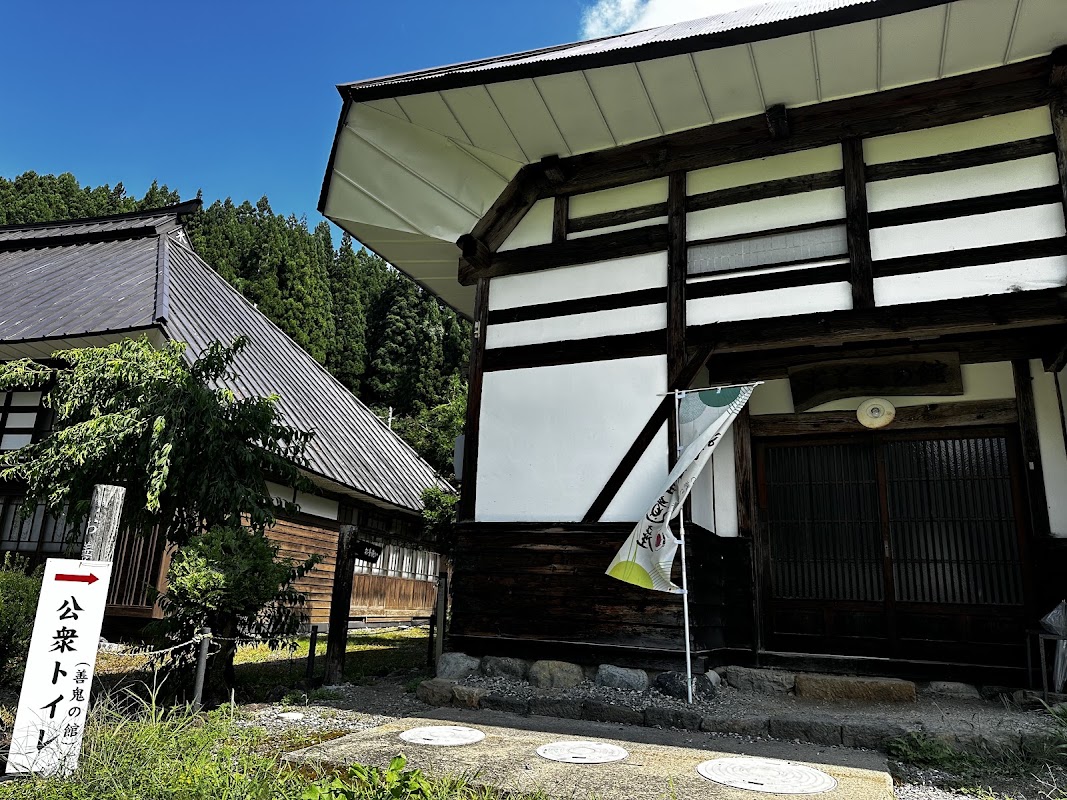
Aoni Village, recognized as one of ‘Japan’s Top 100 Terraced Rice Paddies’ and an ‘Important Preservation District for Groups of Traditional Buildings,’ is a hidden gem where you can experience Hakuba’s deep charm. Fourteen large thatch-roofed (iron plate covered) houses, built from the late Edo to Meiji periods, line the village, vividly conveying the lifestyle of a bygone mountain community.
As you ascend the village slope, a breathtaking contrast awaits: beautiful terraced rice paddies spread out below, with the majestic Northern Alps, including Mount Goryu and Mount Karamatsu, towering beyond. The ‘Aoni Segi’ aqueduct, which irrigates the village, was carved out of steep bedrock by craftsmen using chisels over approximately three years starting in 1860. Clean spring water still flows through it today, evoking the struggles and historical romance of the ancestors.
While the name ‘Aoni’ (blue demon) might sound a bit intimidating, it actually originates from the legend of ‘Ozenki-sama,’ a benevolent demon who helped the villagers. A small temple, ‘Zennki-do,’ is carefully enshrined within the village. The terraced paddies cultivate ‘purple rice,’ a local specialty rich in nutrients and perfect as a souvenir. Cars are not permitted to enter the village, so the rule is to pay a cooperation fee (500 yen) at the dedicated parking lot beforehand and explore quietly in comfortable shoes. The terraced rice paddies in spring, filled with water and backed by the remaining snow on the Alps, are a sight to behold at least once in a lifetime.
Hakuba Mini Train Park
📍 Address: Japan, 399-9301 Nagano, Kitaazumi District, Hakuba, Hokujo 4617-1
The ‘Hakuba Mini Train Park’ in Wadano Forest enjoys overwhelming support from families with children. It’s Japan’s only authentic mini railway theme park where you can experience riding a real mini steam locomotive through the forest.
The mini SL, powered by real steam, is incredibly impressive. The long tracks laid through the forest feature highlights like iron bridges, and both adults and children are sure to be thrilled by the exhilarating ride as it cuts through the wind. Furthermore, indoors, an impressive HO gauge diorama awaits, complete with a corner where you can operate trains yourself and rooms available for private rental, making it a captivating space for railway enthusiasts.
While it’s a wonderful facility offering a leisurely time, its closing time is relatively early, around 3:00 PM, so the trick is to visit in the morning or early afternoon after lunch. It’s a hidden gem leisure spot where families can unwind and play like children in the lush natural forest.
Hakuba Happo-one
📍 Address: Japan, 399-9301 Nagano, Kitaazumi District, Hakuba, Hokujo
Known as a major venue for serious competitions during the Nagano Olympics, ‘Hakuba Happo-one’ is one of Japan’s premier mountain resorts. In winter, tourists flock from around the world in search of exquisite powder snow, and the area around the slopes is so vibrant with international visitors that you might mistake it for an overseas resort.
Characterized by many intermediate to advanced slopes, it boasts a plethora of courses that captivate skiers and snowboarders, such as the famous ‘Urakuro Course’ and the spectacular ‘Riesen Grat.’ Chic bars and cafes line the area around the slopes, offering a fulfilling après-ski experience. The famous croquettes served at nearby eateries and mountain huts are also highly praised for their comforting warmth and deliciousness after a cold day.
During the green season, it transforms into a stunning sauna resort and trekking destination, allowing visitors to enjoy the great outdoors year-round. However, many lifts near the summit close as early as 3:30 PM, so it’s a golden rule to always allow plenty of time in your schedule to avoid missing the descent lift while absorbed in skiing, snowboarding, or sightseeing.
Alps-daira
📍 Address: Japan, 399-9211 Nagano, Kitaazumi District, Hakuba, Kamishiro
Spreading across the summit of the Hakuba Goryu area, ‘Alps-daira’ is a viewpoint where you can enjoy the changing expressions of the Northern Alps throughout the four seasons. From Toomi Station at the foot of the mountain, you can take the 8-person ‘Telecabin’ gondola for an approximately 8-minute aerial stroll, ascending directly to an altitude of 1,515m.
In winter, it bustles as a panoramic course with excellent snow quality. Its gentle slopes are a big draw, allowing even beginners to enjoy exhilarating runs against the backdrop of the magnificent mountains. The powder snow after a snowfall is truly exceptional, and once you experience the beauty of the morning slopes, you’ll want to wake up early again and again.
Conversely, from summer to autumn, it opens as the ‘Hakuba Goryu Alpine Botanical Garden,’ transforming into a heavenly paradise where 300 species and 2 million alpine plants bloom. Especially noteworthy are the ‘Himalayan blue poppy,’ ‘Komakusa’ (Dicentra peregrina), and large clusters of Nikko Kisuge (Daylily) in full bloom during summer. Since the gondola can also be used for descent, even general tourists without mountaineering gear or families with children can easily experience the grand nature of the Alps and its alpine flora, which is a major highlight.
Practical Tips and Things to Note for Hakuba Sightseeing
When sightseeing in the Hakuba area, travelers should pay particular attention to managing their ‘time’ and ‘temperature differences.’ Due to its high-altitude mountain location, the weather can change quickly, and even if it’s sunny during the day, it can get suddenly cold in the evening. Even during the green season in summer, it’s essential to bring a light mountain parka or windbreaker that you can easily throw on.
Also, leisure facilities like ski lifts, gondolas, and the Mini Train Park generally have early closing times, often between 3:30 PM and 4:00 PM. If you plan to ‘visit another spot in the evening,’ you might fall into the trap of arriving only to find it already closed. Therefore, always schedule your main tourist attractions for the morning to around 2:00 PM.
During the winter ski season, parking lots around the slopes fill up early in the morning, so waking up early is key. On the other hand, during the green season in summer, spending leisurely time at scenic cafes or under tarps in the gondola summit area is exceptional. The secret to maximizing your Hakuba sightseeing experience is not to over-pack your schedule, but to create ‘buffer time’ to breathe deeply amidst the grand nature.


'%3E%3Cpath%20stroke='%23000'%20stroke-width='4'%20d='m-35-37-13%2020m5%203%2013-20m5%203-13%2020m63%2042%206-9m1-2%206-9m5%203-6%209m-1%202-6%209m5%203%206-9m1-2%206-9m-96%200%2013%2020m5-3-6-9m-1-2-6-9m5-3%2013%2020m63-42-6-9m-1-2-6-9m5-3%2013%2020m5-3-6-9m-1-2-6-9'/%3E%3Ccircle%20r='24'%20fill='%23cd2e3a'/%3E%3Cpath%20fill='%230047a0'%20d='M0%200a12%2012%200%201%201%2020%2013%2024%2024%200%201%201-40-26A12%2012%200%201%200%200%200'/%3E%3C/g%3E%3C/svg%3E)
'/%3E%3Cpath%20fill='%23b2b2b2'%20d='M241%20382q0%2016%2017%2026%2017%2011%2042%2011t42-11q16-11%2017-26V269H241'/%3E%3Cpath%20fill='%239f7e00'%20d='M241%20379q0%2014%208%2023%209%209%2021%209%2014%200%2021-9%209-9%209-23V269h-59'/%3E%3Cpath%20d='M241%20339v-70h59v110q0%2014-9%2023l-6%205v-68h-15v72q-8%200-14-4v-68zm59%2040c0%2022%2015%2032%2029%2032%2021%200%2030-18%2030-32v-40h-59'/%3E%3Cpath%20fill='%239f7e00'%20d='M266%20277v5h2v12h-3v-5h2v-5h-9v5h2v5h-4v9h3v18h-5v10h34v-10h-5v-18h3v-9h-4v-5h2v-5h-9v5h2v5h-3v-12h2v-5zm42%20101q0%2010%206%2017%206%206%2015%207%2010-1%2016-7%206-7%206-17v-29h-43'/%3E%3Ccircle%20fill='%230044ad'%20cx='329.5'%20cy='372'%20r='6'/%3E%3Cellipse%20fill='%230044ad'%20cx='300'%20cy='340'%20rx='16'%20ry='21'/%3E%3C/svg%3E)


