

To Travelers Looking for a Deeper Experience in Ishikawa Prefecture
From Kanazawa, steeped in the rich history of Kaga Hyakuman-goku, to the dynamic natural beauty of the Hakusan area, and Noto, bravely advancing its recovery – Ishikawa Prefecture is dotted with diverse and charming tourist destinations.
However, simply following a guidebook’s route only reveals half of a place’s ‘true charm.’ There’s a profound sense of awe that can only be truly felt by understanding the local atmosphere – whether it’s a Japanese garden that shows completely different faces depending on the time of day, or a gorge whose expression changes with the weather. This time, for both short-term visitors and those who want to explore thoroughly, we introduce five essential major spots and practical tips to fully (120%) experience their charm.
Kenrokuen
📍 Address: 1 Kenrokumachi, Kanazawa, Ishikawa 920-0936, Japan
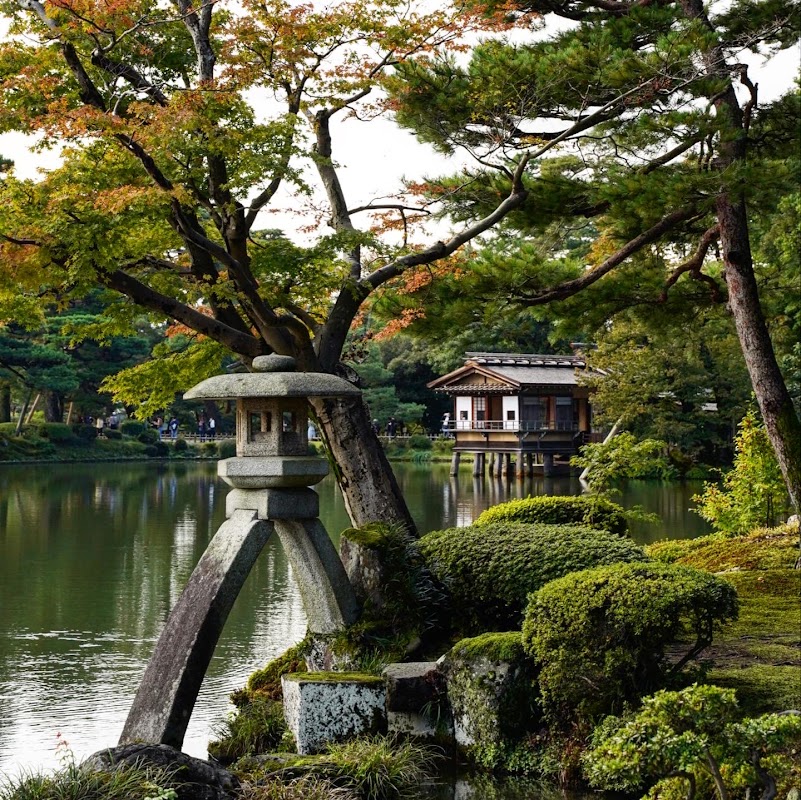
Kenrokuen, one of Japan’s ‘Three Great Gardens’ alongside Kairakuen in Mito and Korakuen in Okayama, is a representative pond-stroll garden from the Edo period, built by successive lords of the Kaga domain over approximately 180 years. It was named for encompassing the ‘six qualities’ (rokushō) – vastness, solemnity, artificiality, antiquity, abundant water, and broad views – all within its extensive grounds.
To maximize your enjoyment of this meticulously designed garden’s beauty, we highly recommend visiting in the ‘early morning (around 7 AM).’ While it tends to get crowded with tour groups and school trips before noon, during the peaceful hours of the morning, you can have views like the Kotojitoro lantern and Kasumigaike Pond, which look like paintings no matter where you frame them, all to yourself.
Also, the garden is vast, about 2.4 times the size of Tokyo Dome, and has many uneven gravel paths, so wearing comfortable shoes like sneakers is essential. During seasonal evening light-ups, on windless days, the water surface reflects the scenery like a mirror, creating a fantastical world entirely different from the daytime. By leisurely strolling through Kenrokuen, perhaps combined with Kanazawa Castle Park, you’ll experience a feeling of your mind and soul being ‘rejuvenated’ and ‘calm.’
Kaga Traditional Craft Village Yunokuni-no-Mori
📍 Address: Na-3-3 Awazu Onsen, Komatsu, Ishikawa 923-0393, Japan
‘Yunokuni-no-Mori’ is a village formed by relocating Edo and Meiji-era thatched-roof traditional houses from the Hokuriku region into a vast 130,000-tsubo (approx. 43 hectares) forest. It’s an experiential theme park where you can easily try over 50 types of traditional crafts, from Kutani-yaki pottery wheel throwing and Wajima-nuri chinkin (gold inlay) to glass sandblasting and gold leaf application.
During long holidays like Golden Week, it gets crowded with many families, but the golden rule here is to ‘aim for the very opening time (9 AM) on holidays.’ By completing popular experiences in the uncrowded morning, you can enjoy them at your own pace without feeling rushed. Additionally, SNS-worthy spots like the ‘Umbrella Sky,’ where colorful umbrellas float overhead, and the heart-shaped window can be freely photographed when there are fewer people.
Even on rainy days, umbrellas are available for rental, and most experiences can be enjoyed indoors, making it less weather-dependent, which is a welcome point for travelers. In winter, the quiet scenery of the traditional houses covered in snow looks straight out of a fairy tale. Also, be sure to try the exquisite Zenzai (sweet red bean soup), which will warm you up on a chilly day.
Kazue-machi Chaya District (Traditional Buildings Preservation Area)
📍 Address: 2-5 Kazue-machi, Kanazawa, Ishikawa 920-0908, Japan
Kazue-machi Chaya District, one of Kanazawa’s three chaya districts, stands apart from the bustling ‘Higashi Chaya District,’ exuding a mature tranquility and charm. Along the Asano River, teahouses and traditional restaurants line the streets, preserving the atmospheric townscape once beloved by author Kyoka Izumi.
When visiting here, you absolutely must walk the two symbolic stone staircases. One is ‘Kuragari-zaka’ (Dark Slope), which is dim even during the day, said to have been used by patrons to discreetly access the chaya district. The other is ‘Akari-zaka’ (Light Slope), named by author Hiroyuki Itsuki and also a film location. The intricate play of light and shadow created by the narrow alleys and latticework windows gives the illusion of stepping from the everyday into the extraordinary.
While daytime mainly involves quiet strolls through the backstreets, its charm is most striking from evening to night. When gas lamp-like streetlights and the lights from each establishment illuminate, the riverside scenery becomes particularly enchanting. Visiting it with Higashi Chaya District is a popular choice, but please be considerate of your surroundings when taking photos, as the streets are narrow and taxis and other vehicles often pass through.
Tedori Gorge
📍 Address: 1 Shimogiyadani-machi, Hakusan, Ishikawa 920-2342, Japan
Among the ‘Hakusan Tedorigawa Geopark,’ certified as a UNESCO Global Geopark, Tedori Gorge is a scenic spot where you can feel the overwhelming power of nature. The fierce current of the Tedori River has carved the land over many years, creating cliffs 20-30 meters high that stretch for about 8 km.
The biggest highlight is ‘Wataga-daki’ (Cotton Waterfall), with a 32-meter drop. It was named because the spray falling down resembles cotton. The roaring volume of water is magnificent, and the surrounding area is filled with negative ions, making it feel 2-3 degrees Celsius cooler even in summer.
However, to see this waterfall up close, you need to descend about 120-130 steep steps. While there are handrails, the stone steps, wet from the spray, can be very slippery, so those with concerns about their legs or back should enjoy it from the observation deck without overexerting themselves. Also, the water quality of the river is highly dependent on the weather, so the local secret is to aim for a ‘clear day when it hasn’t rained for several days’ if you want to see the emerald green clear stream.
Notojima Aquarium
📍 Address: 15-40 Magari-machi, Notojima, Nanao, Ishikawa 926-0216, Japan
Notojima Aquarium, located on Notojima Island surrounded by Nanao Bay, suffered extensive damage to its tanks and facilities in the 2024 Noto Peninsula Earthquake, forcing its temporary closure. However, thanks to support from across the nation and the dedicated efforts of its staff, it made a full comeback in March 2025, truly a ‘symbol of recovery.’
The aquarium isn’t too large, and its compact size is appealing, allowing you to comfortably explore the entire facility in about three hours. The dolphin and sea lion shows are filled with the staff’s handmade charm and deep affection for the animals, leaving you with a warm and fuzzy feeling. In the large tank enveloped in fantastic blue light, you can observe whale sharks and rays gracefully swimming by up close, helping you forget the stresses of daily life.
Overcoming the scars of the earthquake, these marine creatures once again showcase the brilliance of life. Through the beautifully repaired acrylic tanks, you’ll feel not just a leisure facility but the ‘strength to connect life.’ With relatively moderate crowds, it’s an aquarium we heartily recommend to travelers who want to take their time and ‘connect’ deeply with each tank.
Tips for Enjoying Ishikawa Prefecture Tourism to the Fullest (120%)
As the famous spots in Ishikawa Prefecture can be quite spread out, it’s crucial to understand the characteristics of each area and plan your itinerary accordingly. While Kanazawa City (Kenrokuen, Kazue-machi Chaya District) can be sufficiently explored by public transport or on foot, a rental car is overwhelmingly convenient for venturing to the suburban Hakusan area (Tedori Gorge), Noto area (Notojima Aquarium), or Kaga area (Yunokuni-no-Mori).
Furthermore, the Hokuriku region is known for its changeable weather, to the extent that there’s a saying, ‘Don’t forget your umbrella, even if you forget your lunchbox.’ To safely navigate the steep steps of Tedori Gorge and the wide gravel paths of Kenrokuen, always choose comfortable, non-slip sneakers that you’re used to walking in. Immerse yourself in the historical landscapes, powerful nature, and the journey of recovery, and enjoy a deep and memorable trip to Ishikawa.


'%3E%3Cpath%20stroke='%23000'%20stroke-width='4'%20d='m-35-37-13%2020m5%203%2013-20m5%203-13%2020m63%2042%206-9m1-2%206-9m5%203-6%209m-1%202-6%209m5%203%206-9m1-2%206-9m-96%200%2013%2020m5-3-6-9m-1-2-6-9m5-3%2013%2020m63-42-6-9m-1-2-6-9m5-3%2013%2020m5-3-6-9m-1-2-6-9'/%3E%3Ccircle%20r='24'%20fill='%23cd2e3a'/%3E%3Cpath%20fill='%230047a0'%20d='M0%200a12%2012%200%201%201%2020%2013%2024%2024%200%201%201-40-26A12%2012%200%201%200%200%200'/%3E%3C/g%3E%3C/svg%3E)
'/%3E%3Cpath%20fill='%23b2b2b2'%20d='M241%20382q0%2016%2017%2026%2017%2011%2042%2011t42-11q16-11%2017-26V269H241'/%3E%3Cpath%20fill='%239f7e00'%20d='M241%20379q0%2014%208%2023%209%209%2021%209%2014%200%2021-9%209-9%209-23V269h-59'/%3E%3Cpath%20d='M241%20339v-70h59v110q0%2014-9%2023l-6%205v-68h-15v72q-8%200-14-4v-68zm59%2040c0%2022%2015%2032%2029%2032%2021%200%2030-18%2030-32v-40h-59'/%3E%3Cpath%20fill='%239f7e00'%20d='M266%20277v5h2v12h-3v-5h2v-5h-9v5h2v5h-4v9h3v18h-5v10h34v-10h-5v-18h3v-9h-4v-5h2v-5h-9v5h2v5h-3v-12h2v-5zm42%20101q0%2010%206%2017%206%206%2015%207%2010-1%2016-7%206-7%206-17v-29h-43'/%3E%3Ccircle%20fill='%230044ad'%20cx='329.5'%20cy='372'%20r='6'/%3E%3Cellipse%20fill='%230044ad'%20cx='300'%20cy='340'%20rx='16'%20ry='21'/%3E%3C/svg%3E)


