

Tenryu-ji Temple
📍 Address: 68 Susukinobaba-cho, Saga Tenryuji, Ukyo-ku, Kyoto, 616-8385, Japan
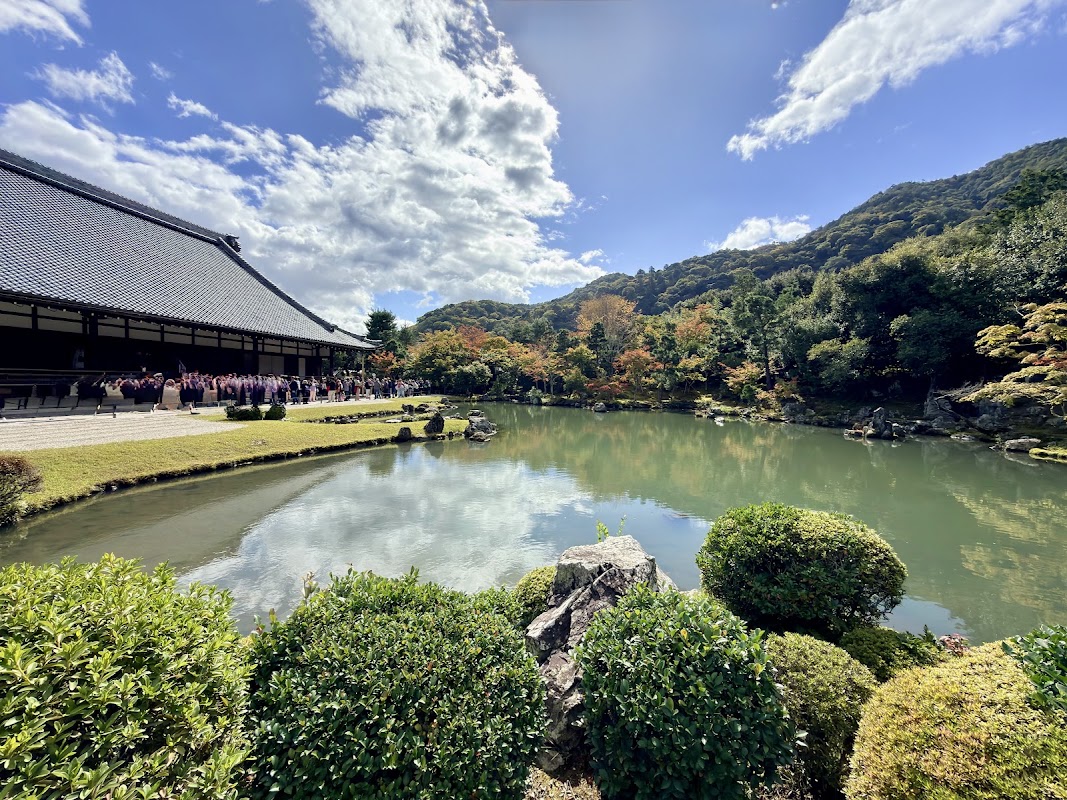
A visit to Arashiyama is incomplete without seeing Tenryu-ji Temple, a head temple of the Rinzai Zen sect and a UNESCO World Heritage Site. This prestigious temple, founded by Ashikaga Takauji to pray for the repose of Emperor Go-Daigo’s soul, is ranked first among Kyoto’s Five Great Zen Temples.
The main highlight is the Sogenchi Teien (Sogen Pond Garden), designated as Japan’s first Special Historic Site and Special Place of Scenic Beauty. This stroll garden, designed by Muso Soseki, cleverly incorporates Arashiyama and Kameyama as borrowed scenery, boasting magnificent natural beauty that has remained largely unchanged for nearly 700 years. Sitting on the veranda and gazing idly at the garden provides a profound sense of healing, as if disconnected from the hustle and bustle of daily life.
Also a must-see is the ‘Cloud Dragon Painting’ (Unryu-zu) on the ceiling of the Hatto (Dharma Hall). Painted by artist Matazo Kayama in 1997, this dragon possesses ‘five claws,’ a symbol of the emperor in ancient China, and exudes an overwhelming presence as the ‘Hapрo Nirami no Ryu’ (Dragon Staring in All Directions), appearing to glare at you from anywhere in the hall. (Note: This is generally viewable on weekends, holidays, and during special spring/autumn openings.)
As a popular tourist destination, it can get very crowded during the day. However, around 9 AM, right after opening, there are fewer tour groups, allowing you to fully appreciate the crisp, solemn atmosphere unique to a Zen temple. Exiting through the north gate of the garden leads directly to the Arashiyama Bamboo Grove, making it an excellent starting point for exploring Arashiyama.
Nijo Castle
📍 Address: 541 Nijo-jo-cho, Nakagyo-ku, Kyoto, 604-8301, Japan
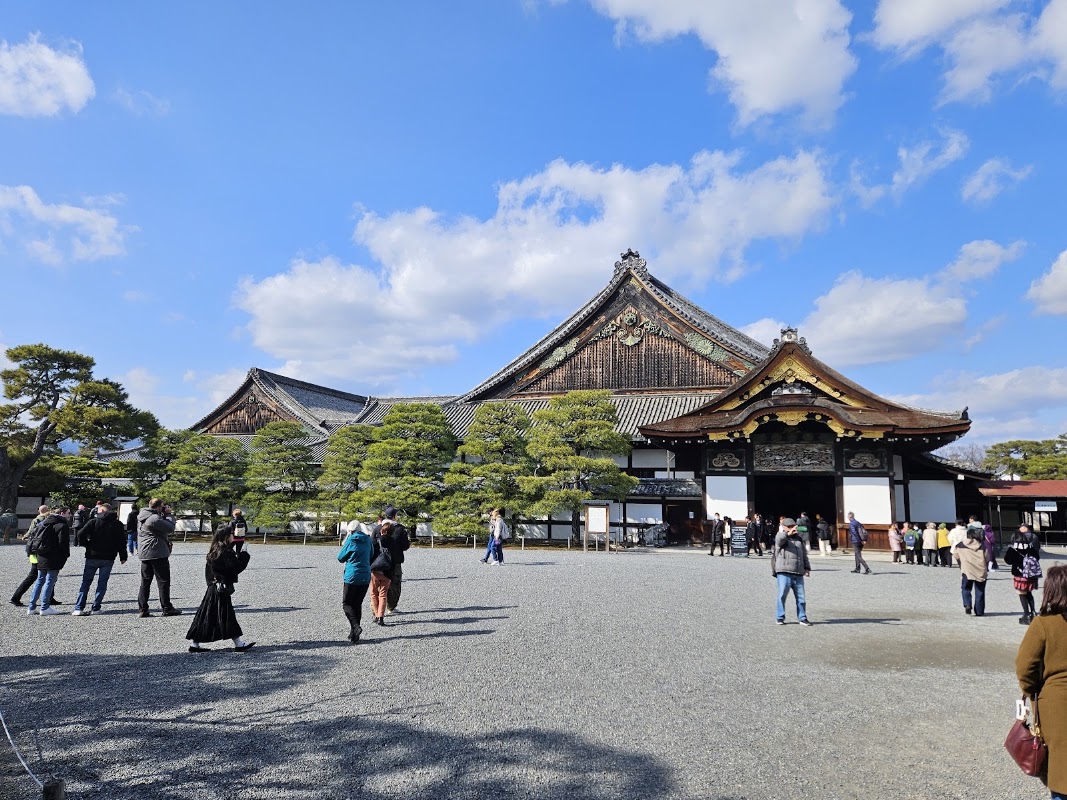
Built by Tokugawa Ieyasu and serving as the stage for the ‘Taisei Hokan’ (Restoration of Imperial Rule) by the 15th Shogun, Yoshinobu, this castle witnessed both the beginning and end of the Edo period. Unlike typical castles built for warfare, it was constructed as a place for shoguns to stay during their visits to Kyoto and for ceremonies, thus featuring splendid and luxurious decorations throughout, much like a guesthouse.
At the National Treasure, Ninomaru Goten (Ninomaru Palace), you can see the ‘Uguisubari no Roka’ (Nightingale Corridor), which makes a squeaking sound like a nightingale’s song with every step, and sliding door paintings drawn by the Kano school up close. Standing in the Great Hall where the Taisei Hokan took place, which you may have seen in history textbooks, makes you feel as if you can sense the atmosphere of that pivotal moment in history.
Currently, the Honmaru Goten (Honmaru Palace) is attracting significant attention. It consists of the main parts of the former Katsura Imperial Palace relocated from the Kyoto Imperial Palace during the Meiji period, and is an extremely valuable surviving example of an ‘imperial court palace’ (Kuge Kyuden) in Japan. After 18 years of extensive preservation and repair work, it finally reopened to the public in autumn 2024. In contrast to the samurai-style Ninomaru Goten, this refined and elegant space, associated with court nobles, is a must-see. Note that advance reservation (web ticket) is required for viewing the Honmaru Goten, so don’t forget to arrange this before your visit.
【Pro Tip】When visiting in winter, be prepared for an intense ‘sokobie’ (chilling cold from the floor) from the wooden palace floors. Bringing thick socks or overshoes can dramatically improve the comfort of your historical tour, so don’t forget them!
Kinkaku-ji Temple
📍 Address: 1 Kinkakuji-cho, Kita-ku, Kyoto, 603-8361, Japan
It’s no exaggeration to say that this is *the* place that comes to mind when thinking of Kyoto, an iconic spot that draws tourists from all over the world. Its official name is ‘Rokuon-ji Temple,’ and it originated as Kitayama-sanso, a villa built by Ashikaga Yoshimitsu, the 3rd shogun of the Muromachi Shogunate.
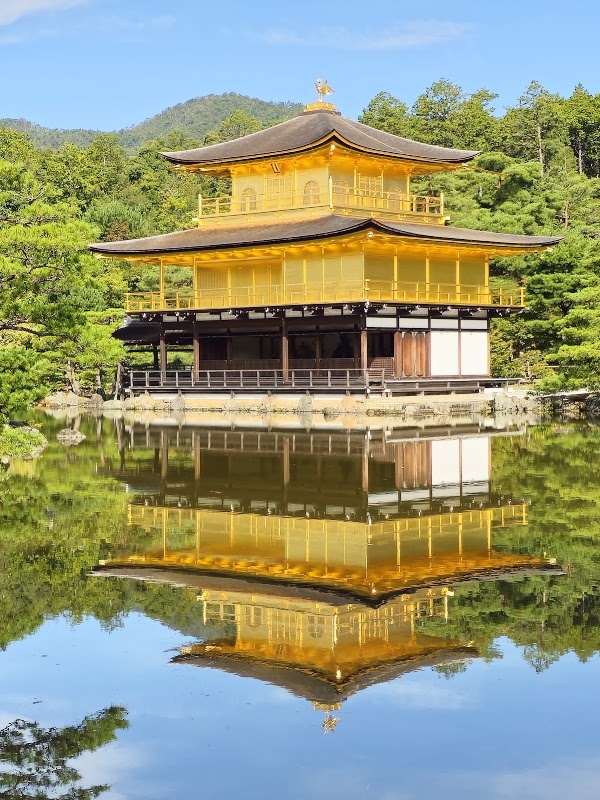
The golden ‘Shariden (Kinkaku)’ (Reliquary Hall) standing on the edge of Kyokochi Pond is exceptionally divine, no matter how many times you’ve seen it in photos or videos. On a clear day, the ‘inverted Kinkaku’ is clearly reflected on the water’s surface, and the contrast between the surrounding green trees and the golden structure creates a beauty akin to that of Sukhavati (the Pure Land).
A lesser-known highlight of Kinkaku-ji is that the Kinkaku (Golden Pavilion) is not just flashy; it’s constructed with different architectural styles on each floor. The first floor is ‘Shinden-zukuri’ (palace style, unpainted wood), resembling a noble’s residence. The second floor is ‘Buke-zukuri’ (samurai house style). And the top third floor is ‘Zenshu Butsuden-zukuri’ (Zen temple style, Tang Dynasty style). This was intended to show that Yoshimitsu was a powerful ruler standing above the court nobles, samurai, and even the Buddhist world.
The temple grounds have a well-maintained one-way path, ensuring smooth movement even with many visitors, without people stopping. There’s also ample space to take photos from across the pond, allowing you to capture a perfect shot without people’s heads in the way. Allow about 30 to 40 minutes for your visit, which will let you leisurely explore, including the view from the Sekka-tei Teahouse on the hilltop.
Sannenzaka (Sanneizaka)
📍 Address: 2-211 Kiyomizu, Higashiyama-ku, Kyoto, 605-0862, Japan
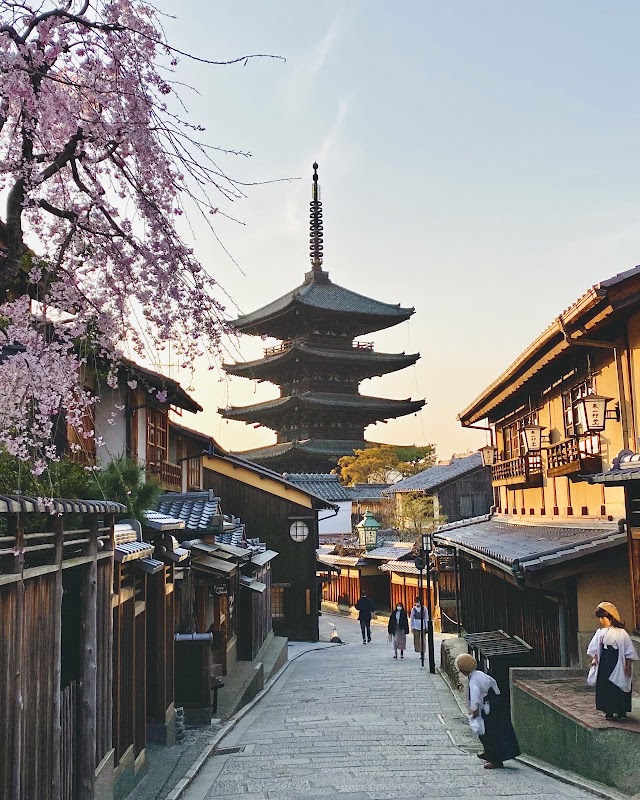
Sannenzaka is a stone-paved slope, part of the approach to Kiyomizu-dera Temple, filled with Kyoto-esque charm and lined with traditional machiya townhouses. It’s designated as an Important Preservation District for Groups of Historic Buildings, and along its sides, you’ll find sweet shops offering matcha sweets and stores selling Kyoto souvenirs like Kiyomizu-yaki pottery and incense. The route from Kiyomizu-dera Temple through Sannenzaka and Ninenzaka to Kodai-ji Temple and Yasaka Shrine is a ‘super classic’ Kyoto sightseeing itinerary, where every turn presents a picturesque scene.
While it’s a bustling street during the day, crowded with domestic and international tourists, for seasoned travelers and repeat visitors, we highly recommend visiting in the ‘early morning’ and ‘at night.’
In the early morning, before shops open, there are almost no people, allowing you to have the stone-paved street to yourself in a crisp, solemn atmosphere. At night, the streetlights and lights from each shop illuminate the cobblestones with an orange glow, and the sight of Yasaka Pagoda lit up in the distance is breathtakingly ethereal. It’s a special time to enjoy a stroll in a tranquility as if you’ve time-traveled, feeling like the protagonist of a drama.
Arashiyama
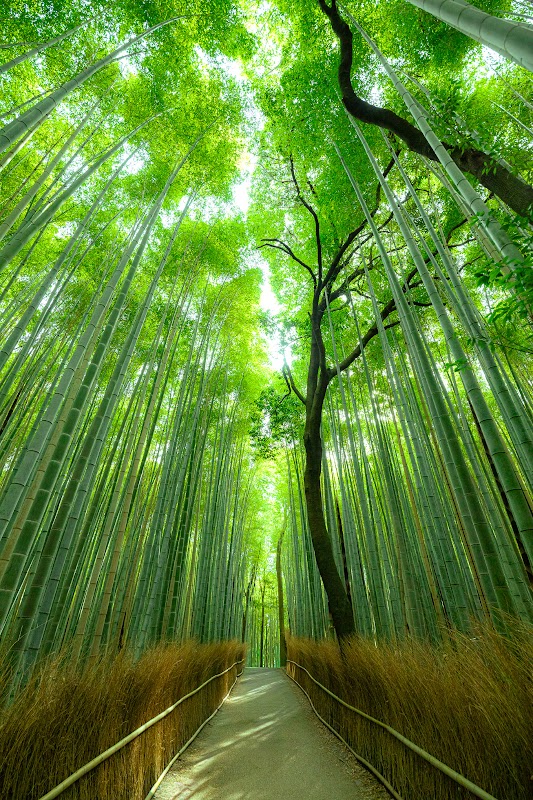
📍 Address: Arashiyama Genrokuyamacho, Ukyo-ku, Kyoto, 616-0007, Japan
Arashiyama, located on the western side of Kyoto City, is an area where nature and history are beautifully harmonized, having long been cherished by nobles as a villa retreat. Centered around the graceful ‘Togetsukyo Bridge’ spanning the Hozugawa River, breathtaking seasonal scenery unfolds. Whether you visit during spring cherry blossoms, fresh green maples in early summer, vibrant autumn foliage, or winter snowscapes, you’ll encounter captivating views.
While exploring classic spots like Tenryu-ji Temple and the Arashiyama Bamboo Grove is enjoyable, we recommend venturing a little further to the Kameyama Park Observatory. From the top of the stairs, you can overlook the magnificent gorge beauty of Hozukyo, and the autumn colors woven by the mountains are simply breathtaking. It’s a hidden gem where you can find deep healing away from the hustle and bustle of the main street.
Since the attractions in the Arashiyama area are spread out over a wide range, instead of rushing through, we recommend dedicating a full day to slowly explore the area. Shops close early in the evening, but taking a leisurely stroll around Togetsukyo Bridge at night when there are fewer people, listening to the murmuring river, is a luxurious way to enjoy the area, especially for those staying overnight or with ample time.
Practical Tips for 120% Enjoyment of Kyoto Tourism
Time-Lag Planning to Avoid Crowds
Kyoto, being a world-renowned tourist city, sees most of its famous spots extremely crowded during the day. The key to a comfortable visit is ‘early rising.’ Popular areas like Kiyomizu-dera Temple (including Sannenzaka) and Arashiyama (Bamboo Grove) are less crowded between 7 and 8 AM, allowing for stress-free photography. Starting your activities to coincide with temple opening hours (usually 8:30 to 9 AM) is a golden rule for seasoned travelers.
Smooth and Queue-Free with Advance Arrangements
In recent years, major facilities in Kyoto have increasingly adopted web tickets. Some places, like Nijo Castle’s Honmaru Goten, are ‘advance reservation only,’ so it’s wise to purchase your tickets via the official smartphone page once your travel itinerary is set. This can significantly cut down on time spent waiting in line for same-day tickets.
Comfortable Shoes and ‘Ease of Taking Them On/Off’
Kyoto sightseeing involves a lot of walking. With many cobblestone paths and slopes, comfortable shoes like sneakers are essential. Furthermore, it’s characteristic of temples and palaces that there are very frequent occasions to ‘take off your shoes’ when entering. Choosing easy-to-remove shoes and, in winter, preparing ‘thick socks’ to prevent the chilling cold from wooden floors can greatly affect your travel fatigue.


'%3E%3Cpath%20stroke='%23000'%20stroke-width='4'%20d='m-35-37-13%2020m5%203%2013-20m5%203-13%2020m63%2042%206-9m1-2%206-9m5%203-6%209m-1%202-6%209m5%203%206-9m1-2%206-9m-96%200%2013%2020m5-3-6-9m-1-2-6-9m5-3%2013%2020m63-42-6-9m-1-2-6-9m5-3%2013%2020m5-3-6-9m-1-2-6-9'/%3E%3Ccircle%20r='24'%20fill='%23cd2e3a'/%3E%3Cpath%20fill='%230047a0'%20d='M0%200a12%2012%200%201%201%2020%2013%2024%2024%200%201%201-40-26A12%2012%200%201%200%200%200'/%3E%3C/g%3E%3C/svg%3E)
'/%3E%3Cpath%20fill='%23b2b2b2'%20d='M241%20382q0%2016%2017%2026%2017%2011%2042%2011t42-11q16-11%2017-26V269H241'/%3E%3Cpath%20fill='%239f7e00'%20d='M241%20379q0%2014%208%2023%209%209%2021%209%2014%200%2021-9%209-9%209-23V269h-59'/%3E%3Cpath%20d='M241%20339v-70h59v110q0%2014-9%2023l-6%205v-68h-15v72q-8%200-14-4v-68zm59%2040c0%2022%2015%2032%2029%2032%2021%200%2030-18%2030-32v-40h-59'/%3E%3Cpath%20fill='%239f7e00'%20d='M266%20277v5h2v12h-3v-5h2v-5h-9v5h2v5h-4v9h3v18h-5v10h34v-10h-5v-18h3v-9h-4v-5h2v-5h-9v5h2v5h-3v-12h2v-5zm42%20101q0%2010%206%2017%206%206%2015%207%2010-1%2016-7%206-7%206-17v-29h-43'/%3E%3Ccircle%20fill='%230044ad'%20cx='329.5'%20cy='372'%20r='6'/%3E%3Cellipse%20fill='%230044ad'%20cx='300'%20cy='340'%20rx='16'%20ry='21'/%3E%3C/svg%3E)


