

Koedo Kawagoe Ichibangai Shopping Street – ‘Kurazukuri’ Warehouse District
📍 Address: Saiwaicho, Kawagoe, Saitama 350-0063, Japan
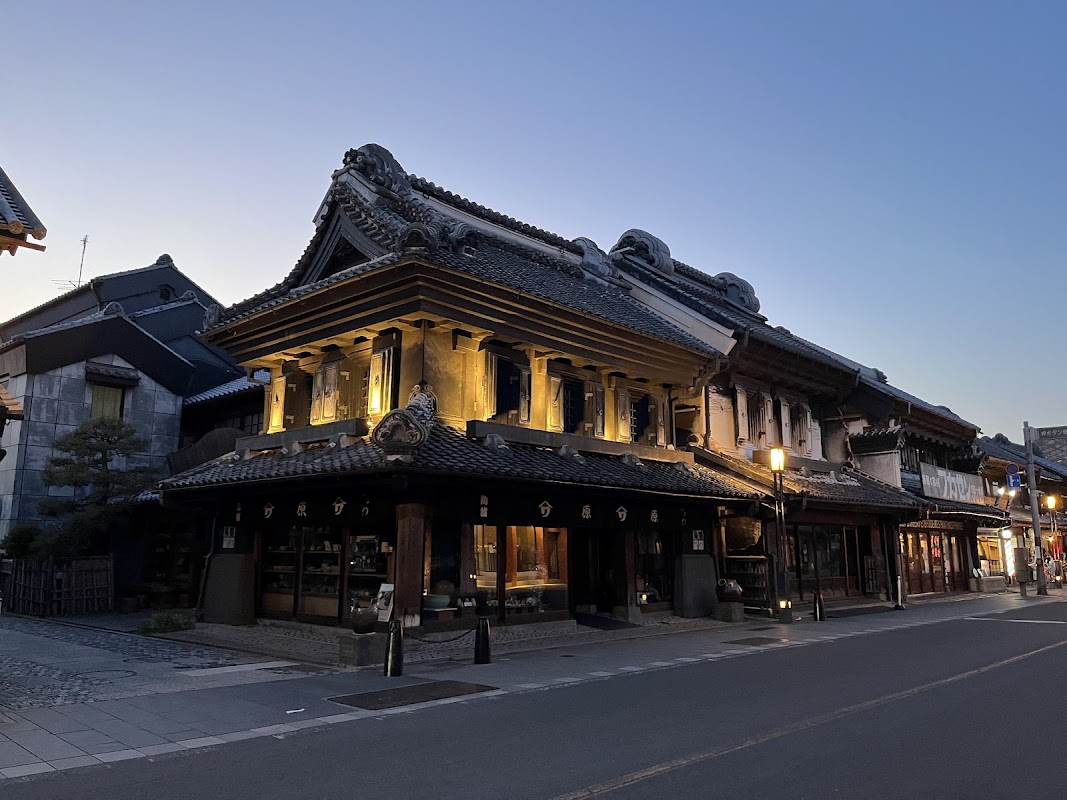
Kawagoe’s main street is just under an hour’s access from central Tokyo. Stepping onto this street, lined with ‘Kurazukuri’ (warehouse-style) buildings characterized by their heavy black plaster walls and impressive ‘onigawara’ (demon roof tiles), feels like traveling back in time to the Edo period. This distinctive landscape was formed following the Great Kawagoe Fire of Meiji 26 (1893), which led to the adoption of fire-resistant architectural styles. Today, it is designated as a National Important Preservation District for Groups of Traditional Buildings.
A common pitfall for tourists is that this street is ‘not a pedestrian-only zone.’ Regular cars and local buses pass through, so be careful not to get too engrossed in photography. Additionally, it gets extremely crowded during the day with tourists enjoying street food. If you want to fully appreciate the architectural beauty of the Kurazukuri buildings and capture photos without people in them, the best time to visit is between 9:00 AM and 10:00 AM, before the shops fully open. Look up at the rooftops, and you might spot ‘Shoki-sama,’ a guardian deity believed to ward off evil, protecting some of the houses – a must-find for history buffs.
Toki no Kane (Bell of Time)
📍 Address: 15-7 Saiwaicho, Kawagoe, Saitama 350-0063, Japan
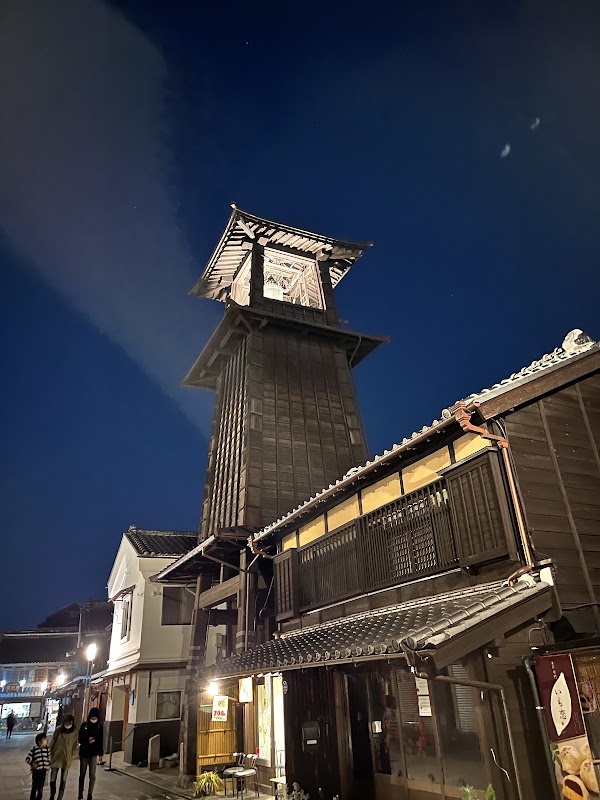
Standing majestically a short walk down an alley from the Kurazukuri street is the ‘Toki no Kane’ (Bell of Time), a symbol of ‘Little Edo’ Kawagoe. It is said to have been first built approximately 400 years ago during the Kan’ei era by Sakai Tadakatsu, the then-lord of the Kawagoe Domain. Having been destroyed by repeated fires, the current wooden three-story bell tower, standing about 16 meters tall, is the fourth generation, rebuilt the year after the Great Kawagoe Fire of the Meiji era. It has also been selected as one of the ‘100 Soundscapes of Japan to Be Preserved’ by the Ministry of the Environment.
The bell rings mechanically four times a day at fixed times: 6 AM, 12 PM, 3 PM, and 6 PM. While it gets extremely crowded during the day, the serene sound heard in the crisp air at 6 AM, or the profound chimes resounding amidst the retro and magical atmosphere at dusk (6 PM), offer a charm that makes you forget the hustle and bustle of tourists. A photography tip is to capture the bell tower from a slight distance, including the surrounding townscape, rather than directly beneath it. Furthermore, beneath the bell tower, you’ll find the secluded ‘Yakushi Shrine,’ believed to grant blessings for eye disease recovery, making it an unmissable deep spot.
Kashiya Yokocho (Candy Alley)
📍 Address: 2-11-3 Motomachi, Kawagoe, Saitama 350-0062, Japan
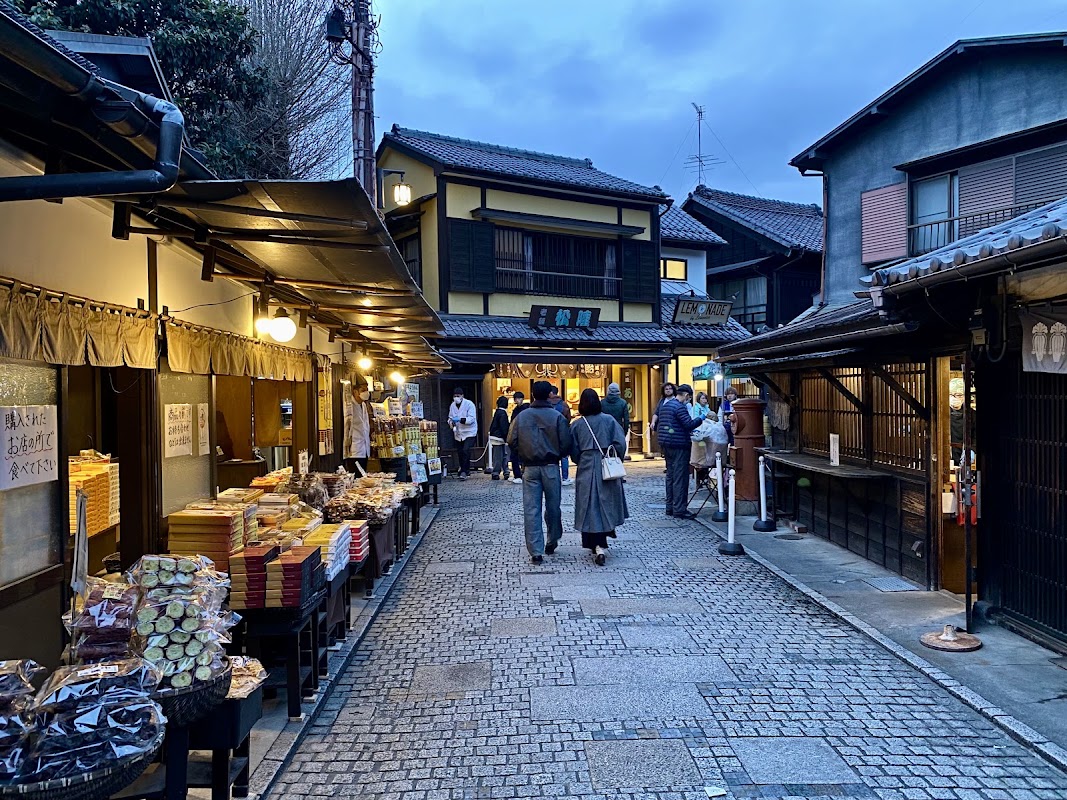
Just a few minutes’ walk from Toki no Kane, ‘Kashiya Yokocho’ is a nostalgic area where traditional ‘dagashi’ (cheap sweets) stores and Japanese confectionery shops line a cobblestone path. Its roots trace back to the early Meiji era. After the Great Kanto Earthquake, it took over production for the damaged Tokyo area, and in the early Showa period, it boasted a vibrant atmosphere with over 70 vendors. Although now numbering around 20 shops, it’s a place filled with the sweet and aromatic scents of mint, soy sauce, and cinnamon, so much so that it was selected as one of the ‘100 Scent-scapes of Japan’ by the Ministry of the Environment.
You’ll find a wide array of local items only available here, such as sweets made from Kawagoe’s famous sweet potatoes, ‘Japan’s longest fu-gashi’ (wheat gluten snack), and traditional ‘kumi-ame’ (patterned candy, like Kintaro-ame) showcasing artisan craftsmanship. Recently, character merchandise shops have also opened, attracting new customer demographics. A word of caution: many old-fashioned shops have short operating hours, with many closing their shutters before evening. If you want to buy your favorite dagashi or enjoy street food, it’s recommended to visit by around 3:00 PM.
Hitsujiyama Park
📍 Address: 6360 Omiya, Chichibu, Saitama 368-0023, Japan
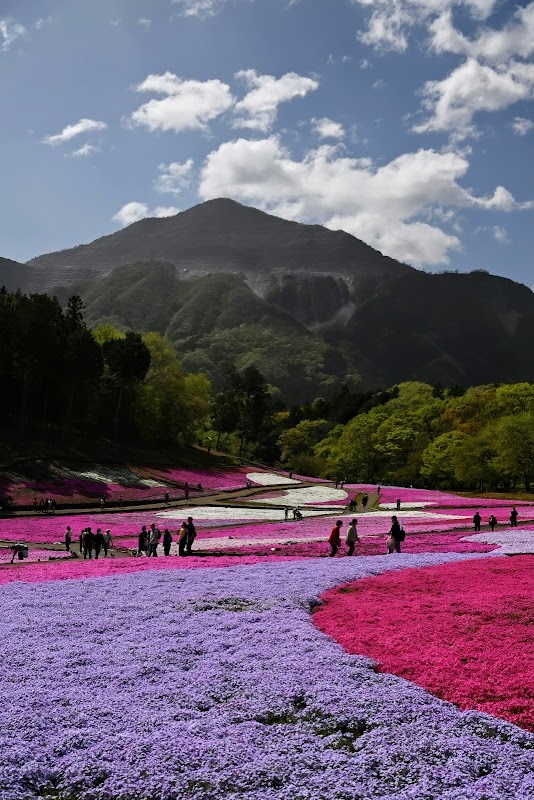
Located on a hill overlooking Chichibu city, ‘Hitsujiyama Park’ is an absolute must-visit spot for spring tourism in Chichibu. The biggest highlight is the ‘Shibazakura Hill,’ which typically reaches its peak bloom from mid-April to early May. With Mount Buko, a symbol of Chichibu, in the background, over 400,000 moss phlox plants of 10 varieties bloom across a vast area of approximately 17,600 square meters, creating a breathtaking spectacle like a giant patchwork carpet of pink, white, and purple.
During peak season, especially Golden Week, a huge number of tourists visit, leading to heavy traffic congestion on surrounding roads and in parking lots. An insider tip from residents and repeat visitors to avoid this crowd is to visit early in the morning. Not only can you enter for free before the paid hours at 8 AM, but you can also leisurely enjoy the spectacular view with fewer people. If you’re lucky, you might even encounter the fantastical sight of Mount Buko floating like a sea of clouds beyond the morning mist. Please be sure to wear comfortable walking shoes, as there’s a rolling slope from the nearest parking lot to Shibazakura Hill.
Nagatoro Iwadatami (Rock Tatami)

📍 Address: Nagatoro, Nagatoro-machi, Chichibu-gun, Saitama 369-1300, Japan
‘Nagatoro Iwadatami’ is a representative natural scenic spot in Saitama Prefecture, designated as a National Place of Scenic Beauty and a Natural Monument. This rock formation, stretching approximately 50 meters wide and 600 meters long along the Arakawa River, was formed by ‘crystalline schist’ created at depths of 20-30 kilometers underground, uplifted by crustal movements, and then eroded by the powerful flow of the Arakawa River. Because it allows direct observation of the Earth’s interior on the surface, geologists also refer to it as ‘Earth’s Window.’
Standing on the rock tatami and gazing at the cliffs on the opposite bank, known as ‘Chichibu Red Cliff,’ or watching boats float down the river, is a unique Nagatoro experience. While most tourists are satisfied taking photos near the entrance by the station, if you venture a little further and walk along the rocks towards Kami-Nagatoro Station, you can find more private spaces where you can feel one with nature and fewer people. However, the rocky terrain can be very unstable, with sloping surfaces and slippery moss. For safe enjoyment, non-slip sneakers or trekking shoes are essential items.
Column: Smart Strategies for an Even More Enjoyable Saitama Trip
Kawagoe and Chichibu-Nagatoro are Saitama Prefecture’s two major tourist areas, but they are geographically separate and each offer completely different appeals. Kawagoe is easily accessible from central Tokyo, and you can enjoy historical walks and street food in half a day, but weekend crowds are inevitable. To avoid the crowds and truly appreciate the original beauty of the Kurazukuri townscape, definitely start your activities early in the morning.
On the other hand, the Chichibu-Nagatoro area boasts a grander natural scale, requiring stamina for moving between spots and exploring locally. Especially when aiming to visit Hitsujiyama Park during the Shibazakura season or engage in summer activities in Nagatoro, driving by car carries a high risk of traffic jams. Utilizing express trains like Seibu Railway’s ‘Laview’ wisely, and then exploring from the nearest station by taxi or on foot to leisurely feel the earth’s energy, is the shortcut to a highly satisfying trip.


'%3E%3Cpath%20stroke='%23000'%20stroke-width='4'%20d='m-35-37-13%2020m5%203%2013-20m5%203-13%2020m63%2042%206-9m1-2%206-9m5%203-6%209m-1%202-6%209m5%203%206-9m1-2%206-9m-96%200%2013%2020m5-3-6-9m-1-2-6-9m5-3%2013%2020m63-42-6-9m-1-2-6-9m5-3%2013%2020m5-3-6-9m-1-2-6-9'/%3E%3Ccircle%20r='24'%20fill='%23cd2e3a'/%3E%3Cpath%20fill='%230047a0'%20d='M0%200a12%2012%200%201%201%2020%2013%2024%2024%200%201%201-40-26A12%2012%200%201%200%200%200'/%3E%3C/g%3E%3C/svg%3E)
'/%3E%3Cpath%20fill='%23b2b2b2'%20d='M241%20382q0%2016%2017%2026%2017%2011%2042%2011t42-11q16-11%2017-26V269H241'/%3E%3Cpath%20fill='%239f7e00'%20d='M241%20379q0%2014%208%2023%209%209%2021%209%2014%200%2021-9%209-9%209-23V269h-59'/%3E%3Cpath%20d='M241%20339v-70h59v110q0%2014-9%2023l-6%205v-68h-15v72q-8%200-14-4v-68zm59%2040c0%2022%2015%2032%2029%2032%2021%200%2030-18%2030-32v-40h-59'/%3E%3Cpath%20fill='%239f7e00'%20d='M266%20277v5h2v12h-3v-5h2v-5h-9v5h2v5h-4v9h3v18h-5v10h34v-10h-5v-18h3v-9h-4v-5h2v-5h-9v5h2v5h-3v-12h2v-5zm42%20101q0%2010%206%2017%206%206%2015%207%2010-1%2016-7%206-7%206-17v-29h-43'/%3E%3Ccircle%20fill='%230044ad'%20cx='329.5'%20cy='372'%20r='6'/%3E%3Cellipse%20fill='%230044ad'%20cx='300'%20cy='340'%20rx='16'%20ry='21'/%3E%3C/svg%3E)


