

Sanmachi Suji (Old Town)
📍 Address: 20 Kamisanmachi, Takayama, Gifu 506-0846, Japan
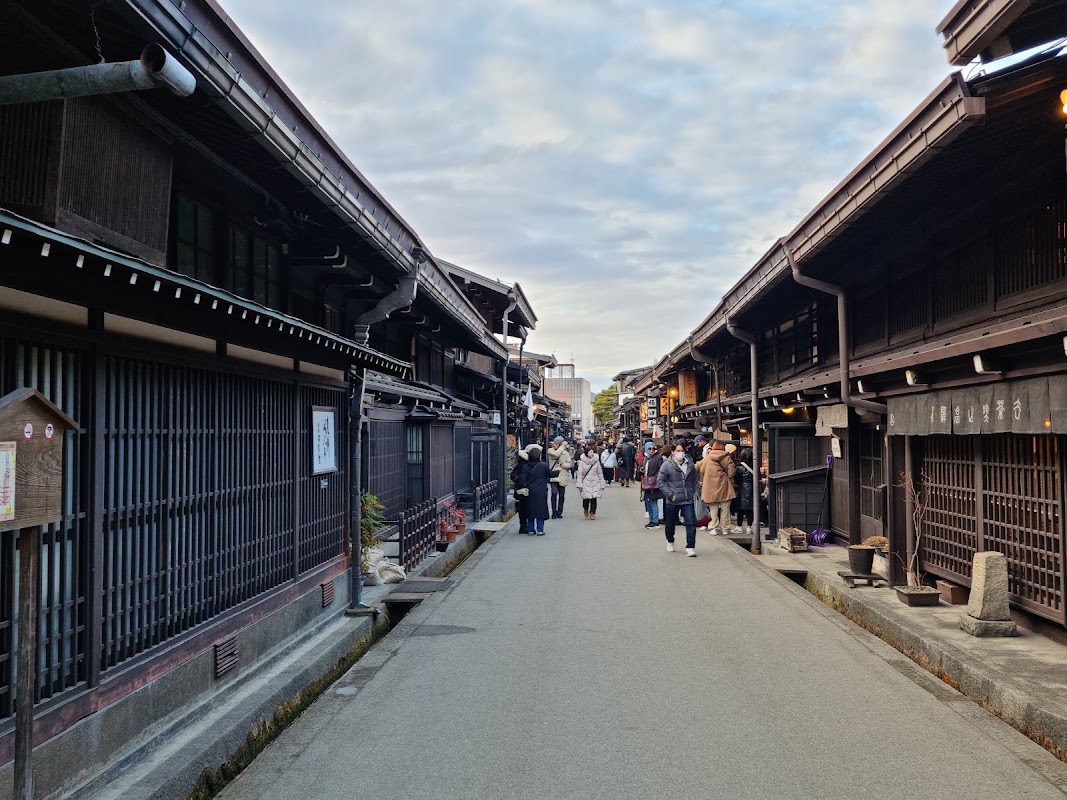
Sanmachi Suji, designated as an Important Preservation District for Groups of Historic Buildings, is synonymous with Takayama tourism. Along its narrow streets, you’ll find rows of traditional machiya houses with distinctive latticework, reminiscent of an Edo-period merchant town, and sake breweries adorned with ‘sugidama’ (cedar balls). It’s like stepping back in time, allowing you to immerse yourself in a historical landscape.
The key to enjoying this area 120% is ‘the time of your visit’. During the daytime, it’s often bustling with domestic and international tourists, making it difficult to fully appreciate the atmosphere. If you want to capture nostalgic, photogenic scenery, visiting ‘before 10 AM’ when there are fewer people is highly recommended. Also, the period around dusk, when shops begin to close and the streets are softly lit, is perfect for a stroll, as the atmosphere is enhanced by the sound of cicadas.
The streets offer a variety of street food, including Hida beef sushi, Gohei mochi (grilled rice cakes), and local sake tasting. However, popular shops like Takayama Pudding and souvenir stores often aren’t open early in the morning (e.g., before 10 AM). So, a smart strategy is to enjoy the quiet morning scenery first, then indulge in the gourmet delights when the shops start to open.
Hida Takayama Miyagawa Morning Market
📍 Address: Shimomachi, Takayama, Gifu 506-0841, Japan
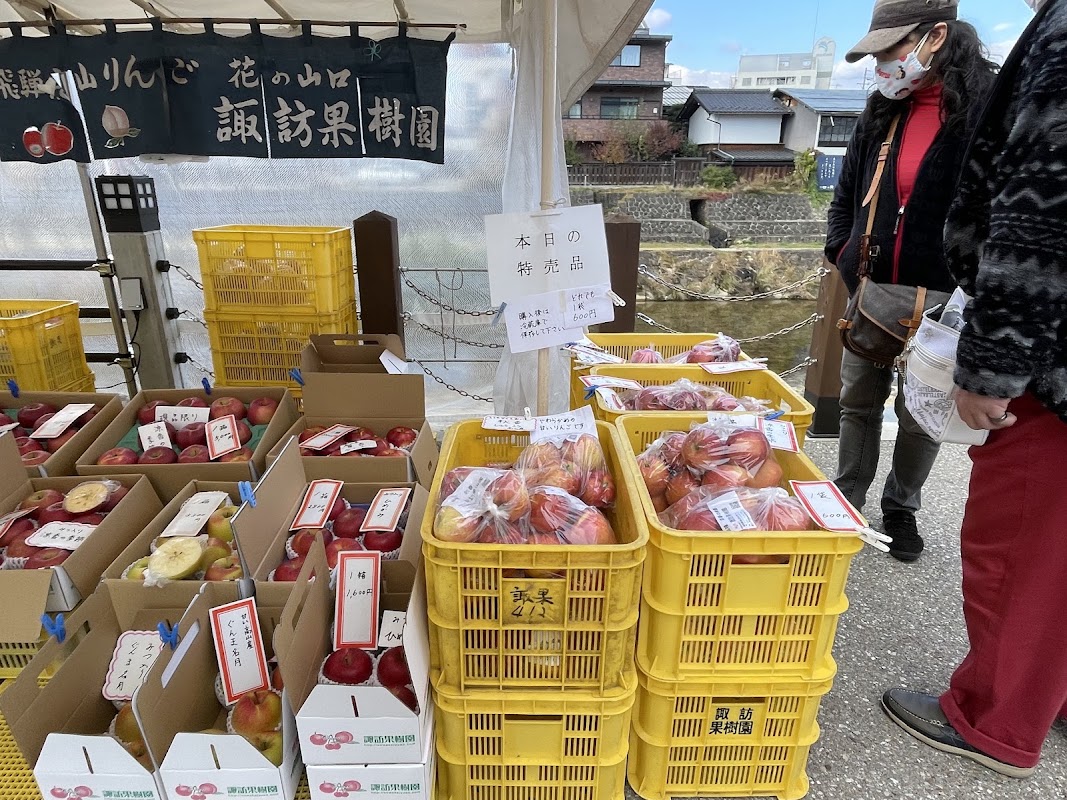
The Hida Takayama Miyagawa Morning Market, counted among Japan’s three great morning markets, is a vibrant spot where about 60 white tents line the 350-meter stretch along the river from Kaji Bridge to Yayoi Bridge every morning. Operating hours are from 7 AM (8 AM in winter) until around noon, but some shops close earlier if their goods sell out. So, if you want to experience the local lifestyle and the quiet morning atmosphere, it’s best to aim for the earlier hours around 7 AM.
Previously, the market mainly featured fresh local vegetables, wild plants, and pickles. However, it has now evolved into a popular spot for street food, with an increasing number of shops offering hot pork soup, beef skewers, Hida beef sushi, warabi mochi (bracken-starch dumplings), coffee, and other light meals and sweets. Sipping warm pork soup infused with perilla flavor on a slightly chilly Golden Week morning will surely become a wonderful travel memory.
Shopping for folk crafts is another highlight of the morning market. Particularly popular are ‘Sarubobo’ dolls, a Hida Takayama specialty made with wishes for children’s happiness and protection from evil. Today, they come in various colors, and each color represents different blessings; for example, ‘gold’ signifies good fortune and success. When buying souvenirs, be sure to enjoy chatting with the friendly local vendors. However, due to the increasing number of tourists in recent years, some shop owners may be tired. Please be mindful of good manners, such as asking permission before taking photos and ensuring clear pathways.
Takayama Jinya
📍 Address: 1 Chome-5 Hachikenmachi, Takayama, Gifu 506-0012, Japan
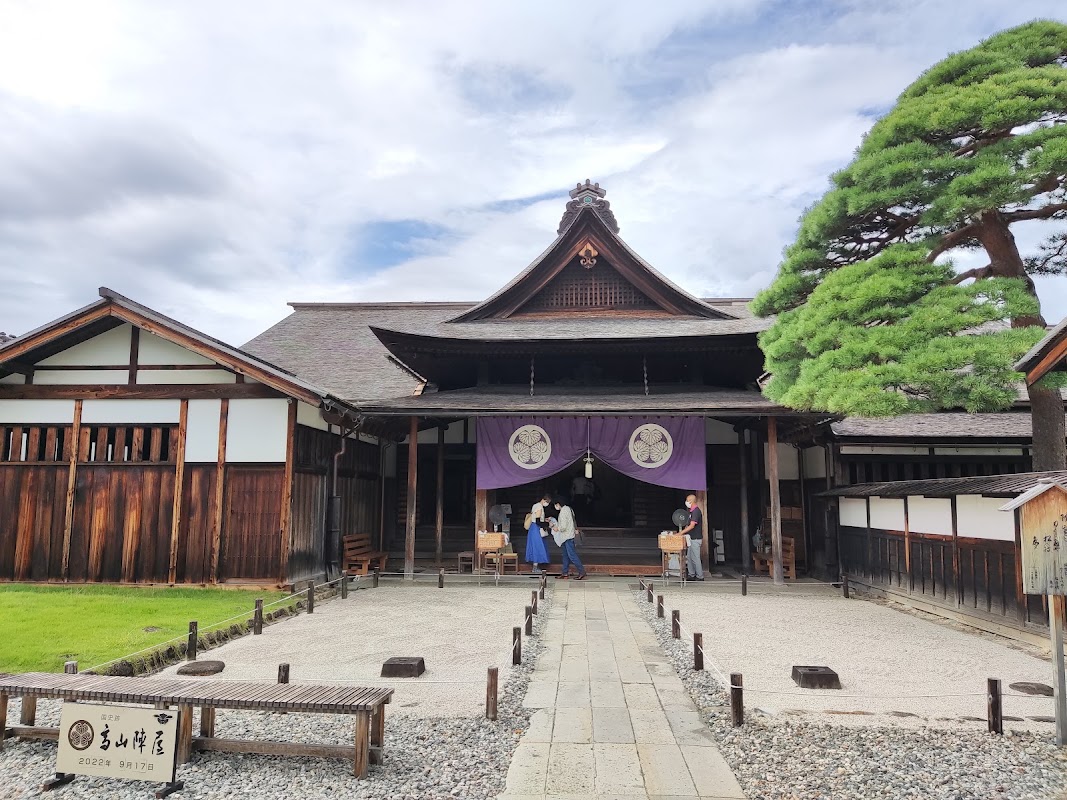
Takayama Jinya was established as the political center of Hida, which was a direct territory (tenryo) of the Shogunate. It served as the local magistrate’s office, where land taxes were collected and criminals were interrogated, and it continued to be used as a local government office even after the Meiji Restoration. Among the over 60 jinya offices said to have existed nationwide, Takayama Jinya is the only one in Japan where the main buildings from that era remain intact, making it an extremely valuable historical heritage site.
The main highlight of Takayama Jinya is the ‘Omakura’ (rice storehouse), one of Japan’s largest and oldest historical storehouses. This vast granary, believed to have been relocated from Takayama Castle in the 1600s (Keicho era), was used to store annual rice taxes. Today, its interior is open to the public as a historical museum, displaying numerous valuable historical artifacts and documents. With such rich content for an admission fee of just 500 yen, it offers exceptional value for money for travelers.
The facility’s viewing route is a designated one-way path, allowing visitors to explore efficiently without missing anything. However, with its narrow corridors and unique room designs, an hour can quickly pass if you truly want to savor the Edo-period atmosphere. It’s highly recommended for history enthusiasts and even those less familiar with history to allocate ample time, as you can feel the real essence of the era. It’s a popular attraction that gets busy with many tourists from the morning hours.
Hida Great Limestone Cave
📍 Address: 1147 Nyukawa-cho Hachimen, Takayama, Gifu 506-2256, Japan
About a 30-minute drive from Takayama city center, nestled amidst nature, is the Hida Great Limestone Cave. It’s known as Japan’s highest-altitude tourist limestone cave, and the average temperature inside the cave is a very cool sub-9°C even in summer. While it’s an excellent summer retreat, it can feel cold if you’re lightly dressed, so it’s essential to bring something warm to wear (like a down jacket or hoodie) even in mid-summer.
Before entering the cave, you’ll find the attached ‘Ohashi Collection Hall’. This museum showcases about 1,000 art pieces and ornaments from around the world, collected by the cave’s discoverer, Gaitokichi Ohashi, who invested his personal fortune. Its scale and the depth of its collection are simply breathtaking (photography of exhibits inside the hall is prohibited). It’s a hidden gem that many travelers exclaim is ‘worth more than the admission fee alone’.
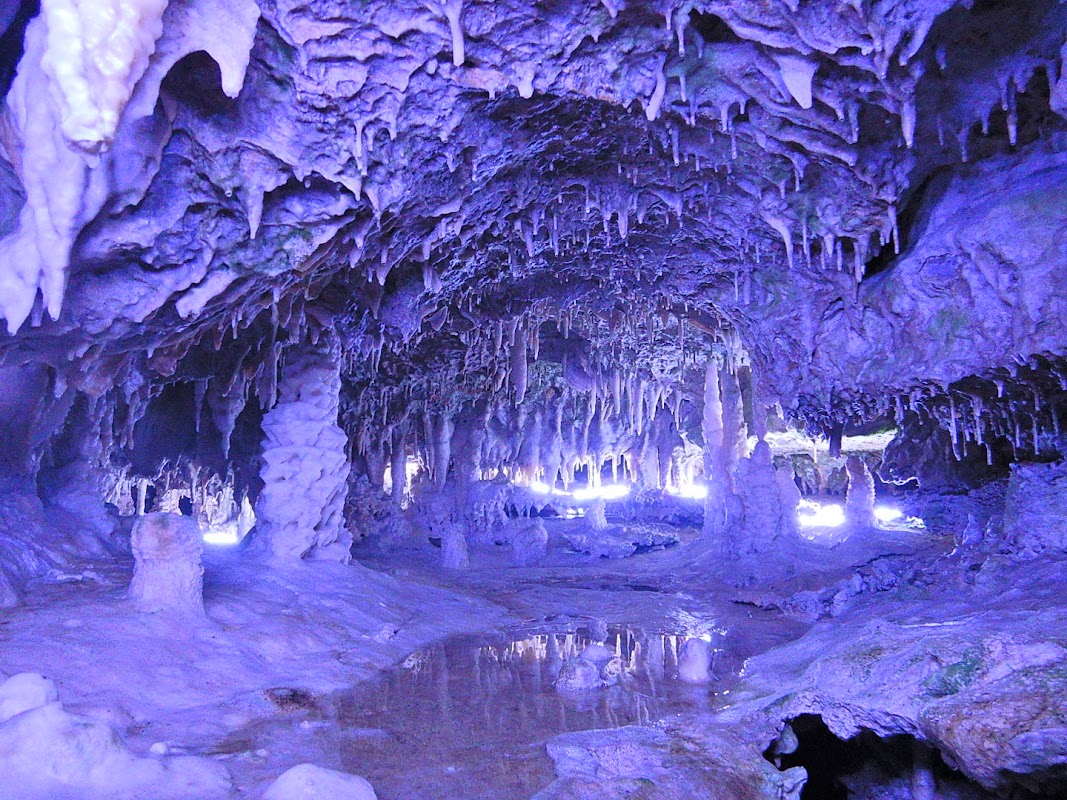
The interior of the limestone cave is beautifully lit, allowing visitors to enjoy unique formations such as the magnificent stalactite known as the ‘Crown’. There are three exits from the first to the third. While the first half is relatively easy to walk, after the second exit, there are increasingly steep ascents and slanted stairs, which can be strenuous on the legs. Those unsure of their stamina can choose to turn back midway. Unusually for a limestone cave, it’s also a delightful feature that you can visit with your dog on a leash, provided good manners are observed. In winter, a spectacular ‘ice pillar’ created by nature awaits near the exit as a special treat.
Hirayu Great Falls
📍 Address: Hirayu Onsen, Okuhida Onsenkyo, Takayama, Gifu 506-1433, Japan
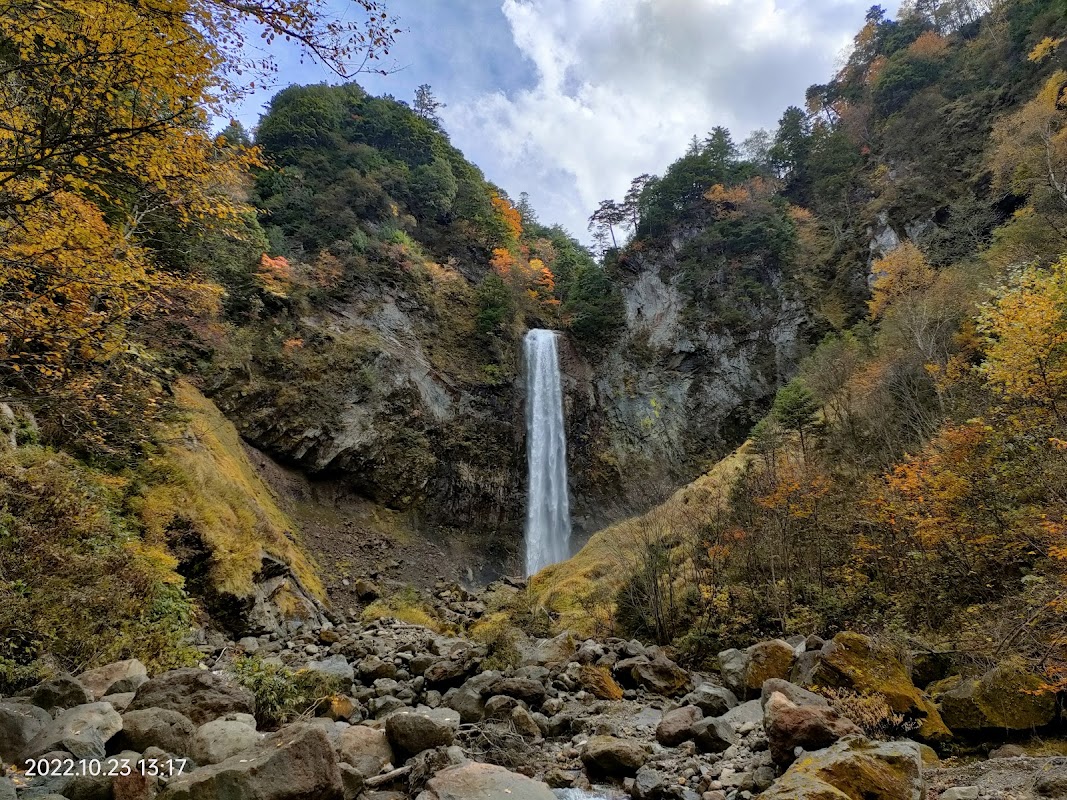
If you’re visiting the Hirayu area of Okuhida Onsenkyo, the ‘Hirayu Great Falls’ is an absolute must-see, selected as one of ‘Japan’s Top 100 Waterfalls’ and one of the ‘Three Great Waterfalls of Hida’. This is a direct waterfall where water plunges straight down a massive rock face, about 64 meters high and 6 meters wide, with a thundering roar. Its sheer scale and natural power are among the best in Japan. Its easy accessibility, just a few minutes’ walk along a well-maintained path from the parking lot, is also a major draw.
Crossing a small wooden bridge near the basin allows you to gaze up at the powerful waterfall head-on. However, during periods of abundant water flow, you’ll be engulfed by intense spray and mist. While it’s refreshing to be showered in negative ions, if you prefer not to get wet, it’s safer to bring a raincoat or view it from the observation deck slightly further back. The deep forest atmosphere combined with the water mist creates a truly mystical landscape.
While the seasons of fresh greenery and autumn foliage are beautiful, Hirayu Great Falls reveals its most mystical form in the dead of winter. The intense cold causes the entire waterfall to freeze, transforming it into a colossal icefall. Every year in mid-February (typically around the 15th to 25th), the ‘Hirayu Great Falls Ice Festival’ is held, and the sight of the bluish-white icefall illuminated at night is breathtakingly beautiful. However, winters in Okuhida are extremely cold and snowy, so visitors should come prepared with studless tires and thorough cold weather gear.
Practical Tips for Enjoying Hida Takayama 120%
To fully enjoy Hida Takayama, understanding the characteristics of each area and planning your schedule accordingly is essential. The Takayama city center area (Sanmachi Suji, Miyagawa Morning Market, Takayama Jinya) is very compact, and all spots are within walking distance. The city center gets very crowded during the day, so the classic, most stress-free route is to ‘tackle the morning market and Old Town from early morning, then slowly explore Takayama Jinya in the late morning as more people start to arrive’.
On the other hand, in the afternoon, it’s recommended to take a car or bus to the Okuhida / Nyukawa area (Hida Great Limestone Cave, Hirayu Great Falls), where nature abounds. This will be a 30-minute to 1-hour drive from the city center, but the mountainous areas tend to have changeable weather and temperatures several degrees lower than the city center. Even in summer, prepare clothing that you can easily layer on and off to regulate your body temperature. Also, if you’re heading to the Okuhida area in winter, driving a rental car on snowy roads can be very risky. For travelers unfamiliar with snowy conditions, utilizing the Nohi Bus from Takayama Station is a safe and reliable option.


'%3E%3Cpath%20stroke='%23000'%20stroke-width='4'%20d='m-35-37-13%2020m5%203%2013-20m5%203-13%2020m63%2042%206-9m1-2%206-9m5%203-6%209m-1%202-6%209m5%203%206-9m1-2%206-9m-96%200%2013%2020m5-3-6-9m-1-2-6-9m5-3%2013%2020m63-42-6-9m-1-2-6-9m5-3%2013%2020m5-3-6-9m-1-2-6-9'/%3E%3Ccircle%20r='24'%20fill='%23cd2e3a'/%3E%3Cpath%20fill='%230047a0'%20d='M0%200a12%2012%200%201%201%2020%2013%2024%2024%200%201%201-40-26A12%2012%200%201%200%200%200'/%3E%3C/g%3E%3C/svg%3E)
'/%3E%3Cpath%20fill='%23b2b2b2'%20d='M241%20382q0%2016%2017%2026%2017%2011%2042%2011t42-11q16-11%2017-26V269H241'/%3E%3Cpath%20fill='%239f7e00'%20d='M241%20379q0%2014%208%2023%209%209%2021%209%2014%200%2021-9%209-9%209-23V269h-59'/%3E%3Cpath%20d='M241%20339v-70h59v110q0%2014-9%2023l-6%205v-68h-15v72q-8%200-14-4v-68zm59%2040c0%2022%2015%2032%2029%2032%2021%200%2030-18%2030-32v-40h-59'/%3E%3Cpath%20fill='%239f7e00'%20d='M266%20277v5h2v12h-3v-5h2v-5h-9v5h2v5h-4v9h3v18h-5v10h34v-10h-5v-18h3v-9h-4v-5h2v-5h-9v5h2v5h-3v-12h2v-5zm42%20101q0%2010%206%2017%206%206%2015%207%2010-1%2016-7%206-7%206-17v-29h-43'/%3E%3Ccircle%20fill='%230044ad'%20cx='329.5'%20cy='372'%20r='6'/%3E%3Cellipse%20fill='%230044ad'%20cx='300'%20cy='340'%20rx='16'%20ry='21'/%3E%3C/svg%3E)


