

Ehime Prefecture is a captivating area where diverse nature and profound history breathe, from the calm Seto Inland Sea to abundant mountains. Scattered throughout are spots that will satisfy anyone who visits, from short-term travelers looking to relax in Dogo Onsen to active explorers venturing widely across the prefecture.
This time, beyond textbook historical explanations, we’ll introduce five carefully selected spots in Ehime Prefecture that you absolutely must visit, blending in the authentic atmosphere cherished by locals and deep attractions that can only be experienced on-site.
Matsuyama Castle

📍 Address: 1 Marunouchi, Matsuyama, Ehime 790-0008, Japan
Matsuyama Castle, soaring in the heart of Matsuyama City, is one of Japan’s ’12 Existing Castle Towers’, of which only twelve remain. Its sturdy ‘Renritsu-shiki Tenshu’ (connected style castle tower) structure, with the main keep located on the 132m high Katsuyama peak and the main tower, minor towers, and turrets arranged on all sides, conveys the spirit of the Sengoku period. The current main tower was rebuilt in 1854 and is considered the newest among the existing castle towers.
While both a ropeway and a lift are available for ascending the castle, the lift is highly recommended if the weather is good. The aerial stroll, feeling the green of the trees and the gentle breeze, offers an exceptional sense of liberation and instantly elevates your travel spirits. Of course, those confident in their physical strength can also take the walking path and enjoy a hike through the dappled sunlight.
A deep highlight not to be missed is the ‘Nobori-ishigaki’ (climbing stone wall), which exists only at Matsuyama Castle and Hikone Castle nationwide. These two stone walls, built to crawl up the mountain slope, incorporate defensive techniques used during Toyotomi Hideyoshi’s invasions of Korea. They vividly convey the preparedness and enthusiasm of the castle’s builder, Kato Yoshiaki, for battle.
Inside the main keep, the original wooden architecture remains, and the stairs are very steep with high steps, so great care is needed when walking. However, the spectacular view of Matsuyama city, and the distant glittering Seto Inland Sea and Shimanami Kaido from the top floor after climbing those challenging stairs, offers a supreme sense of accomplishment that only those who make the climb can experience.
Botchan Karakuri Clock
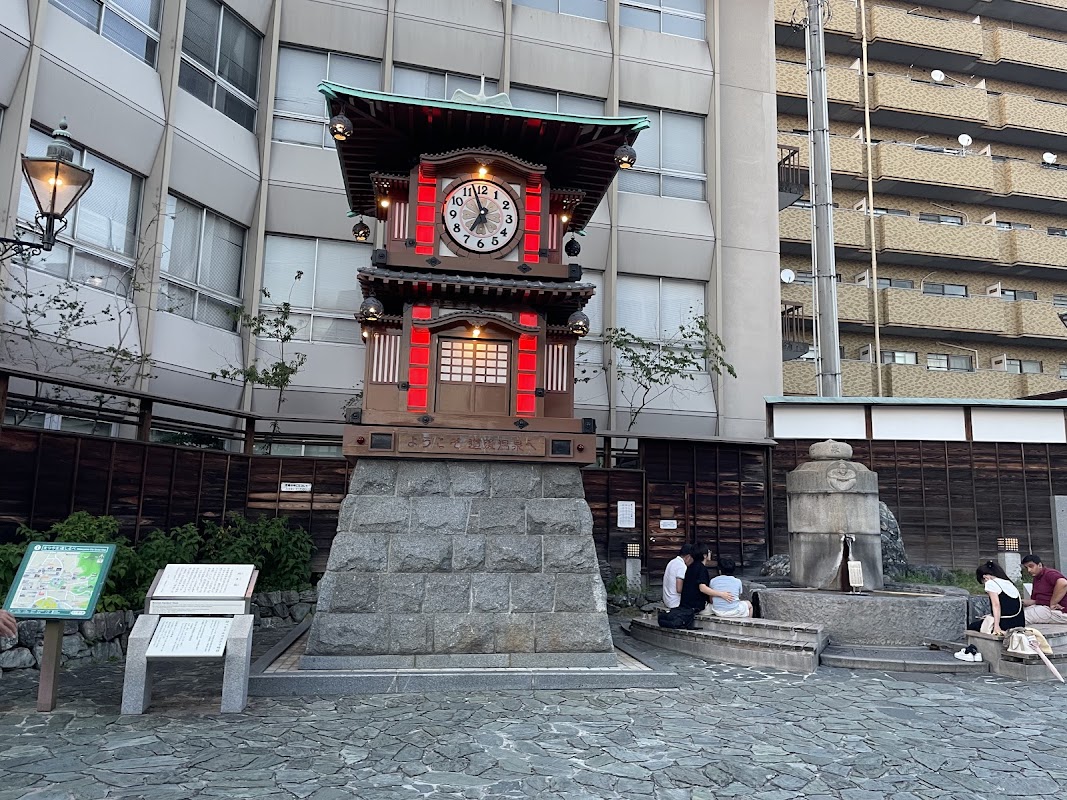
📍 Address: 6-7 Dogo Yunomachi, Matsuyama, Ehime 790-0842, Japan
Right after alighting at Dogo Onsen Station, travelers are greeted by the ‘Botchan Karakuri Clock’ at ‘Hojoen’, the entrance to the hot spring town. Built in 1994 to commemorate the 100th anniversary of Dogo Onsen Main Building’s construction, this clock rises hourly (or every 30 minutes during weekends and tourist seasons) with music, and the familiar characters from Natsume Soseki’s novel ‘Botchan’ charmingly come to life.
Beyond just watching the clock, the authentic way to enjoy this spot is to soak your feet in the ‘ashiyu’ (footbath) at the base of the clock. This footbath uses the same hot spring source as the Dogo Onsen Main Building, and the cauldron from which the hot water flows is a vintage item actually used at the main building from the Meiji to Showa eras. Waiting for the automatons to move while soothing your tired feet has become a classic routine for Dogo sightseeing.
Since it operates until 10 PM, it’s also recommended to visit after dinner or after a hot spring bath, enjoying the evening breeze. The illuminated clock in the darkness, combined with the atmosphere of the hot spring town, creates a fantastic ambiance different from the daytime.
Bansuiso Mansion
📍 Address: 3-3-7 Ichibancho, Matsuyama, Ehime 790-0001, Japan
Nestled amidst the rich greenery at the southern foot of Matsuyama Castle’s Shiroyama hill, ‘Bansuiso Mansion’ (bansui-so) is a pure French-style Western house that stands out in Matsuyama, a city full of Japanese charm. It was built in Taisho 11 (1922) as the villa of Count Hisamatsu Sadakoto, a descendant of the former lord of the Matsuyama domain.
It is the oldest reinforced concrete building in Ehime Prefecture and has been designated a National Important Cultural Property due to its high artistic value. Stepping inside, a lavish space unfolds, filled with vibrant stained glass, crystal chandeliers, and Art Nouveau-inspired decorations, as if packed with the cutting-edge European trends of the time.
While most Western architecture is built symmetrically, Bansuiso Mansion was deliberately designed asymmetrically, subtly reflecting the Japanese aesthetic sense. Furthermore, the lightning rod’s tip is decorated with large and small gold coins of the Matsuyama domain, offering interesting discoveries the more closely you observe it. Photography is generally allowed inside, and every angle is picturesque, making it an absolute must-visit spot for travelers seeking photogenic locations.
Imabari Castle
📍 Address: 3-1-3 Torimachi, Imabari, Ehime 794-0036, Japan
Located in Imabari City, the Shikoku gateway to the Shimanami Kaido, ‘Imabari Castle’ is a flatland castle built in 1602 by Todo Takatora, renowned as a master of castle construction. Alongside Takamatsu Castle and Nakatsu Castle, it is counted as one of Japan’s ‘Three Great Water Castles’.
Its greatest charm is the vast and beautiful moat, which directly draws seawater from the Seto Inland Sea. It has a rare structure where the moat’s water level changes with the tides, and if you peer closely into the water, you can see sea fish like pufferfish and black seabream swimming serenely. It’s astonishing to think that sharks have even strayed into it in the past. It truly is a fortress integrated with the sea.
The current castle tower was rebuilt in the Showa era, but its interior serves as a well-equipped museum displaying armor and weaponry. And when you step out onto the observation deck on the top floor, a magnificent panorama of Imabari city, the glittering blue Seto Inland Sea, and the Kurushima Kaikyo Bridge unfolds. Furthermore, within the castle grounds, ‘Fukiage Shrine’ is enshrined on the former site of the main keep, and the unique atmosphere of a castle and shrine standing side by side is another deep highlight unique to Imabari Castle.
Yakushidani Valley
📍 Address: Kawauchi, Uwajima, Ehime 798-0075, Japan
Located in Uwajima City in southern Ehime Prefecture, ‘Yakushidani Valley’ (yakushidani keikoku) is a healing spot where you can encounter surprisingly mystical and pure nature, despite being only a 15-minute drive from the city center. You can fully enjoy the natural sculptural beauty created by water and the passage of time, such as ‘Yukowa Falls’ sliding between giant rocks and ‘Senjojiki’, where rock formations stretch endlessly.
This place boasts immense popularity among locals as a summer retreat, and from June to September, you can enjoy ‘somen nagashi’ (flowing noodles) along the valley. Listening to the sound of the clear stream and basking in negative ions, the somen, savored with plenty of condiments in a special light broth, is exceptional. The warm hospitality unique to a local spot is also a charm, as they sometimes accommodate visitors even into early autumn.
While the walking paths are maintained, some areas further in can become unstable underfoot, so those wishing to hike to the deepest parts of the valley must wear comfortable sneakers or similar footwear. Freshwater crabs appear by the water, and the water quality is so good that fireflies dance in early summer, making it a perfect hidden gem for travelers seeking to escape the urban hustle and refresh themselves.
Conclusion: A Journey to Savor Ehime’s History and Nature
Ehime Prefecture boasts entirely different faces depending on the region, from the elegant historical architecture of the Matsuyama area to the famous castles standing by the sea in the Imabari area, and the majestic valley beauty of the Uwajima area. By understanding the background of each spot and why it is loved by locals, your travel experience will be greatly enriched.
When planning your trip, feel the romance of the Sengoku period at Matsuyama Castle’s climbing stone walls, take a break at the footbath of the Botchan Karakuri Clock, and immerse yourself in Taisho Roman at Bansuiso Mansion. Then, extend your journey a little further to search for fish in Imabari Castle’s seawater moat and savor the natural coolness of Yakushidani Valley. Embark on such a deep journey to enjoy the authentic atmosphere of Ehime with all five senses!


'%3E%3Cpath%20stroke='%23000'%20stroke-width='4'%20d='m-35-37-13%2020m5%203%2013-20m5%203-13%2020m63%2042%206-9m1-2%206-9m5%203-6%209m-1%202-6%209m5%203%206-9m1-2%206-9m-96%200%2013%2020m5-3-6-9m-1-2-6-9m5-3%2013%2020m63-42-6-9m-1-2-6-9m5-3%2013%2020m5-3-6-9m-1-2-6-9'/%3E%3Ccircle%20r='24'%20fill='%23cd2e3a'/%3E%3Cpath%20fill='%230047a0'%20d='M0%200a12%2012%200%201%201%2020%2013%2024%2024%200%201%201-40-26A12%2012%200%201%200%200%200'/%3E%3C/g%3E%3C/svg%3E)
'/%3E%3Cpath%20fill='%23b2b2b2'%20d='M241%20382q0%2016%2017%2026%2017%2011%2042%2011t42-11q16-11%2017-26V269H241'/%3E%3Cpath%20fill='%239f7e00'%20d='M241%20379q0%2014%208%2023%209%209%2021%209%2014%200%2021-9%209-9%209-23V269h-59'/%3E%3Cpath%20d='M241%20339v-70h59v110q0%2014-9%2023l-6%205v-68h-15v72q-8%200-14-4v-68zm59%2040c0%2022%2015%2032%2029%2032%2021%200%2030-18%2030-32v-40h-59'/%3E%3Cpath%20fill='%239f7e00'%20d='M266%20277v5h2v12h-3v-5h2v-5h-9v5h2v5h-4v9h3v18h-5v10h34v-10h-5v-18h3v-9h-4v-5h2v-5h-9v5h2v5h-3v-12h2v-5zm42%20101q0%2010%206%2017%206%206%2015%207%2010-1%2016-7%206-7%206-17v-29h-43'/%3E%3Ccircle%20fill='%230044ad'%20cx='329.5'%20cy='372'%20r='6'/%3E%3Cellipse%20fill='%230044ad'%20cx='300'%20cy='340'%20rx='16'%20ry='21'/%3E%3C/svg%3E)


