

Ueno Park
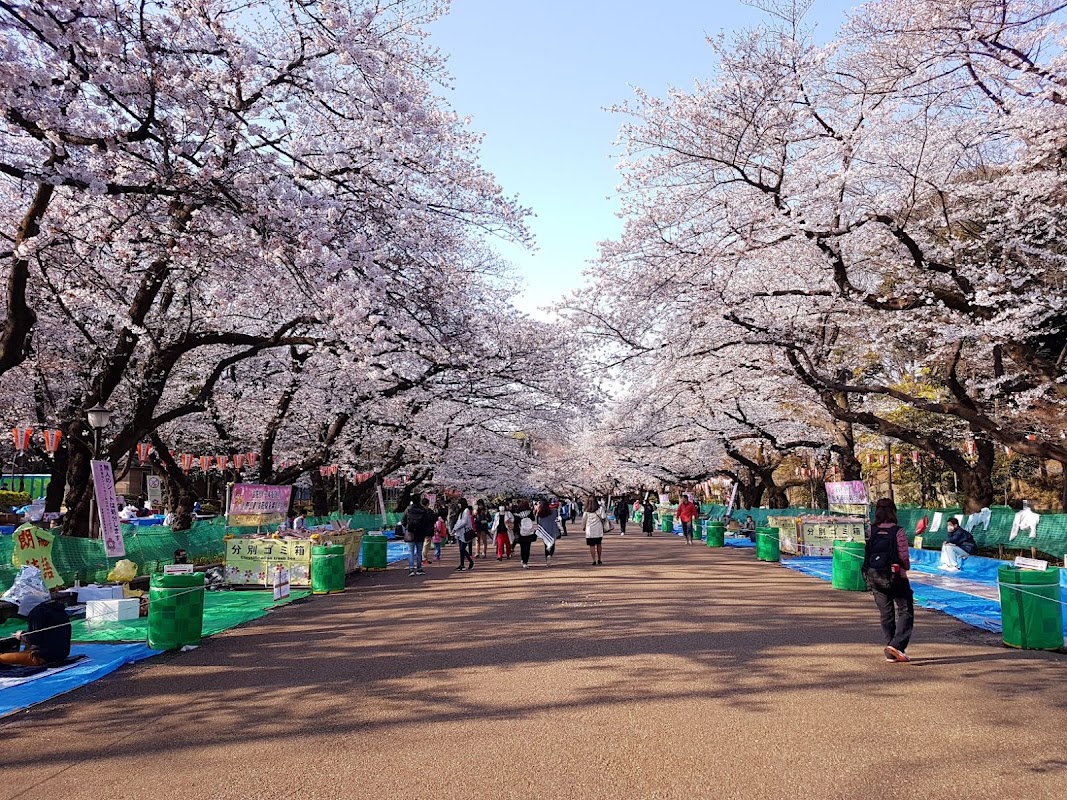
📍 Address: 4 Ueno Park, Taito City, Tokyo 110-0007, Japan
“Ueno Park”, spread out directly in front of Ueno Station, is one of Tokyo’s most representative tourist attractions and Japan’s first designated historic park. Originally, it was the expansive grounds of ‘Toeizan Kan’ei-ji Temple’, built as the ancestral temple of the Tokugawa shogun family during the Edo period. However, it was reduced to ashes during the Boshin War (Ueno War) at the end of the Edo period. Following a proposal by Dutch physician Dr. Bauduin, it was reborn as an urban park in 1873 (Meiji 6). Later, during the Taisho period, it was bestowed upon Tokyo City by Emperor Taisho, hence the name ‘Onshi’ (imperial gift).
The vast grounds are densely packed with cultural facilities such as art museums, museums, and a zoo, offering so many attractions that one day is simply not enough. Tracing the historical footsteps alone is exciting, from the ‘Saigo Takamori Statue’, a popular meeting spot, to the ‘Ueno Daibutsu’ (Great Buddha), popular as a power spot for good luck in exams because only its face remains (meaning ‘can’t fall any further’), and the glittering ‘Ueno Toshogu Shrine’.
We recommend travelers take a stroll in the cool morning hours. While it gets crowded with tourists during the day, in the morning you can have the solemn atmosphere woven by nature’s tranquility and historic buildings all to yourself. While the cherry blossoms in spring are overwhelmingly popular, the fresh green foliage and autumn leaves also offer stunning beauty, making it an urban oasis that reveals a different charm with every visit.
Ueno Zoological Gardens
📍 Address: 9-83 Ueno Park, Taito City, Tokyo 110-8711, Japan
Located within Ueno Park, “Ueno Zoological Gardens” is Japan’s oldest zoo, opened in 1882 (Meiji 15). It has a unique history, having started as an auxiliary facility to a museum. The zoo is divided into the East Garden and West Garden, housing hundreds of species of animals across an area roughly equivalent to three Tokyo Domes.
In addition to classic elephants and giraffes, the zoo boasts a fulfilling array of exhibits that will keep you entertained all day, including giant brown bears that are active even in winter, impressive polar bears, the critically endangered Sumatran tiger, and the incredibly popular ‘shoebill’ known as the ‘motionless bird’. The exhibition spaces are also well-designed, allowing visitors to observe animal calls and behavior up close, making it enjoyable for adults and children alike.
For real-world sightseeing tips, weekends can be extremely crowded, so preparation is essential. We strongly recommend purchasing tickets online in advance to save time queuing at the entrance. Additionally, even when the main gate (East Garden) is crowded, entering through the ‘Benten Gate’ on the Shinobazu Pond side is often smoother – a little-known trick. With plenty of benches and rest areas within the zoo, the trick is to take your time, resting in the shade when you get tired of walking.
National Museum of Western Art
📍 Address: 7-7 Ueno Park, Taito City, Tokyo 110-0007, Japan
For travelers who love art and architecture, the ‘National Museum of Western Art’ is an absolute must-see. It opened in 1959 to house and exhibit the ‘Matsukata Collection’ of businessman Kojiro Matsukata. The main building was designed by Le Corbusier, a leading architectural master of the 20th century, and in 2016, it was registered as a World Cultural Heritage site as one of ‘The Architectural Work of Le Corbusier’.
The greatest feature of this building is its groundbreaking concept: the ‘Museum of Unlimited Growth’. It is structured to allow exhibition rooms to be added spirally outward, like a conch shell, as the collection expands. Furthermore, features like the ‘pilotis’ which support the building only with pillars on the first floor, and the triangular skylight of the ’19th Century Hall’ (said to be inspired by Mount Fuji) which softly lets in natural light, make the architecture itself a giant work of art.
The exhibition rooms display masterpieces by Impressionist giants such as Monet and Renoir. Admission to the permanent collection is also included with special exhibition tickets, and many works allow photography without flash, which is a welcome bonus. However, weekends during special exhibitions are expected to be quite crowded. The museum shop is also incredibly popular, sometimes requiring admission restrictions or long queues. As the last entry time is set early, if you want to soak in the afterglow of your viewing and buy souvenirs, it’s best to avoid the late afternoon and allow plenty of time.
Shinobazu Pond
📍 Address: 5-20 Ueno Park, Taito City, Tokyo 110-0007, Japan
“Shinobazu Pond”, stretching out to the southwest at the foot of Ueno Hill, is a tranquil waterfront where a calming atmosphere, seemingly cut off from the urban hustle and bustle, prevails. This place, once part of an inlet of Tokyo Bay, was developed to resemble Lake Biwa by Priest Tenkai, who founded Kan’ei-ji Temple in the Edo period. ‘Benten Island’, modeled after Chikubu Island, was built in the center of the pond, and the beautiful octagonal ‘Shinobazu Pond Bentendo Temple’ still stands there today.
The vast pond is divided into three sections: the ‘Lotus Pond’, ‘Boat Pond’, and ‘Cormorant Pond’. Especially the Lotus Pond, known as a famous spot since the Edo period, becomes entirely covered with large lotus leaves as tall as a person and delicate pink flowers in summer, creating a dreamlike landscape reminiscent of paradise. Additionally, the Boat Pond offers rowboats and swan boats for rent, which are very popular with tourists and couples.
A promenade encircles the entire pond, making it perfect for a leisurely stroll while observing waterfowl. You’ll often see locals sitting on benches enjoying their lunch or jogging, allowing you to experience a local atmosphere where ‘Tokyo’s daily life’ and ‘historic tourist sites’ blend comfortably. Walking the path leading to Bentendo Temple in the crisp morning air is perfect for refreshing yourself during your trip.
Ameyoko Shopping Street
📍 Address: 6-10-7 Ueno, Taito City, Tokyo 110-0005, Japan
“Ameyoko Shopping Street”, where approximately 500 shops are packed along the elevated railway from Ueno Station to Okachimachi Station, is an incredibly deep spot and a highlight of Tokyo sightseeing. Starting as a black market in the scorched aftermath of World War II, it was originally called ‘Ameya Yokocho’ or ‘America Yokocho’ because there were many stores selling precious ‘candy’ and shops selling surplus goods from the American military, which evolved into the present-day Ameyoko.
Modern Ameyoko is filled with a multi-ethnic, chaotic energy, as if you’ve stumbled into a Southeast Asian night market. Amidst the lively shouts of vendors hawking seafood, a diverse array of international street food lines the street, including fresh cut fruits, towering kebabs, and hot xiao long bao. You might even come across a deep sight like an insect food vending machine, making you do a double-take.
To fully enjoy Ameyoko, comfortable clothing, sneakers, and a hands-free cross-body bag are essential. Especially on weekends and holidays, it gets so crowded that it can be difficult to walk in a straight line. Most shops open and become lively around 11 AM, so starting your food tour before noon is the best timing. Shopping at fishmongers or clothing stores while communicating with staff using broken Japanese or gestures is also a unique pleasure of Ameyoko.
Tips for Enjoying Your Ueno Sightseeing to the Fullest
The Ueno area is a rare tourist destination where you can experience two completely different faces in one day: the nature and cultural facilities of the park, and the chaotic downtown shopping street like Ameyoko. However, with so many attractions, an unplanned visit can easily end up with you ‘just being tired from walking…’.
A recommended classic route is to start your stroll in ‘Ueno Park’ around 9 AM when there are fewer people, then enter ‘Ueno Zoological Gardens’ or the ‘National Museum of Western Art’ right at opening time. After satisfying your intellectual curiosity with culture or animal observation, head south past ‘Shinobazu Pond’ towards ‘Ameyoko Shopping Street’ around lunchtime. This gradual shift in atmosphere from a quiet, intellectual space to a bustling, vibrant downtown is arguably Ueno tourism’s greatest charm.


'%3E%3Cpath%20stroke='%23000'%20stroke-width='4'%20d='m-35-37-13%2020m5%203%2013-20m5%203-13%2020m63%2042%206-9m1-2%206-9m5%203-6%209m-1%202-6%209m5%203%206-9m1-2%206-9m-96%200%2013%2020m5-3-6-9m-1-2-6-9m5-3%2013%2020m63-42-6-9m-1-2-6-9m5-3%2013%2020m5-3-6-9m-1-2-6-9'/%3E%3Ccircle%20r='24'%20fill='%23cd2e3a'/%3E%3Cpath%20fill='%230047a0'%20d='M0%200a12%2012%200%201%201%2020%2013%2024%2024%200%201%201-40-26A12%2012%200%201%200%200%200'/%3E%3C/g%3E%3C/svg%3E)
'/%3E%3Cpath%20fill='%23b2b2b2'%20d='M241%20382q0%2016%2017%2026%2017%2011%2042%2011t42-11q16-11%2017-26V269H241'/%3E%3Cpath%20fill='%239f7e00'%20d='M241%20379q0%2014%208%2023%209%209%2021%209%2014%200%2021-9%209-9%209-23V269h-59'/%3E%3Cpath%20d='M241%20339v-70h59v110q0%2014-9%2023l-6%205v-68h-15v72q-8%200-14-4v-68zm59%2040c0%2022%2015%2032%2029%2032%2021%200%2030-18%2030-32v-40h-59'/%3E%3Cpath%20fill='%239f7e00'%20d='M266%20277v5h2v12h-3v-5h2v-5h-9v5h2v5h-4v9h3v18h-5v10h34v-10h-5v-18h3v-9h-4v-5h2v-5h-9v5h2v5h-3v-12h2v-5zm42%20101q0%2010%206%2017%206%206%2015%207%2010-1%2016-7%206-7%206-17v-29h-43'/%3E%3Ccircle%20fill='%230044ad'%20cx='329.5'%20cy='372'%20r='6'/%3E%3Cellipse%20fill='%230044ad'%20cx='300'%20cy='340'%20rx='16'%20ry='21'/%3E%3C/svg%3E)


