

Taiwan is known as a ‘culinary paradise’ and is exceptionally travel-friendly for people with dietary restrictions such as vegan, halal, or vegetarian (Su-shi), with over 10% of its population identifying as vegetarian. Among its many attractions, Jiufen (pronounced ‘Jiǔfèn’), which draws travelers and students from around the world with its nostalgic scenery, is particularly renowned as an area where you can fully savor plant-based traditional sweets and fragrant Taiwanese tea.
This article introduces local delights like ‘Douhua’ (soft tofu pudding made from soybeans) and ‘Yu Yuan’ (chewy taro balls made from taro), as well as historic teahouses where you can enjoy an authentic tea experience with breathtaking views. We’ll also provide insider tips beloved by locals and advice on how to avoid crowds!
Jiufen Old Street
📍 Address: Jishan St, Ruifang District, New Taipei City, Taiwan 224
‘Jiufen Old Street’, the heart of Jiufen’s tourism, is one of Taiwan’s most iconic nostalgic areas, with narrow alleys and stone steps winding along the mountainside. The cityscape, adorned with red lanterns, makes you feel as if you’ve stepped into a movie scene, transforming into an instantly fantastical atmosphere from evening to night.
Souvenir shops and food stalls line both sides of the street, making it a treasure trove for food exploration. Many Taiwanese local dishes use plant-based ingredients, which is great news for vegans who can enjoy them without worry. However, it gets extremely crowded with tourists from all over the world during the day. If you want to take your time taking photos or enjoy a peaceful atmosphere, it’s recommended by locals and frequent visitors to aim for the time after 7 PM when the crowds start to thin, or stay overnight in Jiufen to enjoy the tranquility of the early morning. Since there are many slopes and stone steps, be sure to wear comfortable shoes.
Jiufen Teahouse (九份茶坊)
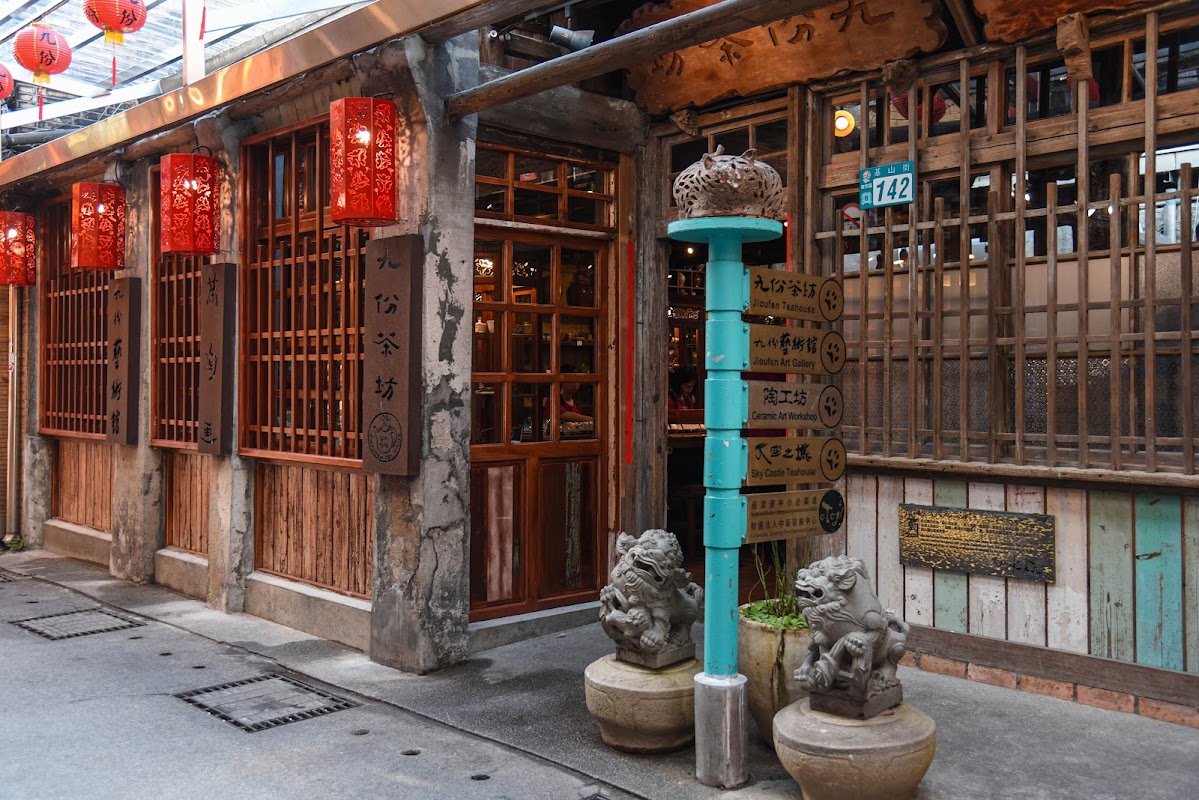
📍 Address: No. 142號, Jishan St, Chongwen Village, Ruifang District, New Taipei City, Taiwan 22448
‘Jiufen Teahouse’ (九份茶坊), opened in 1991, is Jiufen’s very first teahouse. It’s a renovated historic building, over 100 years old, that was originally the residence of Weng Shan-ying, an influential figure during the Japanese colonial era when mining flourished. Stepping inside, you’ll be enveloped in a silence that makes you feel as if you’ve traveled back in time to Jiufen’s past.
Here, you can not only ‘drink’ but also ‘experience’ the history and etiquette of Taiwanese tea. The staff carefully teaches you how to brew, allowing even exchange students and travelers to experience authentic tea culture. The accompanying snacks, such as dried fruits and preserved plums, are also plant-based, making them perfect for vegans. While the total cost for tea and hot water might be a bit premium, any unused tea leaves can be taken home in a special can—a welcome system for long-term visitors to enjoy the local flavor at home. You can spend a tranquil time in this gallery-like space, adorned with beautiful tea sets and modern art, forgetting the hustle and bustle outside.
Artist Teahouse (水心月茶坊)
📍 Address: No. 308號, Qingbian Rd, Chongwen Village, Ruifang District, New Taipei City, Taiwan 224
‘Artist Teahouse’ (水心月茶坊), a sister establishment managed by the same owner as Jiufen Teahouse, is an artistic tea house converted from what was once the owner’s painting studio. This red-brick building, quietly nestled along Qingbian Road, is a hidden gem for those who wish to avoid the main street’s crowds and enjoy tea in tranquility.
Its greatest appeal is the breathtaking panoramic view of the sea and mountains visible from its large windows and terrace seating. Not only on clear days but also on misty, rainy days, it offers a unique charm characteristic of Jiufen, the ‘mountain city’. With credit card payment available and Wi-Fi, it’s also very convenient for digital nomads and long-term visitors. It’s a blissful space where you can monopolize peaceful time and beautiful scenery with authentic Oolong tea.
Jiufen Douhua
📍 Address: No. 2, Jishan St, Yongqing Village, Ruifang District, New Taipei City, Taiwan 224
‘Jiufen Douhua’, located right at the entrance of Jishan Street (near 7-Eleven) after getting off the bus, is a famous shop where you can easily enjoy local sweets. Taiwan’s national dessert, ‘Douhua’ (tofu pudding), is made from solidified soy milk, making it entirely plant-based (vegan-friendly). It features a gentle soybean flavor and a smooth texture.
At this shop, Douhua topped with chewy ‘Yu Yuan’ (taro balls made from taro), tapioca, or red beans is offered at a reasonable price of 60 NTD per bowl. A great point is that you can choose between cold with ice on hot days or warm on chilly days. By the way, staff might speak loudly to you when ordering, but they are not angry; they might just be asking if you’d like ‘ginger syrup’. Try to enjoy this dynamic customer service as part of the authentic local atmosphere.
Baoyun Yu Yuan
📍 Address: No. 8號, Ruifang St, Long’an Village, Ruifang District, New Taipei City, Taiwan 224
Ruifang Station (‘Ruìfāng’), a transit point for buses to Jiufen and a transfer station for Shifen (famous for sky lanterns), is home to ‘Baoyun Yu Yuan’ on the back side of the station (Old Street side). This historic and long-established shop is actually said to be the birthplace of Jiufen’s specialty, ‘Yu Yuan’ (taro balls).
Developed in 1946 by its founder Cai Lin Baoyun, the Yu Yuan here are exquisite, with the natural sweetness of taro and sweet potato spreading with every chew. Sweets combining Yu Yuan with Douhua or Grass Jelly (tender xiancao) are all plant-based and vegan-friendly. A generous portion is served in a bowl for just 50 NTD, making it a long-time favorite among locals. Its excellent location, perfect for a quick stop while waiting for a train at Ruifang Station, and the chance to experience the warmth of the friendly auntie staff, make it a highly recommended spot full of local charm.
[Column] Tips for Vegan & Halal Travelers to Deeply Enjoy Taiwanese Sweets & Tea Culture
Taiwan has a deeply rooted unique vegetarian culture known as ‘Su-shi’ (素食), so you’ll find signs like ‘Quan Su’ (全素 – purely plant-based, often without alliums) or ‘Dan Nai Su’ (蛋奶素 – contains eggs and dairy) everywhere in the city, allowing those with dietary restrictions to eat with great peace of mind.
Traditional Taiwanese sweets, especially those introduced in this article such as ‘Douhua’, ‘Yu Yuan’, and ‘Grass Jelly’, are made from plant-based ingredients like soy milk, taro, and seaweed, allowing you to enjoy them as naturally vegan desserts. The syrups used, such as brown sugar, cane sugar, and ginger, are also gentle on the body, making them appealing guilt-free treats.
Furthermore, in Taiwanese teahouses, it’s a basic rule to ‘take home any leftover tea leaves’. The amount of tea leaves provided with one order is enough to brew multiple times, and any remaining portion will be packed for you. You might be surprised by differences in customer service style compared to Japan, or unexpected local interactions (such as a casual response if tea is spilled, or loud order confirmations), but by embracing these as ‘Taiwan’s authentic daily life’, your trip is sure to become even more richly rewarding. We encourage you to fully experience Jiufen’s plant-based local gourmet and tea culture to nourish your mind and body!


'%3E%3Cpath%20stroke='%23000'%20stroke-width='4'%20d='m-35-37-13%2020m5%203%2013-20m5%203-13%2020m63%2042%206-9m1-2%206-9m5%203-6%209m-1%202-6%209m5%203%206-9m1-2%206-9m-96%200%2013%2020m5-3-6-9m-1-2-6-9m5-3%2013%2020m63-42-6-9m-1-2-6-9m5-3%2013%2020m5-3-6-9m-1-2-6-9'/%3E%3Ccircle%20r='24'%20fill='%23cd2e3a'/%3E%3Cpath%20fill='%230047a0'%20d='M0%200a12%2012%200%201%201%2020%2013%2024%2024%200%201%201-40-26A12%2012%200%201%200%200%200'/%3E%3C/g%3E%3C/svg%3E)
'/%3E%3Cpath%20fill='%23b2b2b2'%20d='M241%20382q0%2016%2017%2026%2017%2011%2042%2011t42-11q16-11%2017-26V269H241'/%3E%3Cpath%20fill='%239f7e00'%20d='M241%20379q0%2014%208%2023%209%209%2021%209%2014%200%2021-9%209-9%209-23V269h-59'/%3E%3Cpath%20d='M241%20339v-70h59v110q0%2014-9%2023l-6%205v-68h-15v72q-8%200-14-4v-68zm59%2040c0%2022%2015%2032%2029%2032%2021%200%2030-18%2030-32v-40h-59'/%3E%3Cpath%20fill='%239f7e00'%20d='M266%20277v5h2v12h-3v-5h2v-5h-9v5h2v5h-4v9h3v18h-5v10h34v-10h-5v-18h3v-9h-4v-5h2v-5h-9v5h2v5h-3v-12h2v-5zm42%20101q0%2010%206%2017%206%206%2015%207%2010-1%2016-7%206-7%206-17v-29h-43'/%3E%3Ccircle%20fill='%230044ad'%20cx='329.5'%20cy='372'%20r='6'/%3E%3Cellipse%20fill='%230044ad'%20cx='300'%20cy='340'%20rx='16'%20ry='21'/%3E%3C/svg%3E)


